

2026 Water Park Equipment Manufacturer Selection Guide: How to Find a Reliable Partner
- Start With the Project, Not the Manufacturer
- What Makes a Reliable Water Park Equipment Manufacturer?
- 1. Real Manufacturing Capability
- 2. Water Park Planning and Design Capability
- 3. Quality and Safety Management
- 4. Customization and Engineering Capability
- 5. Installation and After-Sales Support
- Manufacturer vs. Trading Supplier: What Should Buyers Check?
- How to Compare Water Park Equipment Manufacturers
- Questions to Ask Before Signing a Water Park Equipment Contract
- Product and Technical Specifications
- Production and Delivery
- Installation and Commissioning
- Warranty and Maintenance
- Why Integrated Project Support Matters
- A Practical Manufacturer Selection Checklist
- FAQ
- Conclusion
Choosing a reliable Water Park Equipment Manufacturer requires more than comparing product photos and quotations. For a commercial water park project, the manufacturer should be evaluated according to manufacturing capability, technical expertise, safety management, customization, installation support, and long-term maintenance.
The right partner is not necessarily the company offering the lowest unit price. A more useful question is whether the manufacturer can provide equipment that fits the project's site, visitor profile, budget, schedule, operating model, and applicable technical requirements.
For B2B buyers, the selection process can be simplified into six areas:
- • Project understanding
- • Manufacturing capability
- • Design and engineering capability
- • Quality and safety
- • Installation and after-sales support
- • Total lifecycle value
Start With the Project, Not the Manufacturer
Before contacting a Water Park Equipment Manufacturer, define the basic requirements of the project. A supplier can only provide a meaningful proposal when it understands the conditions in which the equipment will be used.
Important project information includes:
- • Site area and available installation space
- • Site topography and existing structures
- • Target visitors and age groups
- • Expected visitor capacity
- • Project positioning
- • Main attraction categories
- • Investment budget
- • Construction and opening schedule
- • Local regulations and safety requirements
- • Expected operating season and maintenance conditions
For example, a family resort may prioritize family slides, children's water play structures, and moderate-capacity attractions. A large destination water park may require multiple signature slides, large-scale water play areas, wave-making equipment, and a broader attraction portfolio.
Therefore, equipment selection should follow the project strategy rather than become the strategy itself.
What Makes a Reliable Water Park Equipment Manufacturer?
1. Real Manufacturing Capability
A genuine manufacturer should be able to demonstrate how its equipment is designed, fabricated, tested, packaged, and prepared for delivery.
Buyers should look beyond statements such as "factory direct" and check practical evidence:
- • Production facilities
- • Manufacturing equipment
- • Production processes
- • Quality-control procedures
- • Technical personnel
- • Production capacity
- • Product testing
- • Project references
Manufacturing capability becomes particularly important when a project involves large quantities, customized equipment, unusual site conditions, or a tight delivery schedule.
WM International, for example, states that it operates a 100,000 m² production base and integrates equipment development, production, testing, and warehousing. Its capabilities cover water slides, family slides, water houses, water play attractions, wave-making equipment, rafting equipment, and surfing simulators.
2. Water Park Planning and Design Capability
A manufacturer that understands the entire water park project can often provide more useful recommendations than a supplier focused only on individual products.
Planning and design should consider:
- • Visitor circulation
- • Attraction positioning
- • Queue areas
- • Family and children's zones
- • High-thrill areas
- • Maintenance access
- • Equipment dimensions
- • Supporting infrastructure
- • Overall park theme
This is particularly important when the buyer is developing a new park rather than replacing one existing attraction.
A manufacturer does not necessarily need to act as the project's architect or civil engineering consultant. However, it should be able to provide the technical information required for equipment integration and coordinate effectively with the project design team.
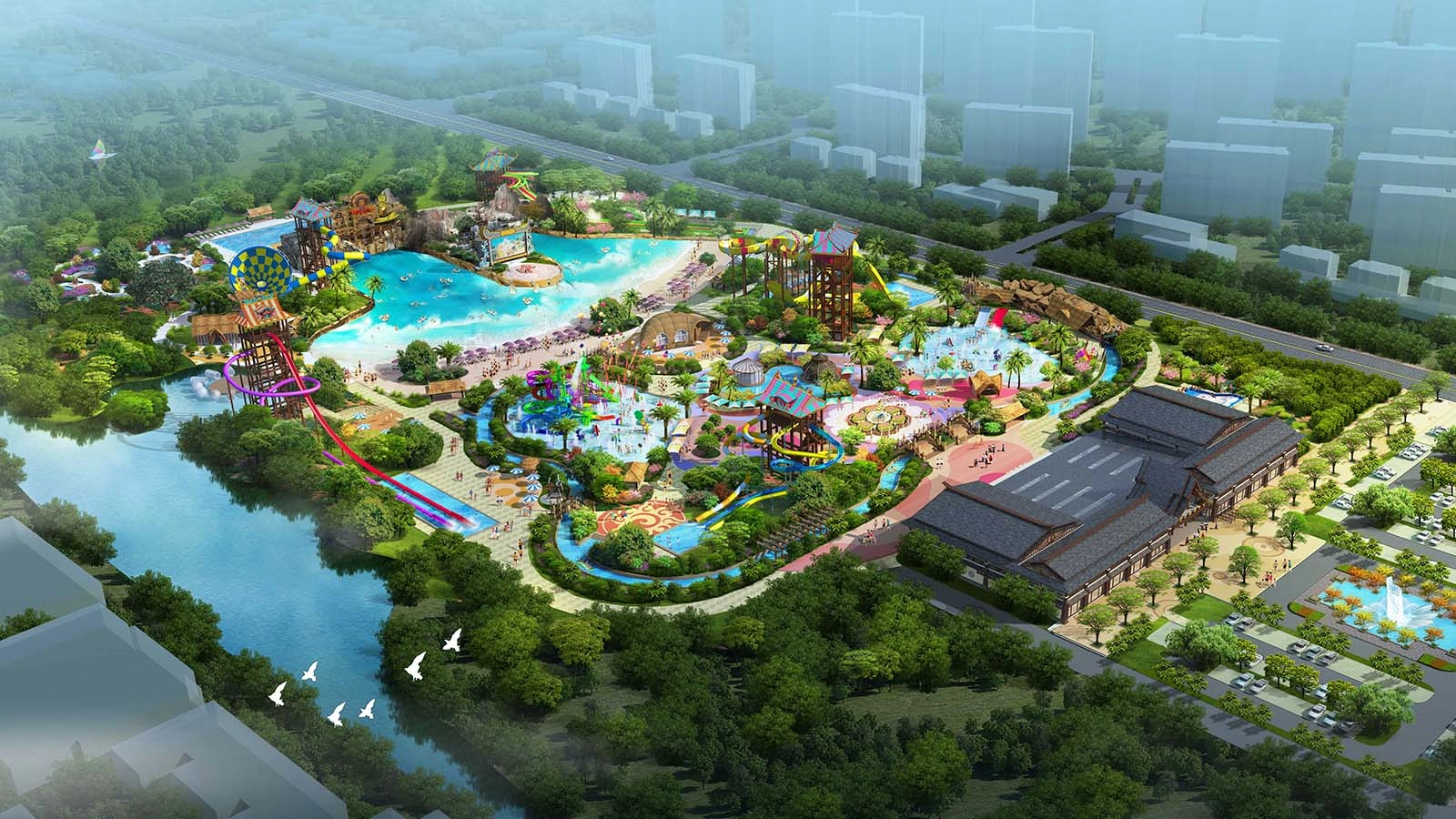
For projects requiring early-stage technical coordination, reviewing the manufacturer's water park planning and design capabilities can help clarify how equipment requirements are incorporated into the overall park layout.
3. Quality and Safety Management
Safety should be assessed at the system level rather than by looking only at the visible surface of a slide.
For example, ASTM F2376-24 covers the classification, design, manufacture, construction, and operation of water slide systems. Its scope includes the flume, water-circulation system, starting platform, structural supports, vehicles or aquatic accessories, and slide termination.
For aquatic play equipment, ASTM F2461-26 addresses manufacture, construction, operation, and maintenance and covers various public aquatic play components and composite structures.
Useful quality and safety questions include:
- • What standards apply to this equipment?
- • What technical documentation is provided?
- • What materials are used?
- • How are structural components inspected?
- • What testing is conducted before delivery?
- • What maintenance procedures are required?
These standards do not replace local regulations. Buyers should determine which standards and regulatory requirements apply in the destination market and ask manufacturers how their products address those requirements.
4. Customization and Engineering Capability
Customization is valuable when it solves a specific project problem.
A capable manufacturer should be able to adjust equipment according to factors such as:
- • Available footprint
- • Platform height
- • Slide configuration
- • Color and appearance
- • Theme requirements
- • Water flow requirements
- • Structural conditions
- • Attraction combinations
However, customization should not be treated as a goal by itself.
For example, changing a slide's appearance may have relatively limited engineering implications, while changing its dimensions, support structure, route, or hydraulic requirements may require more detailed technical coordination.
The buyer should therefore ask not only "Can this manufacturer customize the equipment?" but also "What can be customized, and what are the technical consequences?"
5. Installation and After-Sales Support
Equipment procurement does not end when the products leave the factory.
Installation can involve structural preparation, equipment positioning, lifting, connections, water systems, commissioning, and on-site testing.
A reliable partner should clearly define:
- • Installation responsibilities
- • Installation drawings
- • Technical guidance
- • Commissioning procedures
- • Operator training
- • Warranty terms
- • Spare parts
- • Maintenance requirements
- • After-sales response
WM International describes its service scope as covering planning and design, manufacturing, installation, and maintenance, providing an integrated approach for commercial water park projects.
Manufacturer vs. Trading Supplier: What Should Buyers Check?
A trading company is not automatically unsuitable. Some trading companies can provide useful sourcing and project coordination services.
The more important issue is whether the company can take responsibility for the technical and commercial requirements of the project.
Before selecting a supplier, ask:
- • Where is the equipment actually manufactured?
- • Who controls the product design?
- • Who is responsible for quality control?
- • Can the buyer communicate directly with the engineering team?
- • Who handles customization?
- • Who provides installation guidance?
- • Who supplies spare parts?
- • Who handles warranty claims?
- • Can the supplier provide previous project references?
For a simple replacement purchase, a trading supplier may be sufficient. For a new commercial water park, customized attraction system, or large-scale project, direct access to the manufacturer and technical team can provide greater control over the project.
How to Compare Water Park Equipment Manufacturers
Price should be included in the comparison, but it should not be the only variable.
| Evaluation Factor | Basic Supplier | Strong Project Partner |
|---|---|---|
| Product range | Limited or standard products | Multiple attraction categories |
| Manufacturing | Outsourced or unclear | Transparent production capability |
| Customization | Limited | Site and project-based customization |
| Engineering | Product-focused | Project-oriented technical support |
| Quality control | Basic inspection | Defined quality-control process |
| Installation | Separate contractor | Technical installation support |
| Maintenance | Limited | Long-term maintenance and spare parts |
| Project coordination | Buyer-managed | Supplier-supported |
| Documentation | Basic product information | Technical and project documentation |
| Long-term support | Mainly sales-focused | Lifecycle-oriented |
The purpose of this comparison is not to identify the "best" manufacturer universally. It is to determine which supplier is best suited to the specific project.
A manufacturer with extensive capabilities may not be necessary for a small standard equipment replacement. Conversely, a large destination park may face unnecessary coordination risks if it selects suppliers based only on individual product prices.
Questions to Ask Before Signing a Water Park Equipment Contract
Before placing an order, the procurement team should confirm the technical and commercial scope in writing.
Product and Technical Specifications
Confirm:
- • Equipment dimensions
- • Materials
- • Structural requirements
- • Water requirements
- • Platform requirements
- • Installation conditions
- • Applicable standards
- • Testing requirements
Production and Delivery
Confirm:
- • Production schedule
- • Factory inspection or acceptance procedures
- • Packaging
- • Shipping method
- • Delivery responsibilities
- • Site preparation requirements
Installation and Commissioning
Confirm:
- • Installation scope
- • On-site technical support
- • Commissioning
- • Testing
- • Training
- • Handover documentation
Warranty and Maintenance
Confirm:
- • Warranty period
- • Covered components
- • Spare parts availability
- • Maintenance instructions
- • Technical support
- • Response procedures
Clear documentation helps reduce disputes when project responsibilities are divided among the equipment manufacturer, contractor, architect, and owner.
Why Integrated Project Support Matters
For larger water park projects, several independent suppliers may be involved in design, equipment production, installation, and maintenance.
This can work, but every additional handoff creates another coordination point.
Planning → Design → Manufacturing → Delivery → Installation → Commissioning → Maintenance
An integrated partner can potentially simplify communication across these stages. This does not mean every project should use a single supplier for every scope. The appropriate model depends on project size, internal technical resources, local contractors, and procurement strategy.
The important point is to define responsibility clearly. For example, if a slide does not fit the finalized site layout, the project team should know whether the issue belongs to the equipment manufacturer, design consultant, civil contractor, or another party.
For buyers evaluating the broader project support available around water park equipment, reviewing the complete service scope can provide a clearer picture of responsibilities beyond the initial equipment quotation.
A Practical Manufacturer Selection Checklist
Before making a final decision, check whether:
- • The manufacturer has verifiable production capability.
- • The product range matches the project's attraction requirements.
- • Technical specifications are clearly documented.
- • Applicable safety and regulatory requirements have been identified.
- • Customization requirements have been technically reviewed.
- • Production and delivery schedules are realistic.
- • Installation responsibilities are clearly defined.
- • Warranty terms are documented.
- • Spare parts and maintenance support are available.
- • Previous project experience can be verified.
- • Communication with technical personnel is available.
- • The quotation has been evaluated based on total project value, not only unit price.
A manufacturer that performs well across these areas is generally more suitable for a long-term B2B project relationship than one that competes primarily on price.
FAQ
How do I choose a water park equipment manufacturer?
Start with the project requirements, then evaluate manufacturers according to production capability, technical expertise, safety and quality management, customization, delivery, installation, and after-sales support.
What should I ask a manufacturer before ordering water park equipment?
Ask for technical specifications, applicable standards, material information, production schedule, testing procedures, installation requirements, warranty terms, spare parts information, and maintenance documentation.
Is a manufacturer better than a trading company?
Not automatically. The appropriate choice depends on project complexity. For large or customized water park projects, direct manufacturing and engineering capabilities can provide greater technical control and clearer responsibility.
How important is customization?
Customization is important when standard equipment does not fit the site's dimensions, theme, visitor requirements, or attraction strategy. It should be based on a specific project need rather than customization for its own sake.
Should installation be included when purchasing water park equipment?
For commercial projects, installation responsibility should at least be clearly defined. Depending on the project, professional installation guidance, commissioning, and technical support may be important parts of the procurement scope.
Conclusion
Selecting a Water Park Equipment Manufacturer is ultimately a project decision rather than a simple product comparison.
The strongest evaluation considers the complete lifecycle of the equipment: planning, design, manufacturing, quality control, delivery, installation, operation, and maintenance.
For buyers comparing manufacturers in 2026, the practical approach is to prepare the project information first and then ask shortlisted suppliers to respond to the same technical and commercial requirements. This makes quotations easier to compare and helps reveal differences in manufacturing capability, engineering support, customization, and after-sales service.
WM International combines water park planning and design with equipment manufacturing, installation guidance, and maintenance support. Its stated 19 years of industry experience and 100,000 m² production base provide a relevant foundation for buyers evaluating an integrated project partner.
For a project at the planning or procurement stage, prepare the site information, target visitor profile, preliminary equipment requirements, budget range, and expected schedule. These details can then be used to request a project-specific equipment configuration and technical proposal rather than a generic product quotation.
Explore Water Park Equipment Services
Market Size and Forecast Analysis of Segmented Products in the Water Park Equipment Slide Industry
From Water Park Equipment Innovation to Carnival Experience, Water Parks Define a New Summer Trend
Water Projects: The Complete Guide to Developing Water Projects for Different Venues with WM INTERNATIONAL
Water Project Industry Trends: Emerging Opportunities in the Water Attraction Market
Custom Water Project Solutions for Different Venues: Water Parks, Resorts, Theme Parks and More
Children Combined Water Slide
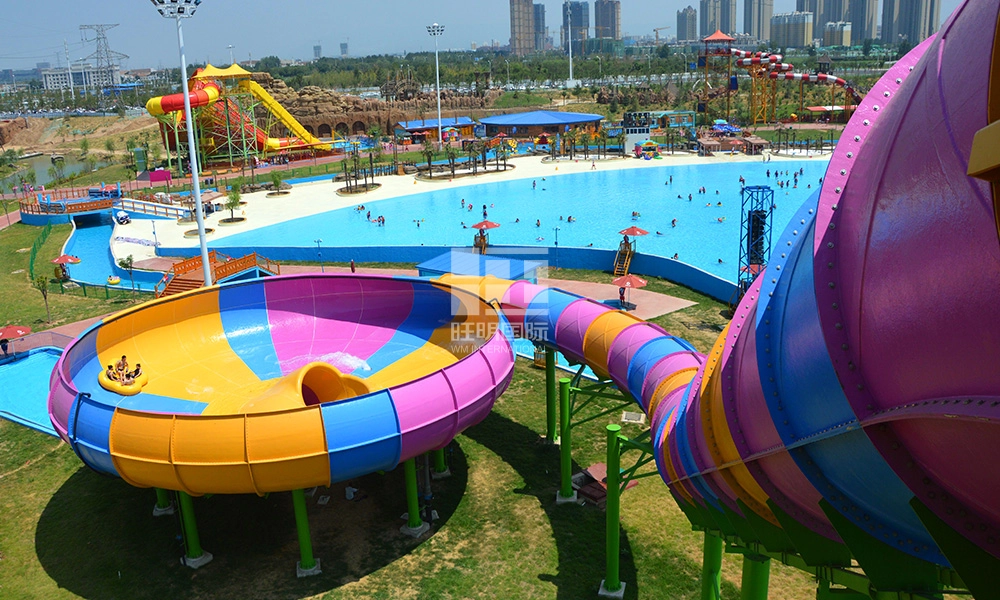
Huge Bowl Water Slide
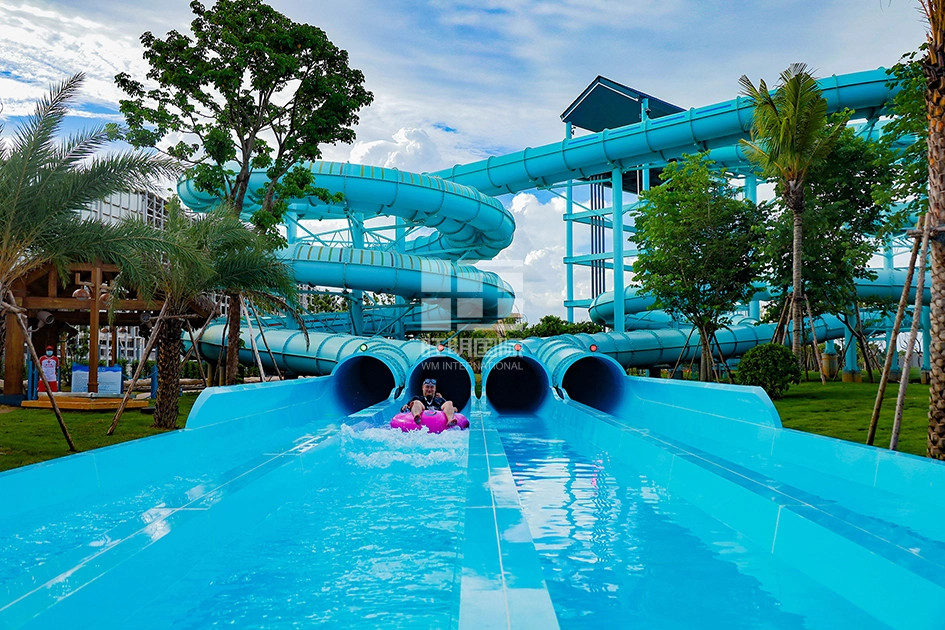
Time Tunnel Water Slide
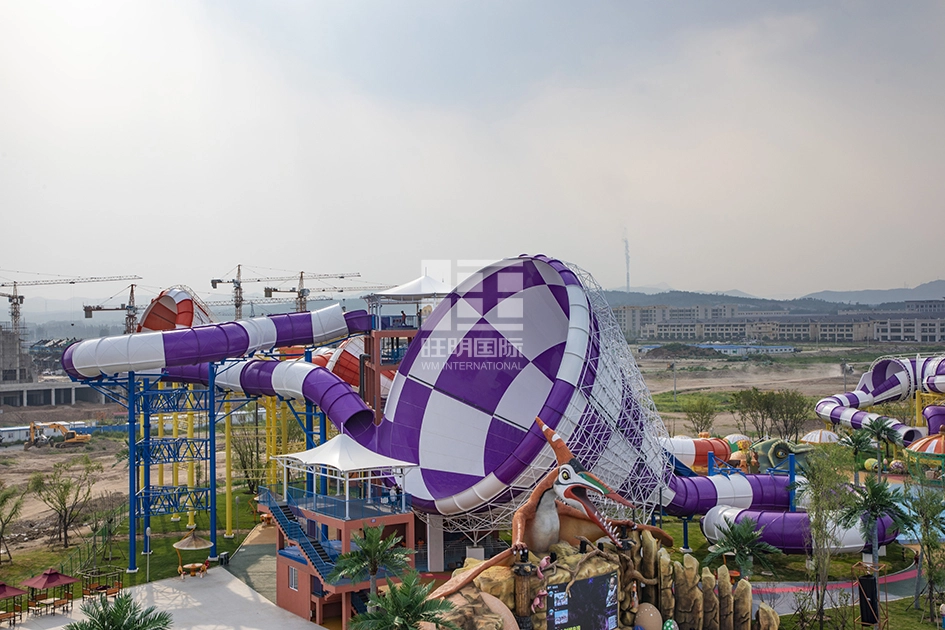
Big Tourbillion Water Slide
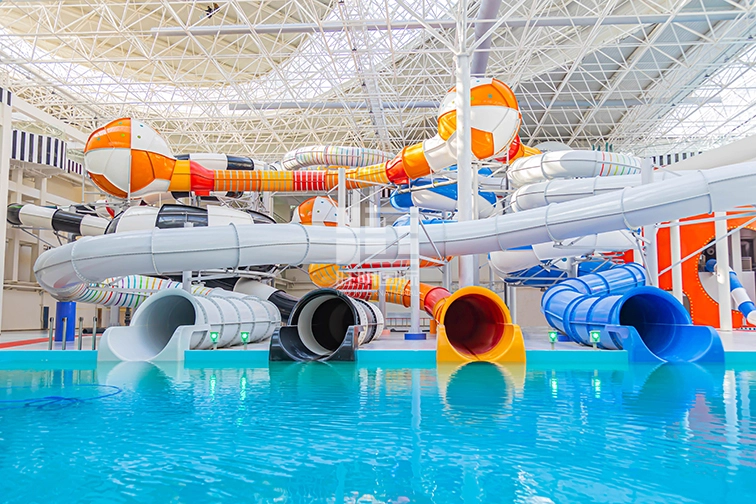
Turnover Slide
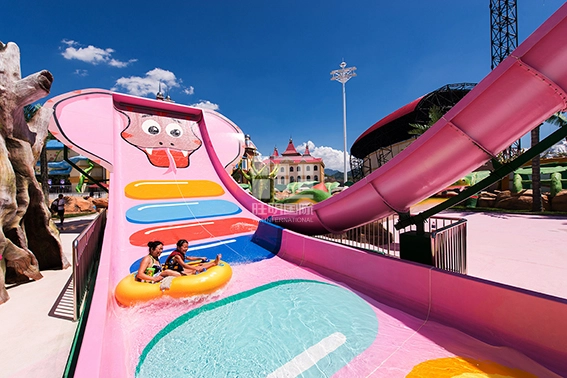
Small King Cobra Water Slide
Get in touch
Have to get customized water park solutions and product quotes.
We will provide you with professional consultation and support.

Relying on leading technology, innovative products and rich industry experience, we tailor personalized solutions for each water park project to ensure a safe and exciting entertainment experience for tourists.
 Scan QR Code
wmwaterslide
wmwaterpark