


Supplier Evaluation: Choosing a Slide Manufacturer
- How to Assess a Water Slide Supplier Before Contract Award
- Verify experience, scope, and project relevance
- Review engineering and technical documentation
- Check management systems without confusing certification and compliance
- Technical and Commercial Criteria for Comparing Manufacturers
- Evaluate materials, finishes, and durability
- Match ride performance with capacity and site conditions
- Compare total cost of ownership rather than quotation price
- Why Integrated Water Park Delivery Improves Project Control
- Connect attraction design with the wider facility
- Assess installation, commissioning, and training
- Consider compliance and public-health interfaces
- WM International as a Strategic Manufacturing Partner
- Full project support from concept to operation
- Large-scale production and tailored engineering
- How buyers should validate the partnership
- Frequently Asked Questions
Choosing a manufacturer for a Family Water Slide or another aquatic attraction is a strategic procurement decision that affects guest safety, construction schedules, operating costs, brand reputation, and return on investment. The lowest quotation rarely represents the lowest total cost. Buyers should assess how a supplier converts a concept into engineered drawings, certified materials, factory-controlled components, site-ready logistics, professional installation, and dependable after-sales support. A reliable partner can also coordinate the attraction with water park design, hydraulic systems, queue capacity, landscaping, theming, and the operating model of the entire facility.
How to Assess a Water Slide Supplier Before Contract Award
Verify experience, scope, and project relevance
Supplier experience should be evaluated by relevance rather than by years in business alone. A manufacturer that produces compact children’s play features may not have the engineering, fabrication, or installation capability required for a large multi-level tower, raft ride, racing complex, or high-capacity resort attraction. Buyers should request project references with comparable ride types, climate conditions, throughput requirements, structural spans, and regulatory expectations.
Reference checks should cover more than visual quality. Ask previous clients whether the manufacturer met design deadlines, issued accurate fabrication drawings, coordinated effectively with civil contractors, delivered components in sequence, resolved installation issues, and supplied replacement parts after opening. Photographs are useful, but operating references and site documentation provide stronger evidence of delivery capability.
Review engineering and technical documentation
A professional supplier should provide a defined technical package that may include general arrangement drawings, plan and elevation views, load information, support schedules, foundation interface data, water-flow requirements, pump specifications, rider restrictions, evacuation procedures, finish schedules, and maintenance recommendations. The exact documents depend on the attraction and local approval process, but vague drawings create avoidable risks during construction.
Buyers should also establish who is responsible for structural calculations, foundation design, electrical coordination, filtration interfaces, drainage, access platforms, and local authority submissions. A slide manufacturer may design the attraction while a local engineering firm certifies the supporting structure. The contract should clearly define these interfaces so that responsibility does not become ambiguous when construction begins.
Check management systems without confusing certification and compliance
An ISO 9001 quality management system can indicate that a company has structured processes for documentation, corrective actions, customer requirements, and continual improvement. However, certification alone does not prove that every product is suitable for a specific project. Buyers still need product specifications, inspection records, resin or material information, weld and fastener controls, dimensional checks, and evidence that nonconforming components are controlled.
Manufacturing claims should be matched with auditable evidence. A capable supplier can explain how design revisions are controlled, how molds are inspected, how fiberglass or composite laminates are produced, how steel supports are protected against corrosion, and how final assemblies are checked before shipment. This level of transparency helps project owners identify operational risk before it reaches the job site.
Technical and Commercial Criteria for Comparing Manufacturers
Evaluate materials, finishes, and durability
Aquatic attractions operate in a demanding environment involving ultraviolet exposure, water treatment chemicals, humidity, temperature variation, abrasion, and repeated rider impact. The specification should identify the proposed materials and finishes rather than relying on general descriptions such as High Quality quality or heavy duty. For fiberglass slide bodies, buyers should ask about laminate construction, gelcoat or surface protection, color stability, repair procedures, and inspection standards. For steel structures, the discussion should include section profiles, welding quality, corrosion protection, fasteners, access platforms, and drainage details.
Durability is also influenced by maintenance design. Smooth transitions, accessible inspection points, replaceable wear items, effective drainage, and clearly documented cleaning procedures can reduce downtime. A supplier that explains how components will be inspected and repaired is generally more valuable than one that focuses only on the initial appearance of the attraction.
Match ride performance with capacity and site conditions
Slide selection should begin with the operating model. A resort may prioritize family participation and repeat use, while a destination water park may require a signature tower that drives marketing demand. Important variables include available footprint, tower height, rider age and weight ranges, dispatch intervals, water consumption, pump head, queue length, unloading space, accessibility, emergency access, and local climate.
Hydraulic performance should be reviewed with the attraction layout. Insufficient flow can affect rider experience and increase stoppages, while excessive flow can increase splash-out, water consumption, and operating costs. The supplier should coordinate the slide profile with pump selection, catch pool dimensions, filtration capacity, surge control, and drainage. These interfaces are particularly important when a new attraction is added to an existing water park with limited mechanical capacity.
Compare total cost of ownership rather than quotation price
A procurement comparison should separate the base attraction from all associated costs. Include engineering, molds, supports, platforms, pumps, control systems, freight, customs, unloading, installation, commissioning, training, spare parts, testing, and future refurbishment. The warranty should specify duration, covered components, exclusions, response time, and the process for technical claims.
| Evaluation area | Weak procurement approach | Stronger procurement approach | Buyer evidence to request |
|---|---|---|---|
| Price | Compares only the quoted equipment total | Compares installed and lifecycle cost | Detailed commercial inclusions and exclusions |
| Safety | Accepts general safety language | Maps design controls to applicable local requirements and recognized guidance | Risk assessment, operating limits, drawings, and test records |
| Quality | Relies on photographs or verbal assurances | Reviews documented factory inspections and material controls | Inspection and test plan, certificates, and nonconformance process |
| Capacity | Selects a visually attractive ride without throughput analysis | Models dispatch rate, queue demand, water flow, and site utilities | Capacity assumptions, hydraulic data, and operating model |
| After-sales support | Assumes support will be available when needed | Contracts response times, training, spares, and maintenance scope | Warranty terms, spare-parts list, manuals, and service contacts |
For safety benchmarking, buyers can consult the U.S. Consumer Product Safety Commission amusement ride guidance and the ASTM F246-21 standard information for amusement rides and devices. These resources do not replace local laws, authority approvals, or project-specific engineering, but they help procurement teams ask more precise questions about design, operation, inspection, and risk management.
Why Integrated Water Park Delivery Improves Project Control
Connect attraction design with the wider facility
A slide does not operate as an isolated product. Its commercial performance depends on circulation, shade, changing facilities, food and beverage locations, lifeguard sightlines, queue comfort, drainage, filtration, and guest wayfinding. Integrated water park design can reveal conflicts between ride envelopes and buildings before construction, reducing expensive changes to foundations, utilities, or access routes.
Project owners should ask whether the manufacturer can coordinate with architects, civil engineers, mechanical contractors, electrical teams, landscape designers, and operations managers. This coordination is especially valuable for family-oriented aquatic zones, where shallow water play attractions, interactive features, small slides, and parent seating must work together safely and efficiently.
Assess installation, commissioning, and training
Installation quality affects alignment, ride speed, leakage, surface performance, structural stability, and future maintenance. The contract should identify the installation supervisor, required site readiness, lifting equipment, storage conditions, assembly tolerances, testing procedures, and handover documents. Commissioning should include water-flow checks, ride trials, leak inspections, hardware checks, signage verification, and operator training.
Training should address daily opening inspections, rider dispatch, height and weight restrictions, emergency stop procedures, evacuation, cleaning, surface repairs, corrosion monitoring, and incident reporting. Owners should receive operating manuals, maintenance schedules, spare-parts recommendations, warranty procedures, and a list of critical wear components. These documents support consistent operation after the original project team has left the site.
Consider compliance and public-health interfaces
Water quality and attraction safety are connected. Slide catch pools, splash zones, circulation systems, and play features must be coordinated with the facility’s treatment and turnover strategy. The World Health Organization guidelines for safe recreational water environments provide a useful international reference for public swimming pools and similar facilities, while local health authorities remain the controlling source for legal requirements.
Manufacturers should identify cleaning compatibility, recommended chemical exposure limits, inspection intervals, and surface repair methods. Owners should also confirm that the complete attraction package supports lifeguard visibility, safe access, slip-resistant working areas, emergency response, and clear user instructions.
WM International as a Strategic Manufacturing Partner
Full project support from concept to operation
WM International Waterslide provides 19 years of industry experience across water park planning, design, manufacturing, installation, and maintenance. Our team supports investors, developers, operators, distributors, and brand owners with comprehensive service solutions intended to turn an attraction concept into a coordinated operating asset.
Our scope can include water park design, water park construction coordination, custom Water Slides, Water Play Attractions, and Wave Making Equipment. This broader capability helps buyers evaluate the attraction within the context of guest flow, site characteristics, available utilities, target demographics, theming, and commercial positioning rather than treating the slide as a disconnected purchase.
Large-scale production and tailored engineering
WM International owns a 100,000-square-meter modern production base, described by the company as the largest in the industry. The facility is focused primarily on manufacturing water slides and related aquatic attractions. A large production environment can support organized fabrication, component staging, quality checks, packaging, and shipment planning, provided that the supplier maintains appropriate process controls and project documentation.
Each project is developed around customer needs and site characteristics. Customization may involve slide geometry, colors, theming, tower configuration, rider capacity, footprint, connection points, water requirements, and integration with existing facilities. Buyers should still request project-specific drawings and specifications so that the proposed solution can be reviewed by their consultants and local authorities.
How buyers should validate the partnership
Before contract signature, procurement teams should provide the supplier with a clear project brief covering site survey information, target opening date, attraction mix, intended users, budget structure, local codes, logistics conditions, and expected operating hours. WM International can then be evaluated against measurable deliverables such as concept options, technical drawings, production milestones, installation scope, commissioning records, training, warranty response, and maintenance support.
The strongest supplier relationship is transparent on both sides. Buyers should request a responsibility matrix, approved material schedule, inspection plan, delivery program, payment milestones, change-order process, and handover checklist. This approach gives the project owner a practical basis for comparing WM International with other manufacturers and for controlling risk throughout water park construction.
To review WM International’s water slide, water park design, Water Play Attractions, and Wave Making Equipment capabilities, visit wmwaterslide.com or contact trading@wmwaterslide.com.
Frequently Asked Questions
What should buyers check before selecting a water slide manufacturer?
Buyers should check relevant project experience, engineering documentation, material specifications, quality-control records, installation capability, warranty terms, spare-parts support, and the supplier’s ability to coordinate the attraction with site utilities and the wider water park.
How can project owners compare water slide quotations accurately?
Project owners should compare total installed and lifecycle cost, including engineering, supports, pumps, freight, customs, installation, commissioning, training, spare parts, maintenance, and warranty coverage instead of comparing only the base equipment price.
Why is hydraulic coordination important for an aquatic attraction?
Hydraulic coordination affects rider experience, water consumption, pump performance, splash control, catch-pool operation, filtration capacity, surge control, and drainage. The slide layout should therefore be reviewed together with the facility’s mechanical systems.
What documents should a manufacturer provide during procurement?
A manufacturer should provide appropriate project drawings, specifications, load and support information, water-flow requirements, risk and operating information, inspection records, maintenance guidance, warranty terms, and handover documentation. The exact package depends on the attraction and local approval requirements.
Does ISO 9001 certification prove that a slide is safe?
No. ISO 9001 indicates a structured quality-management system, but it does not by itself certify that a specific slide is safe or compliant. Buyers must also review product-specific engineering, materials, inspections, testing, local regulations, and applicable industry guidance.
What after-sales services should a slide supplier offer?
After-sales support should ideally include installation supervision, commissioning, operator training, maintenance manuals, inspection schedules, replacement-part recommendations, warranty procedures, technical response channels, and guidance for repairs and refurbishment.
Recommended
Wholesale indoor water park equipment manufacturer and supplier
Case Studies: Successful Parks Buying Commercial Slides
The Role of Water Park Slides in Tourism
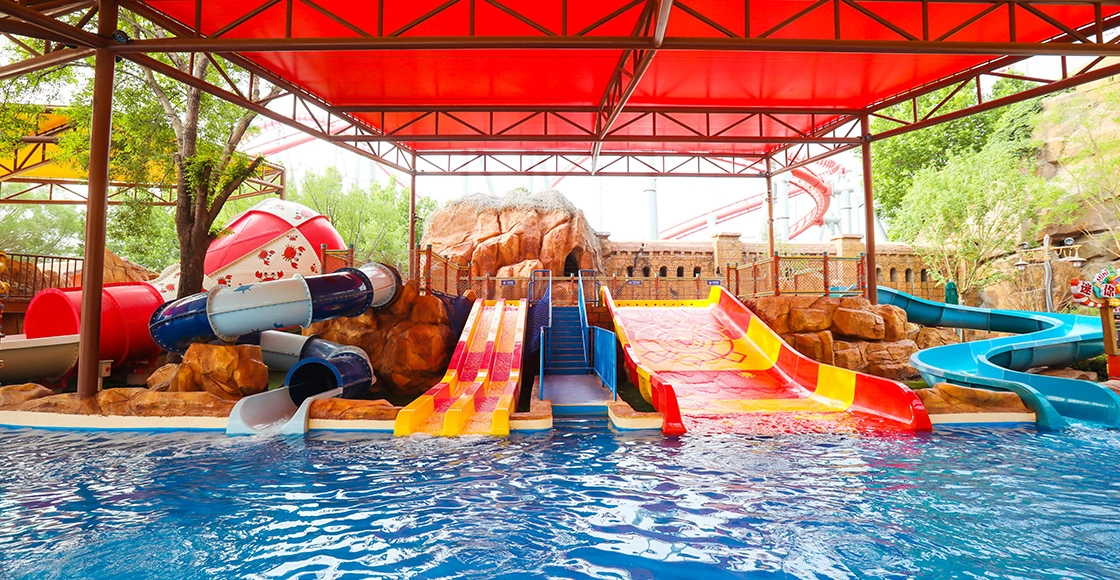
Child-Friendly Features to Look for in Water Slides
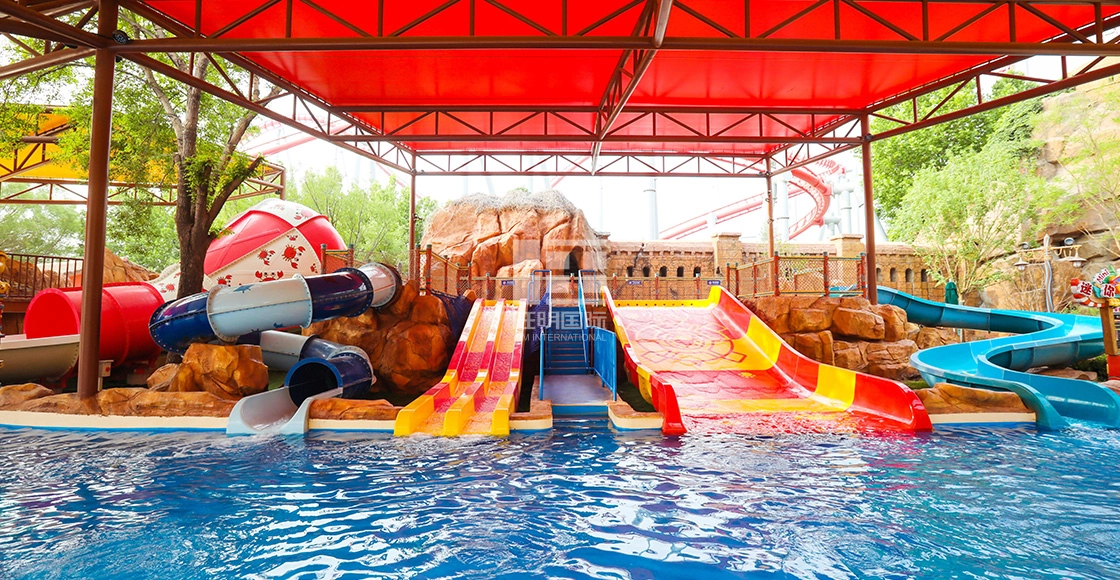
Children Combined Water Slide
Discover endless fun with the Children Combined Water Slide by WM INTERNATIONAL, expertly crafted for thrill-seeking kids. Perfect for summer splashes, this durable slide promises safety and joy. Looking to elevate your play area? Explore our Children's Combined Slide for sale now!
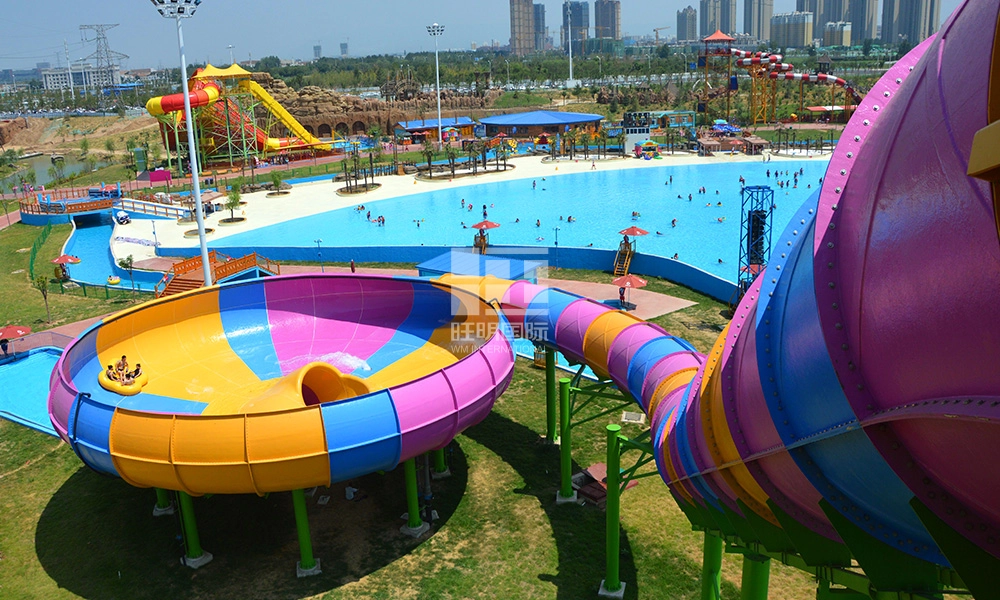
Huge Bowl Water Slide
The Huge Bowl Water Slide has achieved the “World's Best New Water Amusement Equipment” Award; it is the new favorite of the young people and the star project of the water park. The raft carries the tourists slowly entering the closed chute first; then it whirls in the bowl the moment the tourists can see the light. After a short period of time, the raft is suddenly suctioned into a huge black hole until it falls into the water. For a moment, the tourists realize the breathtaking journey has been safely brought to an end.
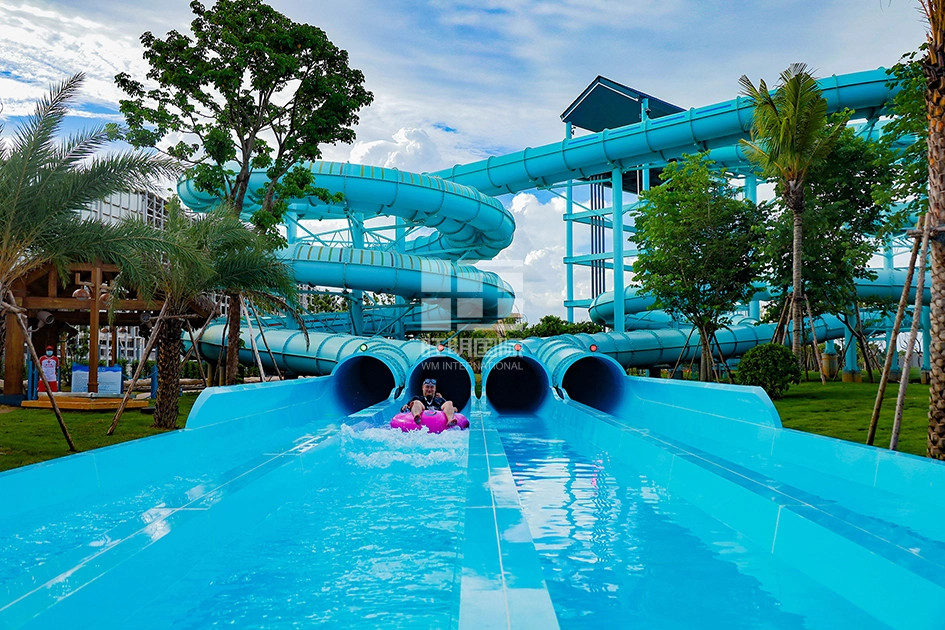
Time Tunnel Water Slide
The biggest feature of the time tunnel slide is that it uses double water slides and double tubes side by side in design and competes along the circular slide path. 8 people can play at the same time, with a large passenger capacity and high return rate, which is very suitable for team and family travel. And the slide is equipped with WangMing International's time tunnel technology, and the interior of the slide presents a beautiful aurora effect, with colorful lights, as if traveling through time and space.
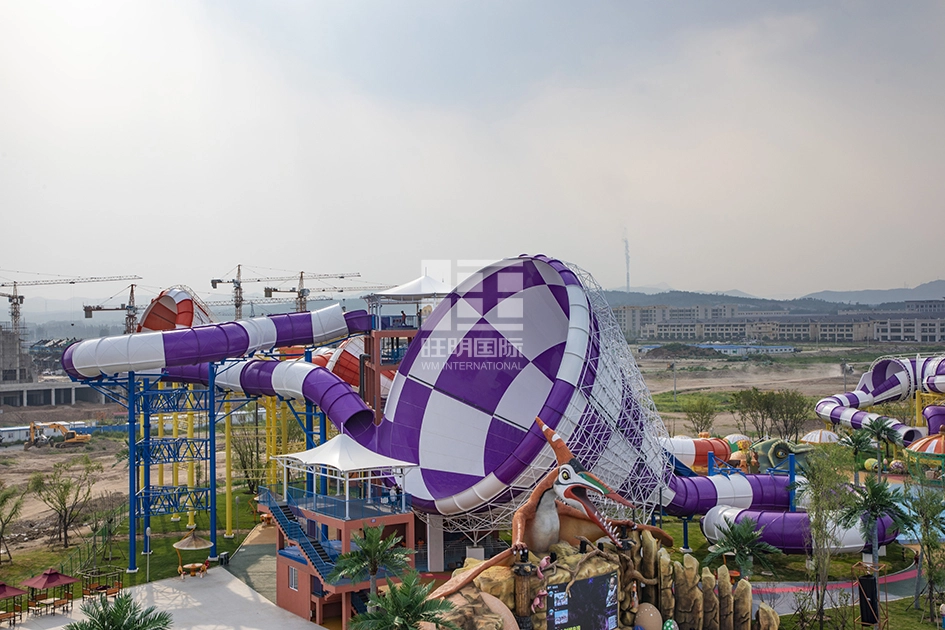
Big Tourbillion Water Slide
The Big Tourbillion water Slide won the "Gold Ticket Award - The Best New Project" of the international tourism industry. With unique modelling, strong irritation and humor, it is deeply loved by the young people; it has always been the popularity star of the water park. The raft carries the tourists as they enter the dark, closed chute slowly from the more than ten-meter-high platform; under the effect of gravity and water flow, it enters the state of rapid falling and then drops into the big Tourbillon; after a few times of whirling, it falls into the water pool. At this moment, the tourists are still in shock.
Get in touch
Have to get customized water park solutions and product quotes.
We will provide you with professional consultation and support.

Relying on leading technology, innovative products and rich industry experience, we tailor personalized solutions for each water park project to ensure a safe and exciting entertainment experience for tourists.
 Scan QR Code
wmwaterslide
wmwaterpark