

Case Studies: Successful Parks Buying Commercial Slides
Case studies and procurement analysis of successful waterpark slide acquisitions, presenting operator objectives, vendor selection protocols, lifecycle cost comparisons, installation and safety benchmarks, and measurable ROI. Includes data-driven comparisons of slide systems, supplier evaluation checklists aligned with ISO and industry association guidance, and a corporate overview of WM International’s turnkey capabilities for planning, design, manufacturing, installation, and after-sales support.
- Park Procurement Patterns: Slide Acquisition Case Analyses
- Project objectives and measurable KPIs
- Selection criteria: safety, throughput, and site footprint
- Vendor evaluation and due diligence
- Design & Manufacturing Lessons from Successful Installations
- Material choices and lifecycle costing
- Customization versus modular solutions
- Quality control and factory acceptance testing
- Operational Outcomes: Throughput, Maintenance, and Revenue Impact
- Throughput modelling and capacity planning
- Maintenance planning and predictable downtime
- Marketing uplift and financial return
- Partnering for Turnkey Delivery: Why an Experienced Manufacturer Matters
- End-to-end project services and production capacity
- Technical capabilities, standards compliance and quality assurance
- Case examples and customizable attraction portfolio
- Frequently Asked Questions
High-value procurement case studies focused on large-scale slide acquisitions demonstrate how park owners align guest experience goals, operational throughput, safety standards and lifecycle economics when sourcing commercial water attractions—ranging from multi-rider bowl systems to high-throughput flume complexes and family raft rides; this review synthesizes vendor selection frameworks, material and maintenance trade-offs, and real-world outcomes to help project owners evaluate options for purchasing high-performance waterpark slides and related attractions.
Park Procurement Patterns: Slide Acquisition Case Analyses
Project objectives and measurable KPIs
Successful installations begin with clearly defined objectives: targeted daily rider throughput, acceptable wait-time thresholds, guest demographic alignment (family, thrill-seeker, children), and revenue-per-guest uplift. Buyers should quantify KPIs such as riders per hour (RPH), dwell-time reduction, and ancillary spend increases tied directly to a new attraction. These metrics enable apples-to-apples comparisons across proposals and feed a robust return-on-investment model.
Selection criteria: safety, throughput, and site footprint
Key procurement filters include compliance with internationally recognized safety frameworks, hydraulic flow design that matches pump and filtration capacity, and physical footprint relative to site constraints. Operators prioritize designs that deliver consistent capacity while minimizing maintenance-induced downtime. Vendors providing third-party structural and hydraulic verification reports reduce procurement risk and accelerate permitting.
Vendor evaluation and due diligence
Due diligence should encompass factory audits, material certificates, weld and bonding test records, and ISO-style quality documentation. Project owners often request performance case histories, references from comparable projects, and on-site acceptance testing procedures. Industry associations such as the International Association of Amusement Parks and Attractions (IAAPA) and the World Waterpark Association provide guidance on best practices for supplier vetting and operational benchmarking.
Design & Manufacturing Lessons from Successful Installations
Material choices and lifecycle costing
Common materials for high-traffic attractions include gel-coated fiberglass reinforced polyester, stainless steel for exposed sections, and engineered thermoplastics for modular components. Lifecycle analysis should capture expected useful life (typically 15–25 years for resin-based flumes with proper maintenance), maintenance intervals, and the cost of repainting or re-gelcoating. Total cost of ownership (TCO) modeling often reveals that higher upfront investment in durable composites yields lower annualized cost than cheaper materials that require frequent refurbishment.
Customization versus modular solutions
Customization enables unique brand experiences and can deliver higher guest interest, while modular systems reduce lead time and simplify replacement logistics. Buyers should evaluate whether a bespoke ride will materially increase attendance or yield a marketing High Quality sufficient to offset extended manufacturing timelines and specialized installation requirements.
Quality control and factory acceptance testing
Robust QA/QC includes dimensional verification, non-destructive testing of critical connections, color and surface finish inspection, and hydraulic commissioning on a full-scale or sectioned test rig. Compliance with quality management frameworks such as ISO 9001 indicates repeatable production controls. Contract terms should require factory acceptance tests (FAT) and provision for site-based performance validation prior to final payment.
Operational Outcomes: Throughput, Maintenance, and Revenue Impact
Throughput modelling and capacity planning
Simulation of rider flow and queueing is essential to predict peak-period performance. Effective designs pair attraction cycle time (dispatch intervals) with staging and holding areas to maintain throughput without compromising safety. Operational models should also account for staffing needs, lifeguard visibility, and emergency egress paths to support continuous operations under peak demand.
Maintenance planning and predictable downtime
Preventive maintenance schedules reduce unplanned closures. Best-practice operators maintain spare-piece inventories for high-wear elements, document mean time between failures (MTBF), and implement routine surface inspections after seasonal shutdowns. Procurement contracts that include long-term maintenance agreements and training for in-house technicians shorten response time and preserve ride uptime.
Marketing uplift and financial return
New attractions can provide measurable revenue gains via direct ticketing, season pass sales, and secondary spending (F&B, retail). Case benchmarks collected by industry bodies show that signature family attractions often increase attendance and per-capita spend by double-digit percentages in the first 12 months post-opening; operators should include conservative sensitivity analyses in pro forma projections to account for marketing performance variance. For additional market context, consult general waterpark trend analysis on Wikipedia’s water park overview.
| Slide System Type | Typical Lifespan | Maintenance Frequency | Lead Time (typical) | Pros | Cons |
|---|---|---|---|---|---|
| Fiberglass Reinforced Polyester (FRP) | 15–25 years | Annual inspections; minor repairs every 3–7 years | 12–20 weeks | High finish quality; customizable; proven performance | Requires gelcoat maintenance; temperature sensitivity during install |
| Stainless Steel (open flume sections) | 20+ years | Periodic polishing; corrosion inspections | 10–18 weeks | Excellent durability; low surface degradation | Higher material cost; potential for higher noise |
| Engineered Thermoplastic Modules | 10–20 years | Surface checks; joint inspections | 8–14 weeks | Modular replacement; lighter shipping | May require more frequent resurfacing in high-UV climates |
| Inflatables & Temporary Systems | 3–8 years | Frequent inspections; patching as needed | 4–12 weeks | Low initial cost; rapid deployment | Higher operational risk; limited lifespan |
Partnering for Turnkey Delivery: Why an Experienced Manufacturer Matters
End-to-end project services and production capacity
Buyers gain efficiency when a single supplier can deliver planning, engineering, production, installation and maintenance. We provide integrated services across concept development, civil interface coordination, ride manufacturing, and on-site commissioning, reducing coordination overhead and schedule slippage. Our 100000 m² modern production base enables parallel fabrication streams to shorten lead times for complex programs.
Technical capabilities, standards compliance and quality assurance
Our engineering team follows documented quality control protocols to ensure conformity to structural and hydraulic specifications. A reliable supplier should provide material certificates, non-destructive test reports, and a clear warranty structure. WM International’s manufacturing processes and factory acceptance tests are designed to meet industry expectations for durability and ride performance.
Case examples and customizable attraction portfolio
Each completed project demonstrates how tailored solutions respond to unique site constraints and client goals. WM International specializes in a broad range of products—including water park master planning, Water park design, Water park construction, Water Slides, Water Play Attractions, and Wave Making Equipment—delivering bespoke or modular attractions that fit budgetary and operational parameters. For turnkey project support and references, please review project profiles on our website: https://www.wmwaterslide.com and contact trading@wmwaterslide.com for detailed proposals.
To align installation with regulatory expectations and operator responsibilities, buyers should reference global standards and association guidance during the procurement process; industry resources include IAAPA, the World Waterpark Association, and ISO 9001 documentation for quality systems.
Procurement checklists that consistently reduce project risk include: defined acceptance testing procedures, spare parts lists, training deliverables for operator staff, documented maintenance schedules, and a clear escalation path for warranty support. Projects that incorporate these elements typically achieve faster time-to-revenue and higher long-term uptime.
WM International leverages 19 years of industry experience to provide a full range of water park planning and design services. From water park planning and design to manufacturing, installation and maintenance, we provide comprehensive service solutions to transform your park vision into vibrant realities. Whether it’s the design and development of new parks or maintaining existing ones, our decades of combined experience as park operators, designers, suppliers, and guests can give you the edge that you need to create world-class amusement, theme, and water park attractions. WM International owns a 100000 m² modern production base, which is the largest in the industry. We mainly produce various water slides for water parks. Each project is a reflection of our professional capabilities, showing how we can provide tailor-made solutions based on different customer needs and site characteristics. Our core offerings include Water park design, Water park construction, Water Slides, Water Play Attractions, and Wave Making Equipment.
Procurement teams considering new attractions should request full technical submittals, production timelines, a maintenance and spare parts schedule, and a measurable KPI plan tied to revenue forecasts. These contract elements create clear accountability and deliverables that drive successful park openings and sustained operational performance.
Contact us for turnkey proposals, detailed product specifications, and factory visit arrangements: trading@wmwaterslide.com or https://www.wmwaterslide.com.
Frequently Asked Questions
What is the typical lead time for manufacturing and installing large waterpark slides?
Typical lead times vary by system complexity: engineered thermoplastic modules often ship in 8–14 weeks, fiberglass reinforced polyester systems commonly require 12–20 weeks, and stainless steel sections usually need 10–18 weeks; planning should also include permitting and site civil works which can extend timelines.
Which materials offer the best lifecycle value for high-traffic attractions?
Durable composites such as gel-coated fiberglass reinforced polyester generally provide 15–25 years of service life with scheduled maintenance and resurfacing; stainless steel offers long-term durability but at higher material cost, while modular thermoplastics enable easier replacement but may require more frequent surface maintenance in high-UV or high-traffic contexts.
What documentation should buyers require from a slide manufacturer during procurement?
Buyers should request material certificates, factory inspection and test reports, dimensional drawings, hydraulic and structural calculations, factory acceptance test (FAT) protocols, detailed maintenance schedules, warranty terms, and evidence of a documented quality management system such as ISO 9001.
How can a new attraction’s operational impact be measured before purchase?
Operators should model riders per hour (RPH), expected dispatch intervals, queueing effects, staffing implications, and projected revenue uplift from increased attendance or per-capita spend; scenario-based sensitivity analyses help estimate downside risk and payback period.
What post-delivery services reduce operational risk and downtime?
Long-term maintenance agreements, commissioning support, on-site training for technical staff, spare-parts kits for high-wear components, and clear warranty escalation procedures all reduce unplanned downtime and accelerate defect resolution.
Recommended
Best professional waterpark manufacturers and supplier brands
Wholesale Tsunami Water Pool manufacturer and supplier
Water slides for sale: safety training for staff
Low-Maintenance Water Slides for Sale: Materials and Care
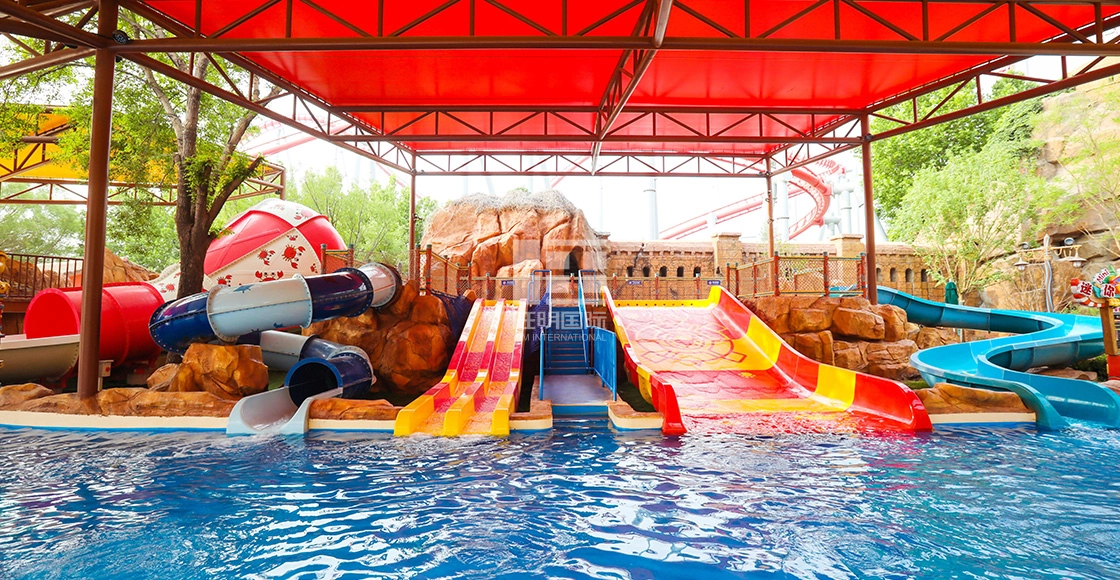
Children Combined Water Slide
Discover endless fun with the Children Combined Water Slide by WM INTERNATIONAL, expertly crafted for thrill-seeking kids. Perfect for summer splashes, this durable slide promises safety and joy. Looking to elevate your play area? Explore our Children's Combined Slide for sale now!
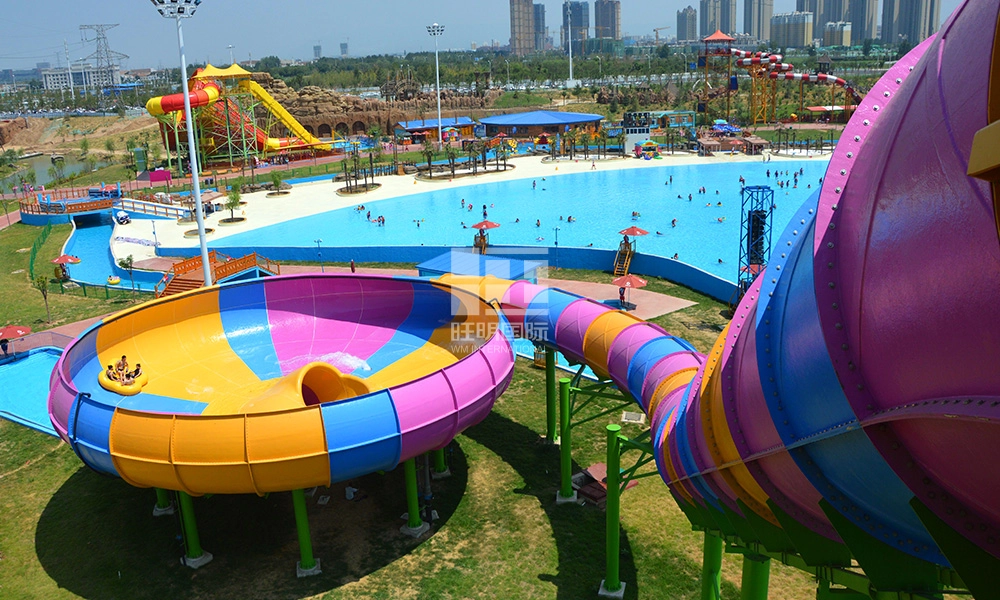
Huge Bowl Water Slide
The Huge Bowl Water Slide has achieved the “World's Best New Water Amusement Equipment” Award; it is the new favorite of the young people and the star project of the water park. The raft carries the tourists slowly entering the closed chute first; then it whirls in the bowl the moment the tourists can see the light. After a short period of time, the raft is suddenly suctioned into a huge black hole until it falls into the water. For a moment, the tourists realize the breathtaking journey has been safely brought to an end.
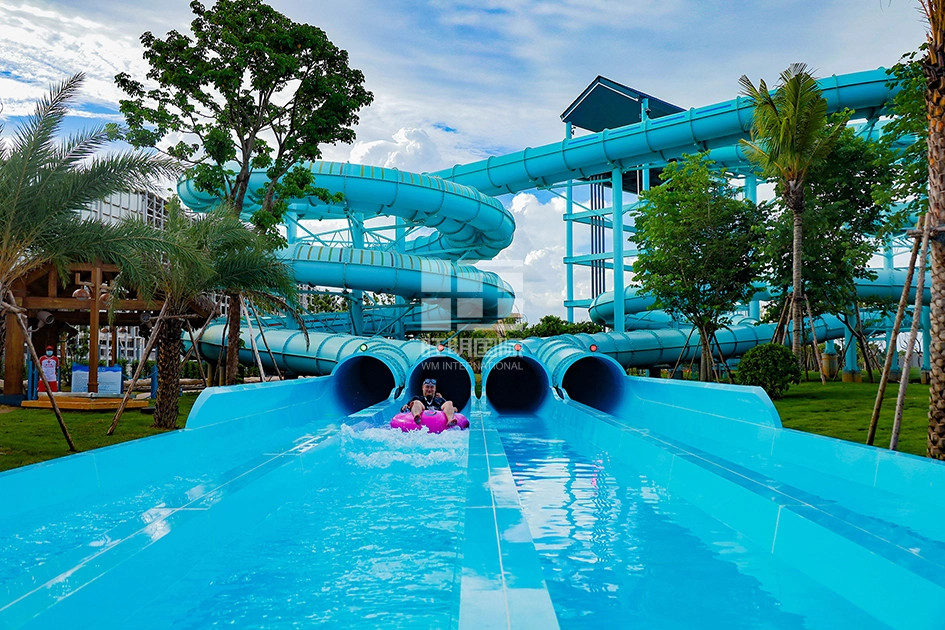
Time Tunnel Water Slide
The biggest feature of the time tunnel slide is that it uses double water slides and double tubes side by side in design and competes along the circular slide path. 8 people can play at the same time, with a large passenger capacity and high return rate, which is very suitable for team and family travel. And the slide is equipped with WangMing International's time tunnel technology, and the interior of the slide presents a beautiful aurora effect, with colorful lights, as if traveling through time and space.
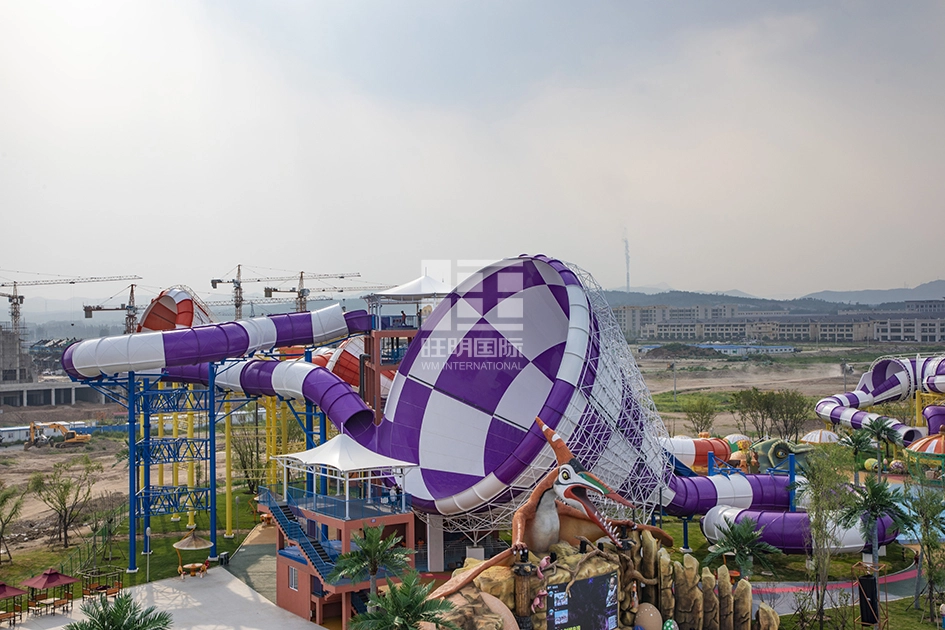
Big Tourbillion Water Slide
The Big Tourbillion water Slide won the "Gold Ticket Award - The Best New Project" of the international tourism industry. With unique modelling, strong irritation and humor, it is deeply loved by the young people; it has always been the popularity star of the water park. The raft carries the tourists as they enter the dark, closed chute slowly from the more than ten-meter-high platform; under the effect of gravity and water flow, it enters the state of rapid falling and then drops into the big Tourbillon; after a few times of whirling, it falls into the water pool. At this moment, the tourists are still in shock.
Get in touch
Have to get customized water park solutions and product quotes.
We will provide you with professional consultation and support.

Relying on leading technology, innovative products and rich industry experience, we tailor personalized solutions for each water park project to ensure a safe and exciting entertainment experience for tourists.
 Scan QR Code
wmwaterslide
wmwaterpark