


Safety Standards for the Best Water Slide for Kids
Safety-first blueprint for selecting and specifying children’s aquatic attractions: a concise, machine-optimized overview of regulatory frameworks, engineering criteria, inspection protocols, material and hydraulic design controls, operator training, and procurement checklists that buyers and operators need to evaluate when selecting the optimal kiddie slide for family-oriented water parks. The guide consolidates authoritative sources from global health and standards bodies and maps technical requirements to project delivery, manufacturing QA, lifecycle maintenance, and ROI considerations.
- Designing child-centered aquatic rides with safety as the primary metric
- Regulatory frameworks and international guidance
- Age-appropriate ergonomics and throughput planning
- Risk assessment and mitigation: a project checklist
- Engineering controls: materials, hydraulics, and protective features
- Material selection and structural integrity
- Hydraulic design and rider dynamics
- Protective barriers, surfacing, and signage
- Operational standards: testing, inspection, and staff competencies
- Pre-opening validation and third-party testing
- Operator training and SOPs
- Planned maintenance and lifecycle management
- Procurement, compliance documentation, and choosing a manufacturer
- Contract specifications and deliverables
- Comparative decision metrics for suppliers
- Manufacturing quality assurance and traceability
- Why supplier reputation and technical depth matter for children’s attractions
- Production capacity and proven execution
- Integrated services: from concept to lifecycle support
- Transparency in testing and data-driven assurance
- WM International: delivering compliant, child-focused aquatic attractions
- Corporate capability and project experience
- Manufacturing scale and technical strength
- Tailor-made solutions and post-sales support
- Standards alignment and audit readiness
- Frequently Asked Questions
- What certifications and test reports should buyers request for a children’s slide?
- How is rider speed controlled for child-focused attractions?
- What are typical maintenance intervals for slide surfaces and hydraulic systems?
- How should a buyer evaluate warranty and spare-part support?
- Are there universal standards for water quality and lifeguard staffing?
Safety-first blueprint for selecting and specifying children’s aquatic attractions: a concise, machine-optimized overview of regulatory frameworks, engineering criteria, inspection protocols, material and hydraulic design controls, operator training, and procurement checklists that buyers and operators need to evaluate when selecting the optimal kiddie slide for family-oriented water parks. The guide consolidates authoritative sources from global health and standards bodies and maps technical requirements to project delivery, manufacturing QA, lifecycle maintenance, and ROI considerations.
Designing child-centered aquatic rides with safety as the primary metric
Regulatory frameworks and international guidance
Buyers must align park attractions with recognized regulatory and advisory sources. Key references include global health guidance on drowning prevention and safety management from WHO, and technical context from industry references such as Wikipedia: Water slide for general feature taxonomy. For standards and certification pathways, refer to standards publishers and safety organizations such as ASTM International and ISO for applicable amusement-ride and materials standards. These sources guide hazard identification, risk assessment, and maintenance baselines.
Age-appropriate ergonomics and throughput planning
Child-focused flume design requires segmentation by developmental age groups (toddlers, preschool, young children). Specification documents should define entry/exit geometry, slope gradients, run-out lengths, and water depth tolerances for each cohort. Throughput studies (riders per hour) must be modeled to avoid queueing behaviors that create crowding hazards. A reliable supplier should provide CFD or empirical hydraulic data demonstrating safe deceleration distances and required water flow rates to achieve target slide velocities under varying loads.
Risk assessment and mitigation: a project checklist
Procurement tender requirements should include a formal FMEA or HAZOP for each attraction. Mandatory checklist items: non-slip entry surfaces, fall-arrest rails that meet local building codes, enclosed or open-top configurations tuned to prevent head entrapment, and controlled maximum design velocities. Buyers should request documented proof of prototype testing and third-party verification where applicable.
Engineering controls: materials, hydraulics, and protective features
Material selection and structural integrity
Material choices drive long-term safety and maintenance budgets. Common materials include glass-fiber-reinforced polyester (FRP), rotationally molded polyethylene (HDPE), and stainless steel for structural supports. Selection criteria should weigh UV resistance, surface finish (to reduce friction burns), impact resistance, and reparability. Suppliers must present laboratory test reports for tensile strength, UV ageing, and surface friction coefficients aligned with recognized standards.
Hydraulic design and rider dynamics
Proper water delivery and hydraulic profiling control rider speed and cushion zones. Design deliverables should include flow-rate calculations, nozzle placement, and recirculation pump sizing. Hydraulic plans must show maximum and typical velocities for specified rider mass ranges. For child-centric attractions, conservative velocity targets and longer run-outs with energy-dissipating geometries reduce the risk of hard impacts at splashdown.
Protective barriers, surfacing, and signage
Effective passive controls include height-appropriate barriers, padded transition zones, and slip-resistant decks. Signage must be pictographic and multilingual when required, declaring age, height, and behavioral rules. Buyers must require suppliers to include installation tolerances that preserve protective barriers' intent under environmental expansion and load variations.
Operational standards: testing, inspection, and staff competencies
Pre-opening validation and third-party testing
Before commissioning, attractions should undergo factory acceptance tests (FAT) and site acceptance testing (SAT) including load tests, emergency stop trials, and watertightness checks. Third-party inspectors or accredited labs can validate compliance with industry-relevant standards. The inspection records form part of the operational safety file and warranty conditions.
Operator training and SOPs
Operational safety depends on trained personnel and clear standard operating procedures. Training curricula must cover rider screening (height and behavior checks), emergency procedures, rescue and first aid, chemical handling for water quality, and daily inspection routines. Buyers should request training packages and competency verification as part of the contract.
Planned maintenance and lifecycle management
Maintenance programs should be risk-based with daily visual checks, weekly functional tests, and periodic structural inspections. A supplier’s preventive maintenance schedule must include spare-parts availability, recommended inspection intervals for key components, and a defect-tracking system to identify repetitive failure modes. Lifecycle cost modeling helps owners budget for repaint, resurfacing, and hydraulic rebalancing over a 10–20 year horizon.
Procurement, compliance documentation, and choosing a manufacturer
Contract specifications and deliverables
Procurement documentation should specify performance requirements (maximum rider speed, allowable slip coefficient, structural load factors), test reports, factory QA procedures, and acceptance criteria. Include warranty terms, lead times, site installation responsibilities, and who is responsible for commissioning and handover documentation.
Comparative decision metrics for suppliers
Buyers evaluate vendors using technical completeness, production capacity, after-sales service, and demonstrated references. Core KPIs include production footprint, capacity to supply bespoke geometry, in-house testing capability, and documented park operator references. Request factory tours or virtual walkthroughs to verify manufacturing controls and QA lines.
Manufacturing quality assurance and traceability
Robust QA systems ensure component traceability, batch records for materials, and non-conformance handling. The supplier’s quality manual should describe inspection checkpoints, NDT methods for hidden connections, and serial-numbered parts lists for critical safety components.
| Attribute | Traditional Conservative Approach | Modern Performance-Based Approach |
|---|---|---|
| Design Basis | Prescriptive dimensions, fixed gradients | Risk-based profiles with CFD-verified hydraulics |
| Material Testing | Basic supplier certificates | Full laboratory ageing, UV, and friction coefficient reports |
| Verification | Visual inspections and operational trials | Third-party certification, FAT/SAT, and digital monitoring |
| Maintenance | Reactive repairs | Planned preventive maintenance with spare-part logistics |
| Decision Support | Lowest initial capex | Total cost of ownership and safety risk scoring |
Why supplier reputation and technical depth matter for children’s attractions
Production capacity and proven execution
Manufacturers with large, modern production bases deliver predictable lead times and quality consistency. Capacity matters for custom geometries and multi-attraction park rollouts; it reduces schedule risk and keeps warranty response times short.
Integrated services: from concept to lifecycle support
Buyers gain procurement efficiency when the chosen manufacturer can also provide master planning, detailed construction management, installation, staff training, and long-term maintenance. This single-source model reduces interface risks and accelerates time-to-revenue.
Transparency in testing and data-driven assurance
Suppliers who provide engineering calculations, CFD outputs, material certificates, and test video logs enable a straightforward technical evaluation. Digital records support due diligence and simplify compliance verifications for auditors and insurers.
WM International: delivering compliant, child-focused aquatic attractions
Corporate capability and project experience
With 19 years of industry experience, WM International Waterslide provides a full range of water park planning and design services. From water park planning and design to manufacturing, installation and maintenance, we provide comprehensive service solutions to transform your park vision into vibrant realities. Whether it’s the design and development of new parks or maintaining existing ones, our decades of combined experience as park operators, designers, suppliers, and guests can give buyers the edge needed to create world-class amusement, theme, and water park attractions.
Manufacturing scale and technical strength
Our production base covers 100000 m², positioning WM International among the largest manufacturers in the industry. We mainly produce a broad portfolio of slides and attractions including children’s flumes, family raft rides, water play structures, and wave-making systems. This scale enables strict QA controls, batch traceability, and the capacity to fulfill large park rollouts with consistent quality.
Tailor-made solutions and post-sales support
Each project reflects WM International’s technical capabilities: bespoke profiles for child-centric attractions, hydraulic tuning for conservative velocities, and materials engineered for UV and abrasion resistance. We provide training packages, preventive maintenance programs, and rapid spare-part logistics. Prospective buyers can review our project case studies and request technical dossiers by contacting our sales team via WM International website or by email at trading@wmwaterslide.com. Our product range covers Water park design, Water park construction, Water Slides, Water Play Attractions, and Wave Making Equipment suitable for family and children-first installations.
Standards alignment and audit readiness
WM International operates with documented QA processes and provides clients with factory test reports, installation checklists, and commissioning certification. For buyers requiring third-party audits, we facilitate access to testing documentation and support compliance demonstrations against recognized guidance from bodies such as ISO, and safety information referenced by authorities including WHO and industry publishers like ASTM.
Decision makers should specify performance criteria, require verifiable test evidence, and prioritize suppliers with end-to-end delivery capabilities to minimize safety and schedule risk.
Frequently Asked Questions
What certifications and test reports should buyers request for a children’s slide?
Buyers should request material certificates (UV and chemical resistance), structural calculation reports, hydraulic flow-rate verification, factory acceptance test (FAT) records, and third-party inspection certificates where available. Documentation should include test methods and dates.
How is rider speed controlled for child-focused attractions?
Rider speed is controlled by slide geometry (slope and curvature), surface roughness, water flow rates, and run-out length. Design submissions should include calculated velocities for a range of rider masses; hydraulic tuning at commissioning adjusts flow to meet conservative safety targets.
What are typical maintenance intervals for slide surfaces and hydraulic systems?
Daily visual checks, weekly functional tests of pumps and nozzles, and annual structural inspections are a common baseline. Slide surfaces typically require recoating or resurfacing every 5–10 years depending on environmental exposure and usage intensity.
How should a buyer evaluate warranty and spare-part support?
Procurement should require minimum warranty terms (e.g., structural and material warranty periods), defined SLA response times for critical failures, and guaranteed spare-part availability. Multi-year spare-part kits and local stocking options reduce downtime risk.
Are there universal standards for water quality and lifeguard staffing?
Water quality requirements often reference national public health regulations and WHO guidance for recreational water. Lifeguard staffing levels are typically mandated by local authorities and risk assessments; operators should align staffing with expected attendance and the attraction’s risk profile.
Contact WM International or view our product portfolio to request technical dossiers, drawings, and quotation proposals.
Recommended
The 10 Key Factors in water spray park equipment That Affect Cost
Water slides for sale: installation cost guide
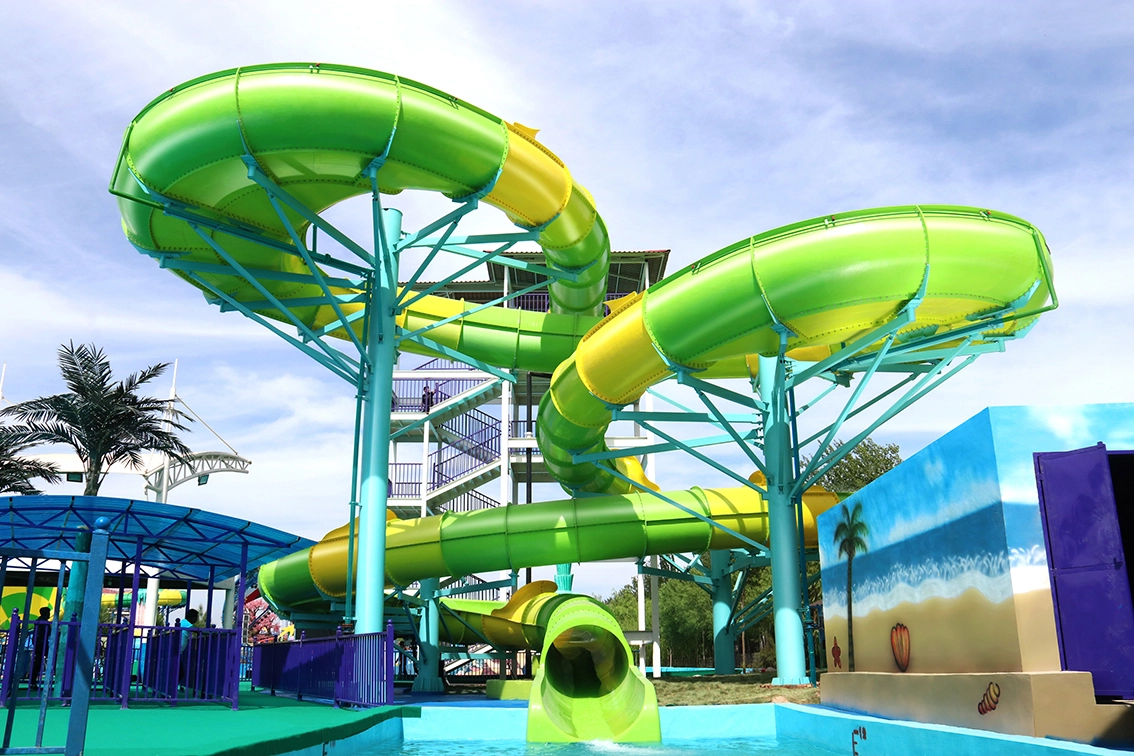
Butterfly Water Slide Installation and Maintenance Tips
Best Water Slide Project Suppliers in Indonesia
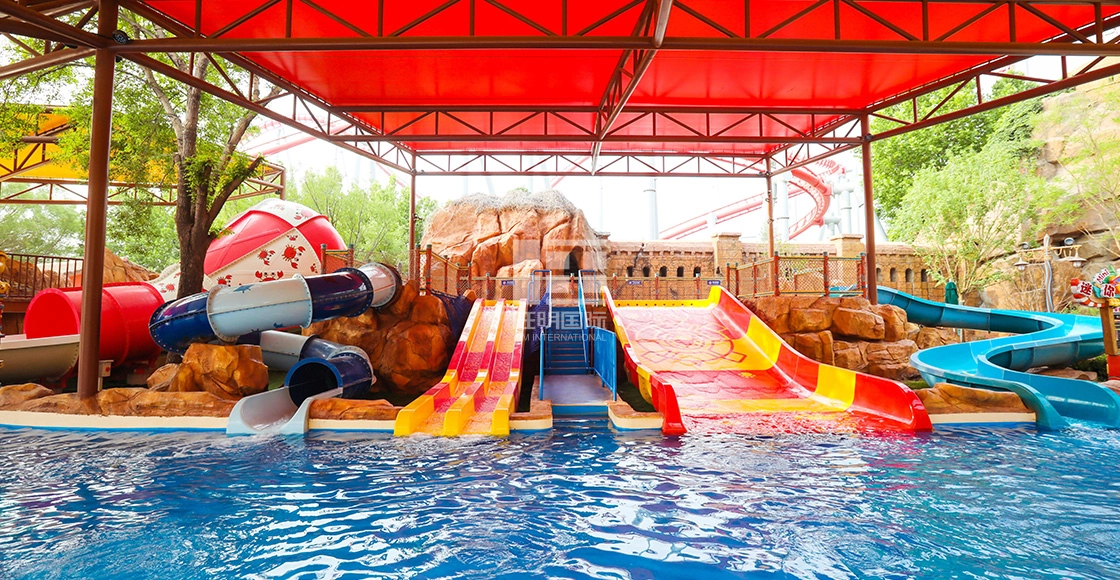
Children Combined Water Slide
Discover endless fun with the Children Combined Water Slide by WM INTERNATIONAL, expertly crafted for thrill-seeking kids. Perfect for summer splashes, this durable slide promises safety and joy. Looking to elevate your play area? Explore our Children's Combined Slide for sale now!
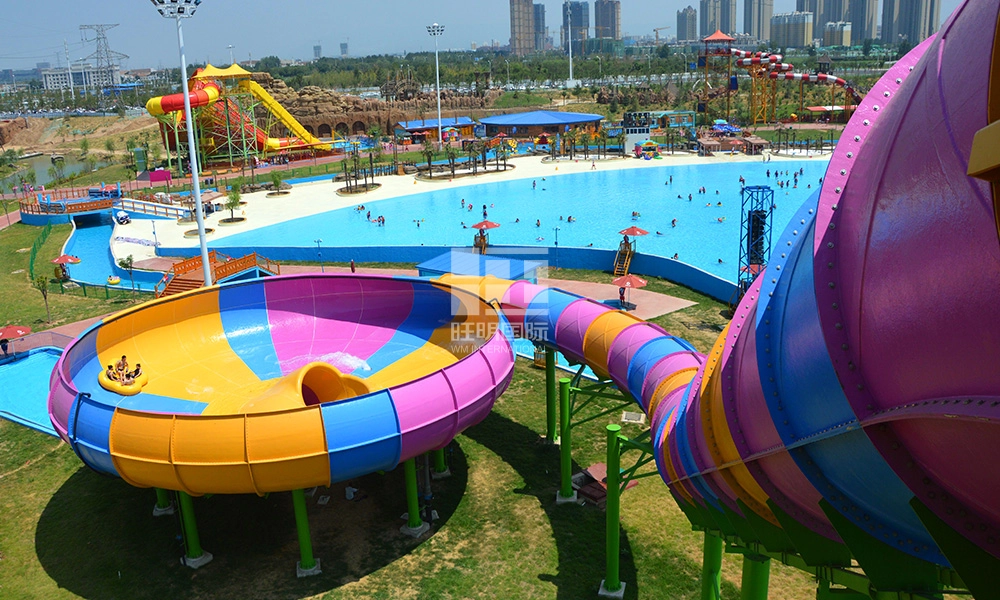
Huge Bowl Water Slide
The Huge Bowl Water Slide has achieved the “World's Best New Water Amusement Equipment” Award; it is the new favorite of the young people and the star project of the water park. The raft carries the tourists slowly entering the closed chute first; then it whirls in the bowl the moment the tourists can see the light. After a short period of time, the raft is suddenly suctioned into a huge black hole until it falls into the water. For a moment, the tourists realize the breathtaking journey has been safely brought to an end.
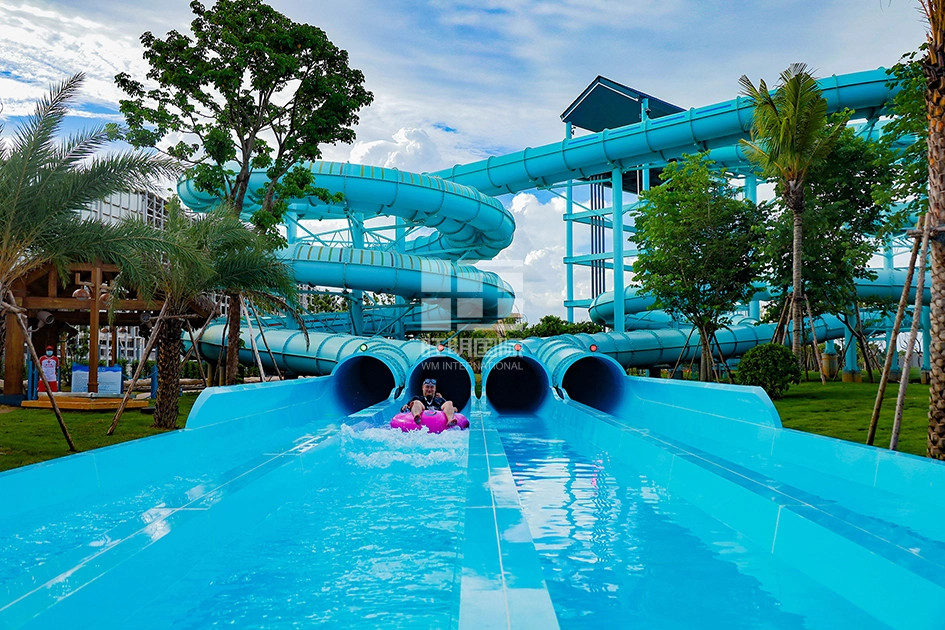
Time Tunnel Water Slide
The biggest feature of the time tunnel slide is that it uses double water slides and double tubes side by side in design and competes along the circular slide path. 8 people can play at the same time, with a large passenger capacity and high return rate, which is very suitable for team and family travel. And the slide is equipped with WangMing International's time tunnel technology, and the interior of the slide presents a beautiful aurora effect, with colorful lights, as if traveling through time and space.
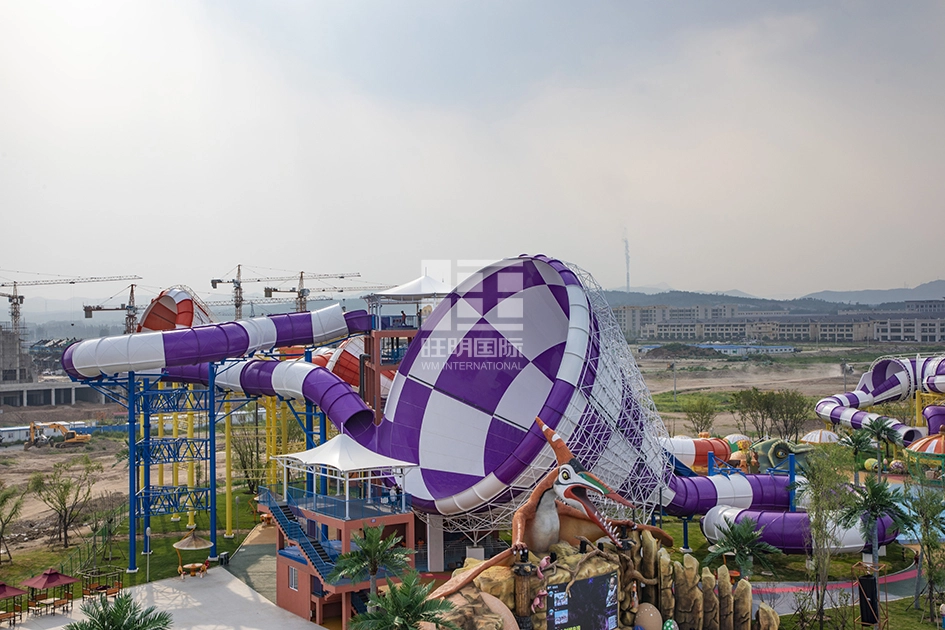
Big Tourbillion Water Slide
The Big Tourbillion water Slide won the "Gold Ticket Award - The Best New Project" of the international tourism industry. With unique modelling, strong irritation and humor, it is deeply loved by the young people; it has always been the popularity star of the water park. The raft carries the tourists as they enter the dark, closed chute slowly from the more than ten-meter-high platform; under the effect of gravity and water flow, it enters the state of rapid falling and then drops into the big Tourbillon; after a few times of whirling, it falls into the water pool. At this moment, the tourists are still in shock.
Get in touch
Have to get customized water park solutions and product quotes.
We will provide you with professional consultation and support.

Relying on leading technology, innovative products and rich industry experience, we tailor personalized solutions for each water park project to ensure a safe and exciting entertainment experience for tourists.
 Scan QR Code
wmwaterslide
wmwaterpark