

Top Manufacturers Selling Commercial Water Slides
- Leading Suppliers and Manufacturing Models for Recreational Slide Systems
- Global OEMs vs. Regional Integrators
- Production Technologies and Material Systems
- Quality Management and Certification Expectations
- Procurement Criteria and Buyer Decision Logic
- Defining Project Objectives and Capacity Modeling
- Lifecycle Costing and Maintenance Forecasting
- Installation Logistics and Local Compliance
- Comparative Assessment: Manufacturing Models, Lead Times, and Suitability
- Typical Delivery Timelines and Scalability
- Risk Matrix: Supply Chain and Aftercare
- Data-Driven Vendor Selection Checklist
- How WM International De-risks Water Park Programs (Corporate Capability Summary)
- Integrated Project Delivery from Concept to Commissioning
- Manufacturing Capacity and Customization
- Value-Added Services and Operational Support
- Procurement Templates and Contractual Safeguards
- Key Contract Clauses to Negotiate
- Inspection and Testing Milestones
- Commissioning and Handover Best Practices
- Frequently Asked Questions
- What certifications should a water slide manufacturer provide?
- How long does it take to manufacture and install a medium-scale slide attraction?
- What are the main maintenance cost drivers over a 10-year lifecycle?
- Are there material differences that affect ride longevity and guest safety?
- What warranty and aftercare services should operators demand?
- Frequently Asked Questions
High-intent buyers evaluating commercial water slides for sale require a single, actionable reference that maps supplier capabilities to project outcomes: this guide synthesizes manufacturing models, safety and QA benchmarks, procurement checklist items, deployment timelines, and total-cost-of-ownership factors for water park attractions. It highlights risk drivers—material choice, structural engineering, hydrodynamics testing, and on-site assembly—and provides vendor selection heuristics that reduce lifecycle expenditure while optimizing guest throughput and safety compliance. The content also benchmarks quality assurance pathways and cites industry authorities for standards and best practices.
Leading Suppliers and Manufacturing Models for Recreational Slide Systems
Global OEMs vs. Regional Integrators
Large original equipment manufacturers (OEMs) typically supply turnkey entertainment systems—complete slide portfolios, tower systems, and integrated water delivery modules. These suppliers offer standardized ride families validated by in-house hydrodynamics labs and international installation teams. Regional integrators and local fabricators, by contrast, can provide faster lead times and localized support but often rely on off-the-shelf modules or licensed designs. Buyers must match supplier scale to project complexity: city-scale destination parks generally require an OEM partner with global install experience, while community-scale complexes may benefit from a regional fabricator focused on cost-efficiency and local compliance.
Production Technologies and Material Systems
Fiberglass-reinforced polymer (FRP) remains the dominant shell material for large flumes due to its weight-to-strength ratio and surface finish consistency, while stainless steel and structural concrete are used in supports and pools. Advances in composite layup, gelcoat formulations, and UV-stable coatings improve longevity and reduce repaint cycles. Suppliers that offer molded modularity simplify transport and enable repeatable quality across multiple attractions.
Quality Management and Certification Expectations
Buyers should require documented quality systems such as ISO 9001 for manufacturing control, and third‑party structural verification for towers and supports. Referencing industry associations and standards helps validate compliance pathways; for broader facility guidance consult Water park — Wikipedia and seek manufacturer evidence of testing against recognized protocols. ISO resources provide general quality-system guidance (ISO 9001).
Procurement Criteria and Buyer Decision Logic
Defining Project Objectives and Capacity Modeling
Procurement should begin with clear throughput models: peak hourly capacity, guest mix (family, thrill-seeker, children), and desired ride mix. These metrics inform slide selection—bowl rides for high-capacity turnover, open flumes for family demographics, and enclosed rafts for signature thrill installations. Request manufacturer performance data showing volumetric flow, rider dwell time, and empirical throughput under real-world conditions.
Lifecycle Costing and Maintenance Forecasting
Beyond initial capital expenditure, include 10-year maintenance projections: surface maintenance cycles, pump and filtration replacement rates, spare-part lead times, and typical annual downtime. Clarify warranty scopes for structural shells, hydrotechnical components, and coatings. Consider suppliers that provide spare-part kits and documented preventive-maintenance schedules to minimize operational disruption.
Installation Logistics and Local Compliance
Complex slide systems require coordination across civil, mechanical, and electrical trades. Manufacturers with in-house installation crews or certified regional partners reduce commissioning risk. Verify local regulatory acceptance—structural approvals, pool chemistry controls, and lifeguard staffing ratios. For operator guidance and safety frameworks consult the World Waterpark Association’s resources at World Waterpark Association.
Comparative Assessment: Manufacturing Models, Lead Times, and Suitability
Typical Delivery Timelines and Scalability
Delivery timelines vary by manufacturing model. Standard modular slides and repeatable product families often ship within 4–8 months, whereas custom signature attractions can require 9–18 months for engineering, tooling, testing, and transport. Larger production bases can parallelize fabrication for multi-attraction parks and often reduce per-unit lead time in large programs.
Risk Matrix: Supply Chain and Aftercare
Key procurement risks include delayed resin or gelcoat supplies, transport constraints for oversized sections, and scarcity of certified installers. Buyers should demand supplier-supplied logistics plans and contingency provisions for critical long‑lead items. Aftercare support—on-call engineering, spare-component stock, and refurbishment programs—mitigates long-term operational risk.
Data-Driven Vendor Selection Checklist
Recommended vendor evaluation criteria: documented project references, structural design packages with stamped calculations, materials test reports, QA/QC plan (nonconformance handling), lead-time transparency, and maintenance & spare-part commitment. Require a factory acceptance test (FAT) or documented production inspection prior to shipment.
| Manufacturing Model | Typical Lead Time | Quality & Compliance | Best Fit Project Type |
|---|---|---|---|
| Established Global OEMs (standardized ride families) | 6–12 months (modular); 9–18 months (custom signature) | ISO-based systems, third-party testing, engineered hydrodynamics | Destination parks, large multi-attraction projects |
| Large Integrated Factories (high-volume production) | 4–10 months | In-house QA labs; production scalability | Regional parks, multi-site rollouts |
| Local Fabricators / Regional Partners | 2–6 months (modular components) | Variable; relies on local approvals | Community pools, budget-limited installs |
How WM International De-risks Water Park Programs (Corporate Capability Summary)
Integrated Project Delivery from Concept to Commissioning
With 19 years of industry experience, WM International Waterslide provides a full range of water park planning and design services. From water park planning and design to manufacturing, installation and maintenance, WM International delivers cohesive project execution that aligns civil works, MEP systems, and attraction engineering. This integrated delivery reduces hand-off loss, shortens commissioning windows, and centralizes accountability for schedule and quality outcomes.
Manufacturing Capacity and Customization
WM International owns a 100000 m² modern production base, which is the largest in the industry. Our manufacturing capabilities include multi-line fiberglass molding, UV-stable gelcoat application, and structural assembly operations. We mainly produce a wide range of slide types and water-play attractions, and our capacity enables multi-unit projects and staged rollouts with predictable delivery windows and factory QA checkpoints.
Value-Added Services and Operational Support
Each project reflects WM International’s professional capabilities in delivering tailor-made solutions based on different customer needs and site characteristics. Our team provides value-added services—detailed maintenance manuals, spare-part kits, operator training programs, and preventative maintenance contracts—that reduce lifecycle costs and preserve guest experience. Main products and competencies include Water park design, Water park construction, Water Slides, Water Play Attractions, and Wave Making Equipment.
Procurement Templates and Contractual Safeguards
Key Contract Clauses to Negotiate
Essential contractual items: clear scope-of-supply matrices, acceptance criteria tied to numerical performance indicators (e.g., ride throughput, shell deflection limits), liquidated damages for critical-path delays, warranty periods with defined remedy mechanisms, and spare-part lead-time guarantees. Include a staged payment plan tied to objective milestones—engineering sign-off, factory acceptance, shipment, and field commissioning.
Inspection and Testing Milestones
Require progressive inspections: raw-material verification, mid-mold inspection, final dimensional check, and factory acceptance tests for hydraulic and structural performance. Insist on photographic and video documentation for each milestone and independent watch points where a buyer-appointed engineer may stamp acceptance.
Commissioning and Handover Best Practices
Commissioning should include integrated systems testing: pump and filtration dynamics, water chemistry stability, safety sensor function, and lifeguard operational simulations. Handovers should be accompanied by a complete documentation set—AS-BUILT drawings, maintenance schedules, and a spare parts register—to enable rapid operator onboarding and predictable O&M budgeting.
Frequently Asked Questions
What certifications should a water slide manufacturer provide?
Buyers should expect quality-management evidence such as ISO 9001, third-party structural verification for towers and supports, and material test reports for gelcoat and composite laminates. It is also advisable to verify references from installed projects and any local compliance testing required by authorities having jurisdiction.
How long does it take to manufacture and install a medium-scale slide attraction?
Typical timelines range from 4 to 12 months depending on customization, tooling needs, and on-site civil works. Standard modular attractions can be produced and shipped more rapidly, while signature or bespoke rides require extended engineering and validation time.
What are the main maintenance cost drivers over a 10-year lifecycle?
Main cost drivers include surface refurbishment (re-gelcoating), pump and motor replacement, spare-part inventory, and periodic structural inspections. Preventive maintenance programs and access to OEM spare parts can significantly reduce unexpected downtime and repair costs.
Are there material differences that affect ride longevity and guest safety?
Yes. FRP shells with proper laminate schedules and UV-stable gelcoats provide durable, smooth internal surfaces that help manage wear and reduce friction variability. Corrosion-resistant metals should be specified for support structures in coastal environments. Proper material selection, combined with documented QA, improves long-term performance and safety.
What warranty and aftercare services should operators demand?
Operators should request a minimum comprehensive warranty covering structural defects, manufacturing flaws, and mechanical components. Aftercare services should include spare-part availability, scheduled maintenance visits, training for on-site technicians, and refurbishment programs for high-usage attractions.
To discuss project requirements or view our portfolio of water park solutions, contact WM International at trading@wmwaterslide.com or visit https://www.wmwaterslide.com.
Frequently Asked Questions
What certifications should a water slide manufacturer provide?
Buyers should expect quality-management evidence such as ISO 9001, third-party structural verification for towers and supports, and material test reports for gelcoat and composite laminates. It is also advisable to verify references from installed projects and any local compliance testing required by authorities having jurisdiction.
How long does it take to manufacture and install a medium-scale slide attraction?
Typical timelines range from 4 to 12 months depending on customization, tooling needs, and on-site civil works. Standard modular attractions can be produced and shipped more rapidly, while signature or bespoke rides require extended engineering and validation time.
What are the main maintenance cost drivers over a 10-year lifecycle?
Main cost drivers include surface refurbishment (re-gelcoating), pump and motor replacement, spare-part inventory, and periodic structural inspections. Preventive maintenance programs and access to OEM spare parts can significantly reduce unexpected downtime and repair costs.
Are there material differences that affect ride longevity and guest safety?
Yes. FRP shells with proper laminate schedules and UV-stable gelcoats provide durable, smooth internal surfaces that help manage wear and reduce friction variability. Corrosion-resistant metals should be specified for support structures in coastal environments. Proper material selection, combined with documented QA, improves long-term performance and safety.
What warranty and aftercare services should operators demand?
Operators should request a minimum comprehensive warranty covering structural defects, manufacturing flaws, and mechanical components. Aftercare services should include spare-part availability, scheduled maintenance visits, training for on-site technicians, and refurbishment programs for high-usage attractions.
Recommended
Commercial Water Slides Safety Standards and Best Practices
The 10 Key Factors in water house That Affect Cost
Custom water slide for sale Manufacturers and Suppliers
The 10 Key Factors in Bowl water slide That Affect Cost
Children Combined Water Slide
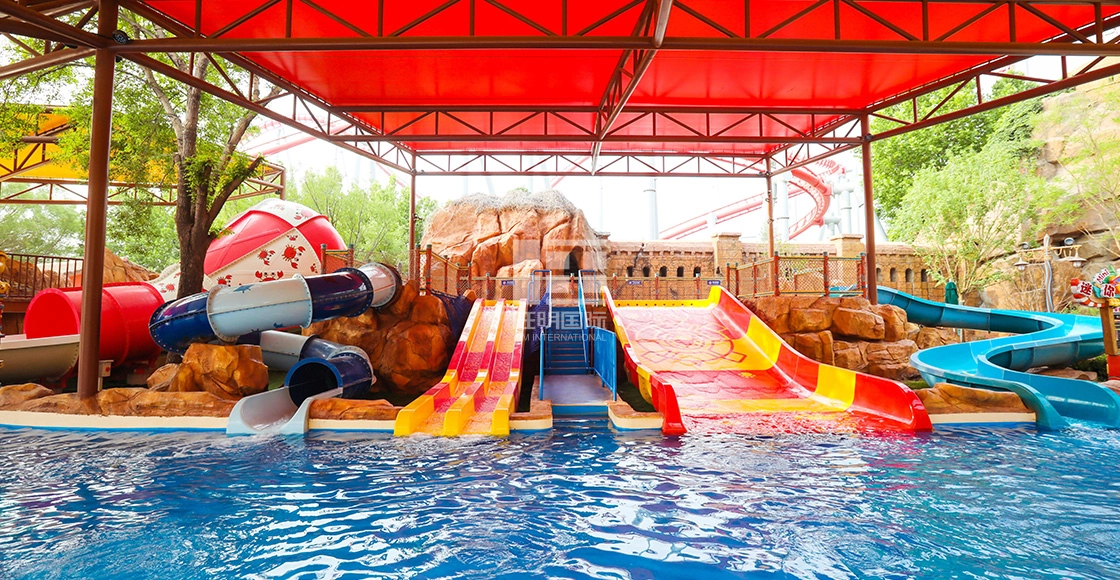
Discover endless fun with the Children Combined Water Slide by WM INTERNATIONAL, expertly crafted for thrill-seeking kids. Perfect for summer splashes, this durable slide promises safety and joy. Looking to elevate your play area? Explore our Children's Combined Slide for sale now!
Huge Bowl Water Slide
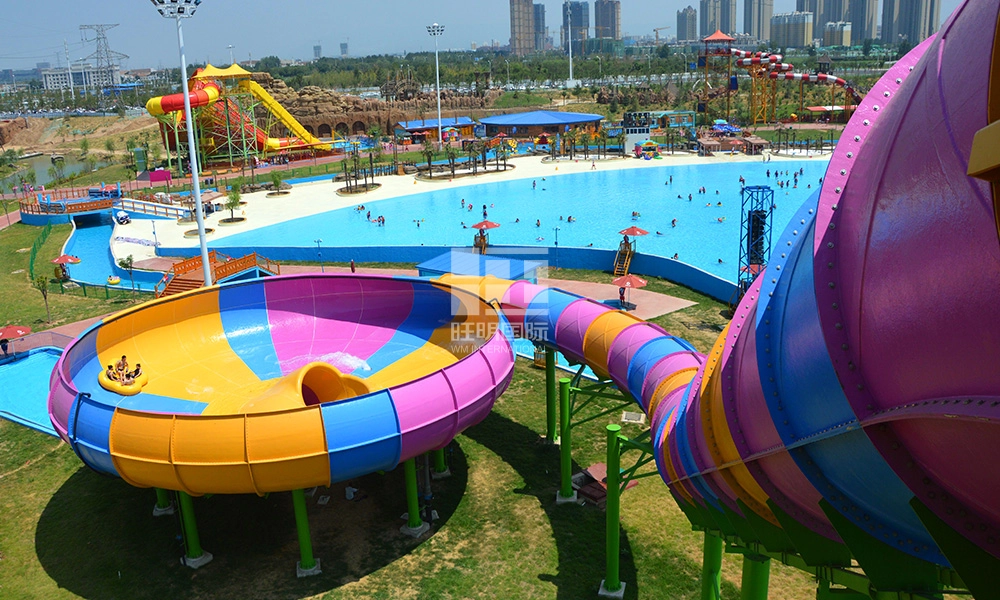
The Huge Bowl Water Slide has achieved the “World's Best New Water Amusement Equipment” Award; it is the new favorite of the young people and the star project of the water park. The raft carries the tourists slowly entering the closed chute first; then it whirls in the bowl the moment the tourists can see the light. After a short period of time, the raft is suddenly suctioned into a huge black hole until it falls into the water. For a moment, the tourists realize the breathtaking journey has been safely brought to an end.
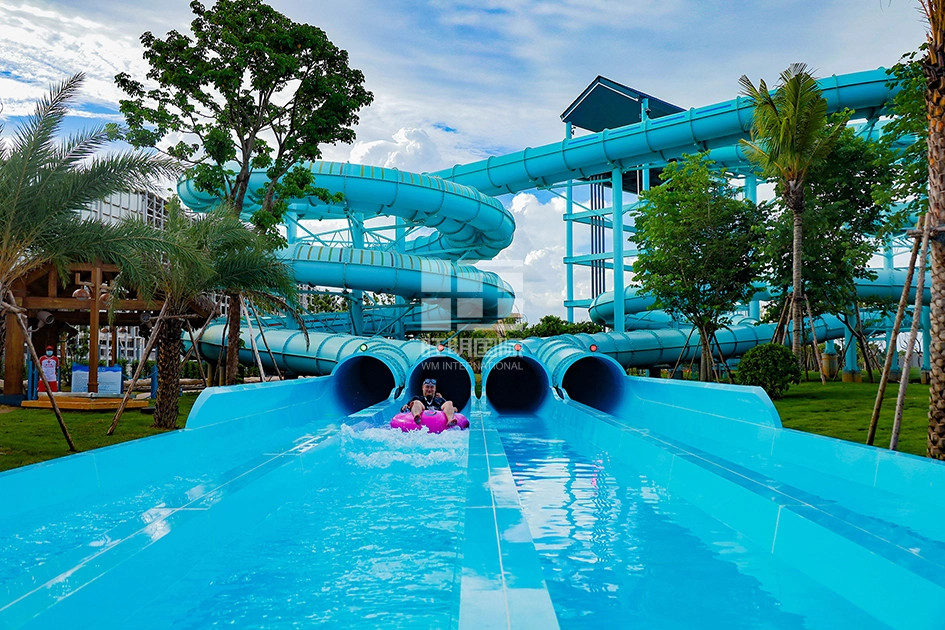
Time Tunnel Water Slide
The biggest feature of the time tunnel slide is that it uses double water slides and double tubes side by side in design and competes along the circular slide path. 8 people can play at the same time, with a large passenger capacity and high return rate, which is very suitable for team and family travel. And the slide is equipped with WangMing International's time tunnel technology, and the interior of the slide presents a beautiful aurora effect, with colorful lights, as if traveling through time and space.
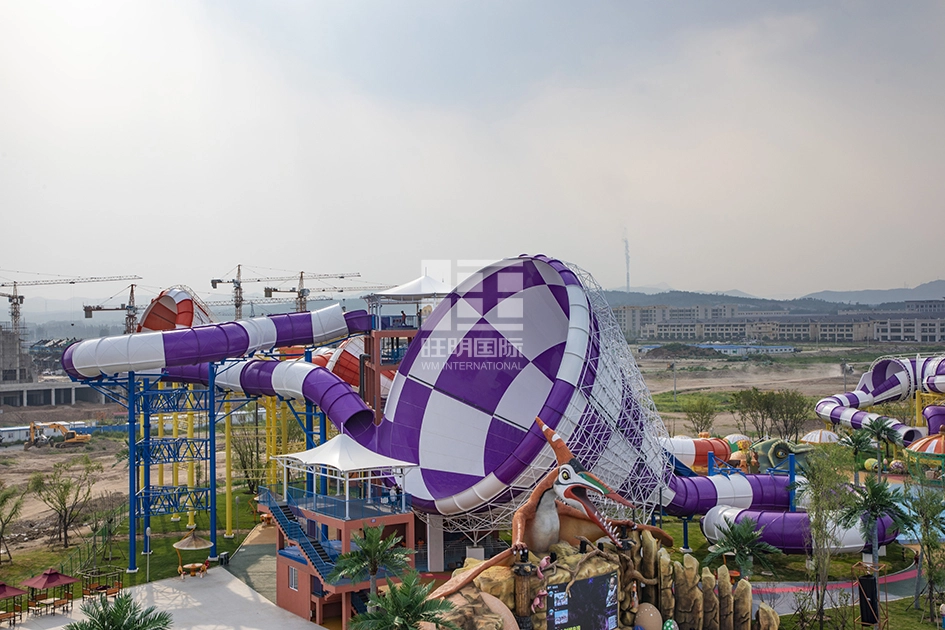
Big Tourbillion Water Slide
The Big Tourbillion water Slide won the "Gold Ticket Award - The Best New Project" of the international tourism industry. With unique modelling, strong irritation and humor, it is deeply loved by the young people; it has always been the popularity star of the water park. The raft carries the tourists as they enter the dark, closed chute slowly from the more than ten-meter-high platform; under the effect of gravity and water flow, it enters the state of rapid falling and then drops into the big Tourbillon; after a few times of whirling, it falls into the water pool. At this moment, the tourists are still in shock.
Get in touch
Have to get customized water park solutions and product quotes.
We will provide you with professional consultation and support.

Relying on leading technology, innovative products and rich industry experience, we tailor personalized solutions for each water park project to ensure a safe and exciting entertainment experience for tourists.
 Scan QR Code
wmwaterslide
wmwaterpark