






Quick Installation Tips for Family Water Slides
- Installation Planning for Family-Oriented Slide Attractions
- Confirm the site before manufacturing and delivery
- Freeze the design and create a responsibility matrix
- Prepare logistics for modular components
- Fast Assembly Methods That Protect Safety and Quality
- Complete foundations and embedded items first
- Use a controlled installation sequence
- Coordinate hydraulic and electrical installation early
- Testing, Commissioning, and Handover for Reliable Operation
- Inspect the structure and rider interface
- Run dry tests and wet tests in stages
- Complete handover before opening day
- How WM International Supports Faster Water Park Delivery
- Integrated planning, manufacturing, and installation support
- Manufacturing capacity for project consistency
- Tailored solutions and lifecycle value
- Frequently Asked Questions
Quick installation of a family water slide depends less on rushing assembly and more on eliminating avoidable delays before equipment reaches the site. A successful water park installation aligns approved drawings, civil works, anchor positions, slide modules, landing pools, pumps, electrical systems, access routes, safety barriers, and commissioning procedures. Project owners should treat speed as a result of disciplined preparation: verify site dimensions, freeze the design, inspect components, coordinate contractors, and complete controlled water testing before opening. This approach protects visitors, reduces rework, improves construction predictability, and supports stronger return on investment.
Installation Planning for Family-Oriented Slide Attractions
Confirm the site before manufacturing and delivery
The fastest installation begins with an accurate site survey. The supplier and local contractor should confirm available elevation, structural bearing capacity, drainage direction, equipment-room location, access for cranes or forklifts, electrical supply, water-treatment space, and the relationship between the slide exit and surrounding guest circulation. A topographic survey, geotechnical report, and as-built civil drawing are especially important when an attraction is being added to an existing water park.
Small discrepancies can create major delays. A difference between the approved drawing and the actual platform elevation may affect slide alignment, support-leg length, rider speed, pool depth, and discharge geometry. Before fabrication, buyers should approve a coordinated layout showing the tower, stairs, queue, handrails, splash zone, circulation paths, pump room, filtration lines, emergency access, and maintenance clearances. A digital 3D model or coordinated shop drawing can help identify clashes between steelwork, pipework, electrical trays, and architectural finishes.
Freeze the design and create a responsibility matrix
Design changes after production begins are among the most common causes of installation delay. The contract should define who is responsible for civil foundations, embedded plates, steel supports, slide assembly, water pumps, filtration, electrical connections, signage, safety inspection, and final approval. A responsibility matrix gives the owner, general contractor, manufacturer, and local authority a shared implementation framework.
Procurement documents should also define the approved loading conditions, material specifications, corrosion protection, fastener grades, surface finish, color schedule, hydraulic flow requirements, and spare-parts list. The project team should establish a document register containing design drawings, foundation reactions, installation manuals, inspection forms, operating instructions, maintenance schedules, and certificates. This documentation supports both construction control and future insurance or regulatory reviews.
Prepare logistics for modular components
Most modern slide systems are manufactured in transportable sections, but modular delivery does not remove the need for logistics planning. Each package should be labeled according to the assembly sequence, with lifting points, orientation marks, connection numbers, and protection for finished surfaces. The site should have a secure laydown area that keeps fiberglass or composite sections away from standing water, heavy traffic, welding sparks, and uncontrolled forklift movement.
Access planning should account for delivery-truck dimensions, turning radii, overhead obstructions, crane capacity, wind conditions, and the distance between unloading and the tower foundation. A delivery checklist should record package numbers, visible damage, missing fasteners, gaskets, brackets, flanges, and installation tools. Photographing every shipment during unloading creates useful evidence for quality control and insurance administration.
Fast Assembly Methods That Protect Safety and Quality
Complete foundations and embedded items first
Slide assembly should not begin until concrete foundations have achieved the specified strength and survey points have been verified. Anchor bolts, embedded plates, support columns, drainage channels, and pool interfaces require dimensional checks before steel erection. The contractor should confirm bolt projection, centerline, elevation, level, and orientation against the approved structural drawings.
Temporary supports may be required while tower sections are being positioned, but they should never replace permanent bracing or approved structural connections. Welding, drilling, or field modification of load-bearing members should only occur under written engineering authorization. Such modifications can affect corrosion protection, fatigue performance, structural capacity, and warranty conditions.
Use a controlled installation sequence
A practical sequence normally progresses from tower and primary supports to slide sections, flanges, joints, access stairs, handrails, splash-zone components, water piping, electrical equipment, and finishes. Installers should keep connection surfaces clean and use the specified gaskets, sealants, washers, torque values, and fastener patterns. A calibrated torque wrench and signed inspection record are more reliable than visual tightening alone.
Slide joints deserve particular attention because misalignment can create uncomfortable transitions, premature wear, water leakage, or a poor visual finish. Each section should be aligned along the centerline and checked for elevation, slope, rotational orientation, and smooth internal continuity. Protective film should remain on finished surfaces for as long as practical, while joint areas should be inspected for burrs, sharp edges, exposed laminate, or damaged gel coat.
Coordinate hydraulic and electrical installation early
Water delivery is part of the attraction’s performance, not an afterthought. Pump selection, pipe diameter, static head, friction loss, valve access, strainers, balancing, and return-water capacity should match the approved hydraulic design. Oversized or undersized piping can cause unstable flow, excessive energy consumption, poor rider experience, or pump cavitation. The installer should provide isolation valves and service access so that maintenance does not require dismantling the slide.
Electrical work should follow the approved single-line diagram and local code. Motors, control panels, emergency stops, bonding, grounding, residual-current protection, cable routing, and wet-area equipment ratings require inspection by qualified professionals. The U.S. Centers for Disease Control and Prevention guidance on healthy swimming emphasizes the importance of properly managed recreational water environments; therefore, hydraulic commissioning and water-treatment verification should be treated as connected operational tasks.
| Project stage | Recommended control | Typical delay prevented | Required record |
|---|---|---|---|
| Site preparation | Verify survey points, foundation dimensions, access, and drainage | Rework of anchors, supports, or pool interfaces | Signed site-readiness checklist |
| Component delivery | Match packages against the packing list and inspect surfaces | Assembly stoppage caused by missing or damaged parts | Delivery inspection report and photographs |
| Mechanical assembly | Use approved sequence, calibrated tools, and joint inspections | Leakage, misalignment, and repeated disassembly | Torque and alignment records |
| Hydraulic commissioning | Test flow, pressure, drainage, valves, and pump behavior | Poor ride performance and equipment faults | Commissioning test sheet |
| Opening approval | Complete safety, operational, water-quality, and staff checks | Last-minute closure or inspection failure | Handover and training records |
Testing, Commissioning, and Handover for Reliable Operation
Inspect the structure and rider interface
Before water is introduced, the team should conduct a complete mechanical inspection. Check support columns, platform connections, stairs, guardrails, barriers, access gates, slide joints, splash-zone edges, drainage grates, signage, and emergency access. The inspection should confirm that there are no sharp edges, exposed fasteners, loose components, unexpected gaps, or obstructions in the rider path.
Risk assessment should be integrated into the commissioning process. ISO 12100 safety of machinery principles provide a recognized framework for identifying hazards, evaluating risk, and applying protective measures. For a water attraction, the assessment should address rider height and behavior, queue loading, access control, evacuation, entrapment risks, collision points, wet walking surfaces, weather conditions, and staff response procedures.
Run dry tests and wet tests in stages
A dry inspection should precede wet operation. Confirm pump rotation, control logic, emergency-stop function, valve positions, communication systems, lighting, and drainage pathways. Wet testing can then begin at low flow before progressing toward the approved operating range. Technicians should observe water distribution, slide joints, landing-pool turbulence, exit clearance, splash containment, pump noise, vibration, and water levels.
Test riders should be selected and supervised according to the operator’s risk assessment and local requirements. The team should verify that the actual rider experience matches the approved operating concept without relying on assumptions from drawings. Any modification to flow rate, dispatch interval, rider posture, or operating limit should be recorded and approved before public use.
Complete handover before opening day
A rapid installation is incomplete without a structured handover. Operators need training on daily inspections, cleaning, chemical management, pump operation, shutdown procedures, weather protocols, guest dispatch, emergency evacuation, first response, and reporting of defects. The owner should receive as-built drawings, equipment manuals, warranty terms, recommended spare parts, inspection intervals, and supplier contact details.
Water quality management should be coordinated with local public-health requirements. The World Health Organization guidelines for safe recreational water environments provide internationally recognized reference material for managing swimming pools and similar facilities. In the United States, the CDC Model Aquatic Health Code offers additional guidance for aquatic facility design and operation. Local regulations remain controlling, but these resources help project teams build a more complete commissioning checklist.
How WM International Supports Faster Water Park Delivery
Integrated planning, manufacturing, and installation support
WM International Waterslide has 19 years of industry experience and provides a full range of water park planning and design services. Our support covers water park planning and design, manufacturing, installation, and maintenance, helping project owners convert an attraction concept into a coordinated operating environment. This integrated model reduces the communication gaps that often occur when design, fabrication, civil construction, and commissioning are managed by unrelated parties.
Our engineering team evaluates site characteristics, guest demographics, available land, elevation, expected throughput, investment objectives, and visual identity before recommending a configuration. The result may include a multi-lane family raft attraction, a children’s interactive water play zone, a compact body-slide combination, or a larger themed slide tower. Each project is developed around the owner’s site conditions and commercial objectives rather than a fixed catalogue layout.
Manufacturing capacity for project consistency
WM International owns a 100,000-square-meter modern production base, described by the company as the largest in the industry, and mainly produces water slides for water parks. A substantial manufacturing base supports organized production, quality inspection, component identification, surface finishing, packaging, and shipment preparation. For buyers, the practical value is greater control over repeatability, delivery coordination, and the relationship between approved drawings and delivered modules.
Our product scope includes water slides, water play attractions, wave making equipment, and broader water park equipment solutions. These products can be coordinated with water park design and water park construction requirements so that tower structures, hydraulic systems, pool zones, circulation, and maintenance access are considered together. Buyers should still require project-specific drawings, material information, inspection procedures, installation responsibilities, and acceptance criteria in the purchase contract.
Tailored solutions and lifecycle value
Every project reflects different local codes, climate conditions, land constraints, visitor expectations, and operating models. WM International develops tailor-made solutions based on customer needs and site characteristics, whether the requirement involves a new park, an expansion, a resort attraction, or maintenance of an existing facility. Our combined perspective as operators, designers, suppliers, and guests helps connect technical choices with guest satisfaction and operational practicality.
For procurement teams, lifecycle value should be assessed beyond the initial equipment price. Compare installation duration, spare-parts availability, cleaning access, pump efficiency, staff training, warranty response, surface durability, documentation quality, and future expansion potential. A supplier that supports planning, manufacturing, construction coordination, installation, and maintenance can help reduce interface risk and protect revenue during the attraction’s operating life.
For project planning, product selection, or a site-specific installation discussion, contact WM International at trading@wmwaterslide.com or visit WM International Waterslide.
Frequently Asked Questions
How can a water park prepare a site for fast slide installation?
The project team should verify site dimensions, structural bearing capacity, elevation, drainage, electrical supply, equipment-room location, access for delivery vehicles and cranes, and the relationship between the slide exit and guest circulation before manufacturing and delivery.
What should be checked when modular slide components arrive?
Each package should be matched against the packing list, inspected for visible damage, and checked for fasteners, gaskets, brackets, flanges, installation tools, lifting points, orientation marks, and connection numbers. Photographing shipments during unloading creates useful quality and insurance records.
Why are hydraulic tests important before opening a water attraction?
Hydraulic tests confirm water distribution, flow stability, pump behavior, valve operation, drainage, landing-pool conditions, splash containment, and rider-path performance. They help identify poor ride performance, leakage, vibration, or equipment faults before public operation.
What documents should a supplier provide at handover?
The owner should receive as-built drawings, equipment manuals, warranty terms, recommended spare-parts information, inspection intervals, operating procedures, maintenance schedules, training records, commissioning results, and supplier contact details.
Can WM International provide more than slide manufacturing?
Yes. WM International provides water park planning and design, manufacturing, installation, and maintenance services, with solutions tailored to customer needs and site characteristics. Its product scope includes water slides, water play attractions, wave making equipment, and related water park solutions.
What standards or guidance can support aquatic attraction commissioning?
ISO 12100 provides a recognized framework for machinery hazard identification and risk reduction, while WHO guidance on recreational water environments and the CDC Model Aquatic Health Code offer useful references for aquatic facility safety and water-quality management. Local regulations remain controlling.
Recommended
Wholesale Tsunami Water Pool manufacturer and supplier
Best professional waterslide manufacturers and supplier brands
Top Wave Pool Manufacturers and Suppliers
Family Water Slide Capacity and Throughput Planning
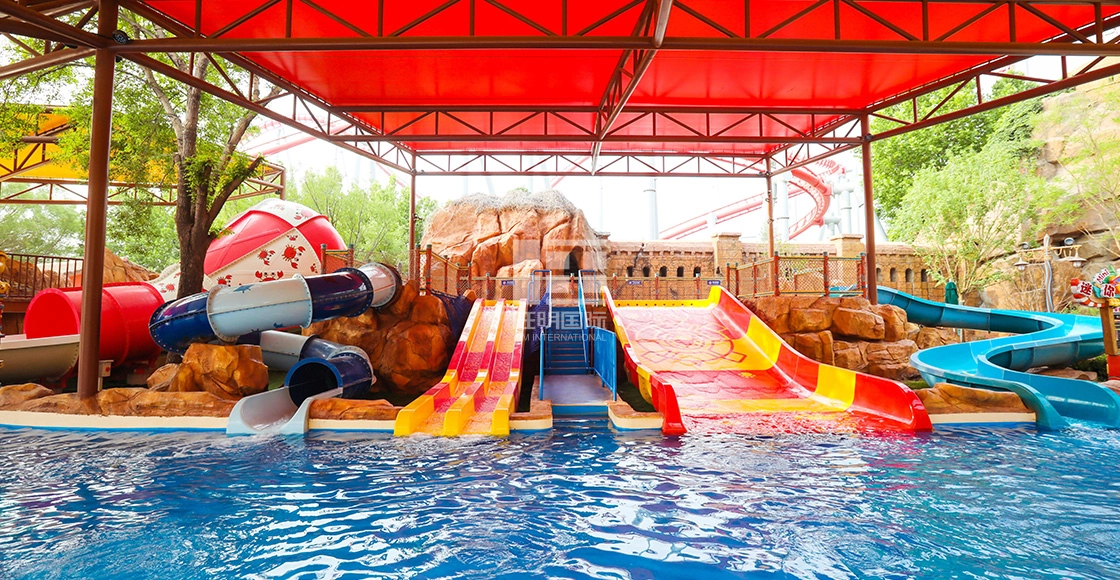
Children Combined Water Slide
Discover endless fun with the Children Combined Water Slide by WM INTERNATIONAL, expertly crafted for thrill-seeking kids. Perfect for summer splashes, this durable slide promises safety and joy. Looking to elevate your play area? Explore our Children's Combined Slide for sale now!
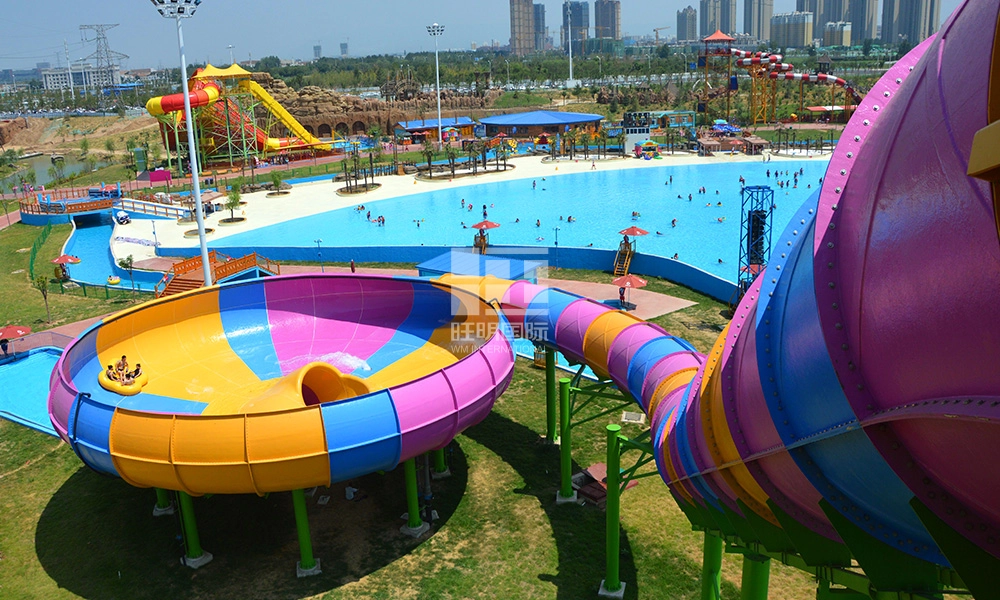
Huge Bowl Water Slide
The Huge Bowl Water Slide has achieved the “World's Best New Water Amusement Equipment” Award; it is the new favorite of the young people and the star project of the water park. The raft carries the tourists slowly entering the closed chute first; then it whirls in the bowl the moment the tourists can see the light. After a short period of time, the raft is suddenly suctioned into a huge black hole until it falls into the water. For a moment, the tourists realize the breathtaking journey has been safely brought to an end.
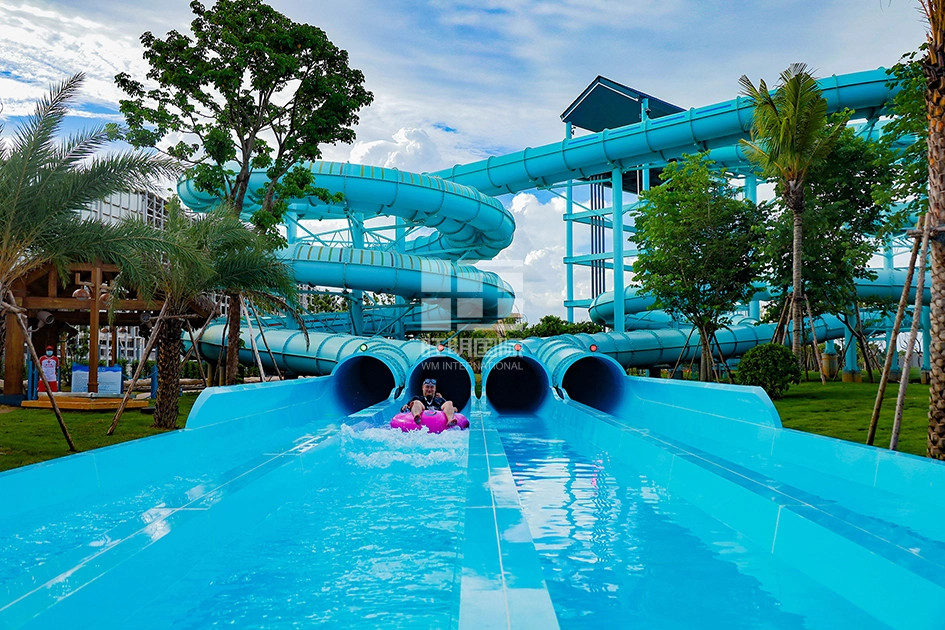
Time Tunnel Water Slide
The biggest feature of the time tunnel slide is that it uses double water slides and double tubes side by side in design and competes along the circular slide path. 8 people can play at the same time, with a large passenger capacity and high return rate, which is very suitable for team and family travel. And the slide is equipped with WangMing International's time tunnel technology, and the interior of the slide presents a beautiful aurora effect, with colorful lights, as if traveling through time and space.
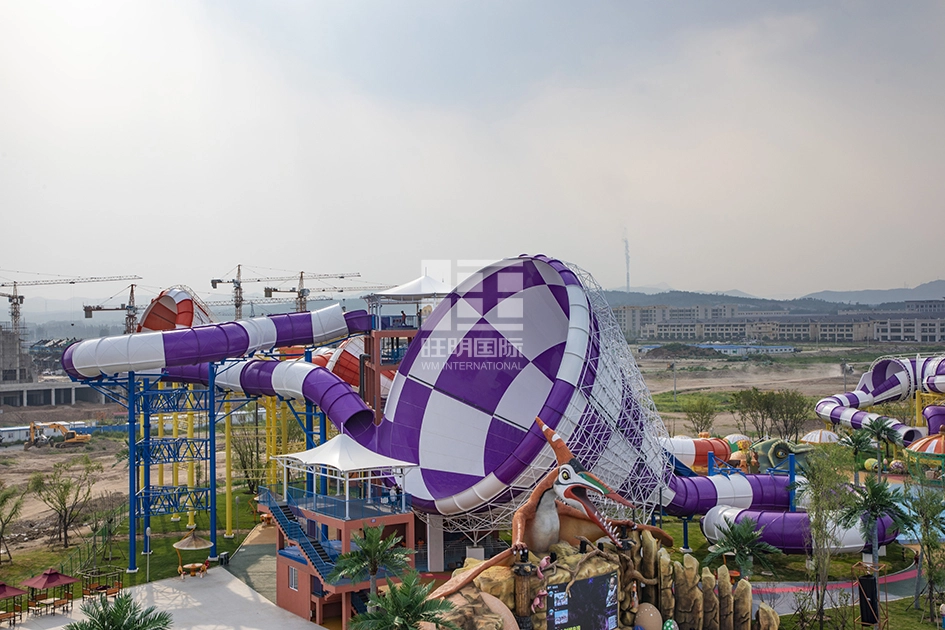
Big Tourbillion Water Slide
The Big Tourbillion water Slide won the "Gold Ticket Award - The Best New Project" of the international tourism industry. With unique modelling, strong irritation and humor, it is deeply loved by the young people; it has always been the popularity star of the water park. The raft carries the tourists as they enter the dark, closed chute slowly from the more than ten-meter-high platform; under the effect of gravity and water flow, it enters the state of rapid falling and then drops into the big Tourbillon; after a few times of whirling, it falls into the water pool. At this moment, the tourists are still in shock.
Get in touch
Have to get customized water park solutions and product quotes.
We will provide you with professional consultation and support.

Relying on leading technology, innovative products and rich industry experience, we tailor personalized solutions for each water park project to ensure a safe and exciting entertainment experience for tourists.
 Scan QR Code
wmwaterslide
wmwaterpark