






Permits and Regulations for Installing Water Slides
- Regulatory landscape for aquatic slide installations
- Key authorities and standards to consider
- Jurisdictional variability and its procurement impact
- Documented evidence buyers must request
- Permit application and approval workflow
- Typical sequence of approvals
- Timeline expectations and critical path items
- Filing best practices to reduce back-and-forth
- Compliance risk management and verification testing
- Factory and on-site quality assurance
- Third-party testing and certification
- Operational safety systems and documentation
- Procurement checklist and vendor qualification matrix
- Technical and commercial evaluation criteria
- Contract clauses to allocate regulatory risk
- Insurance, warranties, and maintenance obligations
- Comparative regulatory touchpoints
- Why WM International is the compliance-focused partner
- Integrated services that streamline approvals
- Manufacturing capacity and certified deliverables
- Operational handover, training, and lifecycle support
- Frequently Asked Questions
High-level compliance summary: This guide consolidates international regulatory touchpoints, mandatory approvals, standards references, and pragmatic procurement checklists for park owners and project managers planning the installation of commercial-grade slide attractions. It outlines the building, safety, and public-health permits typically required; maps standard testing and certification pathways (structural, electrical, hydraulic, and fall/protection systems); highlights cross-border compliance challenges; and prescribes a vendor qualification and documentation matrix that reduces approval cycle time and mitigates liability during construction and operation. Sources include the International Building Code, ASTM recreational-safety standards, WHO guidance for recreational water environments, and industry references for aquatic attractions.
Regulatory landscape for aquatic slide installations
Key authorities and standards to consider
Permitting and oversight commonly span multiple authorities: local building departments for structural approval, health agencies for water treatment and sanitation, fire departments for egress and rescue access, and electrical inspectors for power and control systems. Core technical standards that inform design and acceptance often include the ASTM F2376 slide-specific guidance and building codes such as the International Building Code (ICC). For public health and water quality benchmarks, facility operators should consult the WHO guidance on recreational water.
Jurisdictional variability and its procurement impact
Permit categories, required documentation, and inspection sequences vary by country, state, and municipality. This variability affects lead times, bond and insurance amounts, and required certifications for manufacturing. Buyers should map local regulatory milestones early in the procurement phase to align RFP timelines with permit application windows and avoid costly project delays.
Documented evidence buyers must request
Project owners should require the following from suppliers: certified structural calculations stamped by a licensed engineer, manufacturing quality-control records (material traceability and resin/gelcoat certifications), electrical schematics for pumps and PLCs, hydraulics reports demonstrating flow rates and rider velocity limits, and third-party test reports where available. These documents support permit submissions and reduce the number of review cycles with approving agencies.
Permit application and approval workflow
Typical sequence of approvals
Standard workflows often follow: conceptual approval during planning, structural permit and engineering review, mechanical/plumbing and electrical permits, pre-construction inspections, and a final occupancy/reservation certificate after commissioning. Sequencing permits correctly (for example, securing foundation approvals before superstructure fabrication) prevents rework and protects schedule.
Timeline expectations and critical path items
Typical municipal review timelines range from several weeks for minor plumbing upgrades to multiple months for major structural or site-alteration permits; for complex projects, budget six to twelve weeks per major permit milestone as a conservative planning buffer. Critical path items that frequently influence duration include geotechnical reports, stormwater management plans, and demonstration of compliance with local accessibility regulations.
Filing best practices to reduce back-and-forth
Prepare a consolidated permit packet: coordinated drawings, a compliance matrix referencing applicable clauses of standards (e.g., ASTM sections), a clear operations and maintenance (O&M) plan, and a proposed inspection and commissioning schedule. Early engagement with the permitting authority and pre-application meetings accelerate approval and reduce contingency costs.
Compliance risk management and verification testing
Factory and on-site quality assurance
Quality control should be both factory-based and on-site. Factory QA includes material certification, dimensional inspections, and pressure/hydrostatic testing of pipework. On-site verification covers anchorage checks, alignment of slide segments, anti-slip finishes, and commissioning tests for flow rates, rider egress and rescue drills, and emergency shutdowns. Require photographic and test-report evidence at each stage.
Third-party testing and certification
Third-party verification (structural engineers, accredited testing labs) reduces administrative resistance from authorities and insurers. Independent load and fatigue tests, non-destructive examinations (NDE) of supporting steel, and electrical safety certificates from accredited bodies are standard expectations in high-risk jurisdictions.
Operational safety systems and documentation
Permit reviewers expect a documented safety management system: operator training records, lifeguard staffing plans, incident reporting protocols, and routine maintenance checklists. Incorporate these documents into the permit submission or the operational readiness package to demonstrate long-term compliance and reduce conditional permit items.
Procurement checklist and vendor qualification matrix
Technical and commercial evaluation criteria
Buyers should evaluate suppliers on: adherence to recognized standards, manufacturing capacity and lead times, after-sales maintenance capability, availability of spare parts, and documented project references for similar regulatory environments. A supplier with local installation partners and bilingual documentation simplifies local authority interactions.
Contract clauses to allocate regulatory risk
Contract language should clarify which party secures which permits, responsibilities for permit-related design changes, and procedures for latent site conditions. Include acceptance criteria for deviations discovered during inspections, and tie milestone payments to verifiable permit outcomes.
Insurance, warranties, and maintenance obligations
Confirm that suppliers carry product liability and project-completion insurance, and specify warranty periods for structural shells, coatings, and mechanical equipment. Define preventative-maintenance frequencies and include spare-part lists and lead times in the contract to maintain operational compliance after commissioning.
Comparative regulatory touchpoints
| Requirement Type | Typical Applicability | Verification Source | Typical Review Timeframe |
|---|---|---|---|
| Structural approval | Foundations, supports, towers | Local building code; licensed structural engineer (reference: ICC) | 2–8 weeks |
| Safety standard compliance | Slide geometry, rider velocity, restraints | Industry standards (e.g., ASTM F2376) | Variable; lab testing 4–12 weeks |
| Water quality and public health | Filtration, disinfection, sampling | Local health department; WHO recreational water guidance | 2–6 weeks |
| Electrical and mechanical | Pumps, controls, PLCs, emergency stops | Electrical inspector; manufacturer test certificates | 1–6 weeks |
| Operational readiness | Staffing, lifesaving, training | Operator logs; inspector demonstration | 1–4 weeks |
Why WM International is the compliance-focused partner
Integrated services that streamline approvals
With 19 years of industry experience, WM International provides a full range of water park planning and design services. Our teams produce coordinated permit packages that combine structural engineering, hydraulics analyses, and water-quality plans to accelerate municipal reviews. This single-source approach reduces points of failure between vendor-produced documentation and authority expectations.
Manufacturing capacity and certified deliverables
WM International owns a 100000 m² modern production base, the largest in the industry, enabling rigorous factory QA and traceable material documentation. Our manufacturing process produces a wide range of water slides and attractions—from family flumes to park-scale slide complexes—along with factory test records and dimensional reports required by permitting authorities.
Operational handover, training, and lifecycle support
We deliver turn-key solutions that include installation supervision, commissioning protocols, operator training, and maintenance programs. Each project becomes a documented deliverable reflecting our technical strength and industry reputation. Buyers benefit from transparent warranty terms and post-installation support to keep facilities compliant over their lifecycle. Contact our sales team at trading@wmwaterslide.com for project-specific documentation templates and examples of permit-ready packages.
Relevant external resources: Water park - Wikipedia, ASTM F2376, International Building Code (ICC), WHO water safety guidance.
If a procurement team requires assistance with a permit readiness review, WM International can provide a gap analysis and a prioritized compliance roadmap to shorten approval cycles and control cost risk.
Contact WM International to request product catalogs, permitting templates, or to schedule a technical pre-application review with our engineering team.
Frequently Asked Questions
What permits are typically required to install a park-scale slide attraction?
Typical permits include building/structural permits, mechanical/plumbing permits for pumps and recirculation systems, electrical permits for control and power, health-department approvals for water treatment and sanitation, and sometimes special-use or zoning permits for public assembly. Requirements vary by jurisdiction.
How long does the permitting process usually take?
Review times vary widely by location and project complexity; individual permit reviews commonly take between 2 and 12 weeks. Complex structural and third-party testing items can extend timelines; planning teams should budget six to twelve weeks per critical approval as a conservative estimate.
Which standards should suppliers reference in documentation?
Suppliers and designers should reference relevant building codes and industry standards such as the International Building Code (ICC) for structural compliance and ASTM F2376 for slide-specific safety and design guidance, plus local health guidance for water quality.
What documentation should buyers request from manufacturers to support permit approval?
Buyers should request stamped structural calculations, material certifications and traceability, shop drawings, hydraulic flow reports, electrical schematics, factory test records, and third-party test reports or certifications where available.
Who is responsible for obtaining permits: the supplier or the project owner?
Responsibility is contract-dependent. Contracts should explicitly allocate responsibility for permit procurement, define which party pays for revisions related to permit-driven design changes, and specify deliverables required to satisfy local authorities.
Recommended
Wholesale Surfing Simulator manufacturer and supplier
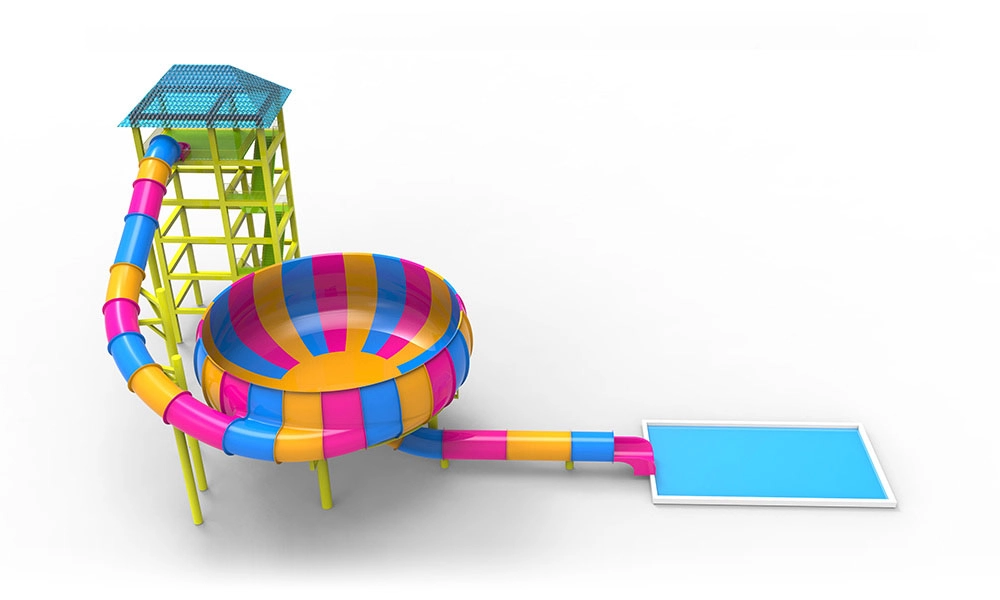
Huge Bowl Water Slide — High-Capacity Thrill Attraction by WangMing Waterslide
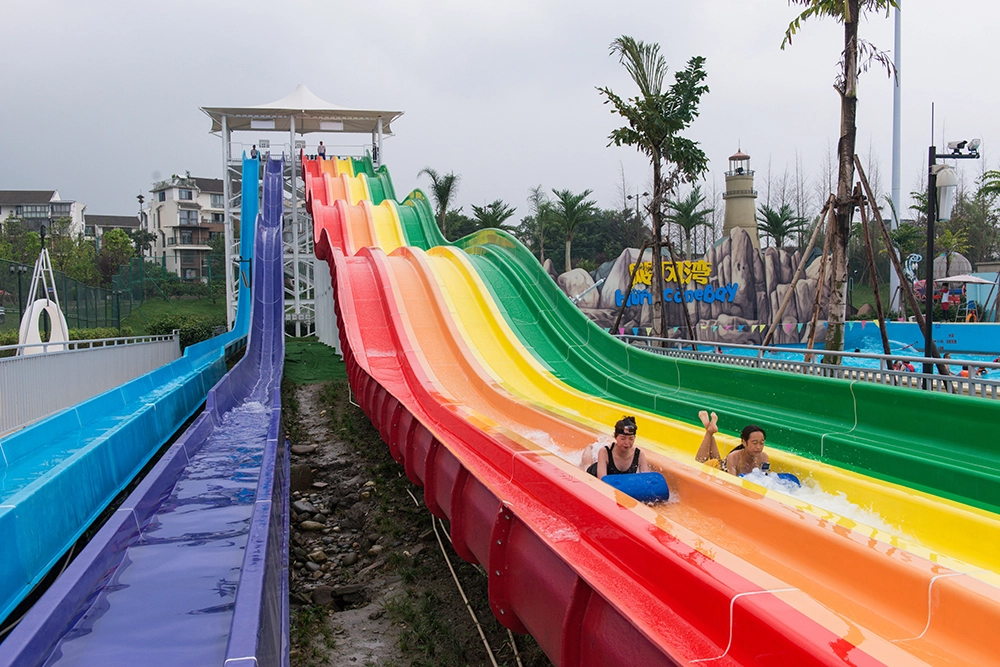
Cost Breakdown: Water Slide for Sale — Rainbow Multi-slide Prices
Wholesale Commercial tsunami pool wave maker manufacturer and supplier
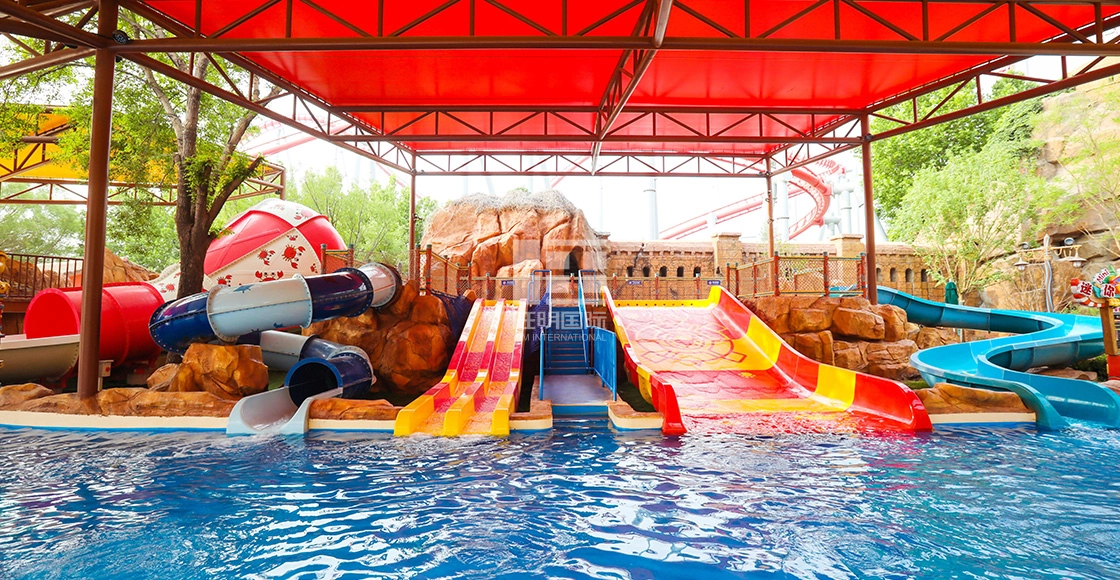
Children Combined Water Slide
Discover endless fun with the Children Combined Water Slide by WM INTERNATIONAL, expertly crafted for thrill-seeking kids. Perfect for summer splashes, this durable slide promises safety and joy. Looking to elevate your play area? Explore our Children's Combined Slide for sale now!
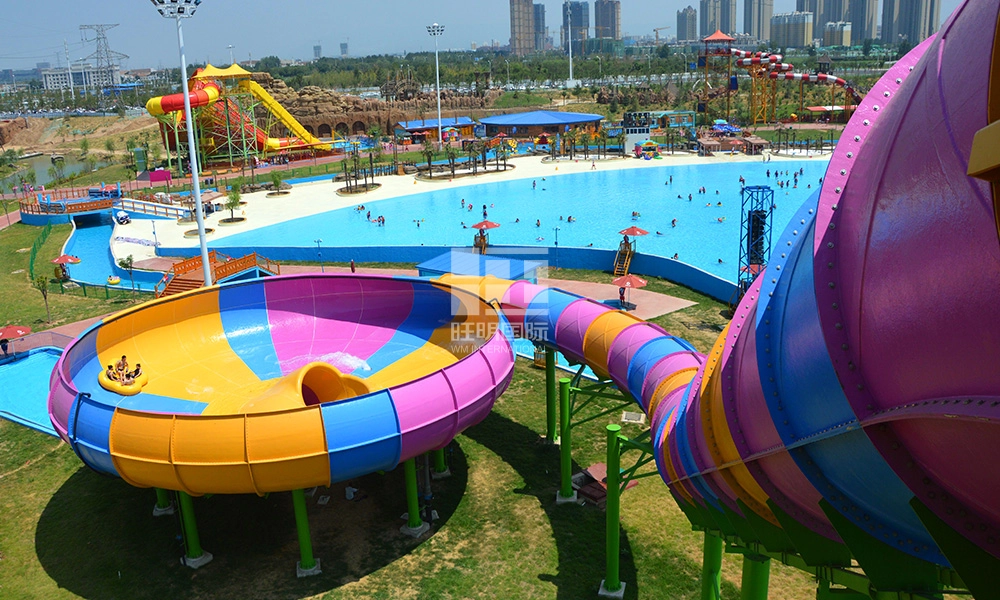
Huge Bowl Water Slide
The Huge Bowl Water Slide has achieved the “World's Best New Water Amusement Equipment” Award; it is the new favorite of the young people and the star project of the water park. The raft carries the tourists slowly entering the closed chute first; then it whirls in the bowl the moment the tourists can see the light. After a short period of time, the raft is suddenly suctioned into a huge black hole until it falls into the water. For a moment, the tourists realize the breathtaking journey has been safely brought to an end.
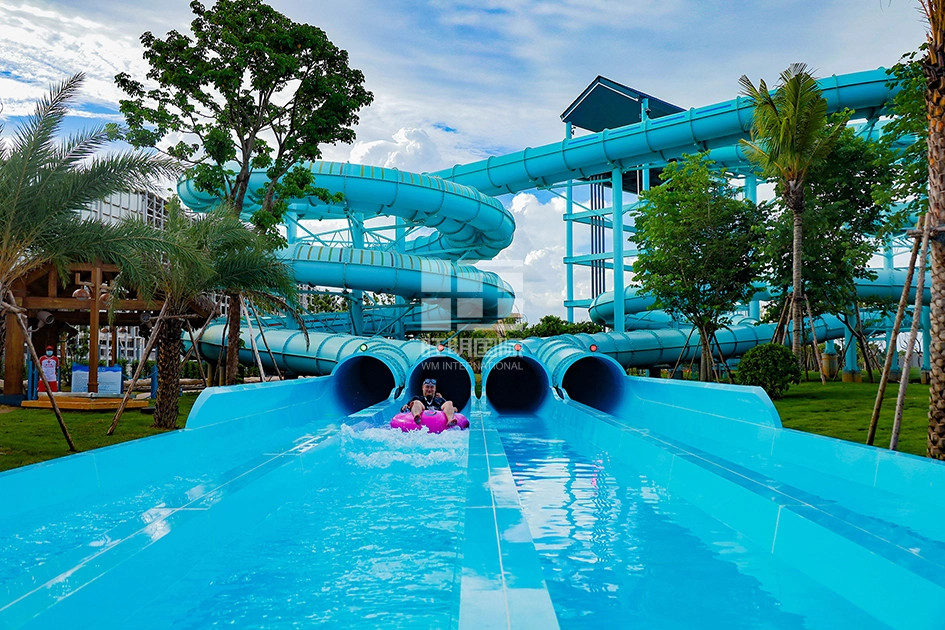
Time Tunnel Water Slide
The biggest feature of the time tunnel slide is that it uses double water slides and double tubes side by side in design and competes along the circular slide path. 8 people can play at the same time, with a large passenger capacity and high return rate, which is very suitable for team and family travel. And the slide is equipped with WangMing International's time tunnel technology, and the interior of the slide presents a beautiful aurora effect, with colorful lights, as if traveling through time and space.
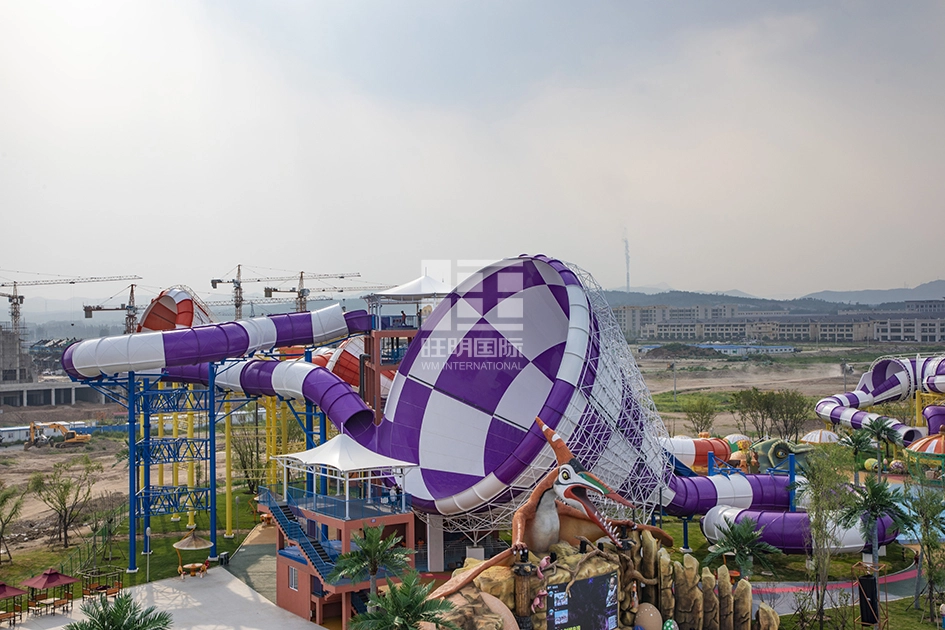
Big Tourbillion Water Slide
The Big Tourbillion water Slide won the "Gold Ticket Award - The Best New Project" of the international tourism industry. With unique modelling, strong irritation and humor, it is deeply loved by the young people; it has always been the popularity star of the water park. The raft carries the tourists as they enter the dark, closed chute slowly from the more than ten-meter-high platform; under the effect of gravity and water flow, it enters the state of rapid falling and then drops into the big Tourbillon; after a few times of whirling, it falls into the water pool. At this moment, the tourists are still in shock.
Get in touch
Have to get customized water park solutions and product quotes.
We will provide you with professional consultation and support.

Relying on leading technology, innovative products and rich industry experience, we tailor personalized solutions for each water park project to ensure a safe and exciting entertainment experience for tourists.
 Scan QR Code
wmwaterslide
wmwaterpark