



Marketing Family Slides: Packages & Group Sales
- Building a Commercial Strategy for Multi-Rider Water Attractions
- Position the attraction around shared participation
- Match the product promise to the guest journey
- Packaging, Pricing, and Group Sales Mechanics
- Design packages for identifiable buying occasions
- Use price fences without weakening the brand
- Build a group-sales operating system
- Demand Generation, Guest Confidence, and Measurable Conversion
- Use content that answers pre-purchase objections
- Connect digital campaigns to real capacity
- Protect trust through safety-led communication
- WM International Support for Family-Oriented Water Park Projects
- From concept planning to attraction delivery
- Manufacturing scale and project customization
- Procurement checks for a reliable supplier
- Frequently Asked Questions
Family-oriented water slides can become one of the strongest commercial anchors in a water park when they are marketed as complete group experiences rather than as isolated attractions. The most effective strategy connects multi-rider capacity, accessible thrill levels, safety communication, queue design, hospitality partnerships, and package pricing to the purchasing behavior of parents, grandparents, schools, hotels, and corporate groups. A successful campaign for a Family Water Slide should therefore combine attraction positioning with timed-entry products, family memberships, meal vouchers, cabana upgrades, photography, birthday events, and repeat-visit incentives. Operators must validate capacity, age and height requirements, water quality procedures, evacuation planning, and maintenance responsibilities before launching promotions. Guidance from the World Health Organization swimming-pool safety manual, the Centers for Disease Control and Prevention healthy swimming guidance, and ISO 17842 for amusement park safety provides useful reference points for responsible planning.
Building a Commercial Strategy for Multi-Rider Water Attractions
Position the attraction around shared participation
Parents and group organizers rarely evaluate a slide only by its height, speed, or visual impact. They assess whether several members of the party can participate together, whether the experience is appropriate for different confidence levels, and whether the attraction supports a predictable day out. A raft-based slide, family raft ride, or broad-bodied flume can be positioned around shared excitement, conversation, and repeatability. This language is particularly effective for mixed-age groups because it avoids presenting the attraction as either a high-risk thrill ride or a children-only feature.
Marketing assets should show the complete use case: guests arriving together, collecting equipment, entering the dispatch area, riding as a group, and continuing to nearby food, shade, or play facilities. Images and videos should represent the permitted rider configuration and should not imply that children or adults may ride outside the approved operating envelope. Clear communication improves conversion while reducing disputes at the entrance. Operators should publish height, weight, seating, accessibility, health, and supervision requirements before ticket purchase, using the final manufacturer and authority-approved operating rules.
Match the product promise to the guest journey
An attractive attraction name cannot compensate for a difficult guest journey. Group buyers want to know how long the visit will take, where to store belongings, whether changing rooms are nearby, and how the group can reunite after the ride. Package landing pages should answer these questions alongside ticket prices. A useful page can include a simple itinerary showing arrival, locker use, meal timing, riding windows, and optional upgrades.
Queue architecture also affects marketing performance. A family-focused ride with inadequate staging space can create long waits that damage online reviews and reduce the perceived value of a High Quality package. During water park design, project teams should model peak-hour arrivals, raft circulation, dispatch intervals, guest loading, unloading, accessibility needs, and emergency access. The attraction should be placed close enough to complementary amenities to support cross-selling without creating congestion around major pedestrian routes.
Packaging, Pricing, and Group Sales Mechanics
Design packages for identifiable buying occasions
Packages should be built around occasions with clear purchase intent. A family day package may combine admission, a meal, locker access, and a reserved riding window. A birthday package can add a shaded gathering area, food service, digital invitations, and a host. Hotel packages can include admission, transportation, breakfast, and late checkout. School and youth-group products require a different structure, including one complimentary supervisor for a defined number of participants, pre-arrival documentation, meal distribution, and a dedicated check-in process.
Corporate and association groups often value operational certainty more than the lowest ticket price. A private venue period, branded welcome point, reserved seating, catering, and a documented weather policy can justify a higher average transaction value. For distributors and destination partners, net rates, blackout dates, inventory controls, commission rules, and cancellation terms should be documented in a trade sales kit. Every offer needs a defined validity period so that discounting does not become the permanent reference price.
Use price fences without weakening the brand
Price fences allow different customer segments to receive relevant value without making every ticket cheaper. Examples include weekday-only family bundles, advance-purchase rates, resident offers, shoulder-season packages, and group reservations above a specified headcount. Add-ons such as High Quality lockers, reserved seating, meal credits, waterproof phone cases, and photo packages can increase revenue without changing the base admission price.
Revenue managers should measure more than ticket volume. Important indicators include average transaction value, package attachment rate, conversion by channel, group lead-to-booking ratio, no-show percentage, per-capita food and beverage revenue, ride throughput, queue abandonment, and repeat-visit rate. A discount that increases attendance but overloads the attraction may reduce satisfaction and future demand. Conversely, a modestly priced package that fills low-demand periods can improve asset utilization and protect peak-day yield.
| Sales offer | Primary buyer | Recommended value components | Operational control | Best performance measure |
|---|---|---|---|---|
| Family day bundle | Parents and extended families | Admission, meal credit, locker, timed ride window | Validity date and eligible operating days | Average transaction value |
| Birthday group package | Celebration organizers | Admission, reserved area, food, invitations, host support | Minimum guest count and reservation schedule | Package attachment rate |
| School group offer | Schools and youth organizations | Group admission, supervisor policy, meal distribution, orientation | Pre-arrival roster and capacity reservation | Lead-to-booking ratio |
| Hotel partnership | Resort and destination guests | Room, park entry, breakfast, transfer, late checkout | Inventory allocation and commission agreement | Referral bookings |
| Corporate event | Companies and associations | Private space, catering, branding, entertainment, admission | Contracted schedule and weather contingency | Revenue per event date |
Build a group-sales operating system
Group sales should not depend on informal communication between the marketing department and front-line staff. A documented process should define lead qualification, proposal templates, deposit milestones, contract approval, guest-count changes, accessibility requests, meal preferences, arrival instructions, and post-event feedback. A customer relationship management system can assign ownership to each inquiry and reveal which segments produce the strongest margin.
Sales collateral should include technical and commercial facts that procurement teams can verify. These may include recommended footprint, rider configuration, expected dispatch logic, water demand, surface finish, maintenance access, spare-parts support, installation scope, and training responsibilities. When the attraction is being added to an existing water park, the proposal should also explain structural interfaces, pump-room coordination, electrical requirements, drainage, queue shading, signage, and construction sequencing.
Demand Generation, Guest Confidence, and Measurable Conversion
Use content that answers pre-purchase objections
Search and social content should address the practical questions that shape group decisions: Is the attraction suitable for mixed ages? Can non-riders wait comfortably nearby? What clothing and footwear are accepted? How are rafts collected? What happens during rain or lightning? Is there a quiet alternative for less confident guests? Can a school or hotel reserve a time slot? These questions create high-intent content opportunities for landing pages, short videos, email campaigns, and sales scripts.
Visual content should show scale accurately. A short-form video can demonstrate the approach to the ride, transfer process, dispatch sequence, and exit route without revealing sensitive operational details. Captions should reinforce supervision, rider restrictions, and the importance of following attendant instructions. Trust improves when promotional claims are consistent with posted rules and actual operating practice.
Connect digital campaigns to real capacity
Paid media should be scheduled around available inventory rather than launched independently of operations. If weekday capacity is underused, campaigns can target local families, homeschool groups, hotels, and community organizations with date-specific offers. If weekends are near capacity, remarketing can promote off-peak visits instead of adding further demand to a congested period.
Analytics should connect the first marketing interaction to the final commercial outcome. Track campaign source, landing-page engagement, form completion, call quality, quotation value, booking status, attendance, and post-visit rating. UTM parameters, dedicated phone numbers, partner codes, and QR-based offers can help identify which channels generate profitable groups. The objective is not simply more traffic; it is a better match between qualified demand and available ride, food, staffing, and guest-service capacity.
Protect trust through safety-led communication
Safety should be presented as part of the guest experience, not as a legal disclaimer hidden at the bottom of a page. Operators can explain that trained attendants control dispatch, that riders must follow posted requirements, and that operational decisions may change with weather, water conditions, or equipment status. This approach reassures families and gives group organizers a credible basis for approving the visit.
Water quality and facility hygiene also influence purchasing confidence. The CDC identifies prevention of recreational water illnesses as a shared responsibility involving swimmers, operators, and public-health practices. Owners should maintain documented water testing, filtration, disinfection, cleaning, incident reporting, and preventive maintenance procedures in accordance with applicable local regulations. Marketing language must never promise uninterrupted operation or risk-free participation.
WM International Support for Family-Oriented Water Park Projects
From concept planning to attraction delivery
WM International supports investors, developers, distributors, and operators with 19 years of industry experience in water park planning and design. Our service scope covers planning, attraction layout, engineering coordination, manufacturing, installation, and maintenance. This integrated approach helps project owners connect commercial objectives with the physical realities of guest circulation, structural requirements, water systems, queue management, safety controls, and future expansion.
Our team can help evaluate which combination of water slides and water play attractions best serves a target market. A group-oriented ride may need generous loading space and high visual visibility, while a children’s interactive zone may require shallow-water planning, parent sightlines, shade, non-slip finishes, and simplified supervision. The right solution depends on site characteristics, climate, land availability, investment level, expected attendance, and the park’s operating model.
Manufacturing scale and project customization
WM International owns a 100,000-square-meter modern production base and mainly manufactures water slides for water parks. Manufacturing scale supports coordinated fabrication, quality-control procedures, production scheduling, and project documentation. Each project is developed around customer requirements and site conditions rather than treated as a standard catalog installation.
For owners planning a new destination or upgrading an existing venue, our product and service portfolio includes water park design, water park construction support, water slides, water play attractions, and wave making equipment. These elements can be coordinated to create a balanced attraction mix: shared family experiences, children’s discovery areas, active-play features, relaxation zones, and signature visual landmarks. A coordinated plan also assists with procurement packaging and reduces the risk of incompatible interfaces between suppliers.
Procurement checks for a reliable supplier
Buyers should assess a supplier through more than product imagery or headline pricing. The evaluation should cover engineering drawings, material specifications, structural calculations where applicable, surface and color options, installation methodology, inspection records, spare-parts availability, warranty terms, maintenance manuals, training, and after-sales response. Contract documents should clearly define responsibilities for civil works, foundations, pumps, controls, electrical systems, testing, commissioning, and local authority approvals.
WM International’s full-service model is designed to support these project stages from early concept through operation. Our manufacturing and engineering teams work to translate site constraints and commercial goals into tailor-made attractions. For family-oriented sales programs, this can help owners select an attraction that is visually marketable, operationally manageable, and compatible with package products designed for families, schools, hotels, and private events.
For product information and project consultation, visit WM International Waterslide or contact trading@wmwaterslide.com.
Frequently Asked Questions
How should a water park package a family-oriented slide experience?
A water park can combine admission with meal credits, locker access, shaded seating, timed ride windows, birthday services, or photo products, depending on the target segment and operating capacity.
What group segments are most suitable for multi-rider water attractions?
Relevant segments include families, birthday parties, schools, youth organizations, hotels, corporate groups, associations, and destination partners.
Which metrics should operators use to evaluate group-sales campaigns?
Important indicators include average transaction value, package attachment rate, conversion by channel, group lead-to-booking ratio, no-show percentage, per-capita food and beverage revenue, ride throughput, queue abandonment, and repeat-visit rate.
What information should be published before guests purchase a package?
Operators should publish height, weight, seating, accessibility, health, supervision, clothing, footwear, operating-day, weather, and reservation requirements in language consistent with approved operating rules.
What should buyers check when selecting a water slide supplier?
Buyers should review engineering drawings, material specifications, structural documentation where applicable, installation methods, inspection records, spare-parts support, warranty terms, maintenance manuals, training, and clearly defined civil-work and commissioning responsibilities.
What services does WM International provide for water park projects?
WM International provides water park planning and design, manufacturing, installation, maintenance, water slides, water play attractions, wave making equipment, and broader support for new parks and existing-facility upgrades.
Recommended
Water slides for sale: warranty and liability tips
The water park play equipment Cost Guide
High-Capacity Picks: Best Water Slide for Kids
Top Giant Water Slide Manufacturers and Suppliers
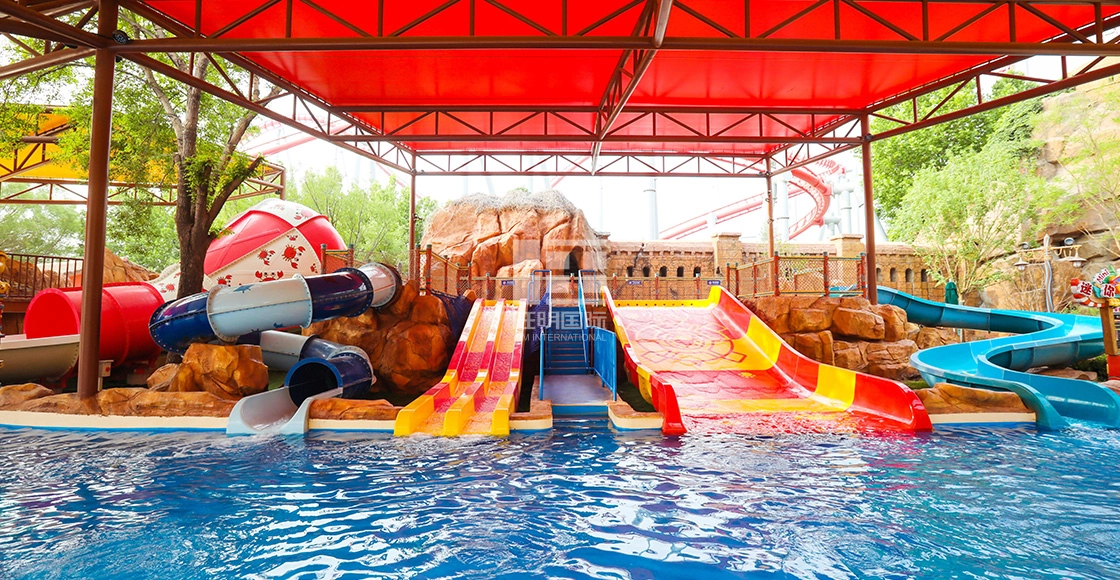
Children Combined Water Slide
Discover endless fun with the Children Combined Water Slide by WM INTERNATIONAL, expertly crafted for thrill-seeking kids. Perfect for summer splashes, this durable slide promises safety and joy. Looking to elevate your play area? Explore our Children's Combined Slide for sale now!
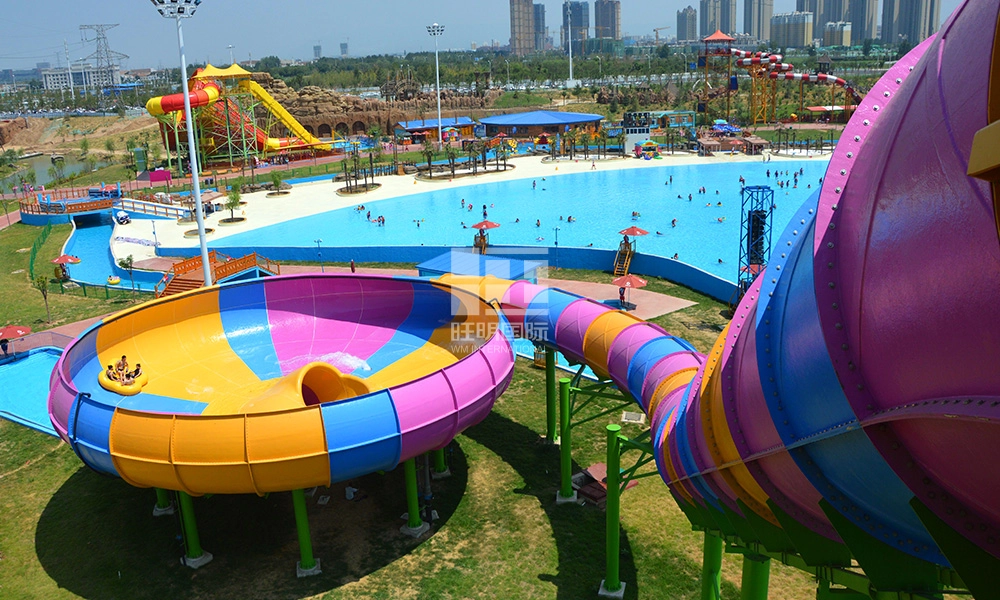
Huge Bowl Water Slide
The Huge Bowl Water Slide has achieved the “World's Best New Water Amusement Equipment” Award; it is the new favorite of the young people and the star project of the water park. The raft carries the tourists slowly entering the closed chute first; then it whirls in the bowl the moment the tourists can see the light. After a short period of time, the raft is suddenly suctioned into a huge black hole until it falls into the water. For a moment, the tourists realize the breathtaking journey has been safely brought to an end.
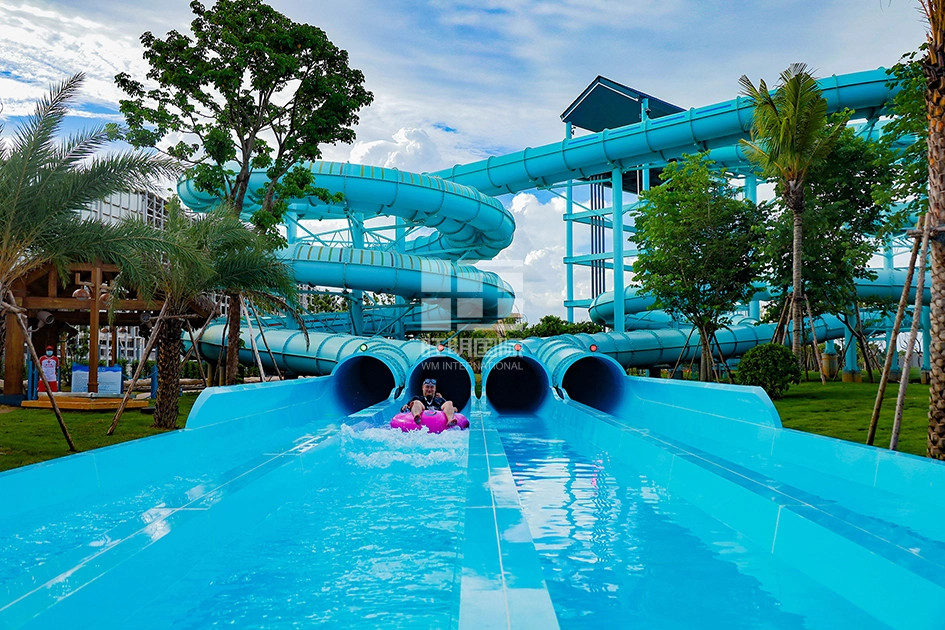
Time Tunnel Water Slide
The biggest feature of the time tunnel slide is that it uses double water slides and double tubes side by side in design and competes along the circular slide path. 8 people can play at the same time, with a large passenger capacity and high return rate, which is very suitable for team and family travel. And the slide is equipped with WangMing International's time tunnel technology, and the interior of the slide presents a beautiful aurora effect, with colorful lights, as if traveling through time and space.
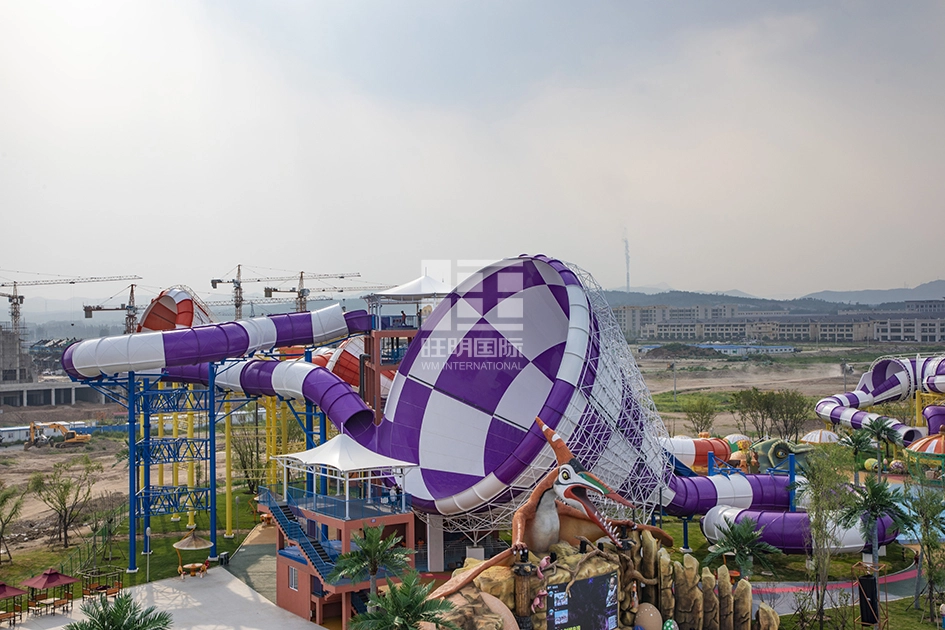
Big Tourbillion Water Slide
The Big Tourbillion water Slide won the "Gold Ticket Award - The Best New Project" of the international tourism industry. With unique modelling, strong irritation and humor, it is deeply loved by the young people; it has always been the popularity star of the water park. The raft carries the tourists as they enter the dark, closed chute slowly from the more than ten-meter-high platform; under the effect of gravity and water flow, it enters the state of rapid falling and then drops into the big Tourbillon; after a few times of whirling, it falls into the water pool. At this moment, the tourists are still in shock.
Get in touch
Have to get customized water park solutions and product quotes.
We will provide you with professional consultation and support.

Relying on leading technology, innovative products and rich industry experience, we tailor personalized solutions for each water park project to ensure a safe and exciting entertainment experience for tourists.
 Scan QR Code
wmwaterslide
wmwaterpark