




High-Capacity Picks: Best Water Slide for Kids
Operators seeking high-throughput, child-focused aquatic attractions require guidance that combines capacity metrics, safety compliance, lifecycle costs and site feasibility into an actionable procurement framework; this enterprise brief evaluates high-capacity kiddie slide typologies—racer lanes, multi-rider bowls, gentle family chutes and toddler play slides—against throughput, footprint, installation complexity and maintenance profiles to help investors, park planners, and procurement teams select the right youth attraction for scalable guest flow and long-term ROI.
- Choosing High-Throughput Children's Flume Solutions
- Capacity Metrics and Queue Management
- Safety Standards, Testing, and Certifications
- Age-Graded Design & Universal Access
- Design Types, Operational Trade-offs and Comparative Data
- Typologies: High-Capacity Racers vs Family Attractions
- Space, Civil Infrastructure and Water Systems
- Maintenance, Consumables and Lifecycle Costing
- Procurement, Contracting and Site-Readiness Checklist
- Pre-Procurement Site Assessment
- Specifying Performance-Based Contracts
- Supplier Due Diligence and Quality Control
- Implementation Roadmap and Operator Handover
- Commissioning, Training and SOPs
- Performance Monitoring and Continuous Improvement
- Refurbishment Planning
- WM International: Why Choose an Experienced Integrated Partner
- Comprehensive Planning to Delivery Capabilities
- Manufacturing Scale, Quality and Customization
- Product Portfolio and Services
- Frequently Asked Questions
Operators seeking high-throughput, child-focused aquatic attractions require guidance that combines capacity metrics, safety compliance, lifecycle costs and site feasibility into an actionable procurement framework; this enterprise brief evaluates high-capacity kiddie slide typologies—racer lanes, multi-rider bowls, gentle family chutes and toddler play slides—against throughput, footprint, installation complexity and maintenance profiles to help investors, park planners, and procurement teams select the right youth attraction for scalable guest flow and long-term ROI.
Choosing High-Throughput Children's Flume Solutions
Capacity Metrics and Queue Management
Procurement decisions should be driven by riders-per-hour targets rather than aesthetics alone. Throughput planning requires measuring dispatch interval, rider turnover, and safety buffer times. For example, multi-lane competitive flumes can achieve substantially higher hourly capacity when combined with staged dispatch platforms and trained lifeguards, while family raft attractions require longer load/unload windows. Estimating peak-hour demand (often 25–35% of daily attendance concentrated over 3–4 hours) helps size attractions to avoid excessive queueing costs and guest dissatisfaction. Industry operators and trade organizations provide operation benchmarks useful for capacity modelling (IAAPA).
Safety Standards, Testing, and Certifications
Buyers must insist on compliance with recognized safety frameworks and independent testing. Standards and guidance from bodies such as ASTM International, the U.S. Consumer Product Safety Commission (CPSC), and best-practice operator guidelines reduce liability and support insurance underwriting. Essential proof points include structural load calculations, UV-resistant gelcoat certification, non-slip stair systems, and documented dynamic testing for raft and rider speeds. Verifiable manufacturing QA records and third-party inspection reports should be contractually mandated.
Age-Graded Design & Universal Access
Designing for young guests requires separate considerations: lower exit pool depths, gradual pitch profiles, and integrated transfer access for caregivers and mobility-impaired users. ADA-equivalent access pathways and staged transfer platforms broaden market reach and increase dwell time. Modular kiddie attractions that can be reconfigured for toddler-only sessions versus mixed-family sessions optimize utilization across seasons.
Design Types, Operational Trade-offs and Comparative Data
Typologies: High-Capacity Racers vs Family Attractions
Racer-style multi-lane slides are engineered for throughput and spectacle—ideal for parks targeting crowd movement and photo opportunities. Family raft systems provide higher perceived value per dispatch but lower throughput per linear meter. Shallow-slope toddler circuits maximize repeat rides and are cost-effective for small footprints. Selection depends on the operator’s attendance profile, target demographic, and capital allocation strategy.
Space, Civil Infrastructure and Water Systems
Footprint planning must account for launch tower, catch pool, circulation pumps and filtration capacity. High-capacity installations require increased hydraulic head, larger recirculation pumps, and redundancy in chemical dosing systems to maintain water quality during peak load. Early inclusion of MEP (mechanical, electrical, plumbing) estimations in the design scope reduces change orders during construction.
Maintenance, Consumables and Lifecycle Costing
Operational cost analysis should include routine gelcoat maintenance, joint seal replacement, pump and motor lifecycle, and annual safety inspections. A lifecycle cost model over 10–15 years often shows that modular, repairable composites reduce total cost of ownership even if initial CAPEX is higher. Service contracts that include SLA-response times, spare parts warehousing, and planned refurbishments preserve uptime for revenue-critical attractions.
| Attraction Type | Typical Throughput (riders/hour) | Approx. Footprint (m²) | Primary Age Range | Installation Complexity |
|---|---|---|---|---|
| Multi-lane Racer (shallow lanes) | 700–1,500 | 200–500 | 6–14 years | Medium–High (tower, staging) |
| Family Raft Slide | 200–800 | 300–800 | 4+ years (mixed) | High (raft handling, larger catch) |
| Kiddie Gentle Chute | 300–600 | 50–150 | 1–6 years | Low–Medium |
| Enclosed Tube (child-appropriate) | 300–700 | 150–400 | 3–12 years | Medium (structural supports) |
Procurement, Contracting and Site-Readiness Checklist
Pre-Procurement Site Assessment
Before issuing an RFP, owners should commission a geotechnical survey, drainage study, and power-load assessment. Water recycling capacity and chemical treatment systems must be sized to accommodate peak hydraulic demand. Early-stage civil allowances in the project budget mitigate downstream scope creep and accelerate turnkey delivery timelines.
Specifying Performance-Based Contracts
Contracts that emphasize performance outcomes (uptime, throughput targets, safety KPIs) align supplier incentives with operator goals. Include acceptance testing procedures, penalty/bonus clauses tied to commissioning milestones, and clear handover documentation. Requiring factory acceptance tests and site witness tests reduces commissioning disputes.
Supplier Due Diligence and Quality Control
Buyers should evaluate manufacturers on production capacity, traceable materials sourcing, factory QA protocols, and installed-base references. Review factory photos, ISO or equivalent QA certificates, and request site visits where feasible. Where available, third-party inspection reports and lifecycle warranty terms provide additional assurance. For industry context and standards, consult resources such as Water slide - Wikipedia and regulatory guidance from CPSC.
Implementation Roadmap and Operator Handover
Commissioning, Training and SOPs
Successful handover includes detailed SOPs for lifeguards, maintenance teams, and chemical handlers. A comprehensive training program covering daily checks, emergency response, and minor repair tasks reduces downtime. Identify critical spare parts and consumables before opening to ensure quick resolution of common failure modes.
Performance Monitoring and Continuous Improvement
Implement telemetry for pump runtime, chemical dosing activity and rider dispatch logs to support data-driven operational improvements. Regular guest-flow analysis allows dynamic allocation of staff to minimize queues and maximize throughput without compromising safety.
Refurbishment Planning
Plan for scheduled cosmetic and functional refurbishments every 5–8 years depending on UV exposure and usage intensity. Incorporate refurbishment windows into park calendars to minimize revenue disruption and preserve lifetime value.
WM International: Why Choose an Experienced Integrated Partner
Comprehensive Planning to Delivery Capabilities
With 19 years of industry experience, WM International Waterslide provides a full range of water park planning and design services. From water park planning and design to manufacturing, installation and maintenance, our team provides comprehensive service solutions to transform a park vision into a vibrant reality. Whether a client requires the design and development of a new park or maintenance for an existing facility, our decades of combined experience as operators, designers, suppliers and guests help realize world-class amusement, theme and water park attractions.
Manufacturing Scale, Quality and Customization
We own a 100000 m² modern production base—the largest in the industry—focused on producing a wide variety of water slides for parks of every scale. Our manufacturing process emphasizes traceability, material certification, and modular construction to support faster site assembly and predictable commissioning schedules. Each project is delivered as a reflection of our professional capabilities, showing how we provide tailor-made solutions based on different customer needs and site characteristics.
Product Portfolio and Services
Our product offerings span water park masterplans and turnkey Water park construction projects to stand-alone attractions such as Water Slides, Water Play Attractions and Wave Making Equipment. WM International supports procurement teams with detailed technical packages, factory acceptance testing, site supervision and after-sales maintenance programs. To discuss project requirements or request a technical dossier, visit https://www.wmwaterslide.com or contact trading@wmwaterslide.com.
Operators requiring compliance references and industry benchmarking can consult standards and associations such as ASTM International, IAAPA, and regulatory resources from CPSC to inform procurement specifications and safety protocols.
For project inquiries, custom designs, or maintenance agreements, WM International offers technical consultations, site evaluations and turnkey delivery options tailored to client KPIs.
Frequently Asked Questions
What throughput should be expected from multi-lane kids’ slides?
Multi-lane competitive slides typically yield the highest rider throughput when configured with staged dispatch platforms and trained staff; typical industry ranges are approximately 700–1,500 riders per hour depending on lane count, dispatch interval and safety buffers.
Which safety standards should be required in procurement documents?
Procurement specifications should reference recognized frameworks such as guidelines from ASTM International, operator best-practices from IAAPA, and regulatory guidance from CPSC; require third-party testing, structural calculations, gelcoat certification and documented factory QA.
How to assess the total cost of ownership for a child-focused attraction?
Total cost of ownership includes initial CAPEX, civil and MEP installation, annual maintenance (gelcoat, seals, pumps), spare parts inventory, staff training, and periodic refurbishment; model costs over a 10–15 year horizon to compare lifecycle value across attraction types.
What site infrastructure is needed for high-capacity installations?
High-capacity attractions need adequate hydraulic head, larger recirculation pumps, properly sized filtration and chemical dosing systems, reinforced foundations for towers, and drainage plans; early geotechnical and MEP assessments are critical to avoid scope changes.
How does WM International support commissioning and after-sales service?
WM International provides factory acceptance testing, on-site supervision during installation, training for operations and maintenance teams, and after-sales maintenance programs including spare parts supply and refurbishment planning tailored to each park’s usage profile.
Recommended
Best professional waterpark manufacturers and supplier brands
WM INTERNATIONAL Best professional water park equipment manufacturers and supplier brands in Asia
The B2B Buyer’s Guide to kids water play equipment
Top water parks with the best adult water slides
Children Combined Water Slide
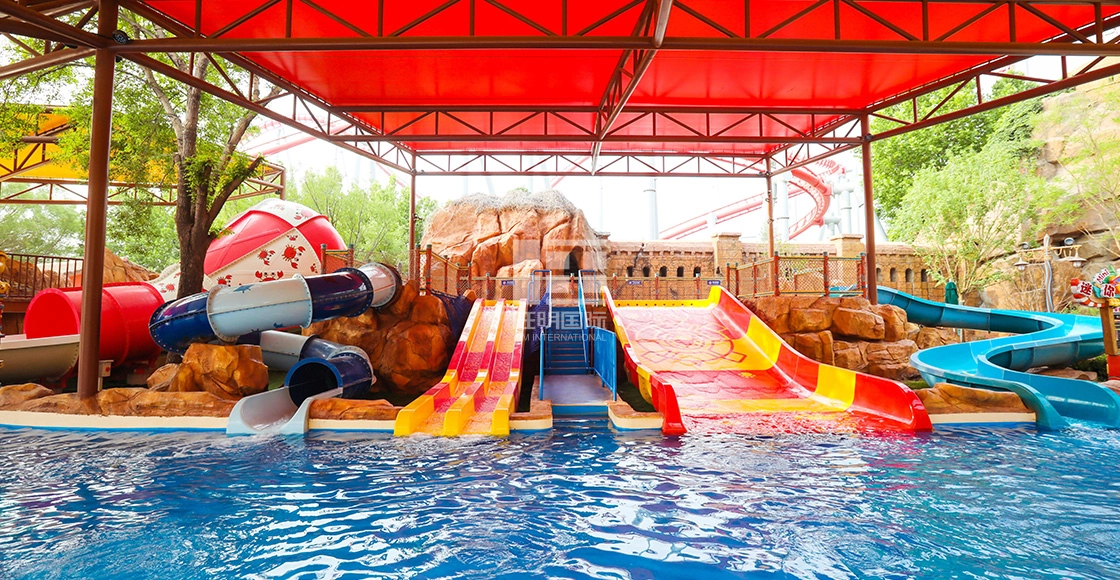
Discover endless fun with the Children Combined Water Slide by WM INTERNATIONAL, expertly crafted for thrill-seeking kids. Perfect for summer splashes, this durable slide promises safety and joy. Looking to elevate your play area? Explore our Children's Combined Slide for sale now!
Huge Bowl Water Slide
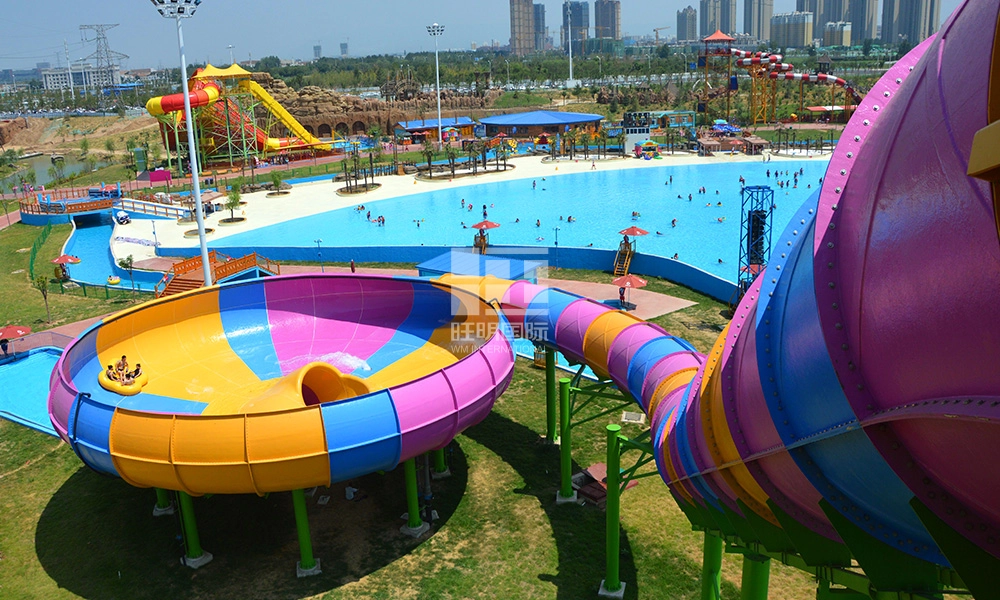
The Huge Bowl Water Slide has achieved the “World's Best New Water Amusement Equipment” Award; it is the new favorite of the young people and the star project of the water park. The raft carries the tourists slowly entering the closed chute first; then it whirls in the bowl the moment the tourists can see the light. After a short period of time, the raft is suddenly suctioned into a huge black hole until it falls into the water. For a moment, the tourists realize the breathtaking journey has been safely brought to an end.
Time Tunnel Water Slide
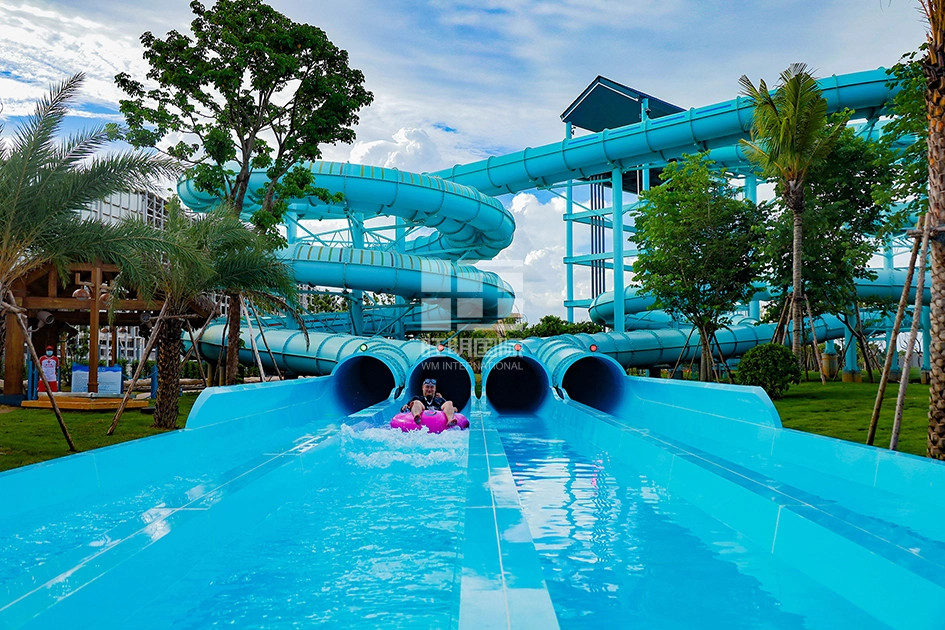
The biggest feature of the time tunnel slide is that it uses double water slides and double tubes side by side in design and competes along the circular slide path. 8 people can play at the same time, with a large passenger capacity and high return rate, which is very suitable for team and family travel. And the slide is equipped with WangMing International's time tunnel technology, and the interior of the slide presents a beautiful aurora effect, with colorful lights, as if traveling through time and space.
Big Tourbillion Water Slide
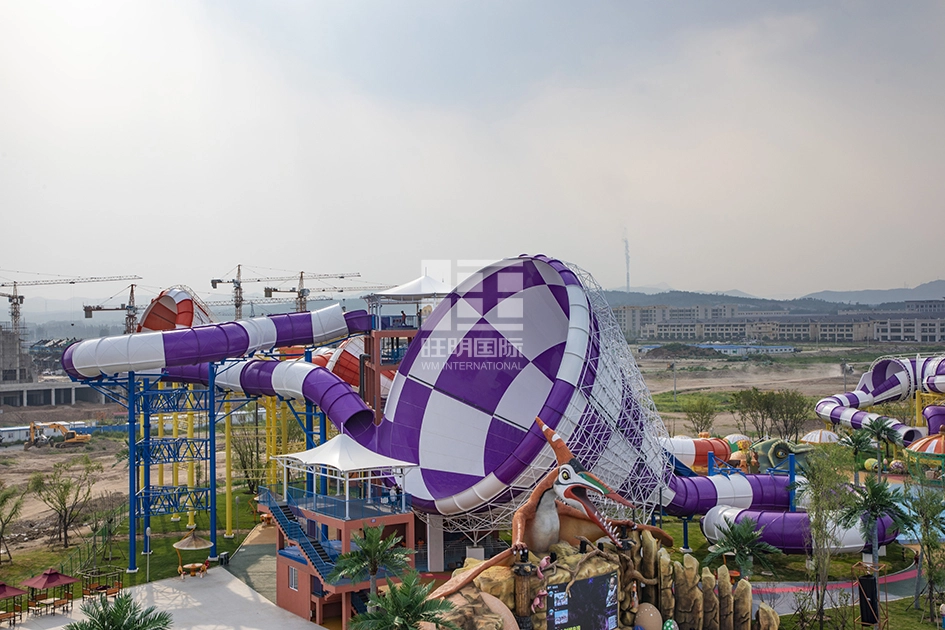
The Big Tourbillion water Slide won the "Gold Ticket Award - The Best New Project" of the international tourism industry. With unique modelling, strong irritation and humor, it is deeply loved by the young people; it has always been the popularity star of the water park. The raft carries the tourists as they enter the dark, closed chute slowly from the more than ten-meter-high platform; under the effect of gravity and water flow, it enters the state of rapid falling and then drops into the big Tourbillon; after a few times of whirling, it falls into the water pool. At this moment, the tourists are still in shock.
Get in touch
Have to get customized water park solutions and product quotes.
We will provide you with professional consultation and support.

Relying on leading technology, innovative products and rich industry experience, we tailor personalized solutions for each water park project to ensure a safe and exciting entertainment experience for tourists.
 Scan QR Code
wmwaterslide
wmwaterpark