






Energy Efficient Pump Systems for Commercial Water Slides
- Optimizing Hydraulic Systems for High-Capacity Slide Attractions
- Demand profiling, duty cycles and throughput planning
- Pump selection: centrifugal families, materials and hydraulic curves
- Hydraulic modelling and system interactions
- Energy-Saving Technologies for Recirculation and Filtration
- Variable Frequency Drives (VFDs) and control strategies
- High-efficiency pump designs and motor technologies
- Smart monitoring, IoT and predictive maintenance
- Operational Strategies, Standards, and Lifecycle ROI
- Operating procedures to minimize waste
- Regulatory compliance, testing and acceptance criteria
- Capital planning: simple payback and TCO
- WM International: Integrated Design-to-Maintenance Solutions
- Turnkey capabilities that align hydraulics with attraction design
- Manufacturing scale and customization
- Product portfolio and lifecycle services
- Frequently Asked Questions
- What energy savings can be expected from upgrading recirculation pumps with VFDs?
- How should pumps be sized for a multi-slide waterpark complex?
- Which standards and test methods should buyers request from vendors?
- What is the typical payback period for energy-efficient pump retrofits?
- How does integrated design from a single supplier reduce lifecycle costs?
- Frequently Asked Questions
Energy-efficient recirculation systems are fundamental to reducing operating expenses and carbon footprint for high-throughput aquatic attractions; this guide consolidates hydraulic design best practices, variable-speed control strategies, verified testing standards, and procurement checklists to help buyers evaluate pump trains, control architectures, filtration integration and predictive maintenance for large-scale slide complexes and retail-ready slide packages such as commercial water slides for sale.
Optimizing Hydraulic Systems for High-Capacity Slide Attractions
Demand profiling, duty cycles and throughput planning
Understanding peak flow rates, ride round-trip times and seasonal demand curves is the first step in designing an energy-efficient pumping network. Owners should develop a duty-cycle matrix that maps attraction demand (l/s or gpm) against hours-of-operation and expected rider throughput. This enables sizing pumps that operate within their best-efficiency point (BEP) during the majority of run-time, thereby avoiding oversized constant-speed units that waste energy during off-peak periods.
Pump selection: centrifugal families, materials and hydraulic curves
Selection criteria must include pump type (single-stage centrifugal, end-suction, split-case), impeller trim options, and hydraulic curve alignment with system head. High-efficiency hydraulics reduce energy draw for a given flow; prefer units with documented performance curves tested to nationally recognized methods. Equipment procurement should request certified performance curves and factory acceptance test (FAT) results to verify that the specified model will achieve the projected kW and flow at site head conditions.
Hydraulic modelling and system interactions
Computational hydraulic modelling (pump system simulations and 1D network analysis) helps predict transient behavior, recirculation paths, and cavitation risk when multiple slides or attractions are tied into a common wetwell or surge tank. Modeling supports decisions on surge mitigation, check valve selection, and whether a parallel pump bank or staged pumping strategy will offer the best energy and redundancy balance for multi-attraction parks.
Energy-Saving Technologies for Recirculation and Filtration
Variable Frequency Drives (VFDs) and control strategies
Variable-speed drives enable pumps to follow real-time hydraulic demand instead of throttling flow via mechanical valves. In variable-load systems such as recirculating slide circuits, VFDs commonly yield 20–50% energy savings compared to fixed-speed operation, depending on the flow variability and control algorithm used. Integrating flow, pressure and level feedback into closed-loop control ensures the pump operates near its BEP across conditions. See the U.S. Department of Energy’s guidance on pumping systems and tools for detailed implementation references: U.S. Department of Energy Pumping System Assessment.
High-efficiency pump designs and motor technologies
Specifying High Quality-efficiency motors (IE3/IE4 where available) and hydraulically optimized impellers reduces kW per unit flow. Consider close-coupled vs. long-coupled designs based on maintenance accessibility; corrosion-resistant materials and coatings extend service intervals in chlorinated or saltwater environments. The Hydraulic Institute provides sector-specific guidance and performance standards for selection and testing: Hydraulic Institute.
Smart monitoring, IoT and predictive maintenance
Embedding flow meters, energy meters, vibration sensors and temperature probes into pump skids enables continuous performance trending. Cloud-enabled analytics detect drift from baseline efficiency and trigger condition-based maintenance actions, reducing unplanned downtime and conserving energy by ensuring pumps operate cleanly and within design parameters. Buyers should specify open protocols (Modbus, BACnet) to integrate with park SCADA or building management systems.
Operational Strategies, Standards, and Lifecycle ROI
Operating procedures to minimize waste
Operational rules such as scheduled low-flow modes during non-peak hours, automated wetwell equalization, and ride queuing logistics that smooth peak surges help keep pumps within efficient operating bands. Training operations teams on start-up sequences, dead avoidance and seasonal commissioning will protect equipment and reduce energy use over the asset lifecycle.
Regulatory compliance, testing and acceptance criteria
Request factory and site acceptance tests to standards recognized in the industry. Reference test methods and standards from ISO and national organizations for pump performance and energy reporting: ISO. Additionally, general design and safety norms for water attractions should be considered alongside hydraulic standards to ensure operational safety and regulatory compliance.
Capital planning: simple payback and TCO
Energy-efficient upgrades often require higher capital but deliver measurable operating savings. Use a total cost of ownership (TCO) model that includes capital expense, energy cost (kWh), maintenance, downtime costs, and expected equipment life. Typical VFD retrofits recover investment in 2–5 years depending on local electric rates and duty factors. A formal lifecycle model allows investors to compare options and justify upfront High Quality for high-efficiency components.
| Characteristic | Fixed-Speed Pump Train | VFD-Controlled Pump Bank | Parallel Staged Pumps |
|---|---|---|---|
| Typical energy savings | Baseline | 20%–50% (variable load scenarios) | 25%–55% (with optimized staging) |
| Operational flexibility | Low | High | High |
| Maintenance complexity | Lower tech complexity | Higher (drive electronics) | Moderate (more rotating equipment) |
| Typical payback (years) | N/A | 2–5 (depends on load profile) | 2–6 |
| Recommended for | Small, constant-load systems | Variable usage parks and multi-attraction complexes | Large parks with redundancy requirements |
WM International: Integrated Design-to-Maintenance Solutions
Turnkey capabilities that align hydraulics with attraction design
With 19 years of industry experience, WM International Waterslide provides a full range of water park planning and design services. From water park planning and design to manufacturing, installation and maintenance, we provide comprehensive service solutions to transform your park vision into vibrant realities. Whether it’s the design and development of new parks or maintaining existing ones, our decades of combined experience as park operators, designers, suppliers, and guests can give you the edge that you need to create world-class amusement, theme, and water park attractions.
Manufacturing scale and customization
WM International owns a 100000 m² modern production base, which is the largest in the industry. We mainly produce various water slides for water parks. Each project is a reflection of our professional capabilities, showing how we can provide tailor-made solutions based on different customer needs and site characteristics. Our engineering team collaborates with facility owners to size pump systems, specify materials compatible with local water chemistry, and select energy-optimized components that match guest throughput targets.
Product portfolio and lifecycle services
Primary offerings include water park planning, Water park design, Water park construction, Water Slides, Water Play Attractions and Wave Making Equipment. Buyers benefit from an integrated approach—design teams coordinate hydraulic layouts and filtration integration during the early design stages, manufacturers pre-commission pump skids in the factory, and onsite teams support commissioning and preventive maintenance programs to sustain energy performance over the asset life. Prospective clients can review product details at https://www.wmwaterslide.com or contact sales at trading@wmwaterslide.com.
Frequently Asked Questions
What energy savings can be expected from upgrading recirculation pumps with VFDs?
Upgrading to variable-speed pumping typically delivers 20%–50% energy savings in systems with variable demand; exact savings depend on the system duty cycle and control strategy. Assessment tools and baseline metering recommended by the U.S. Department of Energy can quantify expected gains: DOE Pumping System Assessment.
How should pumps be sized for a multi-slide waterpark complex?
Pumps should be sized using a demand profile that aggregates peak simultaneous ride flows, friction losses, and elevation head. Engineers should ensure pumps operate near BEP during typical conditions, and include redundancy so that maintenance or single-unit failure does not disrupt operations. Hydraulic modelling and staged pump banks are common strategies.
Which standards and test methods should buyers request from vendors?
Buyers should request performance curves and FAT reports aligned with recognized standards from organizations such as the Hydraulic Institute and applicable ISO standards. Acceptance testing should verify flow, head and power consumption at specified operating points. Useful references include the Hydraulic Institute and ISO portals: Hydraulic Institute and ISO.
What is the typical payback period for energy-efficient pump retrofits?
Payback is commonly between 2 and 5 years for VFD retrofits, depending on electricity prices, operating hours, and baseline inefficiencies. Owners should build a TCO model including energy costs, maintenance savings and avoided downtime for a precise estimate.
How does integrated design from a single supplier reduce lifecycle costs?
When attraction designers, slide manufacturers and pump system engineers coordinate from project inception, hydraulic routing, equipment access, and control integration are optimized, reducing installation change orders, accelerating commissioning, and improving long-term energy performance—minimizing total lifecycle costs and operational disruptions.
Contact WM International to discuss energy-efficient pump systems and view our water park product range: trading@wmwaterslide.com or visit https://www.wmwaterslide.com.
Frequently Asked Questions
What energy savings can be expected from upgrading recirculation pumps with VFDs?
Upgrading to variable-speed pumping typically delivers 20%–50% energy savings in systems with variable demand; exact savings depend on the system duty cycle and control strategy. Assessment tools and baseline metering recommended by the U.S. Department of Energy can quantify expected gains.
How should pumps be sized for a multi-slide waterpark complex?
Pumps should be sized using a demand profile that aggregates peak simultaneous ride flows, friction losses, and elevation head. Engineers should ensure pumps operate near BEP during typical conditions, and include redundancy so that maintenance or single-unit failure does not disrupt operations. Hydraulic modelling and staged pump banks are common strategies.
Which standards and test methods should buyers request from vendors?
Buyers should request performance curves and FAT reports aligned with recognized standards from organizations such as the Hydraulic Institute and applicable ISO standards. Acceptance testing should verify flow, head and power consumption at specified operating points.
What is the typical payback period for energy-efficient pump retrofits?
Payback is commonly between 2 and 5 years for VFD retrofits, depending on electricity prices, operating hours, and baseline inefficiencies. Owners should build a total cost of ownership model including energy costs, maintenance savings and avoided downtime for a precise estimate.
How does integrated design from a single supplier reduce lifecycle costs?
When attraction designers, slide manufacturers and pump system engineers coordinate from project inception, hydraulic routing, equipment access, and control integration are optimized, reducing installation change orders, accelerating commissioning, and improving long-term energy performance—minimizing total lifecycle costs and operational disruptions.
Recommended
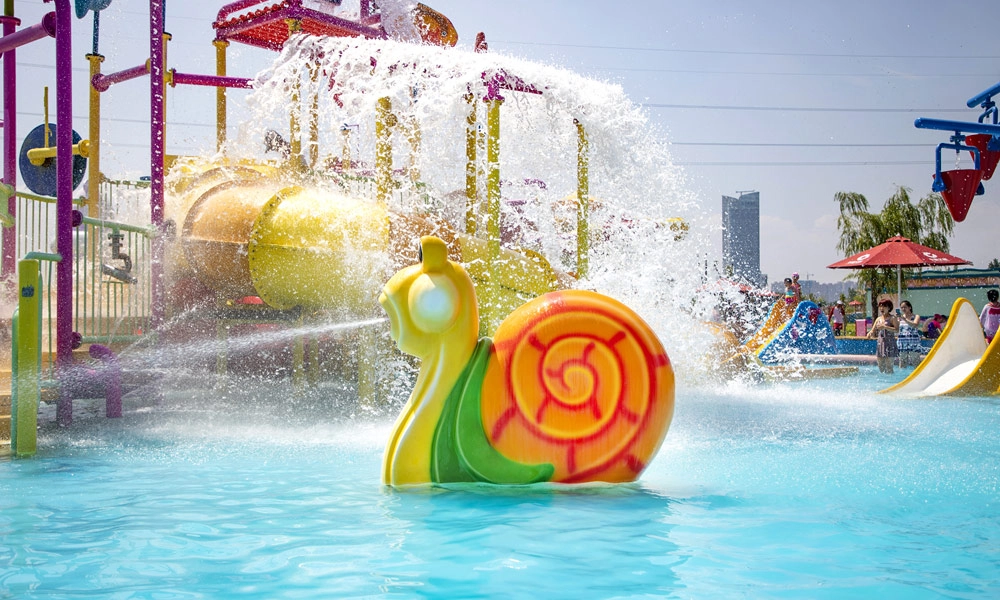
Water Spraying Snail Cartoon Animals for Water Park Splash Zones
Permits and Regulations for Installing Water Slides
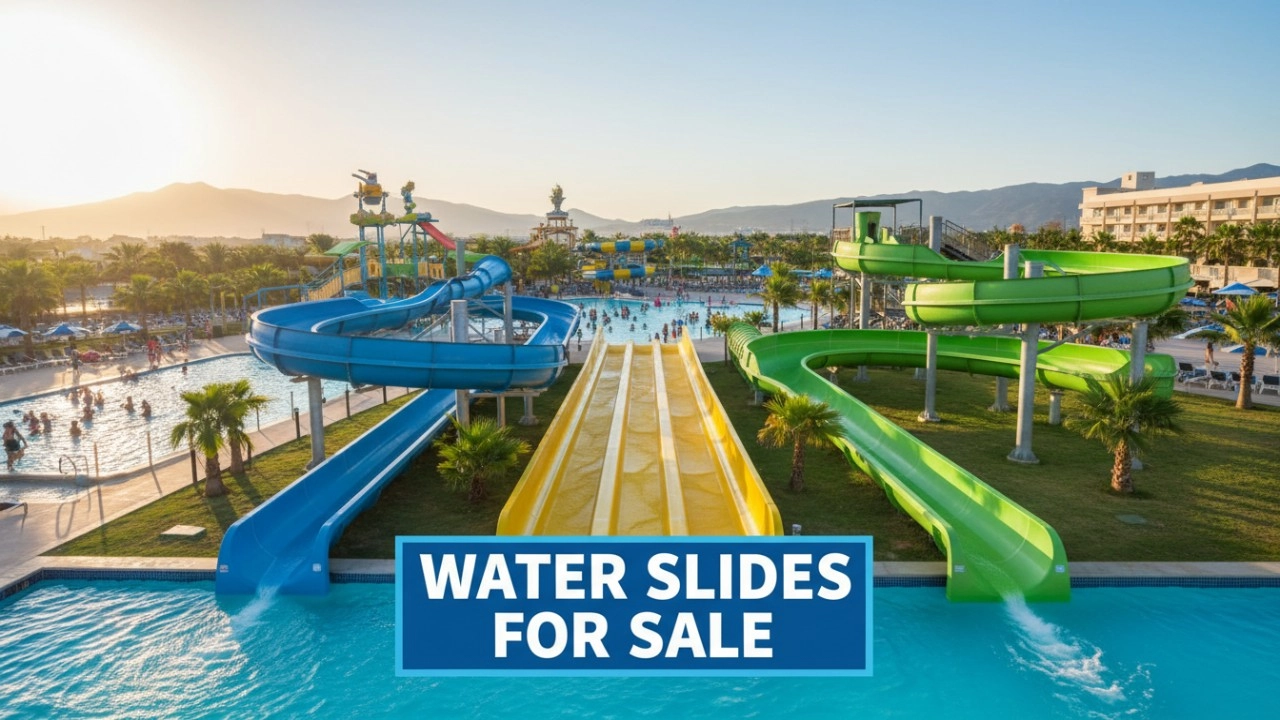
The Ultimate 2026 Buyer's Guide: High-Performance Water Slides for Sale
Commercial vs residential water slides for sale
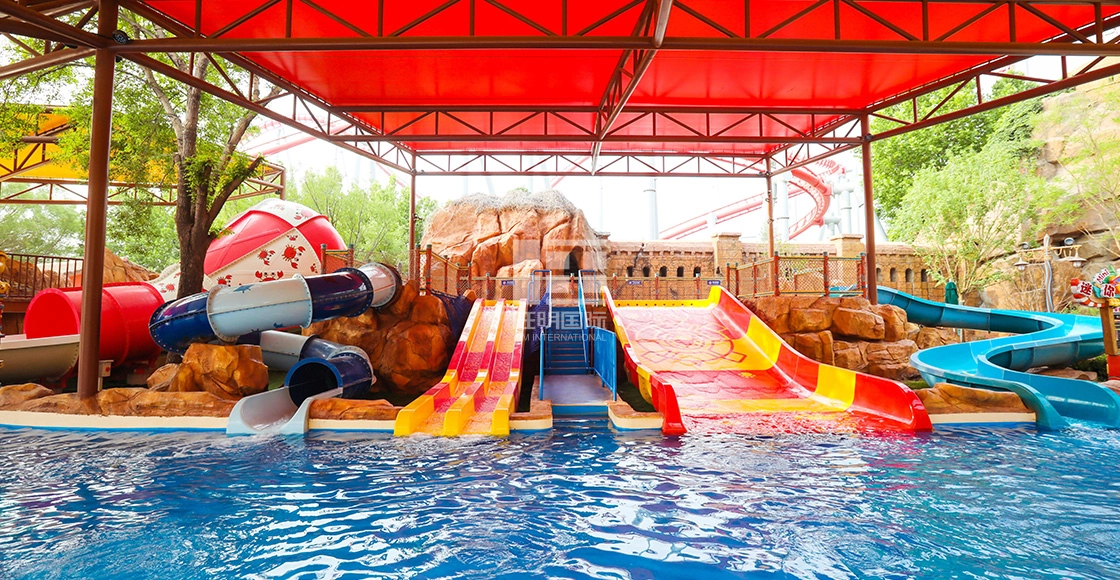
Children Combined Water Slide
Discover endless fun with the Children Combined Water Slide by WM INTERNATIONAL, expertly crafted for thrill-seeking kids. Perfect for summer splashes, this durable slide promises safety and joy. Looking to elevate your play area? Explore our Children's Combined Slide for sale now!
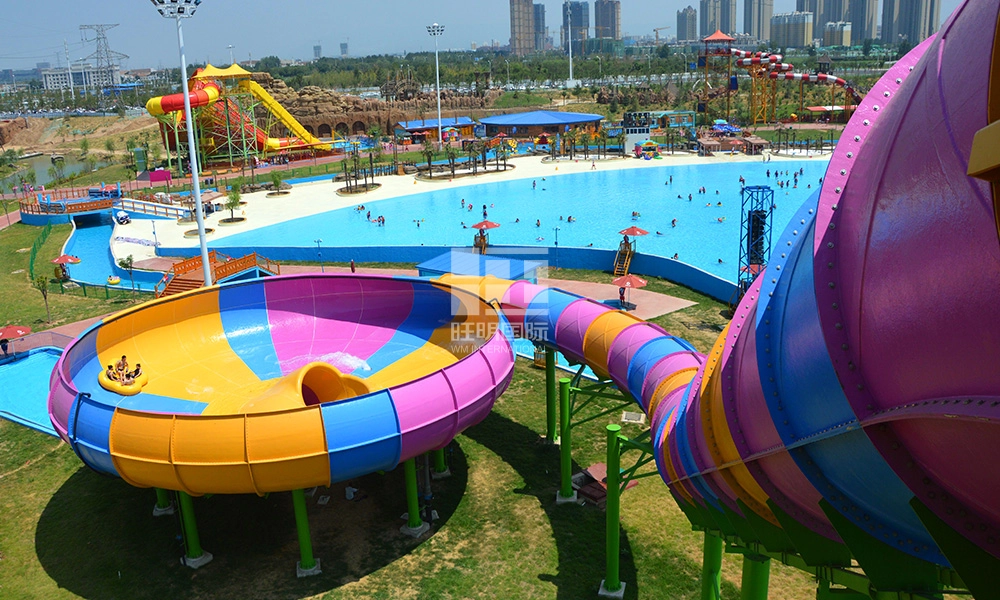
Huge Bowl Water Slide
The Huge Bowl Water Slide has achieved the “World's Best New Water Amusement Equipment” Award; it is the new favorite of the young people and the star project of the water park. The raft carries the tourists slowly entering the closed chute first; then it whirls in the bowl the moment the tourists can see the light. After a short period of time, the raft is suddenly suctioned into a huge black hole until it falls into the water. For a moment, the tourists realize the breathtaking journey has been safely brought to an end.
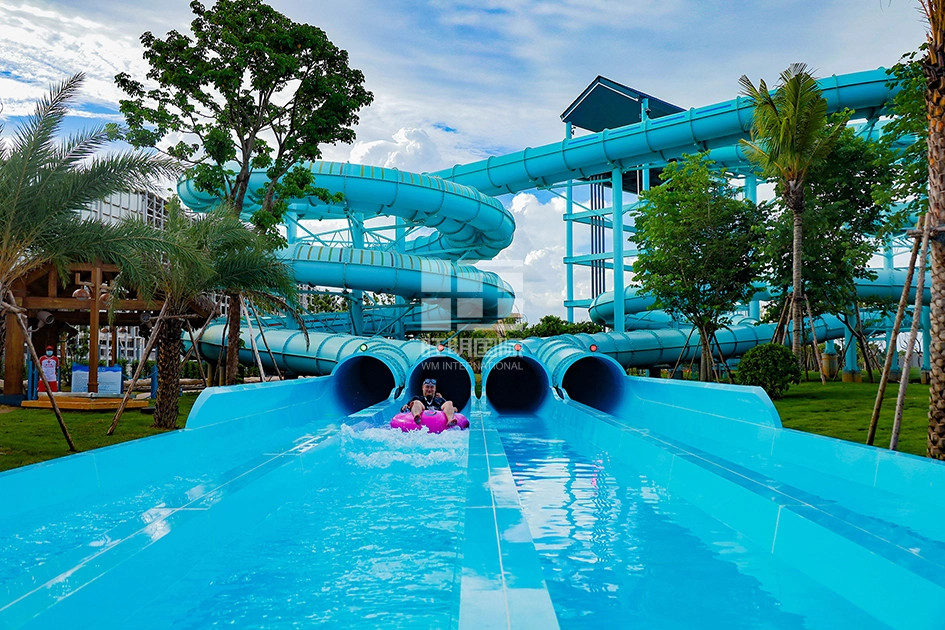
Time Tunnel Water Slide
The biggest feature of the time tunnel slide is that it uses double water slides and double tubes side by side in design and competes along the circular slide path. 8 people can play at the same time, with a large passenger capacity and high return rate, which is very suitable for team and family travel. And the slide is equipped with WangMing International's time tunnel technology, and the interior of the slide presents a beautiful aurora effect, with colorful lights, as if traveling through time and space.
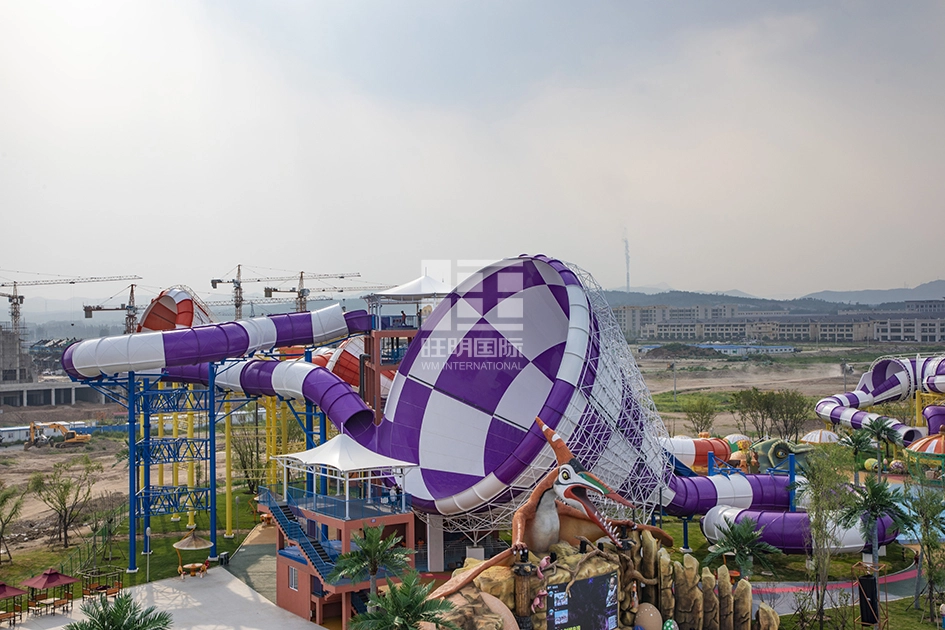
Big Tourbillion Water Slide
The Big Tourbillion water Slide won the "Gold Ticket Award - The Best New Project" of the international tourism industry. With unique modelling, strong irritation and humor, it is deeply loved by the young people; it has always been the popularity star of the water park. The raft carries the tourists as they enter the dark, closed chute slowly from the more than ten-meter-high platform; under the effect of gravity and water flow, it enters the state of rapid falling and then drops into the big Tourbillon; after a few times of whirling, it falls into the water pool. At this moment, the tourists are still in shock.
Get in touch
Have to get customized water park solutions and product quotes.
We will provide you with professional consultation and support.

Relying on leading technology, innovative products and rich industry experience, we tailor personalized solutions for each water park project to ensure a safe and exciting entertainment experience for tourists.
 Scan QR Code
wmwaterslide
wmwaterpark