


Commercial Water Slide Suppliers: Factory, Warranty, and Service Checks
- How to Evaluate Commercial Water Slide Manufacturers and Suppliers
- Verify the factory, production process, and quality records
- Review design responsibility and standards applicability
- Compare Warranty Coverage, Installation, and Service Commitments
- Read the warranty as an operating document
- Test the service plan before a failure occurs
- Build a Supplier Scorecard Around Total Project Risk
- Assess lifecycle cost and operational fit
- Use a documented evaluation process
- Coordinate the Attraction Package with the Wider Water Park
- Connect design, construction, and attraction selection
- Confirm handover readiness and long-term ownership
- Frequently Asked Questions
Choosing a commercial water slide supplier requires more than comparing attraction designs and quoted prices. Buyers should verify manufacturing capability, engineering and safety documentation, warranty exclusions, installation responsibilities, spare-parts access, and post-opening service before placing an order. For operators searching for commercial water slides for sale, a structured supplier review helps expose lifecycle costs and project risks that may not appear in a headline quotation. The most dependable procurement process connects factory evidence to the actual site, applicable regulations, operating plan, and long-term maintenance needs.
How to Evaluate Commercial Water Slide Manufacturers and Suppliers
A supplier’s brochure can show a concept, but it cannot establish whether the company can engineer, manufacture, install, and support the attraction your site requires. The first stage of due diligence is to confirm who is responsible for each part of delivery. Some firms manufacture slide sections, while others act as project integrators, subcontracting engineering, fabrication, transport, or installation. Either model can work, provided responsibilities, interfaces, and approvals are documented in the contract.
Verify the factory, production process, and quality records
Request the legal name and location of the manufacturing entity, a description of its production capabilities, and evidence that the proposed factory will make the equipment in your quotation. A virtual or in-person factory review should examine material receiving, traceability, mold and tooling control, laminate or composite production procedures, curing and finishing controls, dimensional checks, and nonconformance handling. For steel supports and platforms, buyers should also ask how welding procedures, coating systems, and inspection records are controlled.
Ask for representative quality documents rather than relying on a general statement that a factory is certified. Useful evidence may include a quality-management-system certificate whose scope and validity can be checked, sample inspection records, material certificates where applicable, and documented factory acceptance criteria. An ISO 9001 quality management systems overview can help buyers understand the system’s purpose; certification alone does not prove that a particular slide design is safe or suitable for a specific site.
Factory audits should also test production capacity against the project schedule. Confirm the planned manufacturing sequence, current order load, critical-path components, inspection hold points, and the process for approving design changes. If factory access is not practical, request a live video walkthrough and time-stamped evidence tied to the project, then arrange independent inspection at agreed milestones.
Review design responsibility and standards applicability
Before comparing technical offers, identify the governing jurisdiction and the authority having jurisdiction. Safety requirements can depend on the country, local building and electrical codes, the attraction type, and how the facility will operate. The supplier should identify the design basis, applicable standards and editions, required professional reviews, and any assumptions about rider characteristics, water flow, landing pools, circulation, or supervision.
Relevant references may include ISO 17842-1 for amusement rides and devices and ASTM F2376 for water slide systems. Buyers should verify the current edition, scope, and applicability directly with the standards bodies and local regulators; citing a standard in a proposal does not by itself demonstrate compliance. For aquatic-facility operations and public-health planning in the United States, the CDC Model Aquatic Health Code is a guidance resource, not a substitute for applicable laws or local codes.
Require a clear division of engineering responsibility. The contract should state who provides calculations, structural reactions, foundation loads, interface drawings, electrical requirements, water-system requirements, and final installation documentation. The owner’s architect, structural engineer, aquatic consultant, and permitting team may need to review these inputs before fabrication begins. Resolving interfaces early is generally less disruptive than modifying foundations or circulation systems after equipment arrives.
Compare Warranty Coverage, Installation, and Service Commitments
Warranty language can materially change the economic value of a proposal. A long headline term is not necessarily strong coverage if it applies only to selected components or excludes labor, freight, access equipment, operating conditions, or damage associated with installation. Buyers should compare the full warranty document—not a sales summary—and map each obligation to the party responsible for fulfilling it.
Read the warranty as an operating document
Check when the warranty begins: shipment, installation completion, acceptance, or first operation can produce very different coverage periods. Identify covered components, remedies, claim deadlines, response requirements, and whether replacement parts are new, repaired, or refurbished. Review exclusions relating to water chemistry, cleaning products, ultraviolet exposure, weather, misuse, unauthorized modifications, routine wear, and failure to follow maintenance instructions.
Clarify who pays for diagnosis, labor, travel, shipping, customs, lifting equipment, and site access during a repair. For an international project, confirm which party manages replacement-part export documentation and whether freight costs are included. Ask whether the warranty remains valid when installation or maintenance is performed by a local contractor, and what training or records the owner must maintain to preserve coverage.
Test the service plan before a failure occurs
A service commitment should specify the communication channel, working hours, escalation path, and the information required to open a support case. Ask the supplier to define response time separately from resolution time: a rapid acknowledgement does not guarantee a rapid repair. Confirm whether remote troubleshooting, on-site technical visits, annual inspections, operator training, and recommissioning are available, and whether they are included or separately priced.
Spare-parts planning is particularly important for seasonal venues and remote destinations. Request a recommended critical-spares list, part numbers, lead times, storage conditions, and the period for which the supplier expects parts to remain available. Owners should consider keeping high-impact consumables and components on site when a lengthy import or production lead time could interrupt operations. A practical service agreement also defines how engineering changes and replacement parts will be documented so maintenance teams can keep accurate asset records.
| Procurement check | Strong evidence | Warning sign | Buyer follow-up |
|---|---|---|---|
| Factory capability | Named production site, relevant process controls, inspection records, and traceable project milestones | Only a showroom, generic certificate, or unverified subcontracting claim is offered as proof | Confirm the manufacturing entity and arrange an audit or project-specific inspection |
| Design and compliance | Defined design basis, standards and editions, engineering deliverables, and approval responsibilities | Proposal states “meets international standards” without identifying scope or evidence | Obtain a compliance matrix and have local technical advisers review it |
| Warranty | Written coverage, start date, exclusions, claim process, remedies, and allocation of labor and freight | Only a warranty duration is stated, with terms to be supplied after purchase | Compare the complete warranty against the operating and maintenance plan |
| After-sales support | Named contact route, response process, parts information, training, and service options | No parts list, support escalation route, or repair-cost responsibilities are defined | Request a service schedule and priced critical-spares proposal |
The table is a comparison framework, not a claim that every supplier follows the same process or that one document guarantees safe performance. Project owners should adapt the checks to the attraction type, destination, contract structure, and local approval requirements.
Build a Supplier Scorecard Around Total Project Risk
Price comparison is meaningful only when proposals cover comparable scope. One quotation may include design coordination, foundations information, installation supervision, commissioning, training, and spare parts; another may price only fabricated slide components. Normalize the offers by listing inclusions, exclusions, owner-supplied works, provisional sums, taxes, transport, customs, and site assumptions. This helps procurement teams distinguish a genuinely lower-cost solution from an incomplete scope that transfers risk to the owner.
Assess lifecycle cost and operational fit
Estimate costs beyond purchase and installation: planned inspections, cleaning, water treatment implications, replacement components, staff training, downtime, and eventual refurbishment. Ask suppliers to describe inspection and maintenance tasks in a format operators can use, including frequency, responsible role, acceptance criteria, and records to retain. Any maintenance interval or operating limit should be supported by the manufacturer’s documentation and reconciled with local requirements rather than assumed from another project.
Match the proposed attraction to the site’s throughput, guest profile, available footprint, topography, utilities, and operating model. Confirm that the supplier has considered queue access, lifeguard sightlines, dispatch and landing areas, water circulation, drainage, maintenance access, and interfaces with other attractions. A visually compelling feature may underperform if its capacity, staffing needs, or operating constraints do not fit the wider water park plan.
Use a documented evaluation process
Set mandatory pass-or-fail requirements before scoring commercial offers. These may include acceptable design documentation, verified manufacturing source, agreed warranty conditions, required delivery milestones, and a workable support plan. Then score differentiators such as customization, communication, lead-time confidence, service coverage, reference projects, and clarity of technical submissions. Record the evidence behind each score so that decisions remain explainable to finance, operations, engineering, and executive stakeholders.
Request references from projects comparable in climate, scale, regulatory environment, and operating intensity. Ask those operators about schedule reliability, installation coordination, documentation quality, parts availability, and the supplier’s response when issues arose. References are most useful when questions focus on observable delivery and support outcomes rather than general satisfaction alone.
Coordinate the Attraction Package with the Wider Water Park
A slide is part of a connected visitor and operating system, not an isolated purchase. Its performance depends on the relationship between attraction layout, structural design, water supply, filtration and treatment, electrical systems, access routes, staffing, and guest circulation. Projects that coordinate these elements early can reduce interface conflicts and make construction sequencing more predictable.
Connect design, construction, and attraction selection
Our project approach is to evaluate attraction requirements alongside the broader water park plan, rather than treating product selection as a standalone decision. A coordinated scope may bring together water park design, water park construction, water slides, water play attractions, and wave making equipment, with technical interfaces reviewed against the owner’s brief and site conditions. The exact scope should be defined for each project; buyers should confirm which engineering, supply, installation, and commissioning services are included before relying on a supplier’s integrated-delivery description.
When comparing a supplier’s design contribution, ask for deliverables that support decisions and construction: concept layouts, equipment schedules, interface drawings, design criteria, utility requirements, and a responsibility matrix. Confirm how revisions are controlled and how approved drawings are issued to the owner’s consultants and contractors. Clear document control is especially valuable when several vendors are working on the same pool, building, or plant-room interfaces.
Confirm handover readiness and long-term ownership
Before final acceptance, define the required handover package. It may include as-built drawings, operation and maintenance manuals, inspection records, recommended spare parts, training attendance, commissioning documentation, and a list of outstanding items. Specify who verifies completion and how defects are recorded, assigned, and closed. The facility team should receive operational training before opening, with time to understand inspection routines, emergency procedures, and escalation contacts.
For owners planning phased expansion, request information about future modifications, compatibility, and design limits. A supplier should explain which changes require renewed engineering review and whether extensions or replacement components can be integrated with the original installation. Keeping a complete asset file from the start supports future maintenance, insurance discussions, audits, and capital planning.
Use a documented supplier review to connect factory evidence, engineering responsibility, warranty value, and service readiness to the park’s operating goals, then contact our team to discuss a project scope or review our water park and attraction solutions.
Frequently Asked Questions
What should buyers check when evaluating a commercial water slide supplier?
Verify the manufacturing entity and factory processes, engineering responsibilities, applicable standards and editions, written warranty terms, installation scope, spare-parts availability, and after-sales service process. Request project-specific evidence and references from comparable installations.
How can a buyer verify a water slide manufacturer’s factory capabilities?
Confirm the legal name and location of the factory producing the equipment, review relevant production and inspection records, and ask about material traceability, process controls, quality procedures, and project capacity. Arrange an in-person or live virtual audit, or use independent inspections at agreed production milestones.
Which standards should a commercial water slide project consider?
Depending on the attraction, jurisdiction, and project scope, buyers may need to review references such as ISO 17842-1 and ASTM F2376, alongside local laws and approval requirements. Confirm the current edition and applicability with the standards bodies, regulators, and qualified project advisers; a standards reference alone does not prove compliance.
What should a water slide warranty cover?
Review the start date, covered components, remedies, exclusions, claim process, and allocation of labor, travel, freight, and replacement-part costs. Also confirm how maintenance, installation by third parties, operating conditions, and recordkeeping affect coverage.
How can water park operators assess a supplier’s after-sales service?
Ask for defined support channels, escalation steps, response expectations, service options, operator training details, and a recommended critical-spares list with part numbers and lead times. Clarify whether remote troubleshooting, site visits, inspections, and replacement-part logistics are included or separately charged.
What documents should be included at water slide project handover?
Agree on the required handover package in advance. It may include as-built drawings, operation and maintenance manuals, inspection and commissioning records, spare-parts recommendations, training documentation, and a documented process for resolving outstanding defects.
Recommended
Top Questions to Ask Water Slide Manufacturers Before Ordering
Financing Options for Purchasing Commercial Water Slides
How to start the family water park business ?
Commercial Water Slides Safety Standards and Best Practices
Children Combined Water Slide
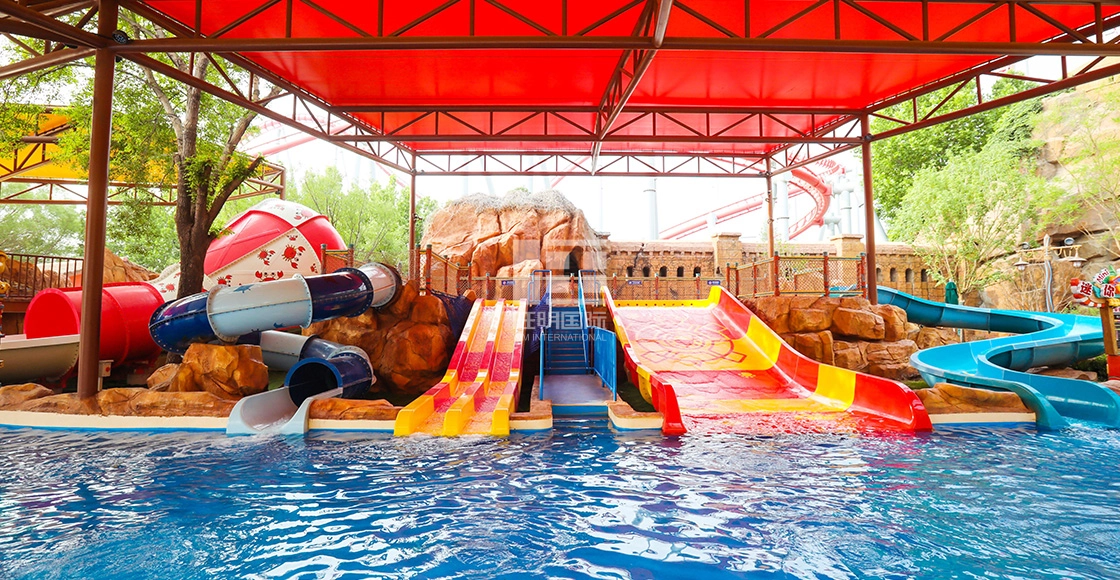
Discover endless fun with the Children Combined Water Slide by WM INTERNATIONAL, expertly crafted for thrill-seeking kids. Perfect for summer splashes, this durable slide promises safety and joy. Looking to elevate your play area? Explore our Children's Combined Slide for sale now!
Huge Bowl Water Slide
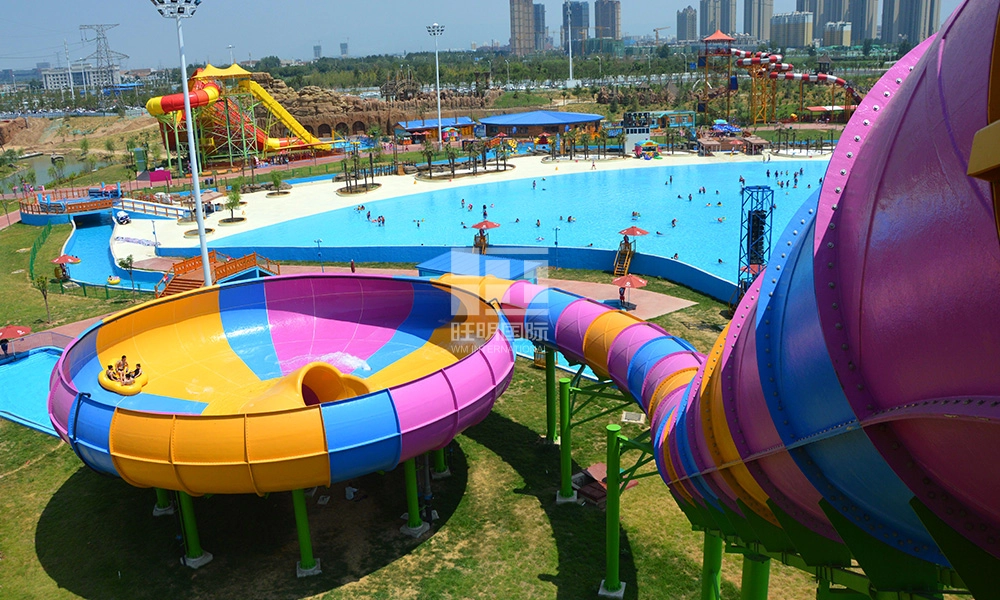
The Huge Bowl Water Slide has achieved the “World's Best New Water Amusement Equipment” Award; it is the new favorite of the young people and the star project of the water park. The raft carries the tourists slowly entering the closed chute first; then it whirls in the bowl the moment the tourists can see the light. After a short period of time, the raft is suddenly suctioned into a huge black hole until it falls into the water. For a moment, the tourists realize the breathtaking journey has been safely brought to an end.
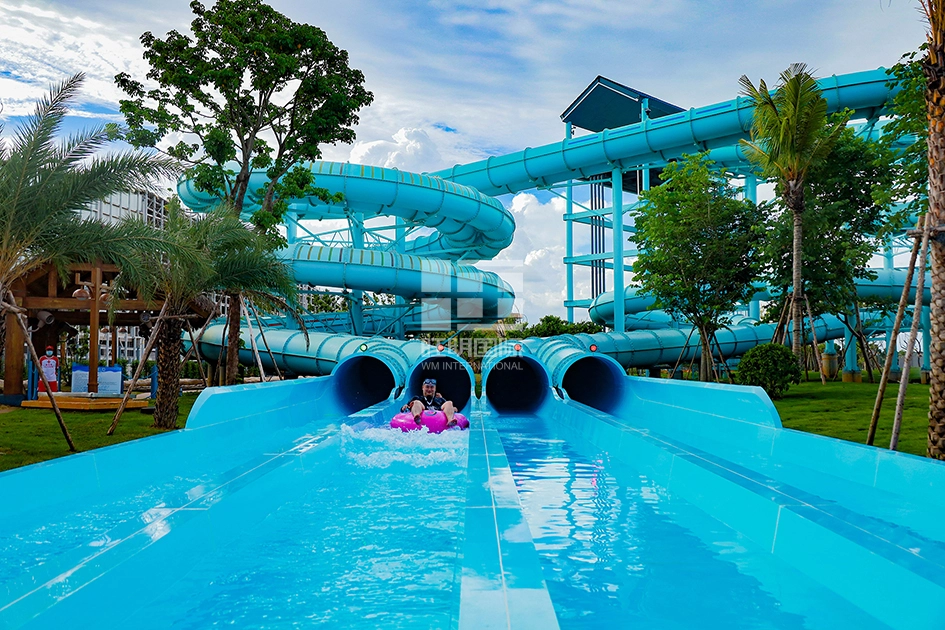
Time Tunnel Water Slide
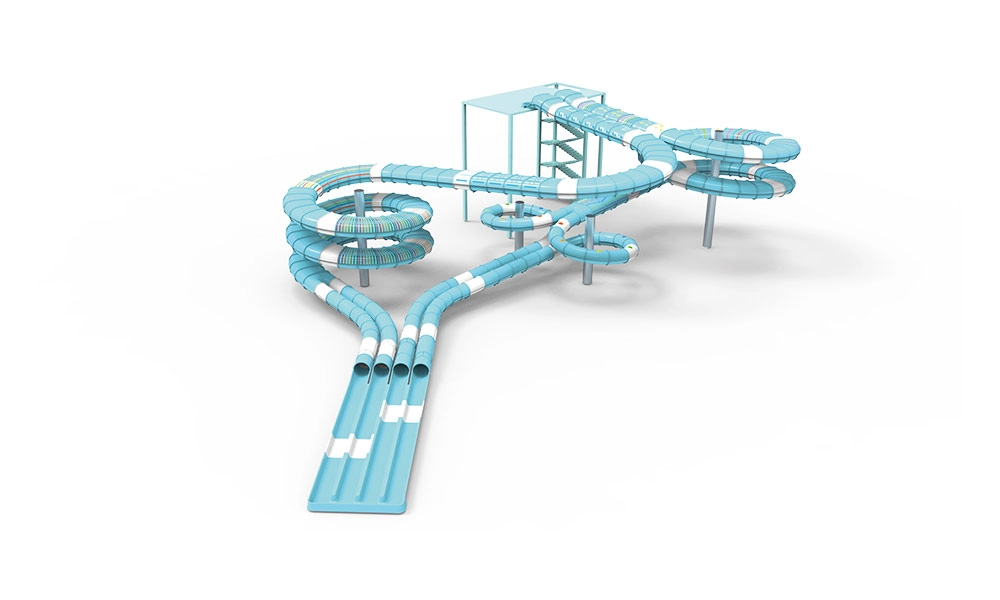
The biggest feature of the time tunnel slide is that it uses double water slides and double tubes side by side in design and competes along the circular slide path. 8 people can play at the same time, with a large passenger capacity and high return rate, which is very suitable for team and family travel. And the slide is equipped with WangMing International's time tunnel technology, and the interior of the slide presents a beautiful aurora effect, with colorful lights, as if traveling through time and space.
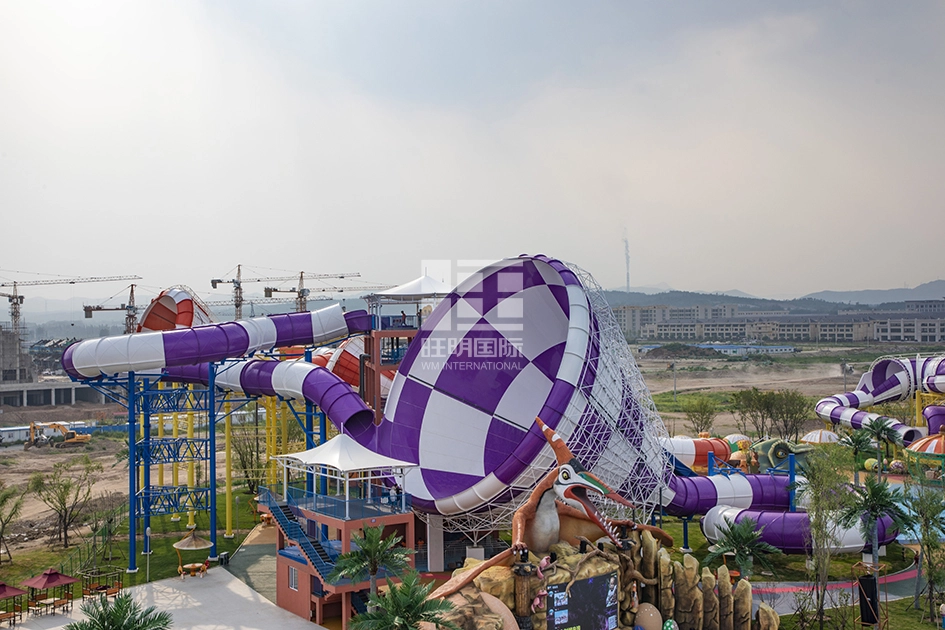
Big Tourbillion Water Slide
The Big Tourbillion water Slide won the "Gold Ticket Award - The Best New Project" of the international tourism industry. With unique modelling, strong irritation and humor, it is deeply loved by the young people; it has always been the popularity star of the water park. The raft carries the tourists as they enter the dark, closed chute slowly from the more than ten-meter-high platform; under the effect of gravity and water flow, it enters the state of rapid falling and then drops into the big Tourbillon; after a few times of whirling, it falls into the water pool. At this moment, the tourists are still in shock.
Get in touch
Have to get customized water park solutions and product quotes.
We will provide you with professional consultation and support.

Relying on leading technology, innovative products and rich industry experience, we tailor personalized solutions for each water park project to ensure a safe and exciting entertainment experience for tourists.
 Scan QR Code
wmwaterslide
wmwaterpark