






Case Study: Successful Family Slide Installations
- How a Multi-Rider Slide Project Becomes a Commercial Success
- Project objectives and initial constraints
- Design decisions that improved guest flow
- Safety and compliance coordination
- Installation Controls That Protected the Schedule
- Manufacturing quality before shipment
- Site installation and interface management
- Testing, commissioning, and handover
- What WM International Adds to a Family-Oriented Water Park Project
- End-to-end planning, design, and manufacturing
- Large-scale production and customized engineering
- Commercial value across the asset lifecycle
- Procurement Checklist for Future Installations
- Questions to ask before signing a contract
- Operational metrics to monitor after opening
- Frequently Asked Questions
A successful Family Water Slide installation is not defined by visual impact alone; it must combine inclusive guest appeal, predictable throughput, structural safety, hydraulic performance, efficient operations, and long-term maintainability. In this representative case study, a water park project team transformed an underused attraction zone into a high-capacity family slide experience by coordinating site planning, rider profiling, slide geometry, support structures, dispatch procedures, splash-pool design, and staff training from the earliest design stage. The project demonstrates why investors and operators should evaluate a slide supplier as an engineering and lifecycle partner rather than as a product vendor.
How a Multi-Rider Slide Project Becomes a Commercial Success
Project objectives and initial constraints
The representative project involved a regional water park seeking a signature attraction for parents, children, and mixed-age groups. The existing site had strong visibility from the park entrance but limited elevation, constrained equipment access, and a circulation route shared with a children’s play zone. These conditions created several procurement questions: Could the attraction produce sufficient capacity without excessive tower height? Would the raft loading area create queues across the main pathway? Could the landing zone be separated from younger children? Would maintenance teams be able to inspect the underside of the structure and replace wear components without major demolition?
The project owner established success criteria before requesting final quotations. These included broad rider eligibility, an attractive footprint, controlled queue growth during peak periods, clear sightlines for attendants, compatibility with existing pumps and filtration infrastructure, and a design language consistent with the wider water park. Establishing these criteria early prevented a common purchasing error: selecting a visually impressive attraction before confirming that the site, utilities, staffing model, and operating envelope can support it.
Design decisions that improved guest flow
The final concept used a family raft configuration with a compact launch tower, multiple directional changes, and a clearly separated runout area. Instead of placing the queue directly beside the splash zone, the design created a shaded serpentine approach with visible dispatch points. Parents could understand the ride sequence before entering the loading area, while operators retained a direct view of the start platform and landing pool.
Capacity was treated as an operational calculation rather than a marketing claim. The project team reviewed raft size, loading time, dispatch interval, slide length, rider behavior, attendant intervention, and peak-hour demand. A simplified planning equation is useful: practical hourly capacity equals the number of riders per raft multiplied by dispatches per hour, then adjusted for loading delays, inspections, stoppages, and operating restrictions. This approach produces a more realistic forecast than multiplying theoretical raft capacity by an uninterrupted operating time.
Safety and compliance coordination
Safety planning covered the complete attraction system: platform access, handrails, stairs, rider instructions, raft handling, slide joints, splash-pool depth, water velocity, emergency access, and operator communication. The project team used recognized risk-management principles consistent with ISO 12100 machinery safety guidance, while the attraction review also considered applicable local building, electrical, public-health, and amusement-device requirements.
For water quality and public-health controls, the owner coordinated with local authorities and the operating team. International guidance from the World Health Organization on safe recreational water environments reinforces the importance of water treatment, contamination control, monitoring, and facility management. Slide design cannot compensate for weak pool hygiene or inadequate turnover capacity, so filtration, disinfection, chemical monitoring, and drainage were included in the infrastructure review.
Installation Controls That Protected the Schedule
Manufacturing quality before shipment
Composite slide sections were reviewed for surface consistency, dimensional accuracy, joint alignment, flange quality, and reinforcement integrity before dispatch. Color and gelcoat specifications were approved against project samples rather than relying only on digital renderings. This matters because lighting, water exposure, and adjacent attractions can change how colors appear in the completed park.
A disciplined supplier also prepares a manufacturing data package containing drawings, component identification, installation references, material information, inspection records, and recommended maintenance procedures. Buyers should request this information during procurement because it supports customs clearance, site receiving, future repairs, and asset registration. The package should clearly distinguish standard components from project-specific parts, especially for gaskets, fasteners, wear strips, raft systems, pumps, and control devices.
Site installation and interface management
The installation sequence began with a survey of foundations, embedded plates, drainage points, utility routes, access roads, and crane positions. Any mismatch between civil works and slide support geometry was resolved before the main sections arrived. This reduced the risk of field cutting, improvised brackets, delayed lifting operations, and unplanned changes to the splash pool.
Installation teams coordinated four interfaces that frequently cause delays. The first was structural: tower loads and support reactions had to align with the civil engineer’s foundation design. The second was hydraulic: pump selection, pipe diameter, head loss, valve access, and water distribution had to match the slide manufacturer’s requirements. The third was architectural: queue rails, shade structures, signage, and landscaping could not obstruct evacuation routes or inspection access. The fourth was operational: attendants needed safe positions for dispatch, rider communication, raft retrieval, and emergency response.
Testing, commissioning, and handover
Commissioning was completed in stages instead of waiting until the final opening date. Dry checks verified fasteners, platforms, stairs, barriers, access gates, and signage. Wet commissioning then examined water flow, slide behavior, splash-pool conditions, drainage, raft movement, and pump stability. Test runs were conducted with controlled loading conditions, followed by operational drills for dispatch interruption, rider assistance, lost raft recovery, communication failure, and emergency shutdown.
The handover package included inspection checklists, cleaning instructions, lubrication points, replacement-part references, operating limits, seasonal shutdown procedures, and staff training records. A practical acceptance process should also define who signs off each item: the owner, general contractor, civil engineer, electrical contractor, water-treatment specialist, and attraction supplier. Clear responsibility prevents unresolved defects from being treated as minor items after opening.
| Control area | Traditional late-stage approach | Integrated project approach | Business effect |
|---|---|---|---|
| Site verification | Survey after equipment delivery | Survey and interface review before fabrication | Fewer field modifications and lifting delays |
| Capacity planning | Uses theoretical rider throughput | Models dispatch, loading, stoppages, and staffing | More credible revenue and queue forecasts |
| Water systems | Connects utilities near completion | Coordinates pumps, filtration, drainage, and controls during design | Lower commissioning risk |
| Safety review | Focuses mainly on the slide body | Reviews platforms, pools, queues, access, and procedures | Stronger operational readiness |
| Maintenance | Receives generic manuals | Receives asset-specific parts and inspection schedules | Better lifecycle control and reduced downtime |
The comparison shows why a successful installation depends on process integration. The equipment itself is only one part of the commercial outcome. Site readiness, water infrastructure, operator capability, preventive maintenance, and visitor communication collectively determine whether the attraction performs as intended.
What WM International Adds to a Family-Oriented Water Park Project
End-to-end planning, design, and manufacturing
WM International Waterslide brings 19 years of industry experience to water park planning and design, manufacturing, installation, and maintenance. Our team supports investors, developers, distributors, and operating companies that need a coordinated path from early concept to opening day. This full-service model helps align attraction selection with site conditions, target demographics, available capital, construction sequencing, and long-term operating requirements.
Our design process can address individual attractions or broader destination planning. For a new development, this may include master planning, zoning, guest circulation, attraction mix, hydraulic concepts, service areas, and construction coordination. For an existing facility, the focus may be on replacing an aging ride, increasing dwell time, improving a children’s zone, or adding a high-visibility signature feature without disrupting current operations.
Large-scale production and customized engineering
WM International owns a 100,000-square-meter modern production base, described by the company as the largest in the industry. The facility supports the production of various water slides for water parks and enables project teams to coordinate fabrication, quality checks, packaging, and delivery planning at scale. Manufacturing capacity is valuable only when it is connected to engineering discipline, so each project is developed around customer requirements, site characteristics, local climate, intended capacity, and architectural identity.
Our product portfolio includes water park attractions, high-impact water slides, family raft rides, children’s play features, and supporting solutions such as wave-making equipment. The objective is not to force every project into a standard catalog configuration. A customized approach can consider tower height, available land, rider age range, queue length, shade, accessibility, maintenance access, visual branding, and compatibility with existing pools and utilities.
Commercial value across the asset lifecycle
For buyers, supplier value should be assessed beyond the initial equipment price. A lower quotation can become expensive if it excludes civil coordination, installation supervision, testing, spare parts, training, or after-sales support. WM International’s integrated service model is designed to reduce those gaps by connecting water park design, water park construction support, product manufacturing, installation assistance, and maintenance planning.
The commercial case for a mixed-age attraction typically rests on several value drivers: wider household appeal, stronger visibility, longer visitor dwell time, potential cross-selling of food and retail, and improved use of existing land. These benefits are not automatic. They depend on appropriate pricing, reliable opening hours, queue management, clean water, attractive theming, and consistent staff performance. WM International works with project stakeholders to translate the desired business outcome into a practical attraction configuration rather than presenting equipment as an isolated purchase.
Procurement Checklist for Future Installations
Questions to ask before signing a contract
Buyers should request a site-specific general arrangement drawing, foundation loads, utility requirements, pool dimensions, operating limits, estimated capacity methodology, delivery scope, installation responsibilities, and commissioning requirements. The quotation should identify exclusions such as civil works, electrical control panels, pump rooms, filtration, cranes, local permits, taxes, customs charges, landscaping, and operator training.
Technical documentation should also explain material specifications, UV and chemical exposure considerations, joint construction, fastening systems, inspection access, replacement procedures, and recommended cleaning products. Where local codes differ from the supplier’s home market, the owner should appoint qualified local professionals to verify structural, electrical, public-health, fire, accessibility, and amusement-device requirements.
Operational metrics to monitor after opening
After launch, the operator should track daily availability, dispatch interval, average queue time, stoppage frequency, water-treatment readings, attendant interventions, raft losses or damage, guest complaints, and preventive-maintenance completion. These metrics reveal whether the attraction is meeting the original business case and whether a problem originates in equipment, staffing, guest communication, or facility management.
Maintenance records should be organized by asset and date. Routine inspections can identify surface wear, joint movement, corrosion, loose hardware, damaged signage, unusual vibration, drainage problems, and changes in water flow. A documented escalation process is essential: operators should know which conditions require immediate closure, which require technical review, and which can be monitored during normal operation.
Independent guidance from ASTM F1193 for amusement ride quality and maintenance practices can help project teams understand the importance of documentation, inspection, testing, and operational controls, subject to the edition and legal requirements adopted in the project jurisdiction. Buyers should also consult the relevant local authority because international standards do not automatically replace national law or permit conditions.
A successful installation therefore combines creative attraction design with disciplined procurement, engineering coordination, manufacturing control, commissioning, and post-opening management. The representative case shows that the strongest outcomes are achieved when the slide supplier participates early, communicates clearly with civil and utility contractors, and remains available through training and maintenance. For investors, this reduces uncertainty; for operators, it supports dependable availability; and for guests, it creates a safe and memorable shared experience.
Contact WM International at trading@wmwaterslide.com or visit https://www.wmwaterslide.com to discuss a customized water park design, water slide installation, water play attraction, or wave-making equipment project.
Frequently Asked Questions
What should buyers evaluate before purchasing a family-oriented raft slide?
Buyers should evaluate site dimensions, rider demographics, tower height, queue capacity, splash-pool layout, pump and filtration requirements, staffing, maintenance access, local regulations, and the supplier’s installation and commissioning scope.
How is practical attraction capacity calculated?
Practical hourly capacity is based on riders per raft and dispatches per hour, adjusted for loading delays, inspections, stoppages, operating restrictions, and actual attendant procedures rather than relying only on theoretical throughput.
What documents should a supplier provide before installation?
A supplier should provide site-specific drawings, foundation loads, utility requirements, pool dimensions, operating limits, delivery details, installation responsibilities, commissioning requirements, material information, inspection records, and maintenance guidance.
Why must water treatment be reviewed during slide design?
Slide performance depends on compatible pumps, filtration, disinfection, chemical monitoring, drainage, and turnover capacity. Water quality and public-health controls must be coordinated with the attraction rather than added at the end of construction.
What does WM International provide for water park projects?
WM International provides water park planning and design, manufacturing, installation, maintenance support, water slides, water play attractions, wave-making equipment, and customized solutions based on customer requirements and site characteristics.
Which post-opening metrics should operators monitor?
Operators should track attraction availability, dispatch interval, queue time, stoppages, water-treatment readings, attendant interventions, equipment damage, guest complaints, and completion of preventive-maintenance tasks.
Recommended
OEM vs ODM: Choosing the Right Water Slide Manufacturer
10 Best Water Park Slides for Sale in 2026: Maximize Your ROI and Guest Satisfaction
Warranty & Financing Options for Slide Purchases
Customization Options for Children Combined Water Slide Buyers
Children Combined Water Slide
Discover endless fun with the Children Combined Water Slide by WM INTERNATIONAL, expertly crafted for thrill-seeking kids. Perfect for summer splashes, this durable slide promises safety and joy. Looking to elevate your play area? Explore our Children's Combined Slide for sale now!
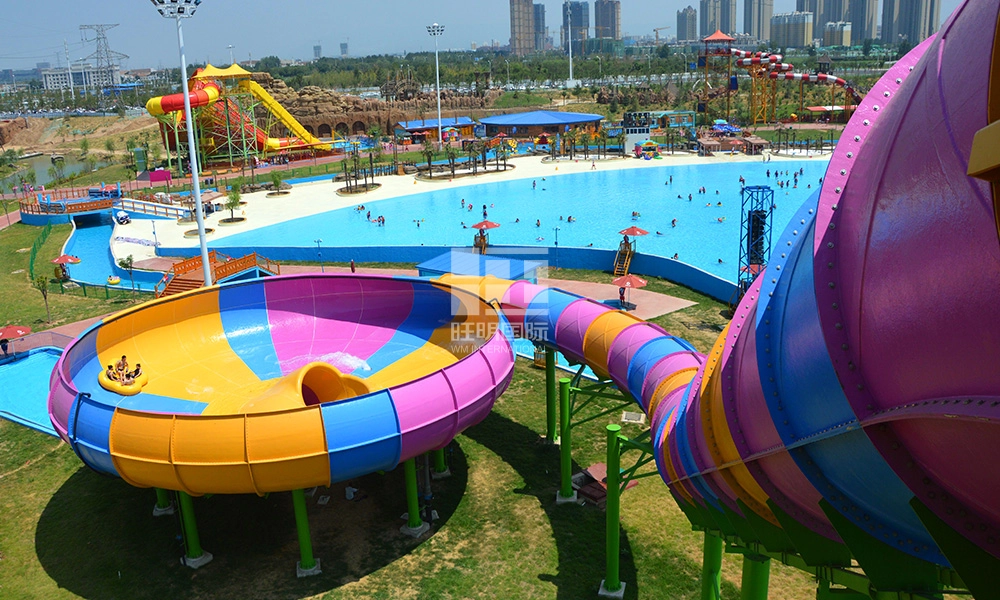
Huge Bowl Water Slide
The Huge Bowl Water Slide has achieved the “World's Best New Water Amusement Equipment” Award; it is the new favorite of the young people and the star project of the water park. The raft carries the tourists slowly entering the closed chute first; then it whirls in the bowl the moment the tourists can see the light. After a short period of time, the raft is suddenly suctioned into a huge black hole until it falls into the water. For a moment, the tourists realize the breathtaking journey has been safely brought to an end.
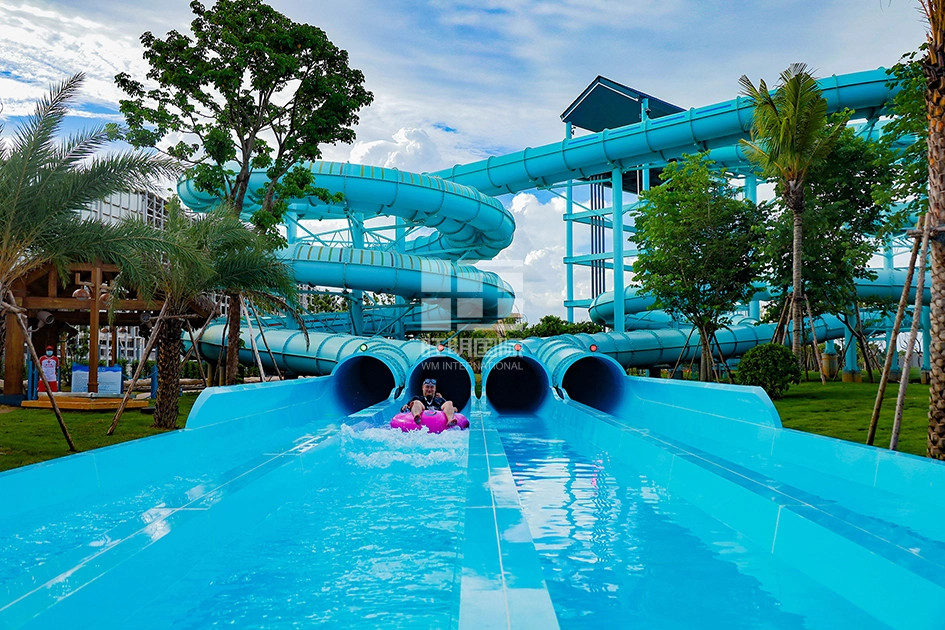
Time Tunnel Water Slide
The biggest feature of the time tunnel slide is that it uses double water slides and double tubes side by side in design and competes along the circular slide path. 8 people can play at the same time, with a large passenger capacity and high return rate, which is very suitable for team and family travel. And the slide is equipped with WangMing International's time tunnel technology, and the interior of the slide presents a beautiful aurora effect, with colorful lights, as if traveling through time and space.
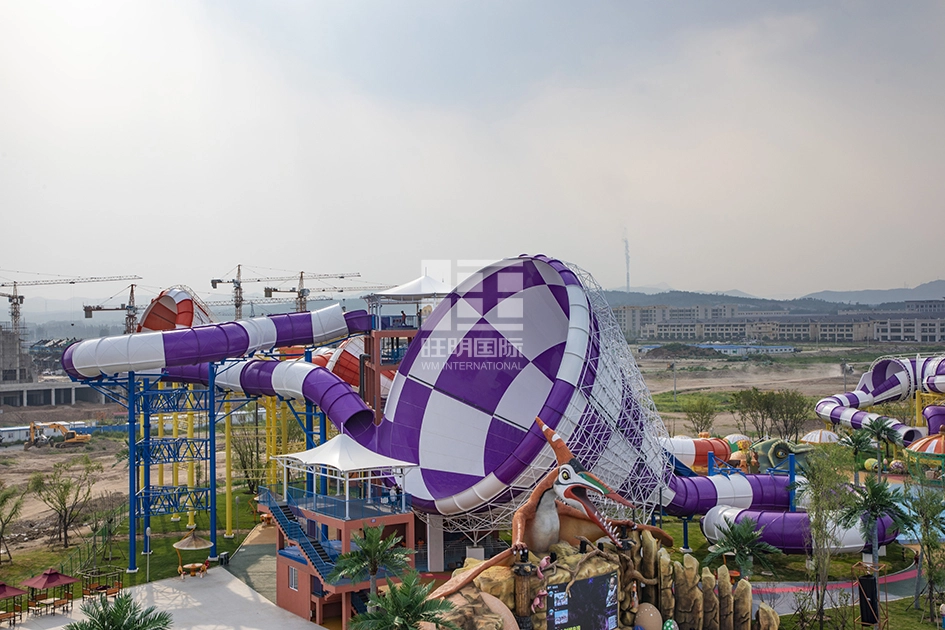
Big Tourbillion Water Slide
The Big Tourbillion water Slide won the "Gold Ticket Award - The Best New Project" of the international tourism industry. With unique modelling, strong irritation and humor, it is deeply loved by the young people; it has always been the popularity star of the water park. The raft carries the tourists as they enter the dark, closed chute slowly from the more than ten-meter-high platform; under the effect of gravity and water flow, it enters the state of rapid falling and then drops into the big Tourbillon; after a few times of whirling, it falls into the water pool. At this moment, the tourists are still in shock.
Get in touch
Have to get customized water park solutions and product quotes.
We will provide you with professional consultation and support.

Relying on leading technology, innovative products and rich industry experience, we tailor personalized solutions for each water park project to ensure a safe and exciting entertainment experience for tourists.
 Scan QR Code
wmwaterslide
wmwaterpark