





Warranty & Financing Options for Slide Purchases
- How to Evaluate Warranty Coverage for Aquatic Attractions
- Separate product warranties from installation and service obligations
- Review coverage by component and risk category
- Verify maintenance conditions and evidence requirements
- Financing Structures That Match Water Park Cash Flow
- Use milestone payments to align capital with project progress
- Compare loans, leasing, supplier credit, and staged procurement
- Calculate total cost of ownership before approving the budget
- Contract Controls That Protect Project Owners
- Define technical acceptance and documentation deliverables
- Clarify claims, remedies, and business continuity
- Check supplier quality systems and relevant standards
- Why WM International Supports Lower-Risk Slide Procurement
- Integrated planning, design, manufacturing, and installation
- Large-scale production and tailored project execution
- Lifecycle value beyond the initial purchase
- Frequently Asked Questions
Warranty and financing terms are not administrative details added after a water slide quotation; they are core components of project risk management. For a resort, municipal facility, hotel, family entertainment center, or destination water park, the purchase decision should address product durability, installation responsibility, maintenance costs, cash-flow timing, and the supplier’s ability to support the attraction throughout its operating life. A well-structured agreement for a family-oriented slide attraction can protect capital while helping owners open on schedule and generate revenue sooner.
Buyers should assess the complete commercial package rather than selecting equipment on headline price alone. The relevant package may include water park design, hydraulic calculations, engineering drawings, fabrication, international shipping, installation supervision, commissioning, operator training, spare parts, inspection support, and warranty response. The following guide explains how to compare warranty coverage and financing options before committing to a major water park investment.
How to Evaluate Warranty Coverage for Aquatic Attractions
Separate product warranties from installation and service obligations
A supplier warranty normally addresses manufacturing defects, material quality, workmanship, or nonconformity with approved drawings. It may not automatically cover damage caused by incorrect installation, unauthorized modification, chemical imbalance, misuse, vandalism, extreme weather, poor storage, or inadequate maintenance. Buyers should therefore identify which party is responsible for each stage: factory fabrication, packing, transport, site assembly, water-system connection, electrical work, testing, and final acceptance.
For a complete project, the contract should define whether the warranty begins at shipment, delivery, substantial completion, commissioning, or commercial opening. These dates can produce very different outcomes when construction is delayed. A clear acceptance procedure should document inspection results, punch-list items, operating tests, training completion, and the date on which the attraction is approved for public use.
Review coverage by component and risk category
A single warranty period can conceal important differences between components. Fiberglass slide sections, steel supports, gelcoat or surface finishes, flanges, fasteners, pumps, control panels, sensors, water-play features, and wave-making equipment may have different service conditions and replacement cycles. Buyers should request a component schedule that states the coverage period, remedy, exclusions, labor responsibility, freight responsibility, and expected response time for each major system.
Surface appearance deserves specific attention. Color fading, cosmetic scratching, blistering, cracking, delamination, and surface roughness are not always treated in the same way by manufacturers. Because ride comfort, appearance, cleaning efficiency, and guest perception can be affected by surface condition, the technical specification should describe acceptable tolerances and approved cleaning chemicals. The contract should also state whether replacement parts are new, refurbished, or repaired and how compatibility will be confirmed.
Verify maintenance conditions and evidence requirements
Warranty validity is commonly linked to documented maintenance. A facility may need to retain water chemistry logs, inspection checklists, pump records, lubrication records, repair reports, photographs, and staff training documents. The owner should understand the required inspection frequency and the qualifications expected of operators or contractors. This is particularly important for high-throughput attractions where abrasion, ultraviolet exposure, chemical contact, and repeated loading can accelerate wear.
Operational teams should compare the supplier’s maintenance instructions with recognized public-health and safety guidance. The World Health Organization guidelines for safe recreational water environments provide an important reference for managing recreational water risks, although local law and project-specific engineering requirements remain controlling. Buyers can also consult the ASTM F24 committee resources when developing an attraction safety and amusement-device compliance checklist.
Financing Structures That Match Water Park Cash Flow
Use milestone payments to align capital with project progress
Manufactured attractions often require deposits before material procurement, progress payments during fabrication, a balance before shipment, and a final amount after installation or commissioning. This structure can be more practical than paying the full purchase price at the beginning, but each milestone should be tied to objective evidence. Examples include approved engineering drawings, completion of factory quality checks, photographic production records, packing-list verification, shipment documents, installation completion, and successful operational testing.
Project owners should avoid milestones defined only by calendar dates when delays may arise from permitting, civil works, utilities, or site readiness. A contract can distinguish supplier-controlled events from owner-controlled events and establish a documented process for schedule changes. Retention amounts or a clearly defined final acceptance payment may provide additional leverage for resolving outstanding commissioning issues without creating unnecessary conflict.
Compare loans, leasing, supplier credit, and staged procurement
Commercial loans may offer ownership from the start, while equipment leasing can preserve working capital and spread payments over an agreed term. Supplier credit may simplify procurement but should be assessed for interest, security requirements, currency exposure, late-payment consequences, and recourse provisions. Staged procurement is another option: an owner may begin with a compact children’s splash area or one signature ride, then add complementary attractions after demand and operating performance are demonstrated.
The right structure depends on the project’s revenue profile. A seasonal destination may need payments that reflect a short operating window, whereas an indoor facility may generate steadier monthly income. Buyers should model debt service, insurance, utilities, staffing, chemicals, inspections, replacement parts, marketing, taxes, and downtime—not just the monthly equipment payment. Financing that appears inexpensive can become costly if it delays opening or creates a payment obligation during a period of limited revenue.
Calculate total cost of ownership before approving the budget
Total cost of ownership includes design revisions, civil foundations, tower structures, pumps, filtration, electrical infrastructure, shipping, customs, installation, testing, operator training, cleaning systems, spare parts, inspections, insurance, and eventual refurbishment. A lower initial bid may exclude items that another supplier includes, making direct comparison misleading. A standardized bid-comparison sheet should show inclusions, exclusions, taxes, delivery terms, currency, warranty assumptions, and optional services.
Return on investment should be evaluated using realistic capacity rather than maximum theoretical throughput. A family recreation attraction may support longer dwell time, repeat visitation, and cross-selling of food, retail, cabanas, or tickets, but those benefits depend on layout, guest circulation, pricing, safety perception, and seasonal demand. Financial models should include conservative, expected, and upside scenarios, together with a sensitivity test for construction delays, lower attendance, higher financing costs, and unplanned repairs.
| Comparison area | Supplier credit or staged payment | Commercial loan | Equipment lease |
|---|---|---|---|
| Ownership | Usually transfers according to contract terms and final payment | Generally owned by the borrower from purchase, subject to lender security | Depends on lease type and purchase option |
| Cash-flow profile | Can be aligned with manufacturing and installation milestones | Usually follows a fixed repayment schedule | Usually follows periodic lease payments |
| Key review points | Interest, currency, security, default, delivery, and acceptance terms | Interest rate, covenants, collateral, fees, and repayment schedule | Residual value, maintenance responsibility, buyout terms, and early termination |
| Best procurement use | Projects needing coordinated equipment delivery and payment timing | Projects with strong credit capacity and a preference for ownership | Projects prioritizing capital preservation and predictable payments |
These are general commercial distinctions rather than a recommendation for a particular financing product. Rates, tax treatment, security requirements, and ownership rules vary by country and lender. Independent financial, legal, and tax advice should be obtained before execution.
Contract Controls That Protect Project Owners
Define technical acceptance and documentation deliverables
A purchase agreement should identify the approved ride geometry, dimensions, load assumptions, water flow requirements, pump specifications, support configuration, materials, finish, color, access routes, and site interfaces. It should also list the documents delivered with the equipment, such as installation drawings, operating manuals, maintenance schedules, parts lists, inspection records, certificates, and as-built drawings.
Where the project uses a digital design process, buyers should establish revision control and approval authority. A change to slide routing, tower height, splash-out location, or hydraulic demand can affect foundations, drainage, guest circulation, and operating costs. Written change orders should state price, schedule impact, warranty effect, and responsibility for related civil or utility work.
Clarify claims, remedies, and business continuity
Warranty language should explain how a claim is submitted, what evidence is needed, how quickly the supplier must respond, and whether remote troubleshooting, replacement parts, field labor, or full component replacement is included. The agreement should distinguish between a safety-critical defect, an operational failure, and a cosmetic issue because each may require a different response time.
Owners should also plan for continuity. Recommended spare parts may include seals, gaskets, sensors, fasteners, wear components, and selected control items. For imported equipment, buyers should examine lead times, customs procedures, local service capability, and the supplier’s ability to provide technical support across time zones. A preventive-maintenance program can reduce downtime and preserve the attraction’s guest experience.
Check supplier quality systems and relevant standards
Quality claims are more credible when supported by traceable inspections, material controls, dimensional checks, weld procedures where applicable, surface-finish checks, packing controls, and documented corrective action. Buyers may ask whether the manufacturer operates a quality-management system aligned with ISO 9001 principles; certification status should be verified rather than assumed. The attraction must also comply with applicable national, regional, building, electrical, environmental, accessibility, and amusement-device requirements.
Standards are not substitutes for engineering judgment or local approval. The Centers for Disease Control and Prevention swimming-pool guidance is useful for understanding public-health considerations, while the U.S. Consumer Product Safety Commission amusement-ride resources illustrate why jurisdiction-specific responsibilities must be reviewed. The final compliance pathway should be confirmed with qualified local professionals.
Why WM International Supports Lower-Risk Slide Procurement
Integrated planning, design, manufacturing, and installation
WM International Waterslide provides a full range of water park planning and design services, covering concept development, attraction planning, manufacturing, installation, and maintenance. With 19 years of industry experience, our team supports new parks and existing facilities by combining the perspectives of park operators, designers, suppliers, and guests. This integrated approach helps connect the commercial brief with site conditions, guest flow, construction sequencing, and long-term operations.
Our product portfolio includes water slides, water play attractions, wave-making equipment, and related solutions for water park development. By considering attractions together with circulation, pools, filtration, pump rooms, drainage, service access, and visual identity, our engineering process helps buyers avoid costly interface problems between ride equipment and civil works.
Large-scale production and tailored project execution
WM International operates a 100,000-square-meter modern production base, described by the company as the largest in the industry. The facility supports the production of various water slides and provides capacity for projects with different scales, layouts, and design ambitions. Each project is developed around customer requirements and site characteristics rather than relying on a one-size-fits-all catalogue solution.
For buyers comparing warranty and financing risk, manufacturing visibility is valuable. A structured process can connect approved drawings, production inspection, packing, shipping, installation, testing, and maintenance documentation. The exact warranty scope, payment milestones, delivery schedule, and acceptance requirements should still be negotiated and recorded in the final contract for every project.
Lifecycle value beyond the initial purchase
A successful attraction must remain appealing, maintainable, and operational after opening day. WM International’s comprehensive service model is designed to support design and development of new parks as well as maintenance of existing ones. This creates a practical basis for discussing spare parts, operator training, refurbishment, future expansion, and technical assistance alongside the original equipment purchase.
Project owners can review WM International’s capabilities and product range at the WM International website and contact the commercial team at trading@wmwaterslide.com for a project-specific discussion covering site conditions, attraction mix, warranty terms, financing milestones, and delivery requirements.
Contact WM International to compare tailored water slide solutions, warranty coverage, and procurement milestones for your next water park project.
Frequently Asked Questions
What should a water slide warranty cover?
A warranty should clearly address manufacturing defects, materials, workmanship, component coverage, remedies, exclusions, response times, labor, freight, and the date on which coverage begins.
When should a water slide warranty begin?
The contract should define whether the warranty begins at shipment, delivery, substantial completion, commissioning, or commercial opening because construction delays can materially affect the effective coverage period.
Which financing option is best for a water park attraction?
The appropriate option depends on the project’s cash flow, credit capacity, ownership preference, tax position, currency exposure, and risk tolerance. Buyers commonly compare supplier credit, milestone payments, commercial loans, equipment leases, and staged procurement.
How can buyers reduce payment risk during manufacturing?
Payment milestones should be tied to objective evidence such as approved drawings, production completion, quality checks, shipment documents, installation completion, and successful commissioning rather than calendar dates alone.
What costs should be included in the water slide budget?
The budget should include design, civil foundations, supports, pumps, filtration, electrical work, shipping, customs, installation, testing, training, spare parts, inspections, insurance, maintenance, and potential refurbishment.
Why are maintenance records important for warranty protection?
Maintenance records such as water chemistry logs, inspection checklists, pump records, repair reports, photographs, and training documents may be required to demonstrate that the attraction was operated and maintained according to the supplier’s conditions.
Recommended
Top Trends in Water Slide Ride Design 2026
Small Rainbow Water Slide — Compact, Safe & Vibrant Attraction for Family Parks
The B2B Buyer’s Guide to water park play equipment
How to Choose Safe Family Water Slides for All Ages
Children Combined Water Slide
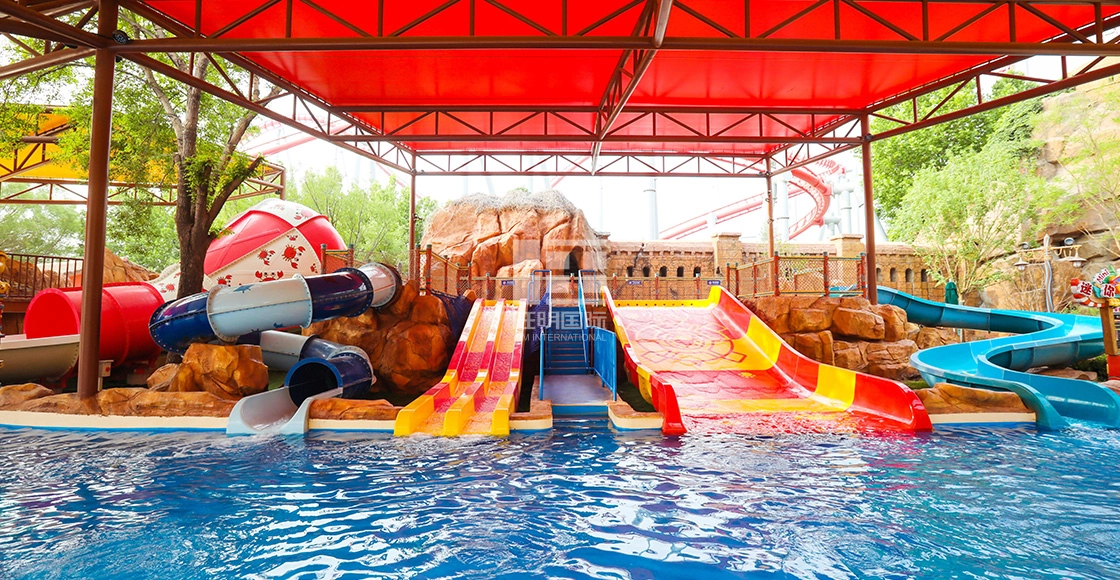
Discover endless fun with the Children Combined Water Slide by WM INTERNATIONAL, expertly crafted for thrill-seeking kids. Perfect for summer splashes, this durable slide promises safety and joy. Looking to elevate your play area? Explore our Children's Combined Slide for sale now!
Huge Bowl Water Slide
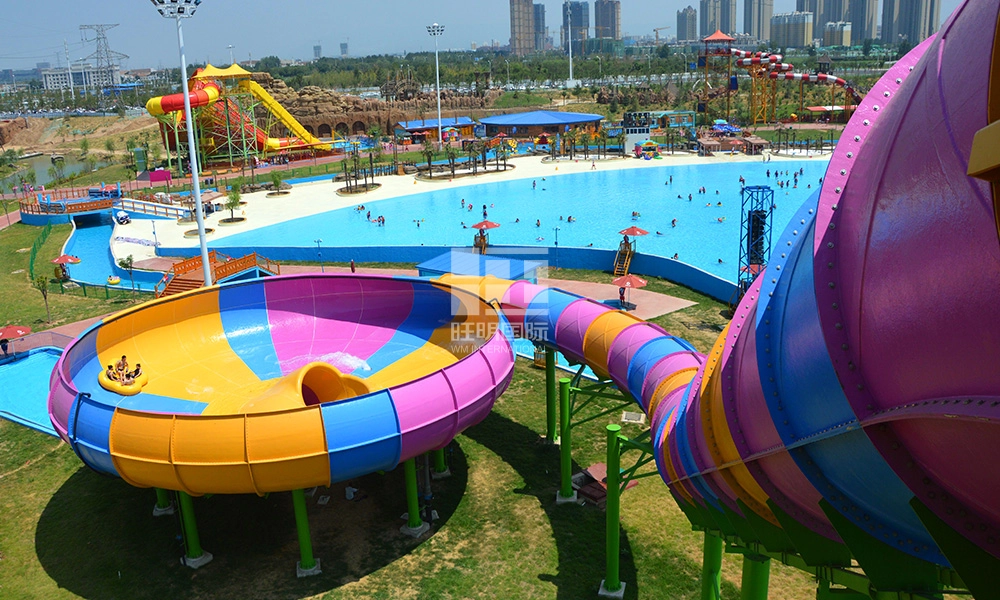
The Huge Bowl Water Slide has achieved the “World's Best New Water Amusement Equipment” Award; it is the new favorite of the young people and the star project of the water park. The raft carries the tourists slowly entering the closed chute first; then it whirls in the bowl the moment the tourists can see the light. After a short period of time, the raft is suddenly suctioned into a huge black hole until it falls into the water. For a moment, the tourists realize the breathtaking journey has been safely brought to an end.
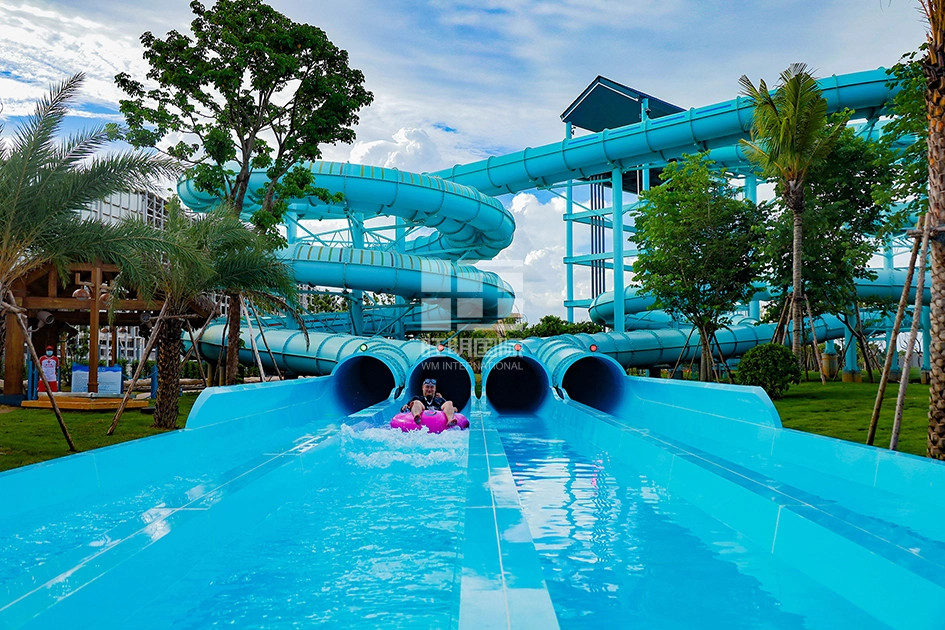
Time Tunnel Water Slide
The biggest feature of the time tunnel slide is that it uses double water slides and double tubes side by side in design and competes along the circular slide path. 8 people can play at the same time, with a large passenger capacity and high return rate, which is very suitable for team and family travel. And the slide is equipped with WangMing International's time tunnel technology, and the interior of the slide presents a beautiful aurora effect, with colorful lights, as if traveling through time and space.
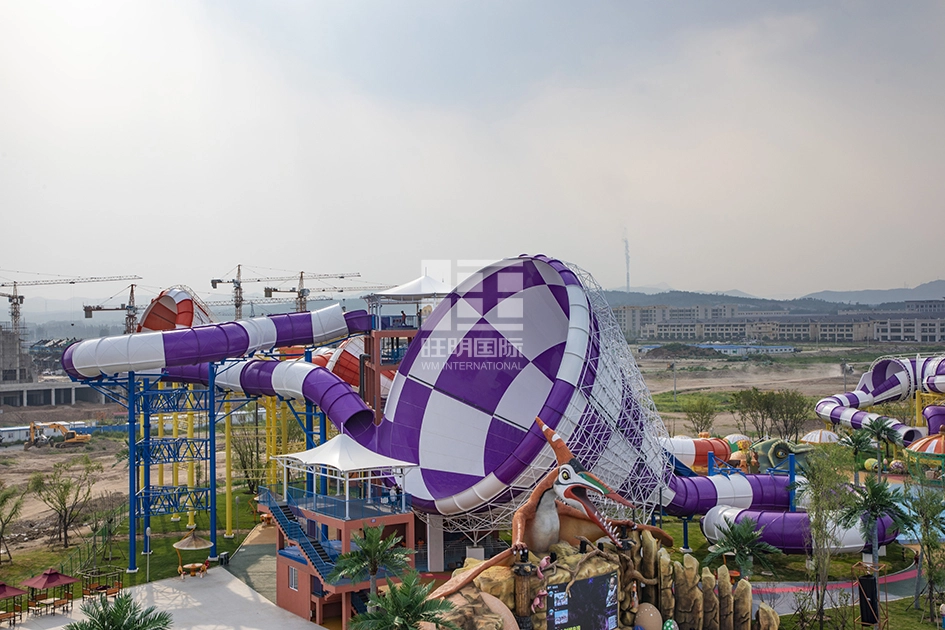
Big Tourbillion Water Slide
The Big Tourbillion water Slide won the "Gold Ticket Award - The Best New Project" of the international tourism industry. With unique modelling, strong irritation and humor, it is deeply loved by the young people; it has always been the popularity star of the water park. The raft carries the tourists as they enter the dark, closed chute slowly from the more than ten-meter-high platform; under the effect of gravity and water flow, it enters the state of rapid falling and then drops into the big Tourbillon; after a few times of whirling, it falls into the water pool. At this moment, the tourists are still in shock.
Get in touch
Have to get customized water park solutions and product quotes.
We will provide you with professional consultation and support.

Relying on leading technology, innovative products and rich industry experience, we tailor personalized solutions for each water park project to ensure a safe and exciting entertainment experience for tourists.
 Scan QR Code
wmwaterslide
wmwaterpark