


Water Slide Supplier Red Flags That Can Delay a Park Project
- How to Spot Risk in Water Slide Manufacturer Proposals
- Incomplete engineering packages create approval bottlenecks
- Unclear project boundaries invite late changes
- Schedule Warning Signs That Can Push Back Opening Day
- Unsubstantiated lead times and vague milestones
- Logistics, installation, and commissioning are treated as afterthoughts
- Due Diligence Checks Before Signing a Ride Contract
- Verify quality controls, traceability, and change management
- Assess communication, references, and after-sales readiness
- Choosing a Partner for Integrated Water Park Delivery
- Connect attraction procurement to the wider site plan
- Use a documented selection process to protect value
- Frequently Asked Questions
Water slide supplier problems can delay a park project long before equipment reaches the site. The most consequential warning signs include incomplete engineering submittals, unclear responsibility for approvals, unsupported production dates, weak quality documentation, and poor coordination with civil, structural, mechanical, and electrical teams. Buyers evaluating water slide ride suppliers for parks should verify design inputs, applicable standards, manufacturing controls, shipment planning, installation scope, and after-sales support before committing. A documented review process helps project owners identify schedule risks early, compare proposals on equivalent terms, and protect the planned opening date without compromising safety or maintainability.
How to Spot Risk in Water Slide Manufacturer Proposals
Incomplete engineering packages create approval bottlenecks
A proposal that relies on attractive renderings but omits engineering deliverables should be treated cautiously. Before an order is finalized, the supplier should clarify what drawings and calculations will be supplied, when they will be issued, and who must review or approve them. Depending on the project, the package may need general arrangements, slide geometry, support locations, loads, interface dimensions, foundation reactions, water-flow requirements, pump data, and electrical information. Missing items often prevent local consultants from completing structural checks, routing utilities, coordinating equipment rooms, or submitting permit documents.
Buyers should also establish whether drawings are preliminary, for coordination, for approval, or released for construction. These labels are not interchangeable. A project team that builds foundations from an unapproved layout may face costly rework if support positions or reaction loads change later. Ask for a submittal register showing each document, its planned issue date, the reviewing party, and the expected review period. This simple control turns a vague promise to provide “engineering support” into a sequence that can be tracked against the master schedule.
Safety standards are relevant to the design and operation of amusement rides, but a standards reference alone does not prove that a specific proposal is complete or approved. For example, ISO 17842-1 addresses safety requirements for the design and manufacture of amusement rides and devices. Buyers should confirm which standards and local codes apply to the project, how compliance will be demonstrated, and which authority or qualified professional has approval responsibility.
Unclear project boundaries invite late changes
Supplier quotations can appear comparable while including different scopes. One may include design, fabrication, packing, and supervision; another may exclude installation, lifting plans, commissioning, or local engineering coordination. If these differences are discovered after contract award, owners may need to source additional services, revise interfaces, or wait for information that was assumed to be included.
Before comparing prices, create a responsibility matrix covering the owner, ride manufacturer, local architect, structural engineer, general contractor, installer, and relevant authorities. Specify who provides foundations, embedded plates, water treatment, pumps, electrical supply, access platforms, lifting equipment, installation labor, testing, operator training, and handover documents. The matrix should also identify who owns design changes when site conditions differ from the original assumptions. Clear boundaries reduce commercial disputes and help prevent schedule-critical tasks from falling between contractors.
Schedule Warning Signs That Can Push Back Opening Day
Unsubstantiated lead times and vague milestones
A single estimated delivery date is not a production schedule. A credible supplier should explain the sequence behind the date, including design approval, material procurement, fabrication, inspection, packing, dispatch, transit, customs clearance where applicable, and site readiness. If the supplier cannot identify schedule dependencies or provide milestone updates, the project team has little opportunity to intervene when progress slips.
Ask which milestones are contractually committed and which are estimates. Confirm what information the supplier needs from the owner to release production, how long review cycles are assumed to take, and what happens if approvals arrive late. A realistic schedule should account for design revisions, transport constraints, and the time needed for installation and commissioning. It should also show the latest dates for decisions that could affect the critical path, such as final color selections, interface approvals, or changes to the ride configuration.
Be cautious when a quotation promises unusually short delivery without explaining manufacturing capacity, material availability, or the status of design development. An aggressive date may be achievable under particular conditions, but it needs a supporting plan. Buyers should ask for evidence such as a project-specific production schedule, named approval gates, and a clear process for escalating missed milestones rather than relying on verbal assurances.
Logistics, installation, and commissioning are treated as afterthoughts
Large slide components may require special packing, transport planning, and coordinated site access. The supplier and project team should establish shipment dimensions, unloading needs, storage requirements, delivery sequencing, and responsibility for damage checks. If the site lacks suitable access or storage, early deliveries can create congestion or expose components to avoidable damage; late deliveries can leave installation crews and lifting equipment idle.
Installation readiness should be verified before equipment is dispatched. Relevant checks may include completed foundations, surveyed support points, safe lifting access, available utilities, and confirmation that required permits or inspections are in place. Commissioning should also be planned as a defined phase, not assumed to occur automatically after assembly. A handover plan can identify inspection records, operating procedures, maintenance instructions, staff training, and any tests required before the attraction enters service.
The applicable technical framework depends on the attraction, jurisdiction, and project scope. ASTM F2376 is a practice covering the classification, design, manufacture, construction, and operation of water slide systems. Its existence does not replace local permitting or project-specific review; it gives buyers a concrete reference point for asking what requirements the supplier has considered and what documentation will be delivered.
Due Diligence Checks Before Signing a Ride Contract
Verify quality controls, traceability, and change management
Quality claims are more useful when supported by records that can be reviewed. Ask how materials and components are specified, inspected, identified, and tracked through production. Confirm what inspections occur at incoming material, fabrication, assembly, and final verification stages, and whether the buyer or an appointed inspector can witness agreed hold points. The contract should state how nonconformities are recorded, corrected, and closed before shipment.
A quality management certificate, if supplied, should be checked for its scope, issuing body, validity, and relevance to the manufacturing operation in question. Certification does not by itself establish that a particular slide design is suitable for a specific site or compliant with every local requirement. ISO 9001 sets requirements for quality management systems; buyers can use it as one due-diligence reference while still examining project-specific inspection plans, records, and acceptance criteria.
Design changes need equal discipline. Every revision should identify what changed, why it changed, which drawings or calculations are affected, who must approve it, and whether it alters price, manufacturing status, shipping, or installation. A supplier that makes undocumented substitutions or cannot control drawing revisions can create mismatches between delivered equipment and site interfaces. Require a formal change log and a documented approval route before production proceeds on revised information.
Assess communication, references, and after-sales readiness
Communication quality is an operational indicator, not a cosmetic preference. During procurement, track whether questions receive specific answers, promised documents arrive when stated, and technical issues are escalated to people with decision-making authority. Repeatedly changing contacts, unexplained gaps, or answers that avoid responsibility can signal trouble once fabrication or installation begins.
Request references for projects with comparable ride types, climate, site conditions, or delivery complexity. Ask previous clients about schedule performance, document quality, installation coordination, response to defects, and the availability of replacement parts. References are most useful when questions are specific and the project scope is genuinely comparable; a general list of installations does not reveal how the supplier handled difficult interfaces or a delayed approval.
After-sales provisions should be reviewed before contract signature. Clarify warranty start dates, exclusions, response channels, spare-parts availability, maintenance documentation, and the process for technical support after opening. These provisions affect both operational continuity and whole-life cost. A low purchase price may not represent good value if essential support is difficult to obtain or maintenance information is incomplete.
| Procurement area | Warning sign | Evidence to request | Schedule exposure |
|---|---|---|---|
| Engineering | Drawings and calculations are described vaguely or have no issue dates | Submittal register, document status, design inputs, review responsibilities | Approvals, foundations, and utility coordination may be held up |
| Production | A firm delivery promise is offered without milestones or dependencies | Project-specific schedule, procurement and fabrication milestones, escalation path | Late manufacture can compress shipping, installation, and testing |
| Quality | Quality is asserted without inspection records or traceability details | Inspection plan, material records, nonconformity process, agreed witness points | Defects discovered late may require repair or replacement before dispatch |
| Scope | Installation, commissioning, or interfaces are excluded or undefined | Responsibility matrix, scope inclusions and exclusions, handover requirements | Unassigned work can delay site readiness and operational approval |
| Logistics | Shipping dimensions, unloading, storage, and delivery sequence are unknown | Packing and transport information, site access review, delivery plan | Access conflicts or missed deliveries can interrupt installation |
This comparison is qualitative: it identifies common project controls and the types of schedule exposure they help manage, rather than predicting a fixed number of delay days. Buyers can adapt the evidence column into tender requirements and evaluate every bidder against the same criteria.
Choosing a Partner for Integrated Water Park Delivery
Connect attraction procurement to the wider site plan
A slide is one element within a larger operating environment. Its layout and interfaces can affect circulation, queue planning, pump and filtration capacity, structural design, electrical distribution, sightlines, accessibility, and maintenance access. Owners should therefore evaluate whether a proposed ride package can be coordinated with the wider water park design and construction program. Early integration helps surface conflicts while changes are still manageable, rather than after foundations, pipework, or surrounding attractions are already committed.
For buyers reviewing our portfolio, our product range includes water park design, water park construction, water slides, water play attractions, and wave making equipment. These categories can support discussions about how individual attractions relate to the broader visitor experience and project scope. Since project requirements differ by site and jurisdiction, owners should define the required design deliverables, manufacturing documentation, installation responsibilities, and approval process in the inquiry and contract rather than assume that a product category automatically includes every service.
Use a documented selection process to protect value
Procurement teams can make supplier comparisons more reliable by issuing a common requirements schedule, setting response deadlines, and scoring technical completeness separately from commercial price. The evaluation should consider design information, standards and compliance approach, manufacturing controls, capacity, logistics, installation support, warranty, and service readiness. Any exception should be recorded and resolved before award, especially when it affects an interface or milestone on the critical path.
Our approach to a project discussion can begin with the owner’s site conditions, target opening date, attraction mix, expected operating context, and scope boundaries. This information allows the conversation to focus on the documents and coordination decisions that need attention at each stage. Buyers should request project-specific technical information and confirm deliverables in writing so the selected package can be evaluated against the same safety, schedule, and operational requirements as competing proposals.
Before contract award, owners should align the supplier’s deliverables with the project’s master schedule and assign a responsible reviewer to each approval gate. This creates a visible path from concept selection to design release, manufacturing, delivery, installation, testing, and handover. A disciplined process does not eliminate uncertainty, but it makes risks easier to identify, assign, and manage while there is still time to protect the opening plan.
Contact our team to discuss your project requirements or explore our water park attractions and equipment portfolio.
Frequently Asked Questions
What are the biggest warning signs when selecting a water slide supplier?
Key warning signs include incomplete engineering submittals, unclear scope boundaries, unsupported delivery promises, weak quality documentation, poor communication, and undefined installation or commissioning responsibilities.
What documents should a water slide manufacturer provide before production?
Buyers should clarify the required submittals, which may include general arrangements, slide geometry, support locations, loads, interface dimensions, foundation reactions, water-flow requirements, pump data, and electrical information, along with a register showing document status, issue dates, and reviewers.
How can a park owner check whether a supplier's delivery schedule is realistic?
Ask for a project-specific schedule that shows design approval, material procurement, fabrication, inspection, packing, dispatch, transit, site readiness, installation, and commissioning milestones, including dependencies and escalation steps for missed dates.
Does an ISO or ASTM reference guarantee that a water slide proposal is approved?
No. Standards provide relevant technical references, but buyers must confirm which standards and local codes apply, how compliance will be demonstrated, and which authority or qualified professional is responsible for project approval.
What should be included in a water slide supplier responsibility matrix?
It should assign responsibility for foundations, embedded plates, water treatment, pumps, electrical supply, access platforms, lifting equipment, installation labor, testing, operator training, handover documents, and design changes.
Why should installation and commissioning be discussed before contract award?
Defining these activities early helps confirm site readiness, access, utilities, permits, lifting needs, tests, inspections, training, and handover records, reducing the risk of unassigned work delaying opening.
Recommended
The 10 Key Factors in Bowl water slide That Affect Cost
How Much to Build a Water Park in Bangkok? Planning & Cost Guide
The Psychology of Thrill-Seeking on Water Slides
A Beginner's Guide to Water Park Slides
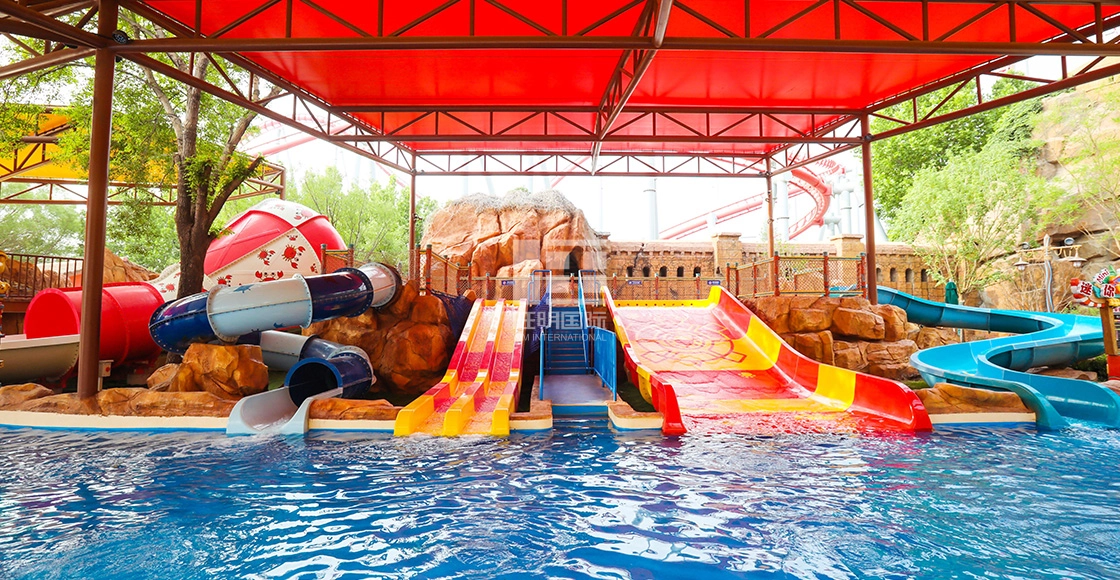
Children Combined Water Slide
Discover endless fun with the Children Combined Water Slide by WM INTERNATIONAL, expertly crafted for thrill-seeking kids. Perfect for summer splashes, this durable slide promises safety and joy. Looking to elevate your play area? Explore our Children's Combined Slide for sale now!
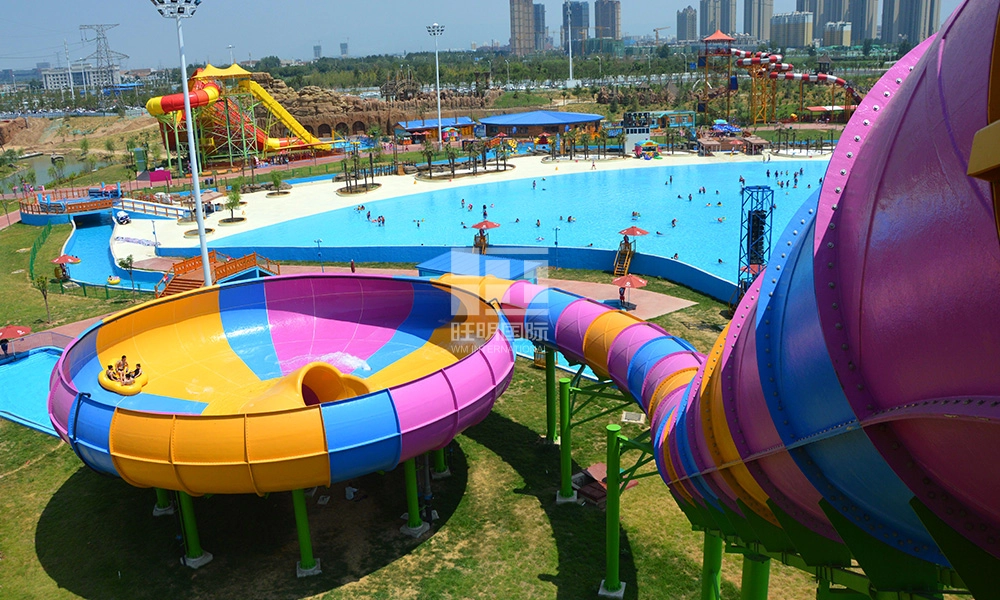
Huge Bowl Water Slide
The Huge Bowl Water Slide has achieved the “World's Best New Water Amusement Equipment” Award; it is the new favorite of the young people and the star project of the water park. The raft carries the tourists slowly entering the closed chute first; then it whirls in the bowl the moment the tourists can see the light. After a short period of time, the raft is suddenly suctioned into a huge black hole until it falls into the water. For a moment, the tourists realize the breathtaking journey has been safely brought to an end.
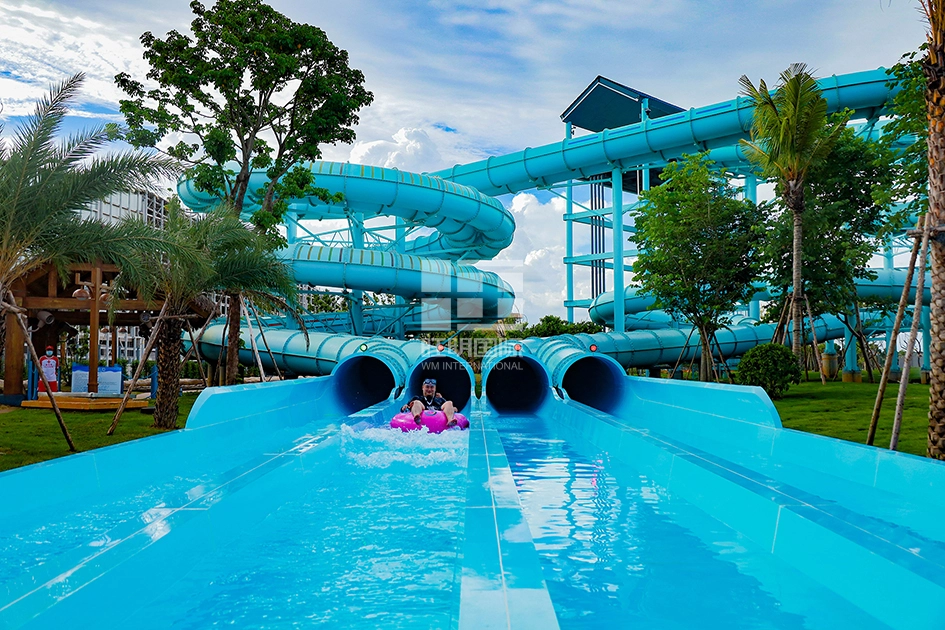
Time Tunnel Water Slide
The biggest feature of the time tunnel slide is that it uses double water slides and double tubes side by side in design and competes along the circular slide path. 8 people can play at the same time, with a large passenger capacity and high return rate, which is very suitable for team and family travel. And the slide is equipped with WangMing International's time tunnel technology, and the interior of the slide presents a beautiful aurora effect, with colorful lights, as if traveling through time and space.
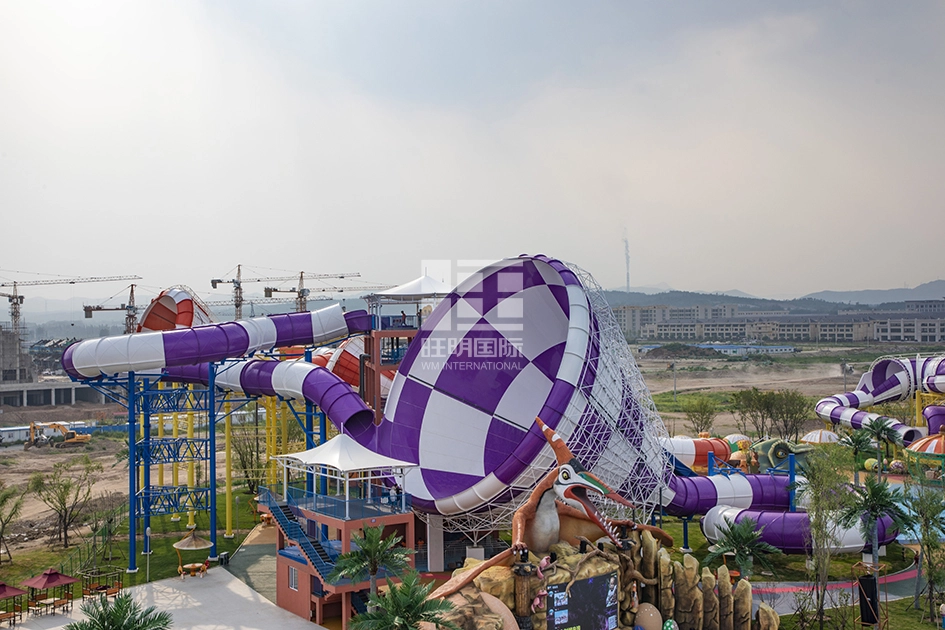
Big Tourbillion Water Slide
The Big Tourbillion water Slide won the "Gold Ticket Award - The Best New Project" of the international tourism industry. With unique modelling, strong irritation and humor, it is deeply loved by the young people; it has always been the popularity star of the water park. The raft carries the tourists as they enter the dark, closed chute slowly from the more than ten-meter-high platform; under the effect of gravity and water flow, it enters the state of rapid falling and then drops into the big Tourbillon; after a few times of whirling, it falls into the water pool. At this moment, the tourists are still in shock.
Get in touch
Have to get customized water park solutions and product quotes.
We will provide you with professional consultation and support.

Relying on leading technology, innovative products and rich industry experience, we tailor personalized solutions for each water park project to ensure a safe and exciting entertainment experience for tourists.
 Scan QR Code
wmwaterslide
wmwaterpark