


Water Slide Ride Types Parks Should Compare Before Buying
- How to Evaluate Water Slide Attractions for a Park Project
- Start with the audience and the role of the ride
- Assess throughput, footprint, and operating complexity
- Use recognized standards and project-specific safety review
- Compare the Main Water Slide Ride Families
- Body slides, speed slides, and mat racers
- Tube rides, bowls, and family raft attractions
- Children’s slides and interactive water play
- Build a Balanced Attraction Mix and a Defensible Business Case
- Balance signature rides with dependable family capacity
- Validate the proposal through drawings and operating assumptions
- How Our Water Park Offering Supports Project Planning
- Connect attraction selection with the wider development
- Compare suppliers on evidence, scope, and support
- Frequently Asked Questions
Water parks comparing water slide ride types should evaluate more than headline height or visual impact: the best attraction mix fits the target audience, available site area, expected throughput, staffing model, water and energy systems, maintenance capacity, and overall guest journey. Body slides, mat racers, tube rides, bowl slides, family raft rides, and children’s play attractions each create different operating and planning requirements. Before selecting equipment or engaging water slide ride suppliers for parks, buyers should confirm rider eligibility, dispatch and landing arrangements, queue design, applicable standards, installation scope, lifecycle support, and how each ride complements the wider water park plan.
How to Evaluate Water Slide Attractions for a Park Project
Start with the audience and the role of the ride
Define the attraction’s primary job before comparing proposals. A high-thrill body slide may help position a destination as an adventure-led park, while a family raft ride can give several members of a group a shared experience. A multi-lane racer creates a visible, social challenge, and a children’s play structure can serve younger guests who are not ready for larger slides. These are different product roles rather than interchangeable choices. The project brief should state the intended age and ability range, desired guest experience, expected rider group size, and whether the attraction is meant to be a signature feature, a capacity contributor, or part of a family zone.
Audience definition also affects height restrictions, access arrangements, supervision, and the surrounding amenities. Families may value shade, seating, clear sightlines, and nearby changing facilities as much as the ride itself. Teenagers and thrill-seeking adults may prioritize speed, competition, or a dramatic visual profile. A balanced water park portfolio considers the full visitor mix instead of allowing one highly visible attraction to dictate the experience for every guest.
Assess throughput, footprint, and operating complexity
Capacity should be assessed as an operating system, not just a claimed rider-per-hour figure. Dispatch spacing, the time needed to climb stairs, loading and unloading procedures, tube or mat availability, attendant coverage, and interruptions for cleaning or inspection can all affect actual throughput. Ask suppliers to explain the assumptions behind any capacity estimate and distinguish theoretical capacity from expected operating performance under the proposed staffing and guest conditions.
Compare the attraction’s footprint with the full space it requires: tower, stairways, queue, runout or splashdown, access routes, plant connections, and maintenance access. A compact slide can still require significant vertical structure or a large landing zone. The site plan should account for guest circulation around the attraction and avoid creating conflicts with food service, other queues, emergency access, or quieter family areas. Early coordination with civil, structural, hydraulic, electrical, and landscape teams helps uncover constraints before design decisions become expensive to change.
Use recognized standards and project-specific safety review
Request documentation showing how the proposed attraction is designed, manufactured, installed, inspected, and operated in relation to applicable local regulations and standards. In the United States, ASTM F2376 addresses classification, design, manufacture, construction, and operation of water slide systems. The applicable edition and legal requirements depend on jurisdiction, contract scope, and authority having jurisdiction, so the project team should confirm them with qualified professionals rather than assume one standard covers every obligation.
Safety planning extends beyond the slide structure. The operator needs clear rider instructions, suitable supervision, effective dispatch practices, emergency response procedures, and maintenance records. The U.S. Centers for Disease Control and Prevention guidance on drowning prevention emphasizes layered prevention measures, including supervision and barriers in relevant aquatic settings. For water quality and facility operations, applicable public-health rules should be confirmed locally; the CDC’s healthy swimming information provides a useful starting point for understanding recreational water health considerations.
Compare the Main Water Slide Ride Families
Body slides, speed slides, and mat racers
Body slides use the rider’s body as the sliding medium and can be configured as enclosed, open, steep, or winding experiences. A speed-oriented configuration may appeal to thrill-seeking guests, but the buyer should evaluate rider restrictions, slide geometry, landing conditions, dispatch control, and visibility for attendants. Enclosed sections can create a different sensory experience from open flumes and should be reviewed for lighting, guest communication, and inspection access.
Mat racers add a competitive, multi-lane format in which riders descend on mats. They can encourage repeat rides and give spectators a clear view of the activity, but lane count, starting arrangements, mat handling, and the available runout should be evaluated together. The visual appeal of multiple lanes does not itself establish throughput: operations still depend on safe dispatch intervals, queue organization, and the time required to return equipment to the start.
Tube rides, bowls, and family raft attractions
Tube slides can support single riders or groups, depending on their design and the equipment used. Buyers should confirm tube capacity, tube storage and retrieval, loading procedures, and whether guests must carry tubes up stairs. A ride that requires guests to transport bulky equipment may need different queue widths and circulation planning than a system with a conveyor or other handling arrangement.
Bowl-style attractions generally use a circular or curved feature as part of the ride path, while raft slides can accommodate multiple riders in a shared experience. These categories may require specific raft or tube handling, a suitable landing arrangement, and careful review of how guests exit the runout. Ask for operating instructions, rider configuration limits, and maintenance access details for the exact proposed design. Family raft attractions can serve a wider group dynamic, but rider eligibility and supervision requirements still need to be established from the manufacturer’s documentation and local rules.
Children’s slides and interactive water play
Children’s attractions include lower-profile slides, splash features, and interactive play structures. Their value often comes from combining several activities in a legible, age-appropriate zone rather than relying on one large slide. Buyers should consider water depth and circulation, visibility for caregivers and attendants, slip-resistant access, shade, seating, and how children move between features. A clearly defined zone can help families understand which experiences suit different ages and abilities.
Accessibility should be planned as part of the whole guest experience, not treated as a late-stage equipment check. Consider accessible routes to viewing and queue areas, transfer and assistance needs, communication formats, and access to associated amenities. The 2010 ADA Standards for Accessible Design provide requirements for covered facilities in the United States; project teams should seek qualified advice on how those requirements apply to the site and attraction. Local accessibility laws may differ.
| Ride type | Typical guest experience | Key procurement checks | Operational considerations |
|---|---|---|---|
| Body or speed slide | Individual descent with a thrill-focused format | Rider criteria, flume configuration, tower and landing footprint, inspection access | Dispatch control, attendant visibility, clear instructions, landing-zone management |
| Mat racer | Side-by-side competition across lanes | Number and layout of lanes, start platform, runout, mat specification | Mat circulation, queue organization, synchronized dispatch procedures |
| Tube slide | Individual or group ride using specified tubes | Tube capacity, storage, retrieval method, access and queue dimensions | Tube availability, handling workflow, loading and exit procedures |
| Bowl attraction | Ride path incorporating a bowl or circular feature | Exact ride configuration, rider eligibility, splashdown and evacuation planning | Clear dispatch procedures, attendant coverage, manufacturer-led operating guidance |
| Family raft slide | Shared ride for a group using a raft | Raft capacity, loading design, conveyance needs, landing arrangement | Raft retrieval and storage, group loading, runout exit flow |
| Children’s play feature | Lower-intensity sliding and interactive water play | Age and ability suitability, water systems, accessible circulation, visibility | Caregiver sightlines, supervision, water-quality monitoring, routine cleaning |
This table is a planning comparison, not a performance guarantee or a substitute for the technical documents for a specific model. Ride configuration, local codes, site conditions, and operating procedures can change the requirements substantially. Request project-specific drawings and operating information before comparing capital costs or making a final selection.
Build a Balanced Attraction Mix and a Defensible Business Case
Balance signature rides with dependable family capacity
A park’s ride portfolio should work as a coordinated visitor journey. A landmark slide can create a strong visual identity, while family raft rides, children’s play areas, and moderate-thrill experiences broaden the reasons to visit. If a proposal concentrates investment in several attractions aimed at the same narrow age or thrill segment, the park may leave other guest groups underserved. Map each proposed ride against target audience, expected dwell time, seasonal use, queue location, and nearby amenities to identify gaps and avoid unnecessary duplication.
Compare capital expenditure alongside lifecycle and operating costs. The evaluation should include foundations and structural support, pumps and filtration interfaces, electrical requirements, water consumption, staffing, inspections, spare parts, cleaning access, and planned downtime. Ask which components are standard, which are custom, what replacement parts are expected, and how maintenance access is handled. A lower purchase price may not represent better value if it introduces avoidable civil works, complex equipment handling, or difficult access for routine inspection.
Validate the proposal through drawings and operating assumptions
Before award, request a coordinated package that identifies the attraction footprint, elevations, access and queue assumptions, utilities, interface points, and responsibilities among the ride supplier, designer, contractor, and owner. Confirm who is responsible for site surveys, structural calculations, foundations, electrical and water connections, permits, installation supervision, commissioning, and operator training. Unclear scope boundaries are a common source of schedule and cost disputes, particularly when imported equipment must fit local construction practices.
Ask for references relevant to the proposed ride type and project scale, plus documentation for quality controls, inspection, warranty terms, and after-sales support. A quality management framework such as ISO 9001 concerns an organization’s quality management system; it does not by itself certify that an individual slide is safe or compliant. Buyers should therefore evaluate the specific product documentation and project controls rather than treating a general certificate as a substitute for technical review.
How Our Water Park Offering Supports Project Planning
Connect attraction selection with the wider development
Our product scope includes water park planning and design, water park construction, water slides, water play attractions, and wave making equipment. Connecting these categories can help project owners assess attractions within the context of circulation, utilities, guest zones, and the overall visitor experience. Rather than selecting a ride in isolation, buyers can use the planning process to consider how a slide tower relates to adjacent attractions, how family areas connect to amenities, and how the equipment interfaces with the site’s water systems.
Because project requirements vary by location and development stage, a useful proposal should identify assumptions and exclusions clearly. Our team can organize discussions around project goals, target audiences, site information, preferred ride categories, and delivery scope, then help buyers define what information is needed for the next decision. Final engineering, approvals, construction methods, and operating procedures must be confirmed against the specific project, local regulations, and qualified professional review.
Compare suppliers on evidence, scope, and support
When evaluating water slide manufacturers and attraction partners, assess the evidence behind each proposal: design documents, material and fabrication information, relevant project references, installation responsibilities, training, warranty conditions, spare-parts access, and response arrangements after handover. Buyers should also clarify whether the supplier’s role covers concept planning, detailed design, manufacturing, shipping, installation, or only selected stages. A transparent scope makes bids easier to compare and reduces the risk that important interfaces are left unassigned.
Our portfolio’s combination of water park design, construction, water slides, interactive play features, and wave making equipment supports a broader conversation about attraction mix and project coordination. The most suitable solution still depends on the owner’s business case, site constraints, approvals, and operating resources. A disciplined comparison enables project teams to select rides that fit both the guest proposition and the practical realities of building and running the park.
Contact our team to discuss your project requirements and explore water park design, construction, water slides, water play attractions, and wave making equipment.
Frequently Asked Questions
Which water slide types should a new water park compare?
Compare body and speed slides, mat racers, tube rides, bowl attractions, family raft slides, and children’s play features. Evaluate each against the target audience, site footprint, operating model, and role in the park’s overall attraction mix.
How should buyers compare water slide throughput?
Ask suppliers to explain the assumptions behind capacity estimates, including dispatch spacing, loading and unloading, queue movement, staffing, and equipment handling. Distinguish theoretical capacity from expected operating performance under the proposed conditions.
What should a water park check before buying a slide?
Review rider eligibility, footprint, tower and landing arrangements, utilities, access, maintenance requirements, applicable standards, installation scope, operating documentation, warranty terms, and after-sales support. Confirm responsibilities among the supplier, designer, contractor, and owner.
Are family raft slides suitable for every age group?
Not automatically. Rider eligibility and group configuration depend on the specific ride design and manufacturer’s operating documentation, as well as applicable local requirements. Buyers should verify restrictions and plan loading, supervision, and exit procedures accordingly.
Which standards should be considered for water slide systems?
In the United States, ASTM F2376 addresses classification, design, manufacture, construction, and operation of water slide systems. Project teams should confirm the applicable edition, local regulations, and authority requirements with qualified professionals.
Why compare lifecycle costs as well as purchase price?
The total project and operating burden can include foundations, utilities, staffing, inspections, spare parts, cleaning access, equipment handling, and downtime. Comparing these factors alongside the purchase price provides a more complete basis for evaluating long-term value.
Recommended
Wholesale Customizable wave pool equipment manufacturer and supplier
Low-Maintenance Water Slides for Sale: Materials and Care
Child-Friendly Features to Look for in Water Slides

Mobula Natrix Water Slide: High‑Thrill Modular Attraction for Modern Water Parks
Children Combined Water Slide
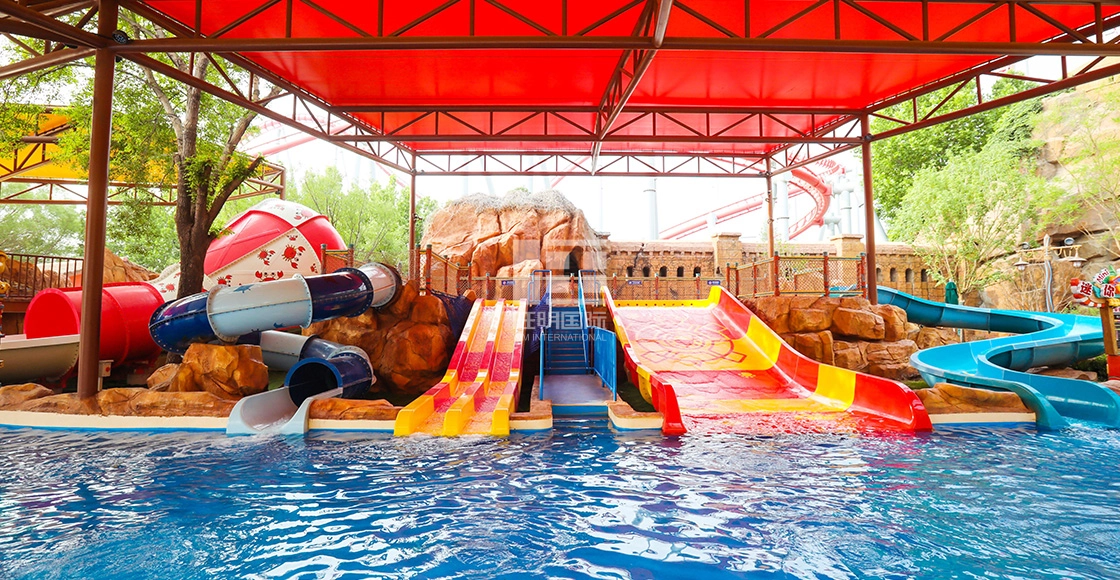
Discover endless fun with the Children Combined Water Slide by WM INTERNATIONAL, expertly crafted for thrill-seeking kids. Perfect for summer splashes, this durable slide promises safety and joy. Looking to elevate your play area? Explore our Children's Combined Slide for sale now!
Huge Bowl Water Slide
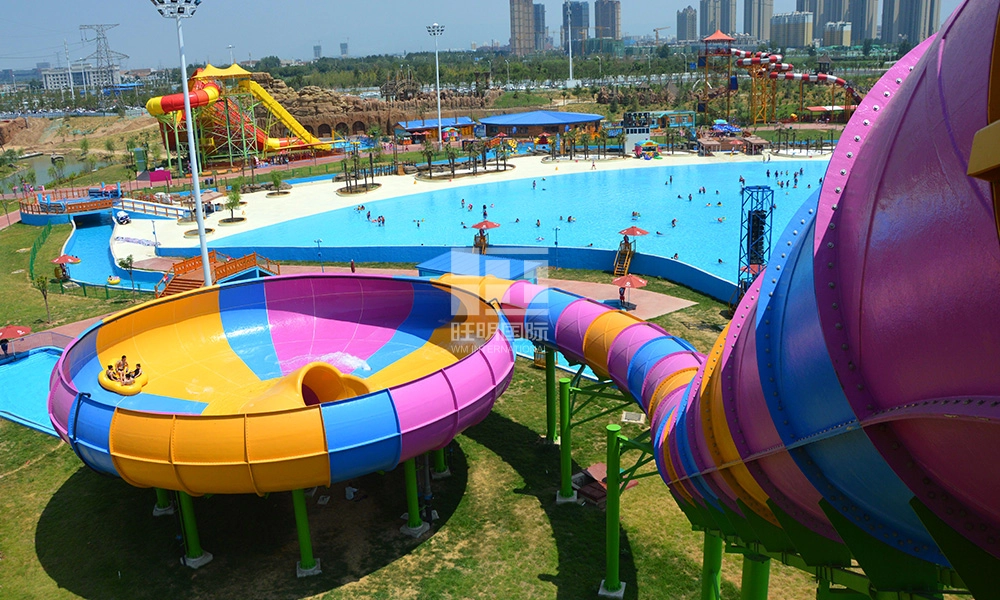
The Huge Bowl Water Slide has achieved the “World's Best New Water Amusement Equipment” Award; it is the new favorite of the young people and the star project of the water park. The raft carries the tourists slowly entering the closed chute first; then it whirls in the bowl the moment the tourists can see the light. After a short period of time, the raft is suddenly suctioned into a huge black hole until it falls into the water. For a moment, the tourists realize the breathtaking journey has been safely brought to an end.
Time Tunnel Water Slide
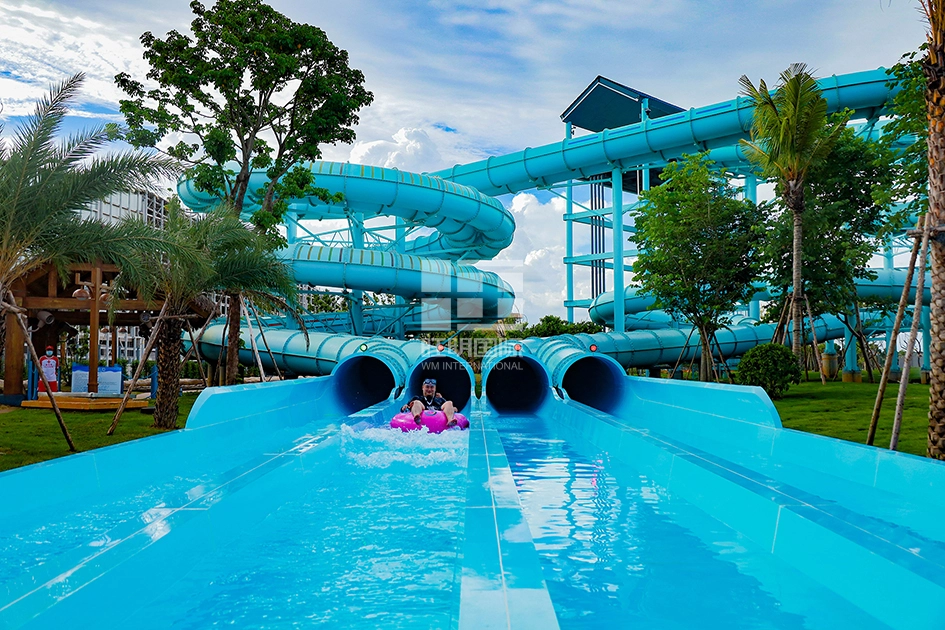
The biggest feature of the time tunnel slide is that it uses double water slides and double tubes side by side in design and competes along the circular slide path. 8 people can play at the same time, with a large passenger capacity and high return rate, which is very suitable for team and family travel. And the slide is equipped with WangMing International's time tunnel technology, and the interior of the slide presents a beautiful aurora effect, with colorful lights, as if traveling through time and space.
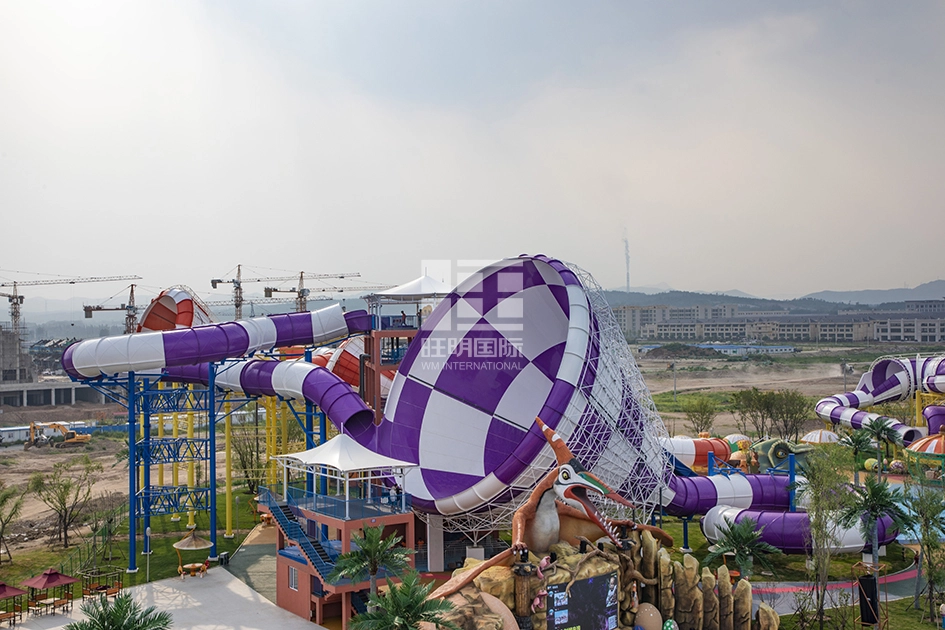
Big Tourbillion Water Slide
The Big Tourbillion water Slide won the "Gold Ticket Award - The Best New Project" of the international tourism industry. With unique modelling, strong irritation and humor, it is deeply loved by the young people; it has always been the popularity star of the water park. The raft carries the tourists as they enter the dark, closed chute slowly from the more than ten-meter-high platform; under the effect of gravity and water flow, it enters the state of rapid falling and then drops into the big Tourbillon; after a few times of whirling, it falls into the water pool. At this moment, the tourists are still in shock.
Get in touch
Have to get customized water park solutions and product quotes.
We will provide you with professional consultation and support.

Relying on leading technology, innovative products and rich industry experience, we tailor personalized solutions for each water park project to ensure a safe and exciting entertainment experience for tourists.
 Scan QR Code
wmwaterslide
wmwaterpark