


Water Slide Quality Checks: Materials, Testing, and Safety Certifications
- How to assess water slide materials and build quality
- Match the material to the ride, climate, and maintenance plan
- Inspect the details that reveal manufacturing consistency
- Compare material options through the project lifecycle
- Testing, compliance, and safety documentation buyers should verify
- Review the design basis and the applicable standard
- Check test plans, inspection records, and commissioning results
- Distinguish certifications, declarations, and operating approvals
- Using supplier evidence to reduce project and operating risk
- Build a procurement checklist around verifiable deliverables
- Look for clear ownership across design and construction
- How our portfolio supports coordinated project planning
- Frequently Asked Questions
Water slide quality depends on more than a polished finish: project owners must verify that materials suit the operating environment, design and fabrication follow applicable requirements, testing covers the complete ride system, and safety documents match the installed configuration. This guide explains how to assess fiberglass-reinforced plastic, stainless steel, and other slide materials; review manufacturing and commissioning tests; distinguish product standards from quality-management certifications; and build a practical supplier checklist. For buyers comparing water slide ride suppliers for parks, the central procurement principle is to evaluate traceable evidence across design, production, installation, and operation—not rely on a brochure, a single certificate, or a successful factory inspection alone.
How to assess water slide materials and build quality
Match the material to the ride, climate, and maintenance plan
Material selection affects structural design, ride surface, corrosion exposure, repair methods, and lifecycle maintenance. Fiberglass-reinforced plastic (FRP) is widely used for many slide forms because manufacturers can mold it into complex shapes and produce sections with a smooth finished surface. Buyers should ask for the laminate and resin specifications, surface-coating details, reinforcement approach, and inspection criteria. The material name alone is not enough: the quality of the laminate, joints, finish, and protection system also matters.
Stainless steel can be appropriate for selected slide designs and project conditions, but “stainless” does not mean immune to corrosion. Grade, fabrication, weld quality, surface finish, water chemistry, cleaning chemicals, and exposure to chlorides all influence performance. Request the specified alloy and relevant material records, and ask how welds and finished surfaces are checked. A site near the coast or one using aggressive cleaning procedures may require a different materials review from an inland facility with controlled water treatment.
Polyethylene and other polymer components may appear in play attractions, smaller slides, or ancillary equipment. Their suitability depends on the component’s function, design loads, exposure, and applicable product requirements. Buyers should confirm whether a polymer component is intended for the specific use proposed, how ultraviolet exposure and chemical contact are addressed, and whether replacement parts are available. Material substitutions during production should be documented and approved rather than treated as interchangeable by default.
Inspect the details that reveal manufacturing consistency
For FRP sections, review the continuity of the riding surface, seams, transitions, flange areas, and support interfaces. Visible pinholes, exposed fibers, cracks, rough patches, inconsistent coatings, or poorly blended joints warrant investigation. A visual check does not establish structural adequacy, but it can identify workmanship issues that require documented disposition before shipment. Ask the manufacturer to explain its acceptance criteria and how nonconforming sections are repaired, reinspected, and recorded.
For metal components, examine weld appearance, edge finishing, surface condition, fasteners, and the protection of dissimilar-metal interfaces. Confirm that the delivered parts correspond to approved drawings and material specifications. For all materials, buyers should verify dimensional tolerances at connections, alignment features, and support points: small discrepancies can complicate field assembly, increase installation time, or create an uneven ride path. Inspection records are most useful when they identify the component, drawing revision, inspector, date, result, and any corrective action.
Supplier quality systems support repeatable production, but they are not proof that a particular slide is safe or compliant. ISO 9001 describes requirements for a quality management system. A certificate to that standard can be relevant evidence about organizational processes, but it does not independently certify a specific ride, validate its design, or replace required inspections and approvals. Buyers should verify the certificate’s scope, issuing body, validity, and relevance to the manufacturing site involved in the project.
Compare material options through the project lifecycle
A useful comparison considers not only purchase price but also design suitability, transport, installation, exposure, inspection access, repair arrangements, and expected maintenance resources. The table below summarizes common procurement considerations; it is a screening aid, not a substitute for engineering review or material specifications.
| Material or system | Potential project advantages | Checks buyers should request | Lifecycle considerations |
|---|---|---|---|
| Fiberglass-reinforced plastic (FRP) | Can be molded into varied slide geometries and supplied as sectional assemblies. | Laminate and resin specifications, surface finish, joint details, dimensional checks, and repair procedures. | Review coating condition, surface damage, compatible repair materials, and access to qualified repair support. |
| Stainless steel | Can suit designs requiring fabricated metal sections and durable structural components. | Specified alloy, material traceability where required, weld inspection, surface finish, and connection details. | Assess water and cleaning-chemical exposure, corrosion monitoring, finish care, and local repair capability. |
| Polymer components | May be suitable for selected play features, smaller slide elements, or ancillary parts. | Intended-use documentation, dimensions, material identification, exposure suitability, and assembly instructions. | Confirm inspection intervals, replacement-part availability, and the supplier’s guidance on wear or damage. |
Testing, compliance, and safety documentation buyers should verify
Review the design basis and the applicable standard
Before placing an order, identify the regulations, codes, and standards that apply in the destination market and to the specific attraction type. Water slide requirements can differ by jurisdiction, facility classification, and project scope. ASTM F2376 addresses the classification, design, manufacture, construction, and operation of water slide systems; buyers can review the ASTM F2376 standard listing and confirm the applicable edition and contractual requirements with the project’s qualified professionals and local authorities. A reference to a standard in a proposal is not, on its own, evidence of conformity.
Request the design basis, approved drawings, calculations and supporting engineering documentation required for the project, along with a compliance matrix showing how applicable requirements have been addressed. The matrix should identify the relevant requirement, the design or process control used to meet it, the supporting evidence, and the party responsible for review or approval. Confirm that the documents relate to the actual ride model, layout, support structure, water conditions, and installation—not merely a similar product from the supplier’s catalog.
Safety review must also account for the facility around the ride. The U.S. Centers for Disease Control and Prevention’s Model Aquatic Health Code provides guidance for public aquatic facilities, including operational and environmental health considerations. It is a model code rather than a substitute for local law, and its relevance depends on the project location. Buyers should coordinate the ride supplier’s deliverables with the water park designer, pool and water-treatment specialists, building professionals, and the authority having jurisdiction.
Check test plans, inspection records, and commissioning results
A robust quality plan covers more than a final ride-through. Depending on the design and applicable requirements, evidence may include material checks, dimensional inspection, weld or joint inspection, structural verification, assembly checks, and review of the finished riding surface. Ask which tests are conducted at the factory, which require the completed installation, what acceptance criteria apply, and who is qualified to witness or approve each stage. If a test is not applicable, the supplier should explain why rather than leave the scope ambiguous.
Factory acceptance testing can confirm selected manufacturing and assembly characteristics, but it cannot replicate every site condition. Site acceptance and commissioning should address the installed support system, connections, alignment, water delivery, controls, emergency provisions, operating procedures, and required inspections. The project team should define how observations are logged, how defects are resolved, who signs off, and whether operation is restricted until closeout items are complete. Keep the final test reports, as-built drawings, manuals, and maintenance instructions together in the facility’s handover records.
Ask for evidence that is specific and traceable: a report should name the equipment or component, identify its configuration and revision, state the method and result, and show the responsible organization or inspector. Clarify whether third-party inspection is required by law, contract, insurer, or the authority having jurisdiction. A general “tested” statement without scope, criteria, or results is difficult to evaluate and offers limited procurement value.
Distinguish certifications, declarations, and operating approvals
In procurement discussions, “certified” can refer to different things: a management-system certificate, a product certification, an inspection report, a declaration of conformity, or an operating permit. These documents are not interchangeable. Buyers should check the issuer, scope, applicable standard or regulation, covered model and options, validity period, and any conditions or exclusions. Where a certificate covers a family of products, verify that the selected configuration falls within its stated scope.
Local approvals may also depend on installation details, site engineering, water quality, access control, signage, lifeguard arrangements, operating limits, and inspection schedules. Accordingly, request a responsibility schedule that identifies which documents the manufacturer supplies and which approvals the owner, designer, installer, or local authority must secure. This avoids a common handover gap: a technically complete product package that does not include the evidence or site approvals needed to open the attraction.
Using supplier evidence to reduce project and operating risk
Build a procurement checklist around verifiable deliverables
Effective supplier assessment connects technical evidence to contract milestones. Before award, confirm the proposed scope, design responsibility, applicable standards, material specifications, document register, inspection and test plan, warranty terms, spare-parts policy, and installation support. In the contract, identify approval points for drawings and material substitutions, define access to inspection records, and state how deviations are reviewed. This makes quality measurable and reduces the risk of discovering late in construction that critical documentation was never included.
During production, track drawing revisions, long-lead components, inspection hold points, and corrective actions. Before shipment, verify that required reports and identification records are complete and that the supplied parts match the approved configuration. At site handover, check as-built information, operating and maintenance manuals, staff training scope, recommended inspection routines, and escalation contacts. A supplier’s ability to provide timely, coherent documentation is a practical indicator of how well project interfaces are being managed.
Commercial comparisons should include lifecycle costs rather than equipment price alone. Consider freight and handling, installation complexity, access equipment, commissioning, staff training, routine inspections, likely surface repairs, spare-part lead times, and downtime implications. Ask suppliers to state assumptions and exclusions in a comparable format. A lower initial quotation may not represent better value if it omits engineering coordination, site support, essential documentation, or realistic maintenance planning.
Look for clear ownership across design and construction
Water park projects involve connected systems: slide geometry and supports, circulation and water delivery, pools and runouts, electrical and control interfaces, guest circulation, and operating procedures. Procurement teams should establish an interface matrix so each party knows who designs, supplies, installs, tests, and approves each element. This is particularly important when an attraction package combines water slides, play features, wave-making equipment, and shared infrastructure. Clear ownership helps prevent gaps between equipment boundaries and the wider park design.
Ask how the supplier manages engineering changes, installation queries, nonconformities, and post-opening service requests. Strong project controls make it easier to assess whether a proposed field change affects structural assumptions, ride performance, certification scope, or operating instructions. No change that could affect safety or compliance should be accepted informally; it should be reviewed, documented, and approved by the responsible parties before implementation.
How our portfolio supports coordinated project planning
Our portfolio includes water park design, water park construction, water slides, water play attractions, and wave-making equipment. For buyers planning a new destination or expanding an existing facility, bringing these categories into early coordination can help align attraction selection with site layout, guest flow, infrastructure interfaces, and construction sequencing. The appropriate scope depends on the project brief, location, approvals, and technical requirements; product selection should follow those requirements rather than precede them.
Our project discussions can be structured around the evidence buyers need to evaluate a proposal: intended use, design scope, materials, applicable standards, production inspections, site interfaces, commissioning responsibilities, and handover documentation. We encourage project owners to identify local regulatory requirements early and to involve their appointed engineers and authorities in technical reviews. This approach supports a transparent procurement process and helps teams compare proposals on documented scope, service responsibilities, and lifecycle considerations—not unsupported assurances.
When reviewing any offer, ask for the product configuration and standards basis in writing, then compare it with the project’s approval pathway and operating plan. A supplier that can explain its deliverables, limitations, and interface responsibilities clearly gives investors and operators a stronger foundation for due diligence, construction coordination, and long-term attraction management.
Contact our team to discuss water park design, construction, water slides, play attractions, or wave-making equipment for your project.
Frequently Asked Questions
Which materials are commonly used for water slides?
Fiberglass-reinforced plastic is used for many slide forms, while stainless steel may suit selected designs and conditions. Polymer components can be used for certain play features or ancillary parts. Suitability depends on the design, exposure, applicable requirements, and documented material specifications.
Does an ISO 9001 certificate prove that a water slide is safe?
No. ISO 9001 is a quality management system standard, not a product safety certification. It can provide evidence about an organization's quality processes, but it does not independently certify a specific ride or replace required design reviews, inspections, testing, and approvals.
What standard should buyers check for water slide systems?
Applicable standards depend on the project location and attraction type. ASTM F2376 addresses the classification, design, manufacture, construction, and operation of water slide systems. Buyers should verify the applicable edition and requirements with qualified project professionals and local authorities.
What testing documents should a water slide supplier provide?
Request a project-specific design basis and compliance matrix, relevant material and inspection records, test plans and results, assembly and commissioning documentation, and final as-built information and manuals. Reports should identify the equipment configuration, revision, method, result, and responsible organization or inspector.
What is the difference between factory testing and site commissioning?
Factory testing can verify selected manufacturing and assembly characteristics, but it cannot replicate all installed conditions. Site commissioning evaluates the completed installation, including supports, connections, alignment, water delivery, controls, operating procedures, and required inspections.
Are safety certificates and operating approvals interchangeable?
No. A management-system certificate, product certification, inspection report, declaration of conformity, and operating permit have different scopes and purposes. Buyers should verify the issuer, covered model and configuration, applicable requirements, validity, and any local approvals needed for the installed facility.
Recommended
The B2B Buyer’s Guide to spray park systems
How Much to Build a Water Park in Abu Dhabi? Full Cost Guide
Wholesale rafting equipment manufacturer and supplier
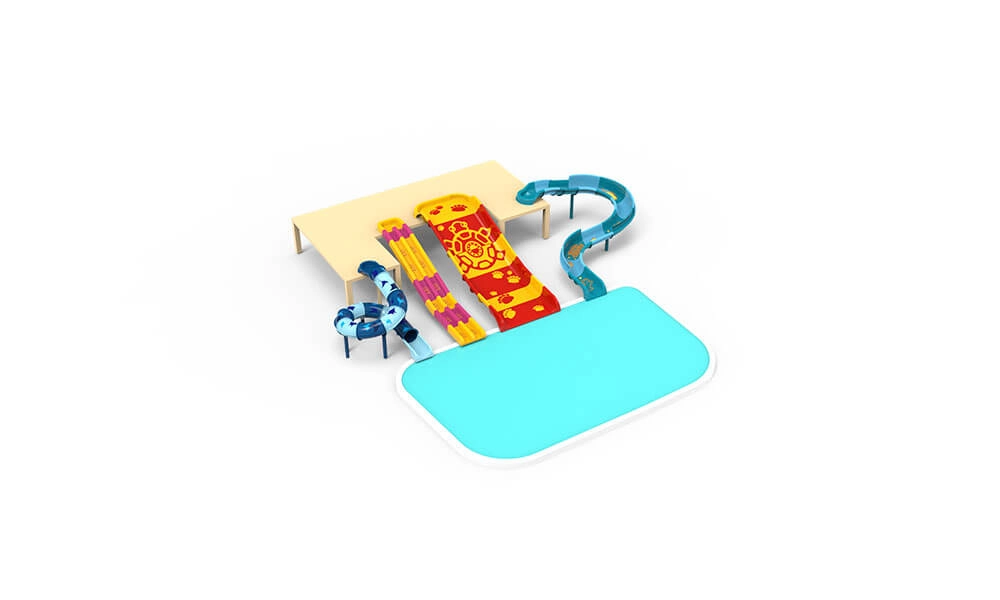
Children Combined Water Slide: Specs for Bulk Buyers
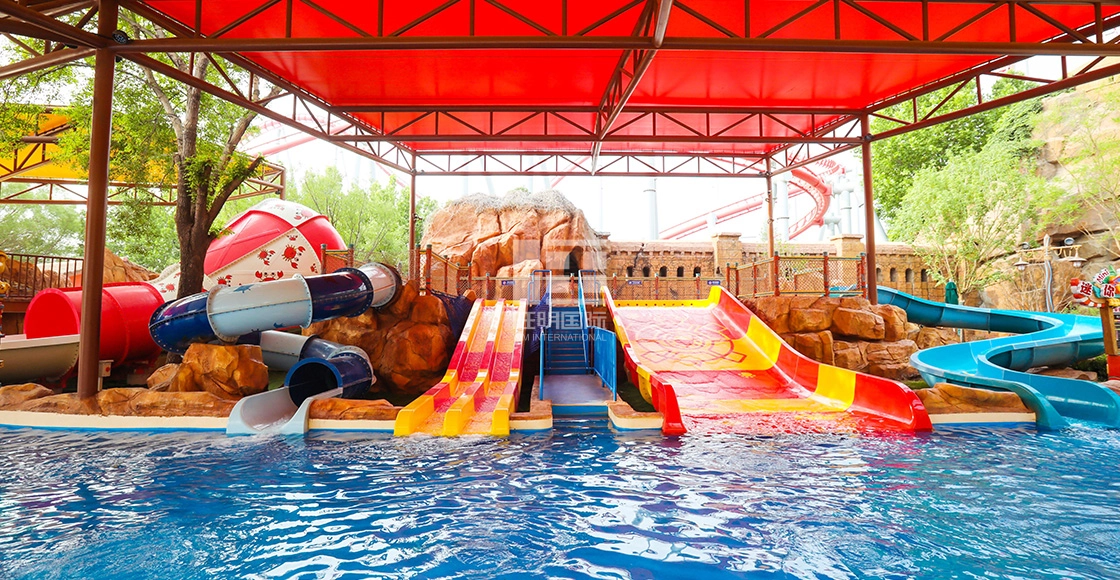
Children Combined Water Slide
Discover endless fun with the Children Combined Water Slide by WM INTERNATIONAL, expertly crafted for thrill-seeking kids. Perfect for summer splashes, this durable slide promises safety and joy. Looking to elevate your play area? Explore our Children's Combined Slide for sale now!
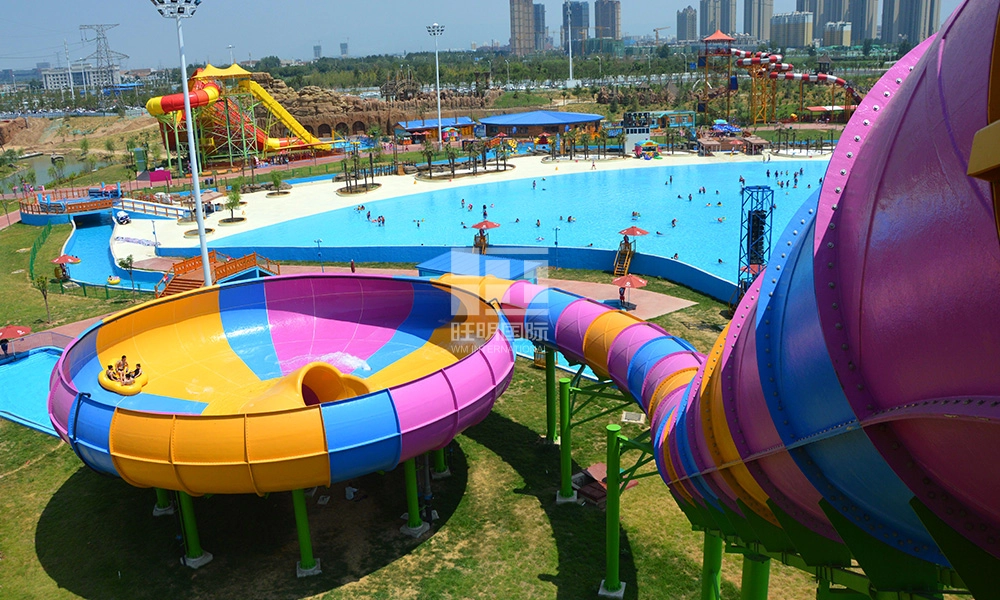
Huge Bowl Water Slide
The Huge Bowl Water Slide has achieved the “World's Best New Water Amusement Equipment” Award; it is the new favorite of the young people and the star project of the water park. The raft carries the tourists slowly entering the closed chute first; then it whirls in the bowl the moment the tourists can see the light. After a short period of time, the raft is suddenly suctioned into a huge black hole until it falls into the water. For a moment, the tourists realize the breathtaking journey has been safely brought to an end.
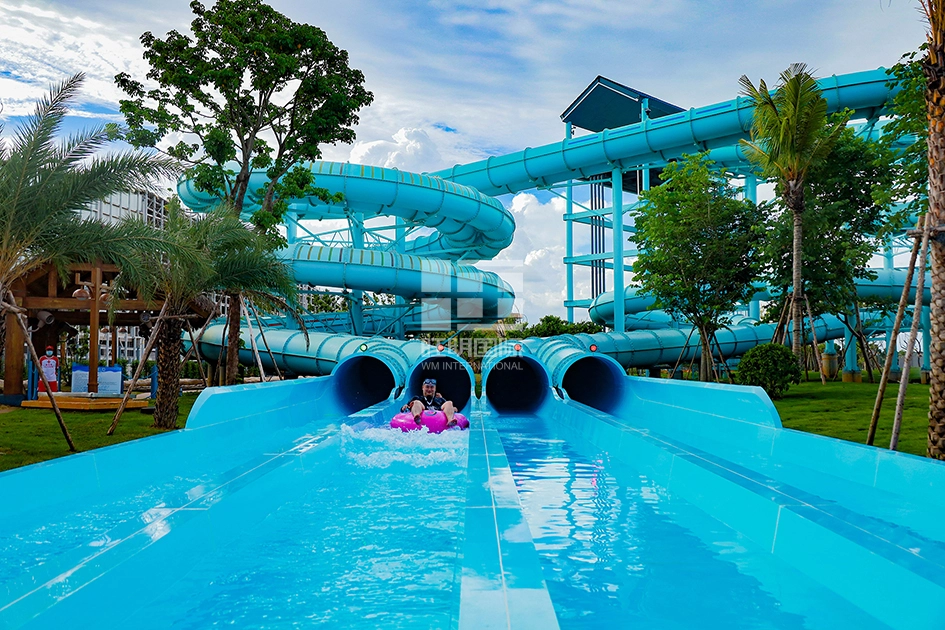
Time Tunnel Water Slide
The biggest feature of the time tunnel slide is that it uses double water slides and double tubes side by side in design and competes along the circular slide path. 8 people can play at the same time, with a large passenger capacity and high return rate, which is very suitable for team and family travel. And the slide is equipped with WangMing International's time tunnel technology, and the interior of the slide presents a beautiful aurora effect, with colorful lights, as if traveling through time and space.
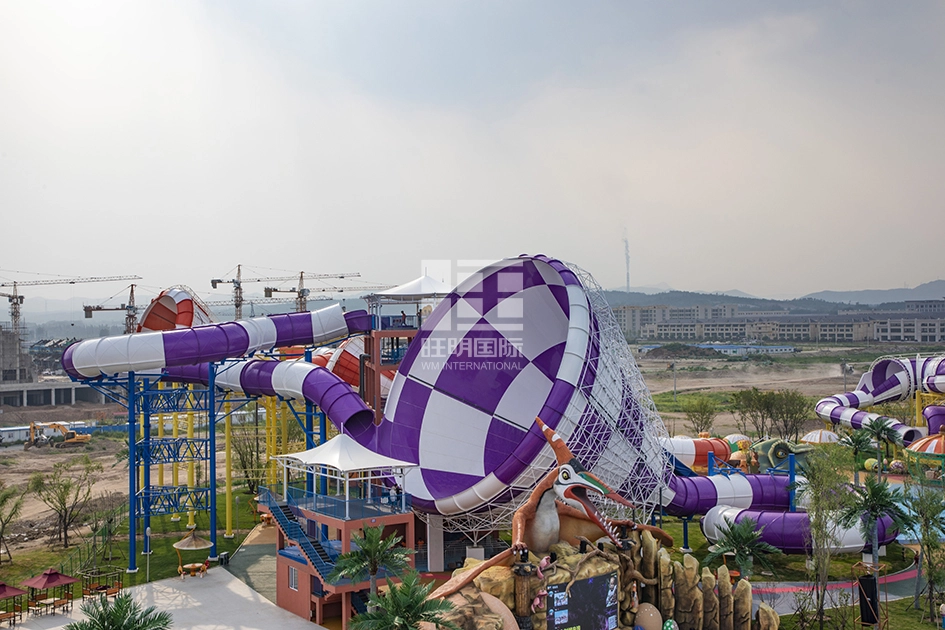
Big Tourbillion Water Slide
The Big Tourbillion water Slide won the "Gold Ticket Award - The Best New Project" of the international tourism industry. With unique modelling, strong irritation and humor, it is deeply loved by the young people; it has always been the popularity star of the water park. The raft carries the tourists as they enter the dark, closed chute slowly from the more than ten-meter-high platform; under the effect of gravity and water flow, it enters the state of rapid falling and then drops into the big Tourbillon; after a few times of whirling, it falls into the water pool. At this moment, the tourists are still in shock.
Get in touch
Have to get customized water park solutions and product quotes.
We will provide you with professional consultation and support.

Relying on leading technology, innovative products and rich industry experience, we tailor personalized solutions for each water park project to ensure a safe and exciting entertainment experience for tourists.
 Scan QR Code
wmwaterslide
wmwaterpark