


Water Slide Lead Times, Shipping, and Installation Planning for Parks
- Planning the Procurement-to-Opening Timeline for Water Slides
- Separate design, approval, production, and delivery milestones
- Use project-specific estimates rather than generic promises
- Shipping, Documentation, and Site Readiness
- Plan freight around equipment dimensions and the destination
- Make the site ready before the first truck arrives
- Compare the schedule risks at each handoff
- Installation, Safety Coordination, and Opening Readiness
- Align technical scope with recognized safety expectations
- Commission the attraction before public operation
- Choosing a Supplier and Building a More Resilient Project Plan
- Evaluate delivery capability, not only attraction design
- Connect the supplier’s scope to the park master plan
- Use a schedule that can survive change
- Frequently Asked Questions
Water slide lead times, shipping, and installation schedules depend on more than factory production: design approval, site conditions, engineering coordination, transport method, customs documentation, crane access, and commissioning all affect the opening date. Park owners should request a milestone-based schedule from each shortlisted supplier, confirm what starts the production clock, and coordinate drawings and foundations before fabrication. A realistic plan includes contingency for approvals and logistics, named owners for every handoff, and a readiness review before equipment arrives. This guide explains how to assess water slide ride suppliers for parks, compare schedule assumptions, and reduce delays from purchase order through safe operation.
Planning the Procurement-to-Opening Timeline for Water Slides
Separate design, approval, production, and delivery milestones
A single “lead time” figure can conceal important dependencies. A supplier may quote a manufacturing duration that begins only after final drawings, colors, interface dimensions, and payment milestones are approved. It may exclude engineering review, site-specific calculations, packing, port handling, customs clearance, inland transport, and installation. Buyers should ask for a schedule that separates these phases and identifies the event that starts and completes each one.
At minimum, map concept and capacity confirmation, design development, interface and foundation review, drawing approval, material procurement, fabrication, factory quality checks, packing, dispatch, transit, delivery to site, installation, inspection, testing, and operator training. Put a responsible party beside every activity. The owner may control land access and permits; the aquatic attraction supplier may provide equipment drawings and installation guidance; the general contractor may build foundations; and the local engineer or authority may review compliance. A schedule is only useful when responsibility and required inputs are explicit.
During early procurement, compare proposals by scope as well as calendar duration. Confirm whether the offer covers ride design, structural calculations, water system interfaces, access platforms, pumps, control panels, installation supervision, commissioning, spare parts, and documentation. A low equipment price can create later delay if engineering, specialist labor, or site interfaces are excluded and must be sourced separately.
Use project-specific estimates rather than generic promises
There is no universally reliable lead-time number for every water slide. A compact, repeatable attraction and a custom multi-slide complex have different engineering, tooling, material, and assembly requirements. Capacity, height, ride path, color selection, local code review, factory workload, and the number of design revisions can all change the critical path. International projects also introduce port schedules, transshipment, customs processing, and inland delivery constraints.
Ask prospective manufacturers to provide an estimate with assumptions and a confidence basis: what is already defined, what remains subject to approval, which components have longer procurement cycles, and what events could move the committed date. Request updates against the baseline at agreed intervals, and require prompt written notification when a dependency changes. Keep schedule contingency visible rather than hiding it inside an optimistic delivery promise.
For a park with a fixed seasonal opening, work backward from the date the attraction must be commissioned, not merely the planned arrival date. Protect time for installation, inspections, water-system balancing, operator familiarization, punch-list work, and corrective actions. If the opening date has little flexibility, consider phased scope, alternate transport options, or prioritizing attractions with the longest design and site dependencies.
Shipping, Documentation, and Site Readiness
Plan freight around equipment dimensions and the destination
Water slides can include long flumes, oversized sections, support steel, stair towers, platforms, pumps, and smaller accessories. The packed configuration affects container selection, loading sequence, handling equipment, and the cost and feasibility of road transport. Request a preliminary packing list and shipment dimensions early enough for the freight forwarder to check container availability, port restrictions, route clearances, and any special handling requirements. Confirm how many shipments are expected and whether the attraction can be installed in the planned sequence as items arrive.
For ocean freight, identify the named ports, estimated transit assumptions, transshipment exposure, cargo insurance responsibility, and who pays each charge under the agreed commercial terms. The ICC Incoterms rules help parties define delivery responsibilities, costs, and risk transfer, but the selected rule and named place must be stated precisely in the contract. Buyers should also confirm who prepares export documents, manages import entry, pays duties and taxes, and coordinates final-mile transport.
Where the shipment is subject to the International Maritime Organization’s verified gross mass requirements, the shipper must provide the verified gross mass of a packed container before loading. Review the IMO guidance on container verified gross mass with the logistics provider so responsibilities and cutoff dates are clear. This is a documentation and loading requirement, not a substitute for checking the separate requirements that apply to the project’s other transport modes or destination.
Make the site ready before the first truck arrives
Site readiness is one of the most controllable sources of installation delay. Before dispatch, verify that foundations and embedded items match the latest approved drawings, concrete strength and curing requirements have been addressed by the project engineer, and survey control points are available. Confirm site access for delivery vehicles and cranes, ground-bearing conditions for lifting equipment, overhead obstructions, laydown areas, temporary fencing, power and water availability, and a secure place to store components.
Coordinate civil, mechanical, electrical, and landscape teams around the attraction’s installation sequence. A foundation may be complete but still unusable if anchor locations are out of tolerance, access platforms are blocked, or underground utilities conflict with support locations. Establish a formal inspection and sign-off process before shipment release. Where local regulations or the project design require structural or geotechnical verification, that work should be assigned to the appropriately qualified local professional rather than assumed to be covered by the equipment supplier.
Lift planning deserves its own review. The installation contractor and site team should confirm component weights, lifting points, crane capacity at the required radius, rigging arrangements, exclusion zones, weather limits, and communication procedures. Applicable jurisdictional requirements matter; in the United States, for example, employers can consult OSHA’s cranes and derricks resources for relevant construction requirements. The governing rules depend on the project location and work scope, so local requirements must be verified.
Compare the schedule risks at each handoff
| Project phase | Typical schedule risk | Buyer control and evidence |
|---|---|---|
| Design and engineering | Late changes to ride layout, interfaces, colors, or site data | Approved design basis, controlled drawing register, named approvers, and response deadlines |
| Manufacturing | Production start depends on unresolved approvals or excluded components | Milestone schedule, scope matrix, progress reporting, and documented factory release criteria |
| Freight and customs | Oversized cargo, port cutoffs, documentation gaps, or route limitations | Packing dimensions, freight plan, Incoterm and named place, broker confirmation, and document checklist |
| Site preparation | Foundations, access, utilities, crane location, or laydown area not ready | Pre-delivery readiness checklist, surveyed interfaces, photos, and signed site acceptance |
| Installation and commissioning | Labor or equipment unavailable; incomplete testing or operator preparation | Installation method statement, crew dates, inspection plan, test records, and training agenda |
The table is a planning framework, not a statistical comparison or a guarantee of duration. Each project team should convert the risks into dates, owners, evidence, and escalation paths within its own master schedule. A useful weekly dashboard shows baseline date, forecast date, variance, blocking issue, responsible party, and the decision required to recover.
Installation, Safety Coordination, and Opening Readiness
Align technical scope with recognized safety expectations
Safety planning begins during design and procurement, not after equipment reaches the site. Ask the supplier which standards, codes, and design criteria apply to the specific attraction and destination, and request the relevant calculations, inspection documents, operating instructions, and maintenance information. The standard ASTM F2376, Standard Practice for Classification, Design, Manufacture, Construction, and Operation of Water Slide Systems, is one reference buyers may encounter in North American projects; applicability and the adopted edition must be confirmed with the authority having jurisdiction and qualified project professionals. Standards do not replace local law, project-specific engineering, or required inspections.
Contract language should identify who is responsible for design review, foundation interfaces, installation supervision, final inspection, and operational acceptance. It should also clarify whether the supplier’s personnel are providing technical guidance or performing installation work, and who controls site safety and lifting operations. For quality-management expectations, buyers can review the ISO 9001:2015 overview and request relevant information about a supplier’s quality-management processes. Certification, where claimed, should be checked for scope and validity; it is not proof that a particular attraction is suitable for a particular site.
Commission the attraction before public operation
Delivery complete does not mean the project is ready to open. Commissioning should follow the approved project plan and include documented checks of structural connections, water flow and operating conditions, controls, access and egress, signage, communications, and other applicable systems. Resolve nonconformities and record corrective actions before acceptance. The exact inspection and test requirements vary by design and jurisdiction, so the project’s engineering team, supplier, operator, and authority should agree on the acceptance criteria in advance.
Operational preparation is equally important. Train ride attendants, maintenance personnel, and supervisors on the attraction’s operating procedures, emergency response, daily inspection routines, shutdown criteria, and escalation process. Make sure the operator receives the final manuals, spare-parts information, warranty terms, maintenance schedules, and as-built documentation. The ISO 12100 overview on machinery safety describes a general risk-assessment and risk-reduction framework; project teams should determine whether and how it applies alongside attraction-specific and local requirements.
Build a pre-opening checklist that includes completion of punch-list items, required approvals, staff readiness, water-quality procedures, operating records, and emergency drills. Keep the acceptance sign-off separate from the commercial delivery receipt, because a shipment can be received while installation or commissioning obligations remain incomplete. This distinction helps protect the owner’s ability to track outstanding scope and obtain the documentation required for operation.
Choosing a Supplier and Building a More Resilient Project Plan
Evaluate delivery capability, not only attraction design
When comparing water park equipment manufacturers and project partners, assess how clearly they manage the interfaces between design, manufacturing, freight, installation, and operations. Request evidence of comparable project scope, a sample milestone schedule, drawing-control procedures, quality checkpoints, packaging and shipping plans, installation support arrangements, and post-delivery service terms. Ask how design changes are priced and scheduled, how shortages or damage are handled, and what information the owner must supply to keep the work moving.
Procurement teams can score proposals against schedule credibility, technical completeness, clarity of exclusions, documentation quality, logistics coordination, service response, and lifecycle support. The lowest initial quote may not represent the lowest project risk if essential engineering or installation inputs are missing. A disciplined evaluation makes trade-offs visible to finance, engineering, operations, and executive stakeholders before contract award.
Connect the supplier’s scope to the park master plan
Water park design and water park construction involve linked decisions about attraction mix, visitor circulation, utilities, structures, landscape, food and beverage, and phased development. A slide supplier’s drawings should be coordinated with the overall site plan and the responsibilities of the architect, civil and structural engineers, MEP contractors, and operator. This coordination reduces rework and helps ensure that the attraction’s footprint, foundations, water supply, drainage, access, and maintenance needs are accounted for.
Our project conversations can be organized around the full delivery sequence, from attraction selection and design coordination to manufacturing information, shipping preparation, installation interfaces, and operational handover. Our product scope includes water slides, water play attractions, wave making equipment, and broader water park design and water park construction solutions. For buyers reviewing our portfolio, the practical next step is to align the desired attraction mix with the project location, target opening, site information, procurement scope, and local review requirements. Specific capabilities, schedule commitments, and project responsibilities should be confirmed against the proposal and contract rather than assumed from a product category.
Use a schedule that can survive change
Set a baseline early, but treat it as a managed control document rather than a static promise. Record assumptions such as approved site dimensions, design freeze dates, payment milestones, permit dependencies, shipping method, and delivery access. Add a change-control process that assesses cost, engineering impact, and schedule effect before revised work proceeds. For high-impact decisions, identify a decision owner and a latest responsible date so that unresolved choices do not silently consume installation contingency.
Before releasing equipment, hold a cross-functional readiness review with procurement, engineering, construction, logistics, operations, and the supplier. Confirm that the latest drawings are approved, foundations and access are ready, shipment documents are assigned, lifting resources are booked, and site teams understand the delivery sequence. After installation, close the loop by reconciling as-built records, warranties, training, spare parts, inspection records, and outstanding corrective actions. This end-to-end discipline gives owners a clearer view of schedule exposure and supports a more controlled path from purchase order to opening.
Contact our team to discuss water slides, water play attractions, wave making equipment, and water park design or construction requirements for your park project.
Frequently Asked Questions
How long does it take to manufacture and install a water slide?
There is no universal duration. Timing depends on attraction complexity, design approvals, site-specific engineering, factory workload, transport, customs, site readiness, installation, and commissioning. Request a project-specific milestone schedule that states assumptions, dependencies, and what starts the production clock.
What should a water slide lead-time quote include?
A useful quote separates design and approval, production, quality checks, packing, dispatch, transit, delivery, installation, inspection, commissioning, and training. It should identify exclusions, required buyer inputs, approval deadlines, and schedule risks.
What shipping details should park owners confirm before ordering?
Confirm packed dimensions and weights, shipment count, container or special transport needs, route and port assumptions, insurance, customs responsibilities, inland delivery arrangements, and the applicable Incoterm with a precise named place. Coordinate required shipping documents and cutoffs with the freight forwarder and customs broker.
How can a park prevent installation delays?
Complete a pre-delivery readiness review. Verify approved drawings, foundations and embedded items, site access, crane and lifting plans, laydown space, utilities, permits, labor availability, and coordination with other contractors. Assign an owner and evidence requirement to each readiness item.
Which safety standards apply to water slides?
Applicable standards and regulations depend on the attraction, project location, and authority having jurisdiction. ASTM F2376 is one reference for water slide systems in some North American projects, but buyers should confirm the adopted requirements and editions with qualified project professionals and local authorities.
What should be completed before a new water slide opens?
Complete the project’s required inspections and commissioning tests, resolve outstanding corrective actions, train operators and maintenance staff, and provide the final manuals, maintenance information, warranty details, and as-built records. Acceptance criteria and required approvals should be agreed before installation begins.
Recommended
The water park water slide Cost Guide
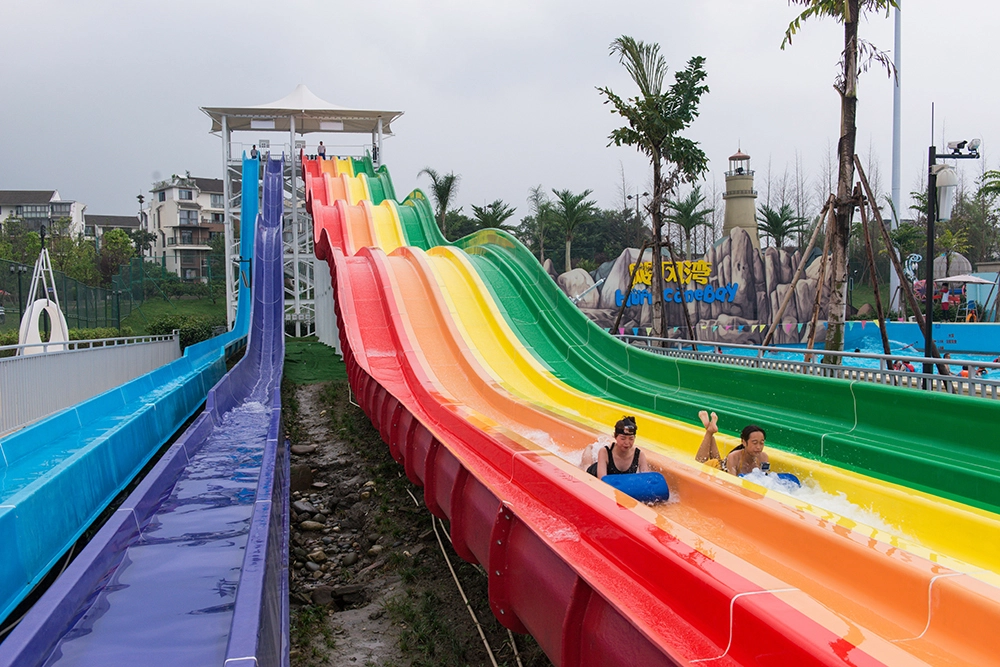
Cost Breakdown: Water Slide for Sale — Rainbow Multi-slide Prices
Wholesale Best tsunami wave pool manufacturer and supplier

Family Group Water Slide: High-Capacity, Safe & Customizable Multi-Rider Attraction
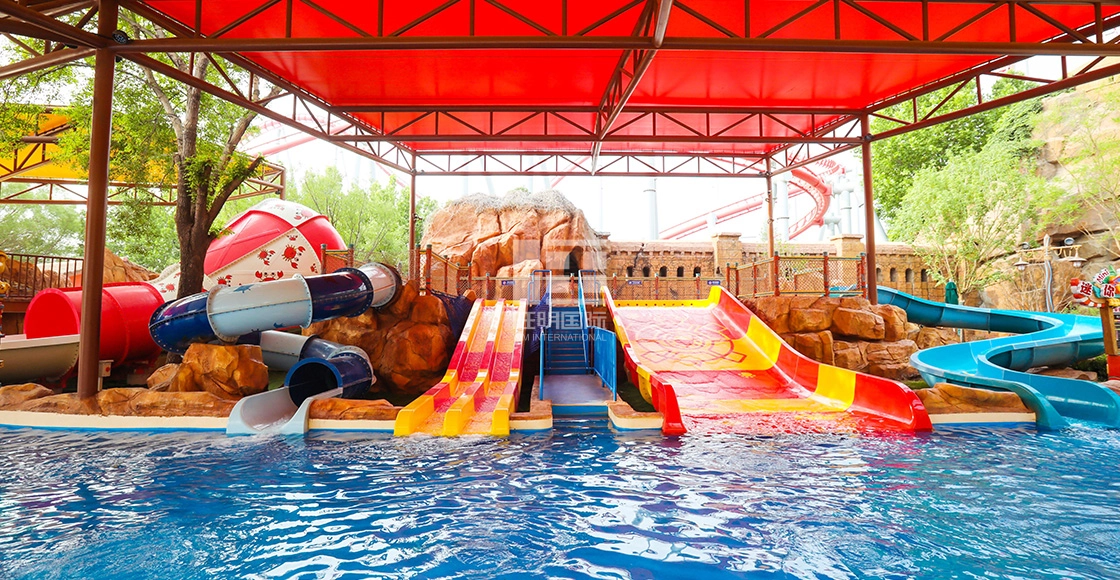
Children Combined Water Slide
Discover endless fun with the Children Combined Water Slide by WM INTERNATIONAL, expertly crafted for thrill-seeking kids. Perfect for summer splashes, this durable slide promises safety and joy. Looking to elevate your play area? Explore our Children's Combined Slide for sale now!
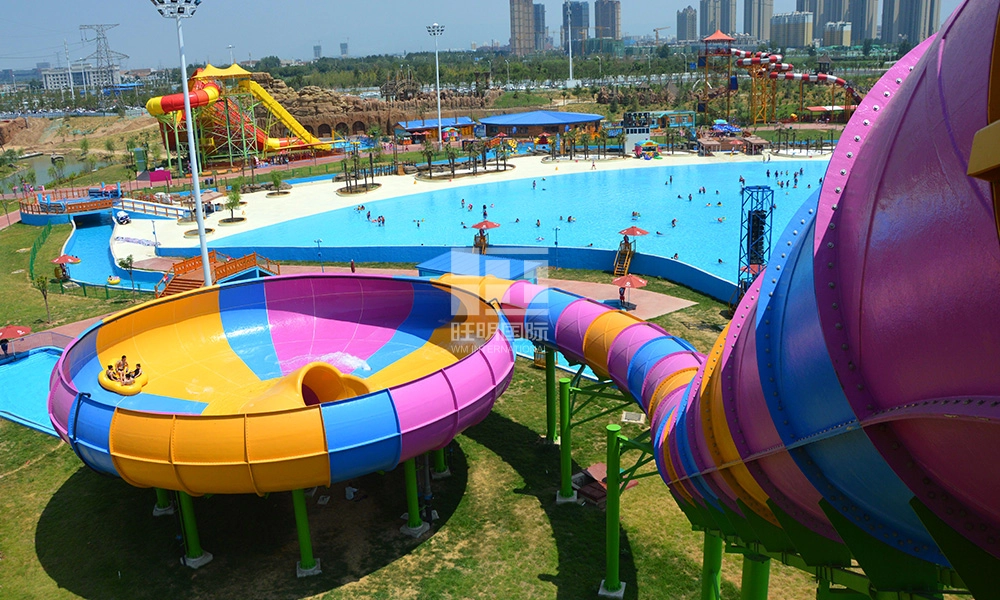
Huge Bowl Water Slide
The Huge Bowl Water Slide has achieved the “World's Best New Water Amusement Equipment” Award; it is the new favorite of the young people and the star project of the water park. The raft carries the tourists slowly entering the closed chute first; then it whirls in the bowl the moment the tourists can see the light. After a short period of time, the raft is suddenly suctioned into a huge black hole until it falls into the water. For a moment, the tourists realize the breathtaking journey has been safely brought to an end.
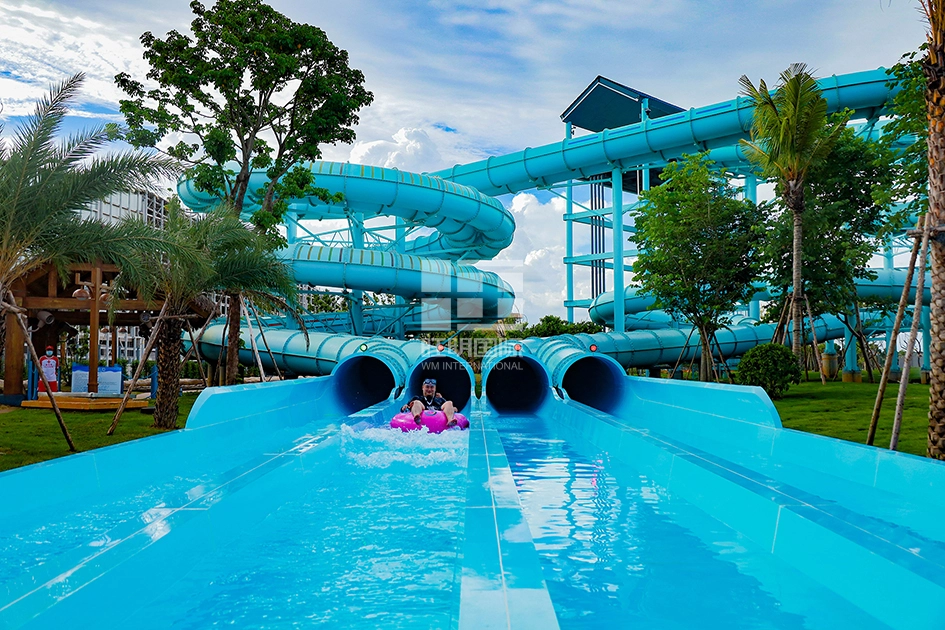
Time Tunnel Water Slide
The biggest feature of the time tunnel slide is that it uses double water slides and double tubes side by side in design and competes along the circular slide path. 8 people can play at the same time, with a large passenger capacity and high return rate, which is very suitable for team and family travel. And the slide is equipped with WangMing International's time tunnel technology, and the interior of the slide presents a beautiful aurora effect, with colorful lights, as if traveling through time and space.
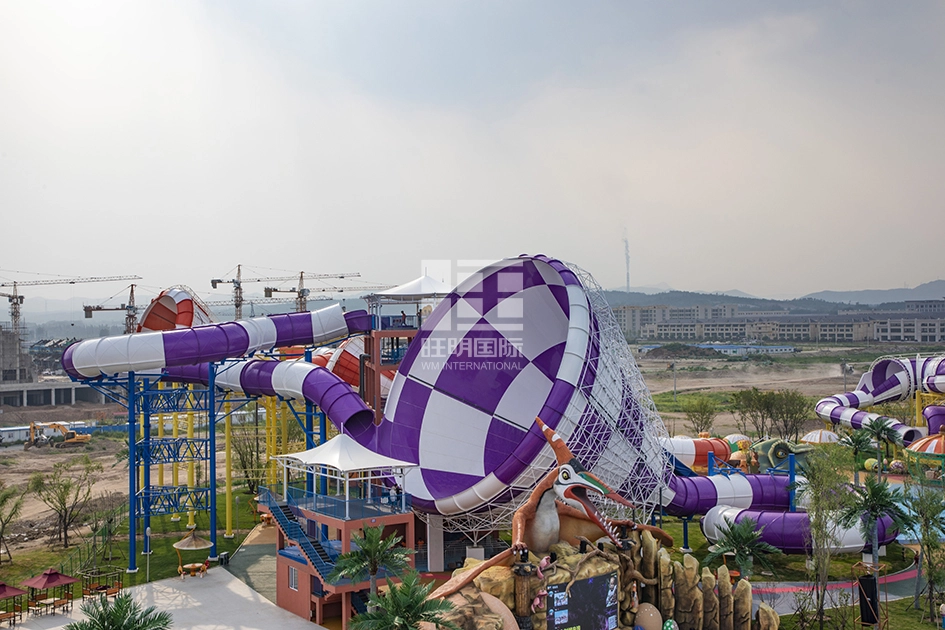
Big Tourbillion Water Slide
The Big Tourbillion water Slide won the "Gold Ticket Award - The Best New Project" of the international tourism industry. With unique modelling, strong irritation and humor, it is deeply loved by the young people; it has always been the popularity star of the water park. The raft carries the tourists as they enter the dark, closed chute slowly from the more than ten-meter-high platform; under the effect of gravity and water flow, it enters the state of rapid falling and then drops into the big Tourbillon; after a few times of whirling, it falls into the water pool. At this moment, the tourists are still in shock.
Get in touch
Have to get customized water park solutions and product quotes.
We will provide you with professional consultation and support.

Relying on leading technology, innovative products and rich industry experience, we tailor personalized solutions for each water park project to ensure a safe and exciting entertainment experience for tourists.
 Scan QR Code
wmwaterslide
wmwaterpark