


Water Park Ride Trends Shaping Supplier Selection and Investment
- How water park investment priorities are changing
- From signature rides to a balanced attraction mix
- Immersion, theming, and social appeal
- Capacity and guest flow as investment criteria
- Evaluating suppliers through safety, delivery, and lifecycle performance
- Verify engineering and safety documentation
- Compare delivery capability, not just product specifications
- Use lifecycle cost and maintainability in the comparison
- Turning market trends into a practical investment decision
- Match the attraction to the business case
- Assess adaptability and operational resilience
- Use a consistent supplier scorecard
- Connecting attraction design with water park delivery
- Why integrated planning matters
- Our product focus for project teams
- Questions to resolve before contract award
- Frequently Asked Questions
Water park ride investment is increasingly shaped by guest-experience differentiation, broader audience appeal, efficient use of site and utilities, and lifecycle performance. Buyers comparing water slide ride suppliers for parks should assess more than ride concepts and purchase price: they need evidence of engineering and safety processes, site-specific design, achievable capacity, installation coordination, maintenance support, and compatibility with the park’s operating model. This guide outlines the trends influencing supplier selection, explains how to compare proposals, and provides a practical framework for making investment decisions that account for both guest value and operational demands.
How water park investment priorities are changing
From signature rides to a balanced attraction mix
A major slide can attract attention, but a successful development usually depends on how the full attraction mix serves different guest groups and spreads activity across the site. Families may value interactive play areas and gentler slides, while teens and thrill-seeking adults may seek faster or more immersive experiences. Younger children, meanwhile, need attractions designed around their size, confidence, and supervision needs. A portfolio approach can help owners appeal to more visitor segments and create reasons for groups to spend longer in the park.
Procurement teams should therefore evaluate each proposed attraction in relation to the broader guest journey. Consider how visitors move between rides, whether queues cluster in one area, how attractions work for mixed-age groups, and whether the overall plan offers appealing choices during different weather or operating conditions. A supplier’s concept should explain its intended audience and role in the park rather than relying on appearance alone. The commercial value of a new ride depends on how well it complements existing assets and contributes to the destination’s identity.
Immersion, theming, and social appeal
Guests increasingly expect attractions to feel like part of a coherent destination rather than isolated pieces of equipment. Theming, landscape, lighting, sound, and the approach to the ride can all contribute to perceived value. Interactive features can also make an attraction more engaging for families and groups, particularly when guests can participate together instead of simply taking turns. These design choices affect more than aesthetics: they influence how an attraction photographs, how it fits the park’s brand, and how guests experience the space around it.
For buyers, the practical question is whether immersive features can be delivered and maintained within the project’s budget and operating capacity. Ask which elements are included in the proposal, what materials and finishes are specified, how exposed components are maintained, and whether replacement parts or technical support will be available. A design concept should be reviewed alongside its construction details and operating requirements so that visual ambition does not obscure long-term upkeep.
Capacity and guest flow as investment criteria
Headline ride capacity is useful only when the underlying operating assumptions are clear. Buyers should request the supplier’s stated capacity basis and understand how it relates to dispatch procedures, rider configuration, loading time, ride duration, staffing, and expected operating conditions. A published or modeled figure should not be treated as a guaranteed daily throughput without examining those assumptions. Queue space, access routes, exit arrangements, and connections to nearby attractions also affect how smoothly guests move through the area.
Reviewing the ride within a site plan can reveal constraints that are difficult to see in a standalone product presentation. Confirm space for queuing, staff positions, maintenance access, pumps and associated systems, guest circulation, and any required service routes. A supplier that coordinates attraction design with the wider water park design process can help identify these interfaces earlier, when changes are generally easier to manage than after construction is underway.
Evaluating suppliers through safety, delivery, and lifecycle performance
Verify engineering and safety documentation
Safety evaluation should begin during procurement, not when equipment is ready to open. Ask each manufacturer to identify the standards and regulations relevant to the ride, the project location, and the proposed scope of supply. The ISO 17842-1 standard addresses design and manufacture requirements for amusement rides and devices; buyers should confirm with qualified project professionals how the applicable edition and local requirements apply to a specific water attraction. In the United States, the ASTM F24 committee develops standards relating to amusement rides and devices. Applicable requirements depend on jurisdiction, attraction type, and project scope.
Request design documentation, material and component information, inspection and testing records, installation instructions, operating procedures, and maintenance recommendations appropriate to the project. Clarify which party is responsible for design integration, site preparation, installation, commissioning, inspections, and approvals. Documentation should be traceable and consistent across the proposal, technical drawings, contract, and handover package. Buyers should also establish how design changes are reviewed and approved, especially when site conditions or project requirements change.
Water quality and public-health processes are another important part of attraction operation. The CDC Model Aquatic Health Code provides guidance for the operation and management of public aquatic venues in the United States, while the World Health Organization’s swimming-pool guidance addresses health and safety considerations for recreational water environments. These resources do not replace applicable local codes or site-specific professional advice, but they can help project teams identify relevant water-quality and operational questions.
Compare delivery capability, not just product specifications
A technically attractive ride can still create project risk if design coordination, production planning, shipping, installation, or commissioning are poorly managed. Ask suppliers to define project milestones, required owner decisions, information needed from civil and MEP teams, and dependencies that may affect the schedule. Clarify how technical questions are handled and who has authority to approve drawings and changes. For international projects, confirm shipping scope, packaging, customs responsibilities, local installation resources, language requirements for manuals, and the availability of after-sales support.
Request relevant project references and examine whether they resemble the planned development in scale, climate, operating season, attraction type, and market. A list of completed installations is more useful when the supplier can explain its scope on each project and provide verifiable references. Buyers should distinguish between equipment manufacturing experience and experience coordinating a complete water park construction project; the requirements can overlap, but they are not identical.
Use lifecycle cost and maintainability in the comparison
The lowest initial quotation may not represent the lowest cost over the attraction’s service life. Compare what each proposal includes, such as design work, controls, pumps, installation support, commissioning, training, documentation, and warranty terms. Then assess likely maintenance needs, access to wear components, inspection requirements, energy and water implications, and the supplier’s process for technical support. The purpose is not to assume that one proposal will always have lower operating costs, but to make differences visible before contract award.
Ask for a clear maintenance schedule and a list of recommended spare parts, including lead times where available. Confirm which tasks can be handled by trained park staff and which require specialist support. The CDC’s Model Aquatic Health Code resources can support broader operational planning for aquatic venues, but ride-specific maintenance instructions should come from the equipment documentation and applicable authorities. A lifecycle review helps owners plan staffing, downtime windows, and budget allowances rather than treating maintenance as an afterthought.
| Evaluation area | Basic product-led review | Lifecycle and project-led review |
|---|---|---|
| Attraction fit | Focuses mainly on ride appearance and listed features. | Assesses target guests, park identity, site layout, and how the ride complements the attraction mix. |
| Capacity | Compares a headline capacity figure. | Checks operating assumptions, loading and dispatch processes, queue design, staffing, and site circulation. |
| Safety and compliance | Requests a general statement that the product meets requirements. | Identifies applicable jurisdictional requirements and reviews relevant design, testing, installation, and operating documentation. |
| Project delivery | Reviews a quoted delivery date and product price. | Maps design approvals, site interfaces, shipping scope, installation responsibilities, commissioning, and handover. |
| Long-term ownership | Considers purchase cost and warranty headline. | Reviews maintenance instructions, spare parts, staff training, support arrangements, and operating implications. |
The table presents a procurement framework, not performance guarantees. Buyers should verify specifications, standards, project responsibilities, and operating assumptions against the actual contract documents and local requirements.
Turning market trends into a practical investment decision
Match the attraction to the business case
Before soliciting final proposals, define what the investment is expected to achieve. Objectives may include refreshing an older area, increasing family appeal, strengthening a destination’s signature identity, improving use of an underdeveloped site, or extending the range of experiences available to overnight guests. A clear business objective makes supplier proposals easier to compare because each can be assessed against the same project purpose.
Build the assessment around more than projected attendance. Consider the attraction’s fit with ticketing and capacity strategy, the park’s operating season, intended guest segments, staffing plan, land and utility constraints, and the effect on existing attractions. Where financial projections are used, document their assumptions and treat forecasts as scenarios rather than guaranteed outcomes. A supplier may inform technical and operational inputs, but investment decisions should also reflect the owner’s market research and financial analysis.
Assess adaptability and operational resilience
Owners are also looking for attractions and site plans that can respond to changing guest expectations and operational realities. This does not mean every project needs the newest technology. Instead, buyers should check whether controls, service access, supporting systems, and design interfaces are documented clearly enough to support future maintenance and planned upgrades. A proposal should identify what can be changed later, what would require redesign, and what dependencies could limit adaptation.
Operational resilience also includes planning for routine inspection, staff turnover, seasonal opening and closing, and equipment downtime. Ask how operators will receive training, whether manuals are available in the required languages, and how technical support is accessed when a problem occurs. For projects in demanding climates or locations with limited local specialist resources, these questions can be as important as the ride’s initial concept.
Use a consistent supplier scorecard
A structured scorecard helps procurement teams avoid over-weighting the most visible proposal feature or the lowest price. Categories can include attraction and audience fit, technical completeness, safety documentation, delivery capability, site coordination, maintainability, warranty and support, schedule alignment, and commercial terms. Assign weightings based on the project’s objectives, then record evidence supporting each rating. This creates a more transparent basis for internal approval and gives suppliers a clear understanding of how proposals will be assessed.
Before final selection, resolve exceptions and assumptions in writing. Confirm the equipment included, owner-supplied items, exclusions, design interfaces, acceptance criteria, documentation deliverables, and responsibilities for installation and commissioning. If multiple vendors are involved, establish who coordinates interfaces between slides, water systems, controls, structural works, landscape, and guest circulation. Clear boundaries help reduce the risk of gaps between individual packages.
Connecting attraction design with water park delivery
Why integrated planning matters
Water park projects bring together attractions, structural and civil works, water treatment, pumping, electrical and control systems, landscape, theming, guest amenities, and operating procedures. Decisions in one area can affect others: ride geometry influences structural requirements, circulation affects queue and exit planning, and attraction operation affects supporting systems and staffing. Early coordination can help identify these dependencies before they become costly changes during installation or commissioning.
When a project team evaluates an integrated supplier, it should still verify the specific scope and expertise offered rather than assuming that one provider covers every discipline. Ask which services are delivered directly, which are coordinated through partners, and what professional approvals remain the responsibility of the owner or local design team. The goal is clear accountability and well-managed interfaces, not simply a longer list of services in a brochure.
Our product focus for project teams
Our product focus spans water park planning and delivery, including water park design, water park construction, Water Slides, Water Play Attractions, and Wave Making Equipment. For buyers, evaluating these elements as connected parts of a destination can support more coherent planning than selecting each attraction in isolation. The project scope, technical requirements, and local approvals still need to be established for each site; a product category alone is not evidence of a particular certification, project outcome, or operating result.
Our approach to supplier evaluation and project planning is to connect attraction selection with the intended guest experience, site conditions, implementation requirements, and long-term operation. Buyers can use the same framework to compare our offering with other proposals: review drawings and scope, clarify interfaces and responsibilities, confirm applicable documentation, and assess maintenance and support requirements. This keeps the decision grounded in project evidence and helps align procurement with the owner’s investment priorities.
Questions to resolve before contract award
Before signing, project owners should confirm that the final scope matches the approved design and commercial proposal. The contract should identify deliverables, milestones, responsibilities, exclusions, change control, payment terms, warranty conditions, and the documentation required at handover. Buyers should also confirm how training, commissioning support, spare parts, and technical queries will be managed after delivery. These details make it easier to compare offers fairly and establish a practical basis for project execution.
Finally, ensure that operations, engineering, procurement, finance, and design stakeholders review the proposal together. Each team sees different risks: operators focus on staffing and maintainability, engineers on interfaces and documentation, finance on whole-life assumptions, and guest-experience teams on audience and destination fit. Bringing those perspectives together before award can help prevent a technically feasible purchase from becoming an operational mismatch.
Contact our team to discuss your project requirements or explore our water park attractions and equipment.
Frequently Asked Questions
What should buyers compare when selecting a water park ride supplier?
Compare attraction fit, engineering and safety documentation, capacity assumptions, delivery capability, site coordination, maintenance requirements, spare-parts support, warranty terms, and total lifecycle considerations. Confirm scope, exclusions, and responsibilities in writing.
How can a park assess whether a new water ride will meet its capacity needs?
Ask the supplier to explain the assumptions behind stated capacity, including rider configuration, loading and dispatch procedures, ride duration, staffing, and operating conditions. Review the ride together with queue space, access routes, exits, and the wider site circulation plan.
Which safety standards should a water park project review?
Applicable requirements depend on the attraction, project location, and jurisdiction. Buyers can ask suppliers to identify relevant requirements and provide supporting documentation. ISO 17842-1 addresses design and manufacture of amusement rides and devices, and ASTM F24 develops standards relating to amusement rides and devices; project teams should confirm applicability with qualified professionals and local authorities.
Why should buyers consider lifecycle cost instead of purchase price alone?
Initial price does not show the full ownership picture. Buyers should compare included design and installation services, commissioning, training, maintenance requirements, spare-parts availability, support arrangements, and operating implications to understand differences between proposals.
What should a supplier proposal include for a water park project?
A proposal should clearly define the attraction and scope, technical information, project milestones, site and system interfaces, owner responsibilities, exclusions, installation and commissioning arrangements, required documentation, training, warranty terms, and after-sales support.
Why is integrated water park planning important?
Attractions interact with civil and structural works, water systems, controls, landscape, guest circulation, and operations. Coordinating these interfaces early can help identify constraints and clarify responsibilities before they cause delays or costly changes.
Recommended
The outdoor water park equipment Cost Guide
The Best Water Park Slides for Thrill Seekers
The B2B Buyer’s Guide to water theme park equipment

Spiral Water Slide: Safe, Space-Saving Thrills for Modern Water Parks
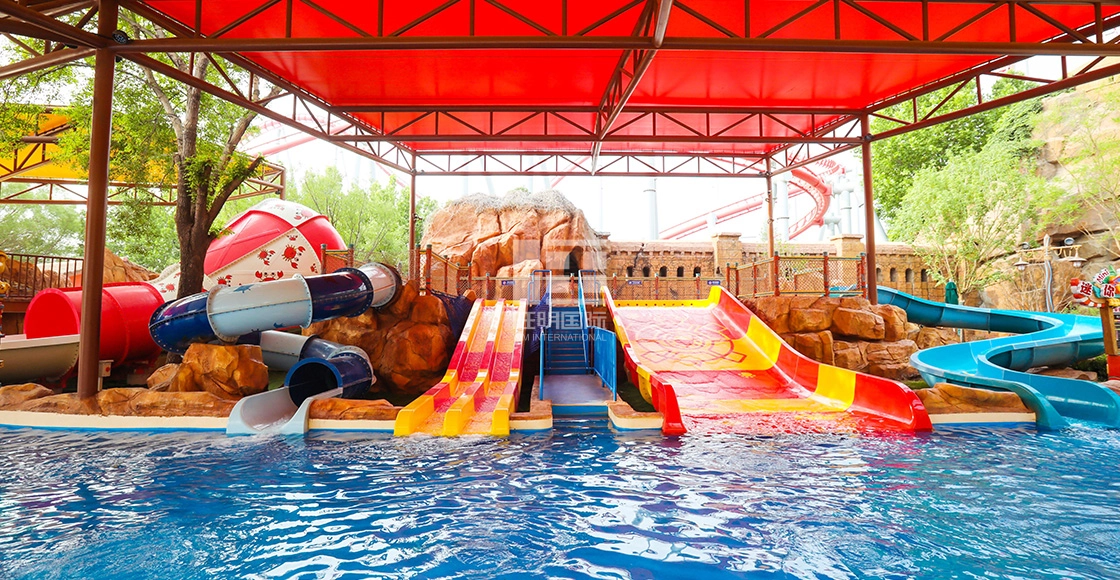
Children Combined Water Slide
Discover endless fun with the Children Combined Water Slide by WM INTERNATIONAL, expertly crafted for thrill-seeking kids. Perfect for summer splashes, this durable slide promises safety and joy. Looking to elevate your play area? Explore our Children's Combined Slide for sale now!
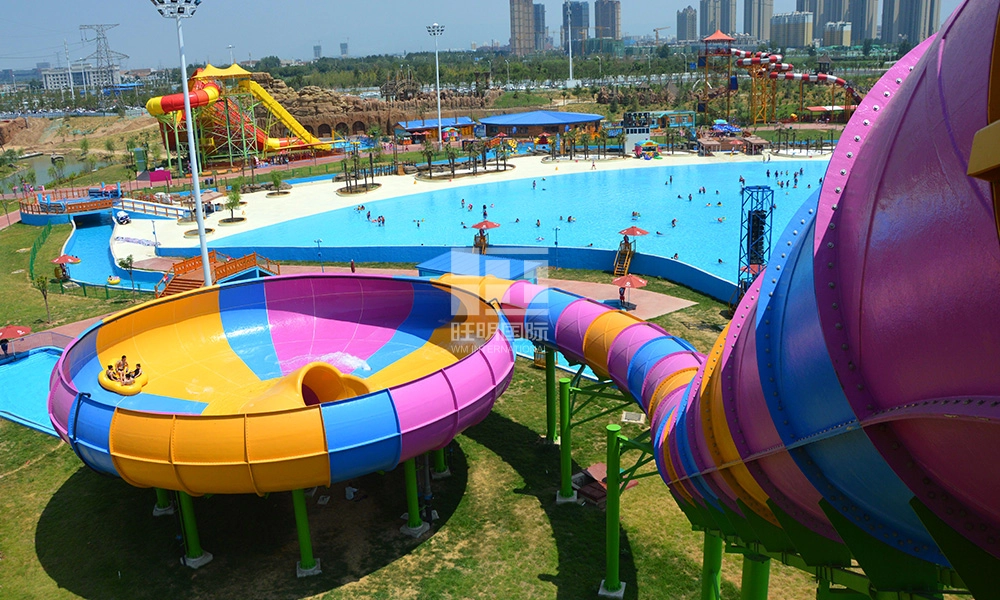
Huge Bowl Water Slide
The Huge Bowl Water Slide has achieved the “World's Best New Water Amusement Equipment” Award; it is the new favorite of the young people and the star project of the water park. The raft carries the tourists slowly entering the closed chute first; then it whirls in the bowl the moment the tourists can see the light. After a short period of time, the raft is suddenly suctioned into a huge black hole until it falls into the water. For a moment, the tourists realize the breathtaking journey has been safely brought to an end.
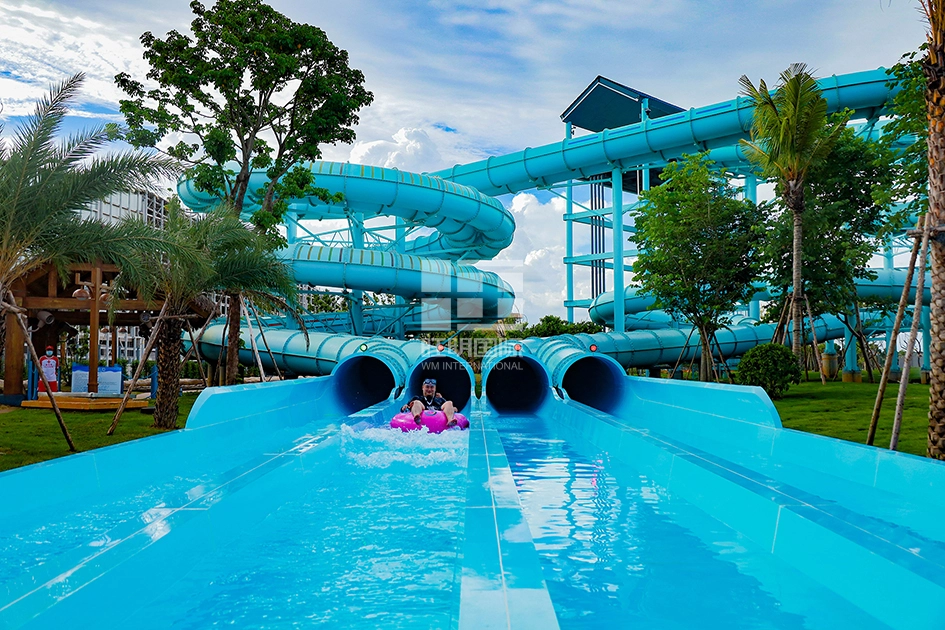
Time Tunnel Water Slide
The biggest feature of the time tunnel slide is that it uses double water slides and double tubes side by side in design and competes along the circular slide path. 8 people can play at the same time, with a large passenger capacity and high return rate, which is very suitable for team and family travel. And the slide is equipped with WangMing International's time tunnel technology, and the interior of the slide presents a beautiful aurora effect, with colorful lights, as if traveling through time and space.
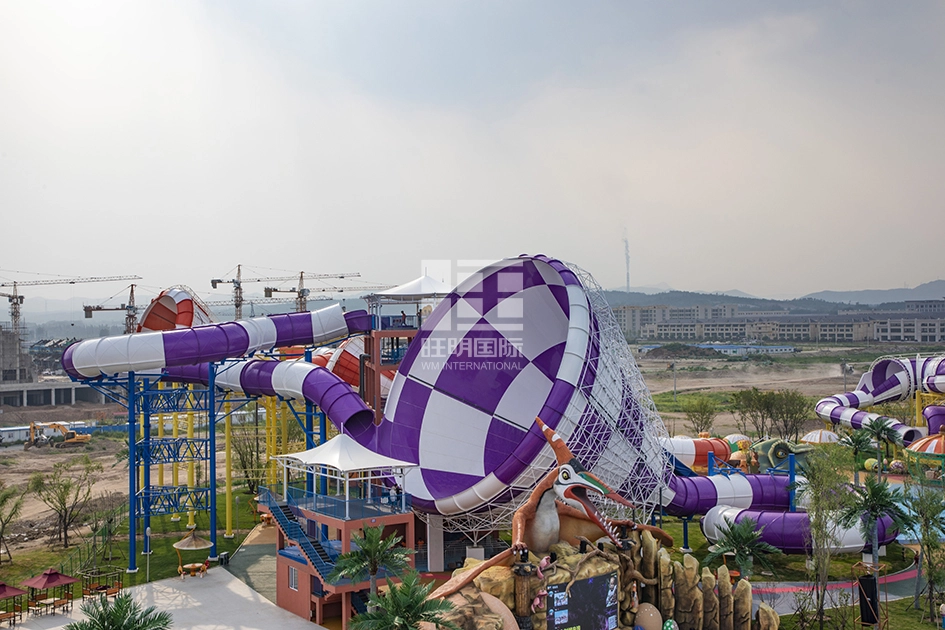
Big Tourbillion Water Slide
The Big Tourbillion water Slide won the "Gold Ticket Award - The Best New Project" of the international tourism industry. With unique modelling, strong irritation and humor, it is deeply loved by the young people; it has always been the popularity star of the water park. The raft carries the tourists as they enter the dark, closed chute slowly from the more than ten-meter-high platform; under the effect of gravity and water flow, it enters the state of rapid falling and then drops into the big Tourbillon; after a few times of whirling, it falls into the water pool. At this moment, the tourists are still in shock.
Get in touch
Have to get customized water park solutions and product quotes.
We will provide you with professional consultation and support.

Relying on leading technology, innovative products and rich industry experience, we tailor personalized solutions for each water park project to ensure a safe and exciting entertainment experience for tourists.
 Scan QR Code
wmwaterslide
wmwaterpark