






Retrofit Options: Upgrading Existing Water Slides
- Planning a Modernization Program for Existing Aquatic Attractions
- Begin with a technical and operational audit
- Match the upgrade to the business objective
- Confirm regulations, insurance, and documentation
- Practical Retrofit Configurations for Water Slide Systems
- Replace, reconfigure, or extend the riding surface
- Upgrade launch, dispatch, and guest circulation
- Improve the landing zone, hydraulics, and control systems
- Execution, Supplier Selection, and Lifecycle Value
- Use phased implementation to control closure time
- Evaluate suppliers by engineering depth, not catalog size
- Measure lifecycle performance after reopening
- WM International support for tailored modernization
- Frequently Asked Questions
Retrofitting an existing water slide is a practical capital strategy for water park owners that need stronger guest appeal, improved safety, better throughput, or longer asset life without demolishing an entire attraction zone. The most effective upgrade programs combine structural inspection, hydraulic testing, code compliance, guest-flow analysis, theming, and lifecycle cost planning. Depending on the site, a retrofit may involve replacing slide sections, modifying the launch platform, adding enclosed or translucent segments, upgrading pumps and controls, rebuilding the splash-out area, improving accessibility, or integrating the attraction into a broader water park design. The right solution is determined by the existing structure, local regulations, available footprint, water treatment capacity, seasonal demand, and investment target.
Planning a Modernization Program for Existing Aquatic Attractions
Begin with a technical and operational audit
A retrofit should begin with documented evidence rather than visual assumptions. The owner, consultant, and manufacturer should review original drawings, material specifications, load calculations, installation records, maintenance history, incident reports, water-flow data, and previous repair work. A field audit should then examine supports, platforms, stairs, flanges, joints, fiberglass or composite surfaces, anchors, fasteners, splash zones, drainage, pumps, valves, sensors, and electrical cabinets.
Structural assessment is particularly important when a new configuration will add loads, change rider speeds, alter water discharge, or extend the slide beyond the original support arrangement. Non-destructive testing, corrosion checks, dimensional surveys, and foundation verification can identify hidden risks. Where machinery, controls, or moving components are involved, the project team should apply a documented risk-assessment process consistent with principles described in ISO 12100 machinery safety guidance. The applicable local building, electrical, accessibility, fire, and amusement-ride requirements must also be confirmed before fabrication begins.
Match the upgrade to the business objective
Different commercial goals require different retrofit choices. If the priority is capacity, the project may focus on faster dispatch, revised queue geometry, improved rider communication, or parallel loading positions. If the objective is higher revenue per guest, a themed tower, High Quality cabana approach, photo opportunity, or signature racing feature may provide stronger differentiation than a basic surface replacement.
Owners should define measurable targets before requesting quotations. Useful indicators include hourly throughput, average downtime, maintenance hours, water consumption, energy use, guest satisfaction, queue abandonment, incident frequency, and expected operating seasons. A simple return model should compare the proposed capital cost with incremental attendance, ticket yield, food and beverage spending, merchandise revenue, avoided maintenance, and the value of reduced closure time. A lower initial price is not necessarily the lowest-cost option if the design creates difficult cleaning access or requires frequent replacement parts.
Confirm regulations, insurance, and documentation
Water-slide modernization is not only a design exercise. The project may require authority approvals, revised engineering calculations, updated operating procedures, new emergency plans, and insurer review. Buyers should ask whether the supplier can provide drawings, material certificates, installation instructions, inspection records, operating limitations, cleaning guidance, and maintenance schedules.
Industry references should be checked against the jurisdiction in which the attraction operates. ASTM International publishes standards relevant to aquatic play equipment and water-slide operations, including ASTM F2376 specifications for water slide systems. Water quality and treatment decisions should also be coordinated with public-health requirements and recognized guidance such as the World Health Organization guidance for safe recreational water environments. Standards do not replace local approval, but they provide a useful framework for procurement questions and quality-control checkpoints.
Practical Retrofit Configurations for Water Slide Systems
Replace, reconfigure, or extend the riding surface
Replacing degraded sections is often the least disruptive option when the tower, supports, and landing basin remain serviceable. New segments can address fading, surface wear, cracks, delamination, rough joints, outdated color schemes, or obsolete rider restraints. However, replacement sections must be engineered to match existing radii, transition geometry, connection points, and water-flow requirements. Mixing components from different manufacturers without a verified interface design can create alignment problems, uneven joints, unexpected speed changes, or maintenance complications.
Reconfiguration provides greater design flexibility. A straight body slide may be transformed with additional curves, a short enclosed tunnel, a translucent section, a family raft feature, or a compact race element. Extension is possible when the property has sufficient setback, drainage, and basin capacity. Any length or geometry change should be validated through rider-dynamics calculations, hydraulic analysis, structural review, and controlled commissioning tests.
Upgrade launch, dispatch, and guest circulation
Many older attractions lose capacity because the problem is at the platform rather than in the slide body. Retrofit work can improve dispatch visibility, anti-slip surfaces, handrails, lighting, rider instructions, queue barriers, communication systems, and operator sightlines. A revised loading arrangement can reduce hesitation and help attendants maintain consistent spacing while preserving safe rider separation.
Guest circulation should be assessed from entrance to exit. A high-performing attraction needs a logical queue, shaded waiting areas, clear height and health restrictions, footwear storage where relevant, and an exit route that does not conflict with incoming riders. For a broad-audience attraction, the design should distinguish between body-riding, mat-riding, and raft-riding requirements. Signage should use simple language, pictograms, and multilingual communication where the market requires it.
Improve the landing zone, hydraulics, and control systems
The splash-out area is a frequent source of operational complaints. Retrofit choices may include reshaping the runout, replacing worn coping, improving drainage, adding slip-resistant finishes, adjusting water depth, or changing the connection to a landing pool. The goal is a predictable rider exit with sufficient visibility for attendants and no conflict between exiting guests and the next dispatch cycle.
Hydraulic upgrades may include variable-frequency drives, more efficient pumps, improved filtration, new spray nozzles, revised flow controls, and automated level monitoring. These changes should be evaluated as a complete system because a pump upgrade can affect velocity, noise, splash behavior, treatment demand, and energy consumption. Control panels can also be modernized with fault alerts, emergency-stop circuits, access controls, and operating data logs. Electrical work should be completed by qualified professionals under the applicable national and local requirements.
| Retrofit approach | Typical objective | Key technical checks | Potential business benefit |
|---|---|---|---|
| Surface and section replacement | Extend service life and refresh appearance | Material compatibility, joints, supports, drainage | Lower disruption and improved visual quality |
| Platform and queue upgrade | Increase dispatch consistency and comfort | Sightlines, separation, access, signage, flooring | Higher throughput and better guest experience |
| Hydraulic and controls modernization | Improve reliability and operating efficiency | Flow rate, pump curve, filtration, electrical protection | Reduced downtime and more predictable operation |
| New themed or enclosed sections | Create a differentiated signature attraction | Geometry, lighting, rider dynamics, structural loads | Stronger marketing value and repeat visitation |
| Landing-zone reconstruction | Improve rider exit and staff visibility | Depth, splash-out, drainage, circulation, slip resistance | Safer operations and fewer guest complaints |
Execution, Supplier Selection, and Lifecycle Value
Use phased implementation to control closure time
A retrofit schedule should separate design, approvals, procurement, fabrication, site preparation, installation, testing, and staff training. Long-lead materials should be released early, while demolition and tie-in work should be planned around the park calendar. Some projects can be executed in an off-season window, but that depends on access, weather, foundation work, crane requirements, curing time, and local inspection availability.
Temporary barriers, dust control, drainage protection, guest separation, and contractor safety plans are essential when construction occurs near operating attractions. A professional supplier should provide a method statement and identify interfaces with existing utilities, treatment rooms, electrical systems, foundations, and adjacent attractions. Factory acceptance checks can reduce site surprises by verifying segment dimensions, color, finish, connections, and control components before shipment.
Evaluate suppliers by engineering depth, not catalog size
Procurement teams should compare suppliers using a technical matrix rather than relying only on product images or headline pricing. The evaluation should cover design responsibility, calculations, material traceability, mold quality, fiberglass or composite production controls, dimensional tolerances, packaging, installation supervision, spare parts, warranty terms, response time, and post-project maintenance support.
Reference projects should be relevant to the proposed retrofit, including similar climates, rider profiles, tower heights, throughput targets, and site constraints. Buyers should ask how the supplier handles discrepancies between old drawings and actual site conditions. Clear responsibility for surveys, approvals, foundations, water treatment interfaces, electrical connections, commissioning, and operator training should be written into the contract.
Measure lifecycle performance after reopening
Commissioning should include water-flow verification, leak checks, joint inspection, emergency-stop testing, communication checks, rider observation, queue timing, drainage performance, and staff drills. Early operating data should be compared with the original targets. Owners can monitor throughput, pump energy, water chemistry stability, maintenance tickets, ride closure duration, guest feedback, and recurring defects.
Post-opening review is valuable because a retrofit may reveal opportunities for small adjustments, such as revised dispatch intervals, improved signage, nozzle tuning, lighting changes, or additional shade. A maintenance plan should identify daily inspection points, weekly cleaning tasks, seasonal shutdown procedures, annual structural reviews, and replacement-part inventory. This disciplined approach protects the capital investment and supports consistent guest service.
WM International support for tailored modernization
WM International Waterslide brings 19 years of industry experience to water park planning and design, manufacturing, installation, and maintenance. Our team supports both new developments and existing attraction upgrades, allowing project owners to address a retrofit as part of a broader asset strategy rather than as an isolated equipment purchase.
Our engineering and project teams assess site characteristics, operating objectives, available space, existing structures, guest demographics, and budget parameters before recommending a configuration. This approach supports tailor-made solutions for compact resorts, destination water parks, hotels, family entertainment centers, and large-scale amusement developments. Depending on the project, our scope can include water park design, water park construction coordination, replacement or newly configured water slides, water play attractions, and wave making equipment.
WM International owns a 100000 m² modern production base, described by the company as the largest in the industry, and primarily manufactures water slides for water parks. A substantial production platform can support mold fabrication, composite component production, finishing, inspection, packaging, and project coordination under one organized process. For retrofit buyers, this can simplify communication when new components must integrate with an existing tower, basin, pump room, or circulation system.
Our value is based on project fit, engineering coordination, manufacturing capability, and service continuity. Each project reflects the site conditions and commercial priorities defined by the client. By combining the perspectives of park operators, designers, suppliers, and guests, our team can help investors and brand owners consider attraction appeal alongside safety, maintainability, capacity, and long-term operating value.
For product information and project discussion, visit WM International Waterslide or contact our team at trading@wmwaterslide.com.
Frequently Asked Questions
Can an existing water slide be upgraded without replacing the entire tower?
Yes. If the tower, foundations, supports, and landing area remain structurally suitable, owners may replace slide sections, modify the platform, add themed or enclosed segments, improve the runout, or upgrade controls without rebuilding the entire tower. A structural and interface assessment is required before confirming feasibility.
What should be inspected before retrofitting a water slide?
The project team should review drawings, material specifications, maintenance history, and operating data, then inspect supports, anchors, joints, slide surfaces, platforms, stairs, drainage, pumps, valves, sensors, electrical equipment, and foundations. Dimensional surveying and non-destructive testing may be appropriate when the condition is uncertain.
How can a retrofit increase water park throughput?
Throughput can improve through better dispatch visibility, clearer rider instructions, revised loading positions, queue redesign, improved operator sightlines, more reliable controls, and optimized rider separation. Increasing pump flow alone does not guarantee higher capacity and must be evaluated with rider safety and attraction geometry.
How long does a water slide retrofit take?
The schedule depends on the scope, approval requirements, fabrication lead time, site access, foundation work, weather, and the available off-season window. A project may include separate phases for survey, engineering, approvals, production, demolition, installation, commissioning, and staff training. The supplier should provide a project-specific schedule rather than a generic estimate.
What documents should a retrofit supplier provide?
Buyers should request engineering drawings, applicable calculations, material or component documentation, installation instructions, inspection records, operating limitations, maintenance schedules, warranty conditions, spare-parts information, commissioning records, and staff-training materials. Responsibility for local approvals and site interfaces should also be clearly defined in the contract.
Can hydraulic equipment be modernized at the same time as the slide?
Yes. Retrofit programs may include pumps, variable-frequency drives, valves, spray nozzles, filtration interfaces, level monitoring, and control panels. The complete water system must be assessed because changes in flow can affect rider speed, splash behavior, energy use, treatment demand, noise, and landing-zone performance.
Recommended
Best Water Slide for Kids: Trusted Brands Compared
Custom water slide for sale Manufacturers and Suppliers
The Most Popular Water Park Slides in the U.S.
The B2B Buyer’s Guide to water park play equipment
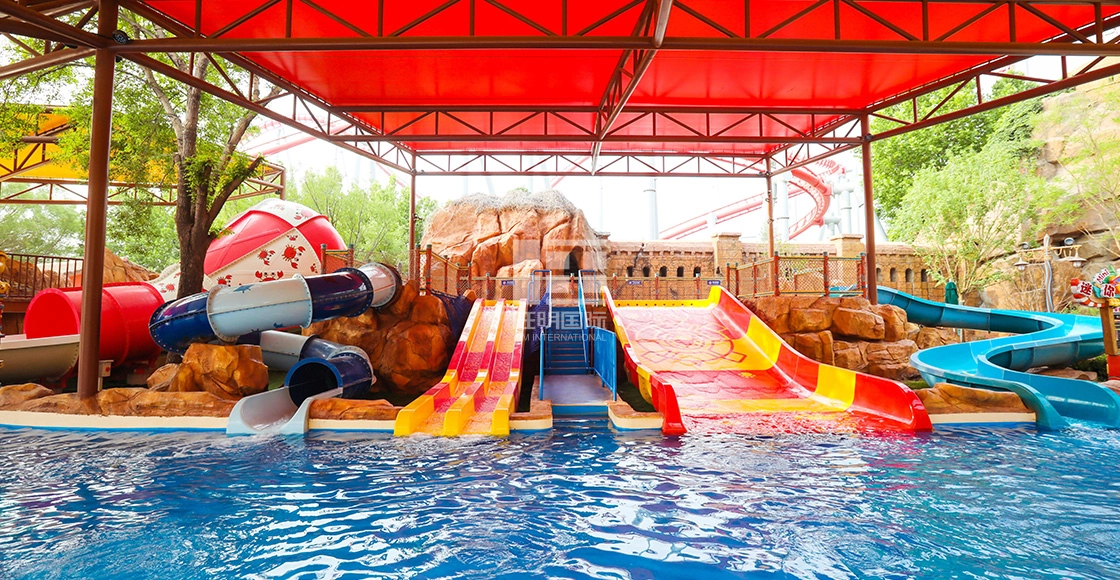
Children Combined Water Slide
Discover endless fun with the Children Combined Water Slide by WM INTERNATIONAL, expertly crafted for thrill-seeking kids. Perfect for summer splashes, this durable slide promises safety and joy. Looking to elevate your play area? Explore our Children's Combined Slide for sale now!
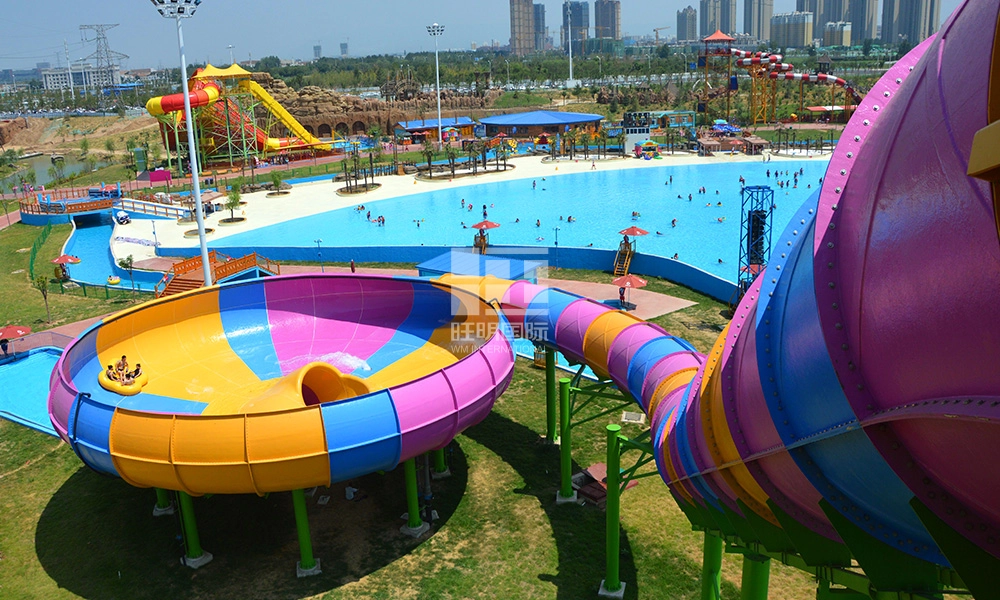
Huge Bowl Water Slide
The Huge Bowl Water Slide has achieved the “World's Best New Water Amusement Equipment” Award; it is the new favorite of the young people and the star project of the water park. The raft carries the tourists slowly entering the closed chute first; then it whirls in the bowl the moment the tourists can see the light. After a short period of time, the raft is suddenly suctioned into a huge black hole until it falls into the water. For a moment, the tourists realize the breathtaking journey has been safely brought to an end.
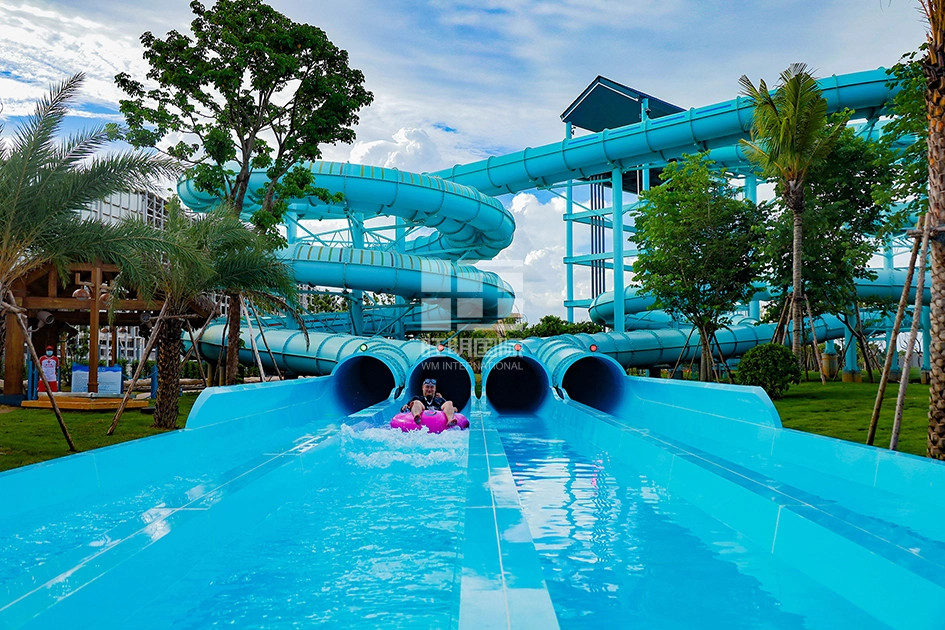
Time Tunnel Water Slide
The biggest feature of the time tunnel slide is that it uses double water slides and double tubes side by side in design and competes along the circular slide path. 8 people can play at the same time, with a large passenger capacity and high return rate, which is very suitable for team and family travel. And the slide is equipped with WangMing International's time tunnel technology, and the interior of the slide presents a beautiful aurora effect, with colorful lights, as if traveling through time and space.
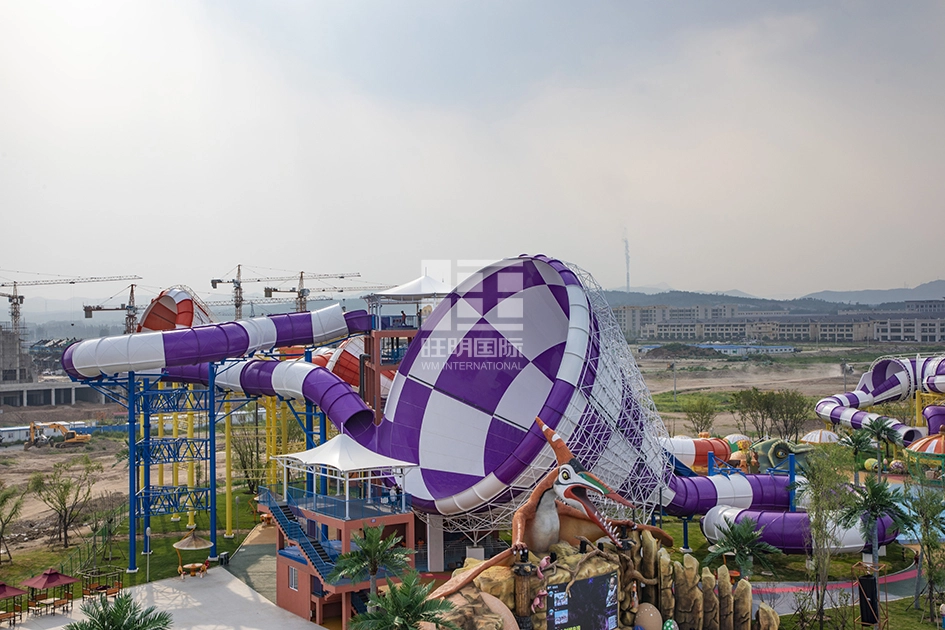
Big Tourbillion Water Slide
The Big Tourbillion water Slide won the "Gold Ticket Award - The Best New Project" of the international tourism industry. With unique modelling, strong irritation and humor, it is deeply loved by the young people; it has always been the popularity star of the water park. The raft carries the tourists as they enter the dark, closed chute slowly from the more than ten-meter-high platform; under the effect of gravity and water flow, it enters the state of rapid falling and then drops into the big Tourbillon; after a few times of whirling, it falls into the water pool. At this moment, the tourists are still in shock.
Get in touch
Have to get customized water park solutions and product quotes.
We will provide you with professional consultation and support.

Relying on leading technology, innovative products and rich industry experience, we tailor personalized solutions for each water park project to ensure a safe and exciting entertainment experience for tourists.
 Scan QR Code
wmwaterslide
wmwaterpark