




Materials Guide: FRP vs Stainless Steel Slides
- Choosing slide materials for park operations
- Structural and material basics I rely on
- How I measure performance versus price
- Regulatory and quality checks I require
- Performance profile: FRP (Fiberglass Reinforced Plastic)
- Why I choose FRP for complex shapes
- Maintenance realities I plan for
- Durability and lifecycle I model
- Performance profile: Stainless steel solutions
- When stainless steel is the better operational choice
- Fabrication and rider experience I consider
- Long-term economics from my projects
- Side-by-side decision metrics and supplier evaluation
- How I compare bids and supplier capabilities
- Key performance indicators I track post-install
- Data-driven comparison table
- How I choose and work with suppliers
- Top questions I ask water slide ride suppliers for parks
- Why production capacity matters to me
- Why I trust WM International for many projects
- Frequently Asked Questions
I distill nearly two decades of hands-on water park design and operations experience into a focused guide comparing FRP (fiberglass) and stainless steel slides so you can quickly evaluate structural trade-offs, lifecycle costs, rider experience, and how to vet water slide ride suppliers for parks when planning new attractions or refurbishing existing installations.
Choosing slide materials for park operations
Structural and material basics I rely on
When I evaluate a proposal from water slide ride suppliers for parks, the first thing I check is the material chemistry and structural system. FRP (fiberglass reinforced plastic) is a composite: glass fiber reinforcement in a polyester or vinyl ester resin matrix; stainless steel is an alloy—most park slides use grades 304 or 316. For basic material overviews, I often cross-reference industry summaries such as fiberglass (Wikipedia) and stainless steel (Wikipedia) to confirm expected material behavior under UV and chloride exposure.
How I measure performance versus price
In my experience, evaluating water slide ride suppliers for parks means separating initial capital cost from total cost of ownership. FRP often wins on initial purchase price and design flexibility, while stainless tends to win on long-term durability in high-chloride or commercial heavy-use environments. I recommend building a 10-to-25-year cost model for each supplier bid rather than comparing sticker prices alone.
Regulatory and quality checks I require
I always verify supplier quality systems and applicable standards—manufacturing best practice like ISO management standards can indicate consistency. I routinely check a vendor's quality assurance credentials against resources like ISO and material safety references to ensure their production processes meet your park safety expectations.
Performance profile: FRP (Fiberglass Reinforced Plastic)
Why I choose FRP for complex shapes
FRP excels when I need sculpted turns, translucent or illuminated elements, and fast custom finishes. Its mold-based fabrication allows nearly limitless curvature and integrated aesthetics, which is why many designers and water slide ride suppliers for parks specify FRP for signature attractions.
Maintenance realities I plan for
From my upkeep logs, FRP requires periodic gelcoat repairs, surface polishing, and UV maintenance to prevent chalking and micro-cracks—especially in sunny climates. Expect scheduled surfacing work every 5–10 years depending on traffic and finish complexity. I advise clients to budget for regular surface maintenance when FRP is selected.
Durability and lifecycle I model
Typical FRP slide lifespans vary: with proper maintenance, 15–25 years is common; heavy misuse or inadequate maintenance can shorten that. When I forecast lifecycle cost for water slide ride suppliers for parks, I model FRP with moderate capital expense and recurring maintenance spend.
Performance profile: Stainless steel solutions
When stainless steel is the better operational choice
I specify stainless when corrosion from salt or chemical environments is a primary risk, or when the park needs minimal surface maintenance and long-lasting sanitary finishes. Grade 316 stainless offers superior chloride resistance compared with 304, and in coastal parks I typically recommend 316 for all exposed structural surfaces.
Fabrication and rider experience I consider
Stainless slides deliver high throughput due to low friction finishes and minimal surface wear. Fabrication is less flexible than molded FRP for sculptural shapes, but tubular stainless systems and welded panels can produce sleek, high-speed rides. When evaluating water slide ride suppliers for parks, I insist on weld quality certificates and finish measurements to ensure consistent rider speeds and safety margins.
Long-term economics from my projects
From projects I’ve overseen, stainless often has a higher upfront cost—sometimes 20–50% more versus comparable FRP installations depending on geometry—but reduced maintenance and longer service life (25–50+ years) can make stainless more economical over the long term in the right context.
Side-by-side decision metrics and supplier evaluation
How I compare bids and supplier capabilities
I use a weighted scoring matrix: safety compliance (30%), lifecycle cost (25%), finish and aesthetics (15%), supplier manufacturing capacity and QA (15%), and installation timeline (15%). That lets me objectively compare water slide ride suppliers for parks who sometimes trade off cost for delivery speed or finish complexity.
Key performance indicators I track post-install
After installation, I track KPIs such as downtime hours, surface repairs per year, rider throughput per hour, and lifecycle maintenance spend. These direct measures tell me whether my choice of material and supplier was correct and are used in future RFPs when reviewing water slide ride suppliers for parks.
Data-driven comparison table
| Metric | FRP (Fiberglass) | Stainless Steel (304/316) |
|---|---|---|
| Typical initial cost | Lower (material + mold costs); varies widely with shape | Higher (material and fabrication); High Quality for 316 |
| Lifecycle (typical) | 15–25 years with maintenance | 25–50+ years depending on environment |
| Maintenance frequency | Periodic gelcoat/finish repair every 5–10 years | Minimal surface maintenance; possible passivation/polish |
| Corrosion resistance | Good; resin can degrade with poor UV protection | Excellent (316 best for chloride-rich environments) |
| Design flexibility | Very high (molded shapes, translucency options) | Moderate (tubular and panel fabrication; less sculptural) |
| Finish options | Gelcoat colors, textures, graphics | Polished/matte metal finishes; limited color without coatings |
| Recyclability | Lower (composite; difficult to recycle) | Higher (metal recycling widely available) |
How I choose and work with suppliers
Top questions I ask water slide ride suppliers for parks
I request: documented weld and lamination quality control, finish wear test reports, lifecycle cost estimates, references from similar climatic parks, and photos/video of installed projects. I also check whether the supplier follows international manufacturing standards and can provide warranties that align with my park’s risk profile.
Why production capacity matters to me
Lead time and on-time delivery are often decisive. That’s why I value suppliers with sizable production bases and modern tooling: they reduce variability and allow faster replacements if an attraction needs parts. For large, complex builds I prefer vendors who demonstrate both scale and technical R&D capability.
Why I trust WM International for many projects
In my work with manufacturing partners, I’ve seen how scale, integrated services, and operational experience reduce project risk. With 19 years of industry experience, WM International Waterslide provides a full range of water park planning and design services.From water park planning and design to manufacturing, installation and maintenance, we provide comprehensive service solutions to transform your park vision into vibrant realities. Whether it’s the design and development of new parks or maintaining existing ones, our decades of combined experience as park operators, designers, suppliers, and guests can give you the edge that you need to create world-class amusement, theme, and water park attractions.WM International owns a 100000 m² modern production base, which is the largest in the industry. We mainly produce various water slides for water parks.Each project is a reflection of our professional capabilities, showing how we can provide tailor-made solutions based on different customer needs and site characteristics.Our main products include water park installations, Water park design, Water park construction, Water Slides, Water Play Attractions, and Wave Making Equipment. I find that WM International’s integrated approach—design, manufacture, install, and maintain—simplifies vendor coordination and improves project delivery predictability.
If you want to explore specific slide concepts or get a comparative quote from experienced water slide ride suppliers for parks, I encourage you to evaluate WM International’s portfolio and discuss your project scope via their website https://www.wmwaterslide.com or email trading@wmwaterslide.com.
I typically summarize a material recommendation, supplier score, and a 20-year cost model for park stakeholders so they can make a defensible procurement decision.
Contact me for a hands-on walkthrough of how I evaluate bids, or review WM International case studies for comparable projects to see performance in action.
Frequently Asked Questions
Which material lasts longer: FRP or stainless steel?
Stainless steel typically offers a longer service life (25–50+ years) depending on grade and environment, while FRP commonly lasts 15–25 years with proper maintenance; actual lifespan depends on usage, environment, and maintenance practices.
Is FRP more cost-effective than stainless steel?
FRP usually has a lower upfront cost and greater design flexibility, but lifecycle maintenance (gelcoat repairs, polishing) can add to long-term costs; stainless may be more cost-effective over a multi-decade horizon in corrosive or high-usage settings.
What maintenance should I expect for FRP slides?
FRP requires periodic gelcoat repairs, polishing, and UV protection treatments every few years depending on exposure and traffic; I recommend scheduled upkeep every 5–10 years to preserve aesthetics and structural integrity.
When should a park choose 316 stainless over 304 stainless?
Choose 316 stainless in coastal or high-chloride environments because it contains molybdenum that improves resistance to pitting and crevice corrosion compared with 304; 316 is preferred for exposed outdoor installations near salt water.
How do I evaluate water slide ride suppliers for parks effectively?
I recommend a weighted scoring matrix including safety compliance, lifecycle cost, finish/aesthetics, manufacturing QA, and delivery schedule; request references, QA documentation, test reports, and warranty terms, and compare total cost of ownership rather than initial price alone.
Recommended
The 10 Key Factors in Water park slide That Affect Cost
The water park water slide Cost Guide
Why choose WM INTERNATIONAL as your water games equipment supplier in 2026
Retrofit Options: Upgrading Existing Water Slides
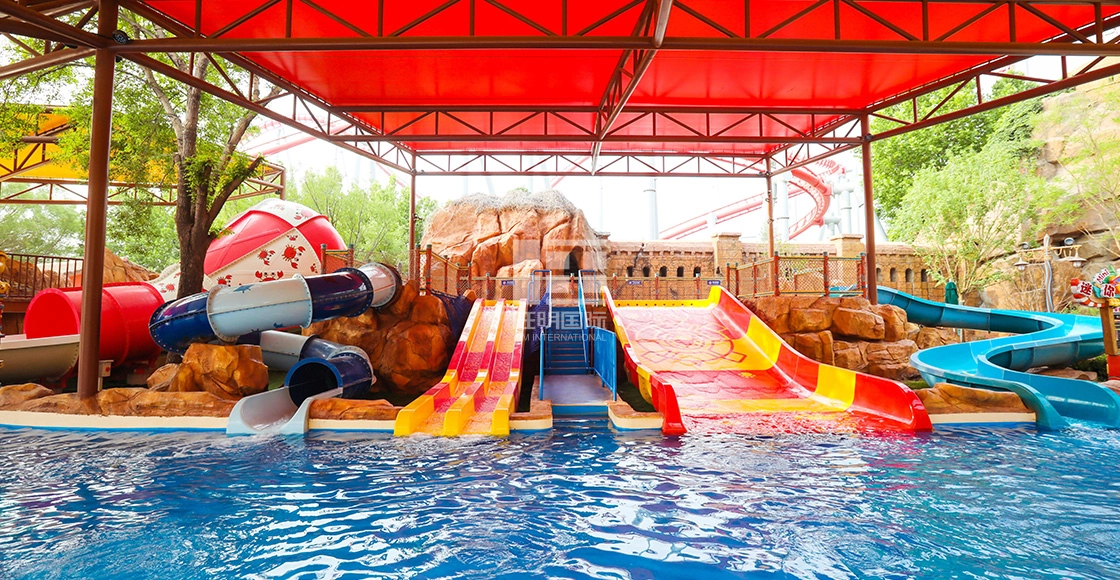
Children Combined Water Slide
Discover endless fun with the Children Combined Water Slide by WM INTERNATIONAL, expertly crafted for thrill-seeking kids. Perfect for summer splashes, this durable slide promises safety and joy. Looking to elevate your play area? Explore our Children's Combined Slide for sale now!
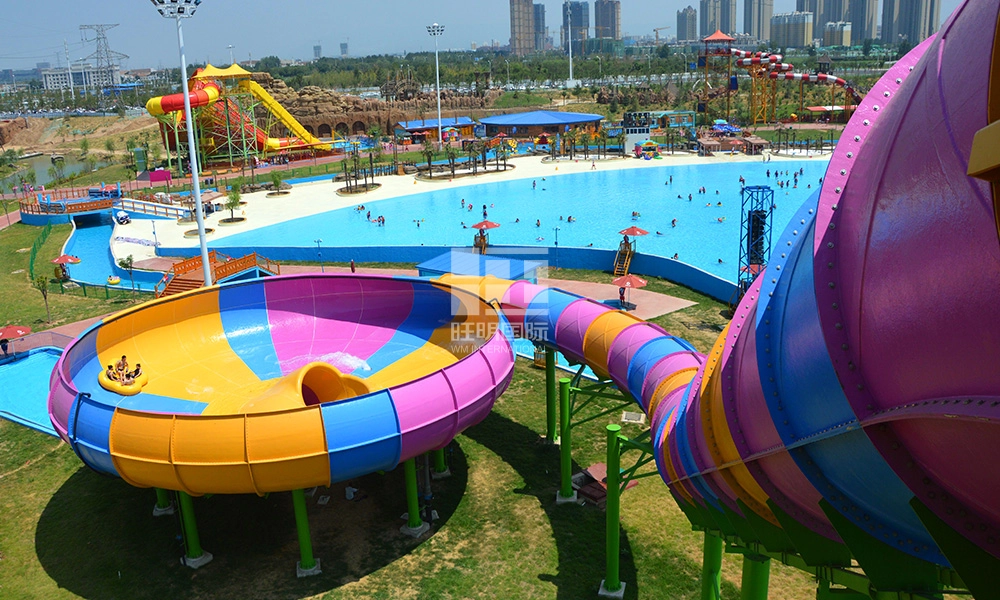
Huge Bowl Water Slide
The Huge Bowl Water Slide has achieved the “World's Best New Water Amusement Equipment” Award; it is the new favorite of the young people and the star project of the water park. The raft carries the tourists slowly entering the closed chute first; then it whirls in the bowl the moment the tourists can see the light. After a short period of time, the raft is suddenly suctioned into a huge black hole until it falls into the water. For a moment, the tourists realize the breathtaking journey has been safely brought to an end.
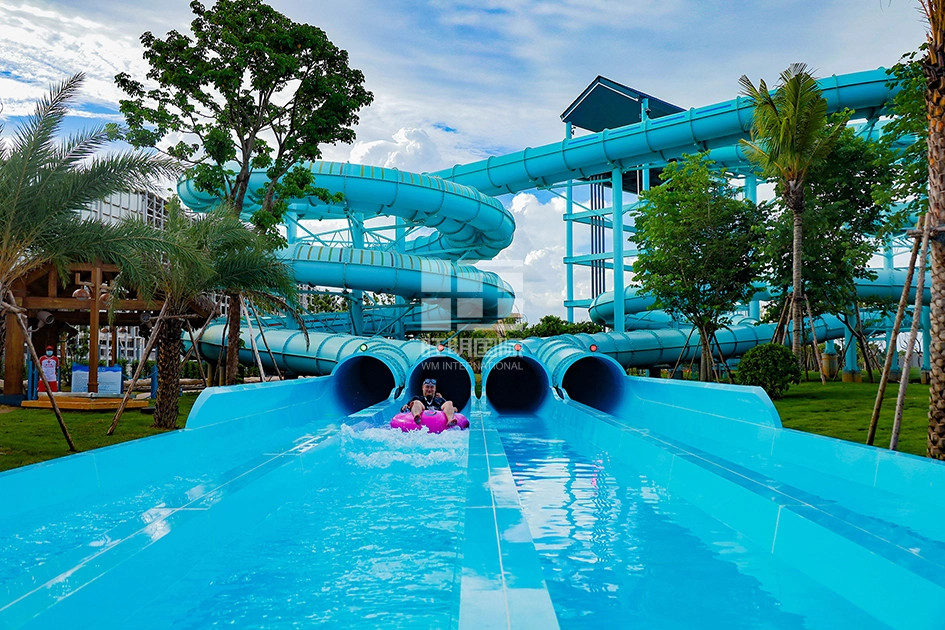
Time Tunnel Water Slide
The biggest feature of the time tunnel slide is that it uses double water slides and double tubes side by side in design and competes along the circular slide path. 8 people can play at the same time, with a large passenger capacity and high return rate, which is very suitable for team and family travel. And the slide is equipped with WangMing International's time tunnel technology, and the interior of the slide presents a beautiful aurora effect, with colorful lights, as if traveling through time and space.
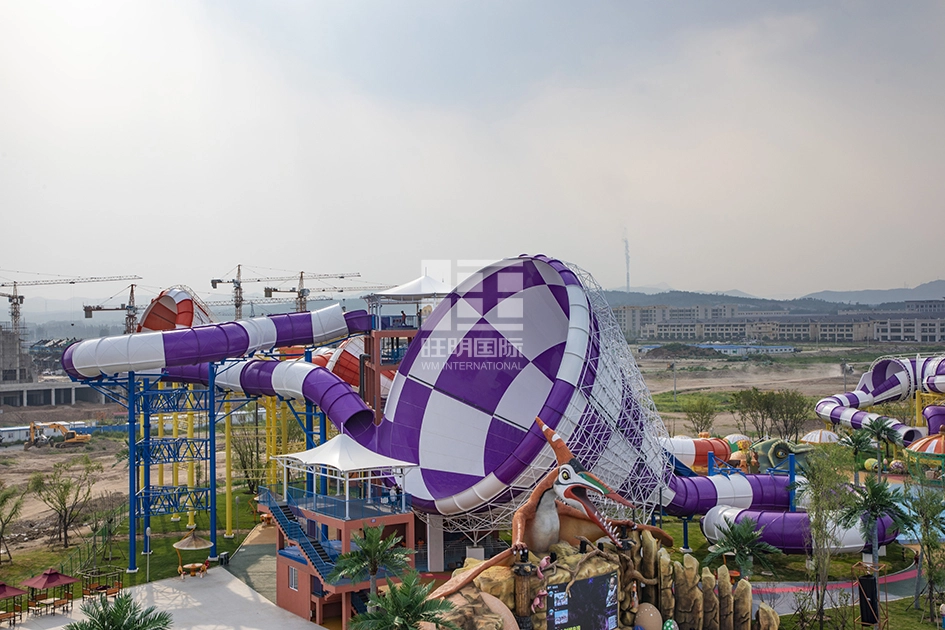
Big Tourbillion Water Slide
The Big Tourbillion water Slide won the "Gold Ticket Award - The Best New Project" of the international tourism industry. With unique modelling, strong irritation and humor, it is deeply loved by the young people; it has always been the popularity star of the water park. The raft carries the tourists as they enter the dark, closed chute slowly from the more than ten-meter-high platform; under the effect of gravity and water flow, it enters the state of rapid falling and then drops into the big Tourbillon; after a few times of whirling, it falls into the water pool. At this moment, the tourists are still in shock.
Get in touch
Have to get customized water park solutions and product quotes.
We will provide you with professional consultation and support.

Relying on leading technology, innovative products and rich industry experience, we tailor personalized solutions for each water park project to ensure a safe and exciting entertainment experience for tourists.
 Scan QR Code
wmwaterslide
wmwaterpark