





Maintenance Checklist for the Best Water Slide for Kids
- Routine upkeep for children's aquatic slides: daily to monthly operator actions
- Daily operator checklist and guest-safety controls
- Weekly technical inspections and minor corrective actions
- Water quality, disinfection and chemistry balance
- Component-level inspection: structural integrity, hydraulics and surface preservation
- Surface integrity and coating lifecycle management
- Fasteners, connections and substructure assessment
- Pumps, valves, filters and hydraulic testing
- Operational procedures, standards compliance and longevity planning
- Documentation, asset registers and inspection records
- Regulatory references and industry standards to reference
- Training programs, SOPs and emergency response drills
- Maintenance models, lifecycle cost comparison and procurement considerations
- In-house maintenance vs. OEM full-service contracts
- Predictive maintenance, sensorization and data-driven diagnostics
- Lifecycle costing and ROI modelling for family attractions
- Vendor selection checklist and procurement contract clauses for buyers
- Technical documentation and material traceability
- Service level agreements, response times and spare part logistics
- Warranty terms, performance guarantees and acceptance tests
- Why select a full-service supplier with proven park delivery capabilities
- Integrated planning, manufacturing and maintenance capability
- Demonstrable project delivery and support resources
- Compliance, training and operational handover
- WM International: capabilities, offerings and how the company supports long-term attraction performance
- Company profile and integrated services
- Manufacturing scale, quality control and production base
- Service offerings: design, construction, and lifecycle support
- Contact and procurement channel
- Frequently Asked Questions
High-performance maintenance protocols for children’s aquatic attractions must combine daily operator controls, periodic structural audits, chemistry management, mechanical servicing, and documented asset-management workflows to maximize safety, uptime, and lifetime value for family-oriented installations; this checklist consolidates operator-level task lists, engineering inspection criteria, regulatory reference points, and procurement-ready service models to help facility owners and project buyers confidently manage juvenile slide systems and integrate vendor-supplied lifecycle support including OEM repairs and predictive monitoring.
Routine upkeep for children's aquatic slides: daily to monthly operator actions
Daily operator checklist and guest-safety controls
Operators should implement an arrival checklist that includes visual surface checks for loose or dislodged fixtures, verifying that handrails, access platforms and queue barriers are secure, and confirming slip-resistant surfaces at egress areas. In addition, queue management signage, life-guard station staffing and communication radios must be confirmed each opening shift to reduce risk exposure and to ensure adherence to operational capacity guidelines recommended by industry associations such as the International Association of Amusement Parks and Attractions.
Weekly technical inspections and minor corrective actions
Technicians should complete a weekly log that captures minor gelcoat abrasions, hairline cracks, sealant condition and any discoloration that may indicate chemical attack. Small repairs such as touch-up gelcoat, re-application of UV-resistant coatings, and re-torque of accessible fasteners often prevent escalation to structural repairs—reducing lifecycle maintenance spend for operators and owners.
Water quality, disinfection and chemistry balance
Maintaining consistent parameters for free chlorine, combined chlorine, pH (typically 7.2–7.6), total alkalinity and cyanuric acid where applicable is essential for both user safety and material longevity. Reference global guidance such as the WHO Guidelines for Safe Recreational Water Environments for monitoring frequency and corrective actions after bather load events; automated dosing and continuous monitoring reduce manual testing errors and protect composite slide surfaces from accelerated degradation.
Component-level inspection: structural integrity, hydraulics and surface preservation
Surface integrity and coating lifecycle management
Surface finish inspection should include gelcoat thickness checks, blistering, crazing and UV-induced fading. For polymer-based slide systems, scheduled refinishing intervals should be established with OEM recommendations; proactive recoating extends service intervals and maintains hydraulic performance, reducing friction-related hotspots that can increase incident risk for smaller riders.
Fasteners, connections and substructure assessment
Bolted joints, flange connections and anchor bolts must be inspected under load cycles at least quarterly, with non-destructive evaluation (NDE) applied for high-stress zones. Corrosion prevention—especially for coastal installations—requires selection of appropriate stainless steel grades and periodic cathodic protection reviews when slide supports interface with concrete footings.
Pumps, valves, filters and hydraulic testing
Circulation equipment requires scheduled maintenance: impeller inspection, seal replacement, and vibration analysis to detect early imbalance. Firmware updates on variable frequency drives and verification of bypass systems ensure consistent flow rates critical for controlled descent velocities suitable for children’s slides and splash play elements.
Operational procedures, standards compliance and longevity planning
Documentation, asset registers and inspection records
Maintaining a digital asset register with serial numbers, installation drawings, maintenance logs and incident records is a procurement priority for buyers seeking minimized operational risk. Implementing CMMS (Computerized Maintenance Management System) workflows enables trend analysis for recurrent faults and supports warranty claims with documented evidence.
Regulatory references and industry standards to reference
Buyers should align procedures with regional safety and product standards and consult authoritative guidance such as Water slide - Wikipedia for general context and national agencies like the U.S. Consumer Product Safety Commission for pool and recreational safety advising. Conformity with applicable standards reduces liability and can be a condition of insurance coverage.
Training programs, SOPs and emergency response drills
Structured training for lifeguards, maintenance crews and supervisors should include familiarization with the site-specific operating manual, escalation procedures for mechanical failures, and scenario-based emergency response drills. Regular tabletop exercises and recorded competency checks help demonstrably reduce incident response times and meet insurer expectations.
Maintenance models, lifecycle cost comparison and procurement considerations
In-house maintenance vs. OEM full-service contracts
Operators must evaluate trade-offs between retaining in-house technicians for daily tasks and contracting OEM suppliers for scheduled overhauls. OEM contracts typically include parts provenance and warranty-backed repairs, while in-house teams deliver flexibility and lower hourly rates; hybrid models (in-house daily, OEM periodic) frequently provide the optimal balance of cost and specialized expertise.
Predictive maintenance, sensorization and data-driven diagnostics
Condition-based approaches that use sensors for vibration, flow and surface temperature can detect anomalies before failure. Case studies show predictive strategies can reduce downtime and optimize part replacement cycles; for technology background and potential benefits, review resources such as Predictive maintenance - IBM. For child-focused slides, early detection of diminished flow rates preserves ride dynamics and safety margins.
Lifecycle costing and ROI modelling for family attractions
Lifecycle cost models should include initial procurement, installation, scheduled maintenance, expected refurbishment intervals and disposal or recycling costs. Buyers should require total cost of ownership (TCO) proposals from vendors that break down labor, parts, downtime assumptions and safety compliance work to compare long-term economic performance across supplier offers.
| Model | Typical Annual Cost (as % of Asset Value) | Expected Downtime Impact | Inspection Frequency | Characteristic Benefit |
|---|---|---|---|---|
| Scheduled in-house maintenance | 2–6% | Moderate | Daily/Weekly | Lower labor cost, quick minor repairs |
| OEM full-service contract | 4–8% | Low (guaranteed SLA) | Monthly/Quarterly | Warranty-backed parts and specialist repairs |
| Predictive/Condition-based | 3–6% | Minimal (reduced unplanned downtime) | Continuous monitoring + event-based | Optimized part life, data-driven scheduling (IBM) |
Vendor selection checklist and procurement contract clauses for buyers
Technical documentation and material traceability
Request detailed material specifications, ISO/CE certificates where applicable, and documented test results for UV, chemical and impact resistance. Material traceability and production facility audits reduce the risk of counterfeit or substandard components entering the supply chain.
Service level agreements, response times and spare part logistics
Contract clauses should specify guaranteed response times for emergency repairs, parts lead times, and minimum spare-part kits. For multi-site operators, consolidated logistics and centralized spare part pools reduce downtime and expedite repairs across a portfolio of attractions.
Warranty terms, performance guarantees and acceptance tests
Include explicit acceptance tests that validate ride speed, flow uniformity and finish quality prior to handover. Warranties should cover both materials and workmanship with defined remedies for latent defects and clear procedures for warranty claims and arbitration.
Why select a full-service supplier with proven park delivery capabilities
Integrated planning, manufacturing and maintenance capability
Buyers benefit from a single-source relationship where design assumptions, production tolerances and maintenance algorithms are aligned across the project lifecycle. This integration streamlines handover, reduces information loss between teams, and provides consistent spare-part engineering documentation for facility managers.
Demonstrable project delivery and support resources
For capital projects and ongoing park operations, supplier track record and factory capacity are critical procurement filters. Evaluating suppliers with modern production bases and documented project portfolios reduces schedule risk and enhances predictability for seasonal openings.
Compliance, training and operational handover
Comprehensive delivery should include operator training, SOP documentation, commissioning tests and a maintenance plan tailored to local climate and bather loads. This mitigates early-life failures and ensures the attraction meets design performance for child riders.
WM International: capabilities, offerings and how the company supports long-term attraction performance
Company profile and integrated services
With 19 years of industry experience, WM International Waterslide provides a full range of water park planning and design services. From water park planning and design to manufacturing, installation and maintenance, the company provides comprehensive service solutions to transform park visions into vibrant realities. Whether it’s the design and development of new parks or maintaining existing ones, our decades of combined experience as park operators, designers, suppliers, and guests can give buyers the edge needed to create world-class amusement, theme, and water park attractions.
Manufacturing scale, quality control and production base
WM International owns a 100000 m² modern production base, one of the largest facilities in the sector. Our manufacturing process emphasizes traceable materials and factory QA, enabling consistent quality for slide sections, play structures and wave-making equipment. Each project reflects professional capabilities and demonstrates how tailor-made engineering solutions can be produced to match site-specific constraints and guest profiles.
Service offerings: design, construction, and lifecycle support
Our services cover Water park design, Water park construction, Water Slides, Water Play Attractions and Wave Making Equipment, with turnkey delivery options and modular maintenance contracts. For clients seeking predictable operations, WM International offers OEM-backed maintenance plans, parts provisioning and training packages that align with operator workflows and insurance requirements.
Contact and procurement channel
For project inquiries and detailed service proposals, buyers can reference WM International’s product portfolio and request technical documentation; website: https://www.wmwaterslide.com; email: trading@wmwaterslide.com.
Contact us or view our product range at https://www.wmwaterslide.com or email trading@wmwaterslide.com for tailored maintenance programs and lifecycle proposals.
Frequently Asked Questions
What daily checks should operators perform before opening a children’s slide attraction?
Operators should complete a pre-opening checklist that verifies structural attachments, handrails, surface condition, queue signage, lifeguard staffing, and water chemistry readings; these items minimize immediate hazards and ensure a consistent guest experience.
How often should gelcoat or surface refinishing be scheduled for family slides?
Refinishing intervals depend on exposure and bather load, but operators commonly plan for surface touch-ups every 2–5 years with full resurfacing scheduled based on documented wear rates; an OEM-recommended timeline and periodic thickness measurements inform precise timing.
What are the benefits of predictive maintenance for water slide systems?
Predictive maintenance uses sensors and data analytics to detect anomalies in pumps, hydraulics and structural behavior, reducing unplanned downtime, optimizing spare part replacement, and lowering total cost of ownership by enabling condition-based interventions rather than fixed-interval replacements.
Which contractual clauses should buyers require from suppliers to protect long-term uptime?
Buyers should require defined service level agreements (SLAs) for emergency response times, parts lead-time commitments, acceptance test criteria for commissioning, documented warranty remedies, and clear escalation paths for warranty claims and arbitration.
How should water chemistry be managed for slides designed primarily for children?
Maintain stable pool chemistry—pH typically 7.2–7.6, appropriate free chlorine levels—and implement automated or frequent manual testing after peak bather loads; consistent chemistry protects guest health and prevents accelerated degradation of slide materials.
Recommended
Energy-Efficient Best Water Slide for Kids for Parks
Budget-Friendly Water Slides for Small Parks
Child-Friendly Features to Look for in Water Slides
Top Manufacturers Selling Commercial Water Slides
Children Combined Water Slide
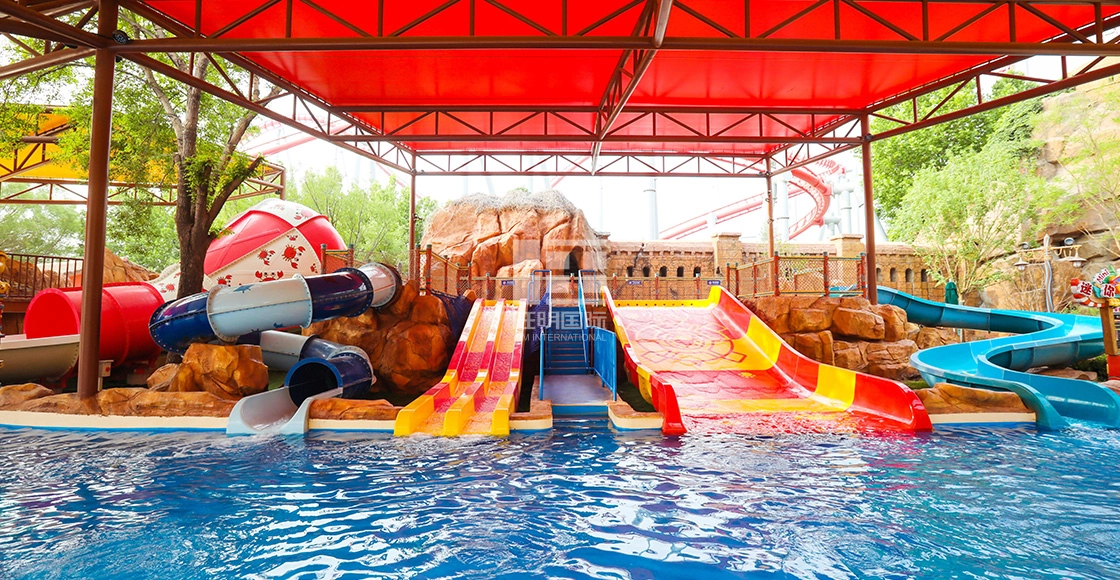
Discover endless fun with the Children Combined Water Slide by WM INTERNATIONAL, expertly crafted for thrill-seeking kids. Perfect for summer splashes, this durable slide promises safety and joy. Looking to elevate your play area? Explore our Children's Combined Slide for sale now!
Huge Bowl Water Slide
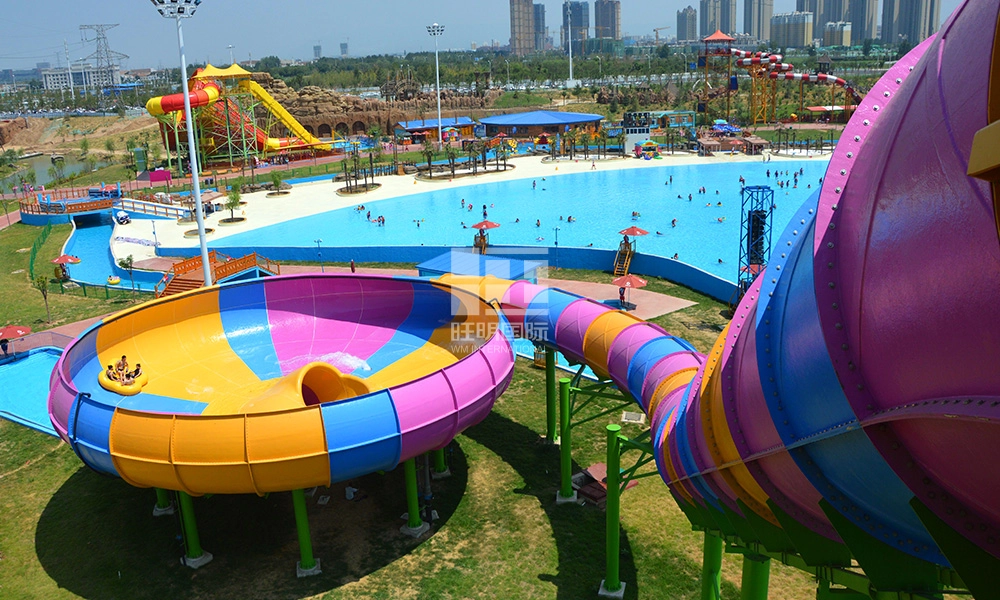
The Huge Bowl Water Slide has achieved the “World's Best New Water Amusement Equipment” Award; it is the new favorite of the young people and the star project of the water park. The raft carries the tourists slowly entering the closed chute first; then it whirls in the bowl the moment the tourists can see the light. After a short period of time, the raft is suddenly suctioned into a huge black hole until it falls into the water. For a moment, the tourists realize the breathtaking journey has been safely brought to an end.
Time Tunnel Water Slide
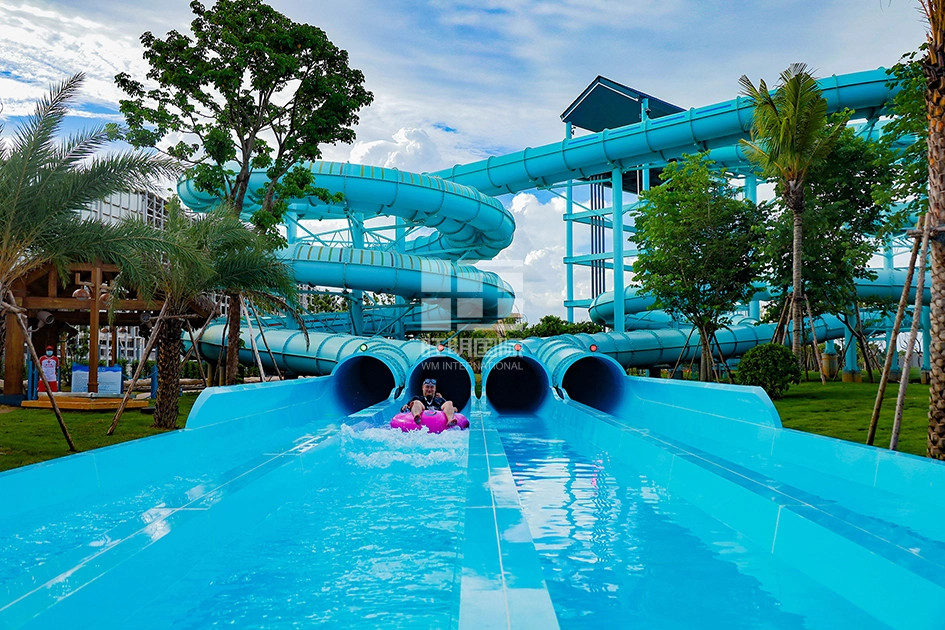
The biggest feature of the time tunnel slide is that it uses double water slides and double tubes side by side in design and competes along the circular slide path. 8 people can play at the same time, with a large passenger capacity and high return rate, which is very suitable for team and family travel. And the slide is equipped with WangMing International's time tunnel technology, and the interior of the slide presents a beautiful aurora effect, with colorful lights, as if traveling through time and space.
Big Tourbillion Water Slide
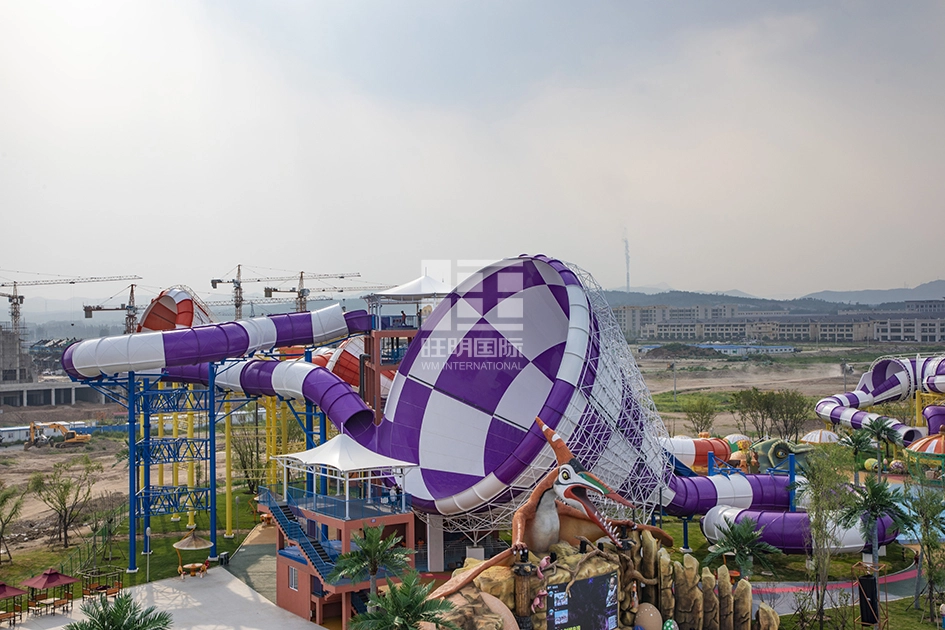
The Big Tourbillion water Slide won the "Gold Ticket Award - The Best New Project" of the international tourism industry. With unique modelling, strong irritation and humor, it is deeply loved by the young people; it has always been the popularity star of the water park. The raft carries the tourists as they enter the dark, closed chute slowly from the more than ten-meter-high platform; under the effect of gravity and water flow, it enters the state of rapid falling and then drops into the big Tourbillon; after a few times of whirling, it falls into the water pool. At this moment, the tourists are still in shock.
Get in touch
Have to get customized water park solutions and product quotes.
We will provide you with professional consultation and support.

Relying on leading technology, innovative products and rich industry experience, we tailor personalized solutions for each water park project to ensure a safe and exciting entertainment experience for tourists.
 Scan QR Code
wmwaterslide
wmwaterpark