


Increasing Park Revenue with Family Water Slides
- Designing Multi-Generational Raft Attractions that Drive Spend
- Experience-driven geometry and rider psychology
- Programmable theming and guest segmentation
- Accessibility and universal design
- Operational Strategies for Throughput, Safety, and Ancillary Revenue
- Queue management and capacity engineering
- Staffing models and risk controls
- Ancillary sales and experience monetization
- Commercial Models, Procurement Logic, and Projected ROI
- CapEx vs. OpEx: procurement structures that protect margins
- Revenue forecasting and sensitivity scenarios
- Regulatory compliance and standards alignment
- Why select an integrated supplier for multi-rider aquatic attractions
- Advantages of turnkey partnerships
- Key technical capabilities to require from vendors
- WM International: full-spectrum water park solutions
- Frequently Asked Questions
High-impact, multi-generational raft attractions and all-ages slide experiences are proven revenue drivers for modern aquatic facilities: when designed for group capacity, flexible throughput, and ancillary monetization, these attractions extend dwell time, increase per-capita spending, and differentiate park offerings in competitive markets. This guide provides operators, project owners, and investors with pragmatic design, procurement, and operational strategies to convert family-focused ride investments into sustainable top-line growth while maintaining safety, efficiency, and regulatory compliance.
Designing Multi-Generational Raft Attractions that Drive Spend
Experience-driven geometry and rider psychology
Attraction geometry—turn radius, drop profile, banking angle, and raft dynamics—directly shapes perceived value. Designing group chutes and raft circuits to create shared thrills encourages repeat rides and social media exposure, which amplifies unpaid marketing. Consider incorporating mixed-intensity elements: an initial high-visual-drop to deliver an adrenaline spike, followed by a family-friendly spiral that supports intergenerational riders and yields broader market appeal.
Programmable theming and guest segmentation
Modular thematic overlays and seasonal skins enable price differentiation and time-limited promotions. Operators can create High Quality sessions (e.g., evening glow rides or private-group blocks) to capture higher yield per rider. Segmented offerings—family sessions, single-rider lanes for thrill seekers, and private rentals for events—expand revenue streams without major structural changes.
Accessibility and universal design
Inclusive entry points, graduated step systems, and raft loading platforms reduce dispatch time while expanding the addressable market to parents with young children and multi-generational groups. Universal design features reduce queue abandonment and the associated lost revenue from frustrated guests.
Operational Strategies for Throughput, Safety, and Ancillary Revenue
Queue management and capacity engineering
Optimizing dispatch cadence and station ergonomics directly increases hourly throughput. Multi-seater raft attractions typically achieve higher group throughput than single-rider chutes when station layout minimizes turnaround. Tactical use of virtual queuing, timed-entry wristbands, or dynamic pricing during peak windows preserves guest satisfaction while maximizing hourly yield.
Staffing models and risk controls
Efficient operations require well-defined role matrices—dispatch attendants, raft handlers, safety supervisors, and maintenance teams—with clear KPIs. Regular scenario-based training cuts incident rates and operational downtime. Compliance with public health guidance and recreational water safety reduces legal exposure; consult the WHO water and sanitation guidance for sanitation frameworks and the Water park overview (Wikipedia) for industry context.
Ancillary sales and experience monetization
Adding rentable cabanas, photo packages, High Quality queue passes, F&B bundles, and private-event time blocks converts a ride investment into multiple revenue levers. Family-oriented attractions tend to increase dwell time and cross-sell rates for on-site dining and retail, making a ride investment a catalyst for whole-park yield improvement.
| Characteristic | Single-rider flume | Multi-rider family raft |
|---|---|---|
| Typical guest profile | Teen and adult thrill-seekers | Families, groups, mixed-age parties |
| Dispatch efficiency | Moderate; frequent staging | High; batch loading by raft |
| Throughput (qualitative) | Lower per-hour for equal footprint | Higher riders per cycle; better use of footprint |
| Ancillary monetization | Lower cross-sell uplift | Higher F&B and photo-package conversion |
| Maintenance complexity | Lower parts count | Higher mechanical and raft upkeep |
Commercial Models, Procurement Logic, and Projected ROI
CapEx vs. OpEx: procurement structures that protect margins
Project owners should evaluate supplier proposals using lifecycle cost analysis rather than headline CapEx alone. Consider bundled contracts that include design, installation, and initial maintenance to reduce start-up risk. Financing options—revenue-sharing, lease-to-own, or staged payments tied to milestone acceptance—can preserve working capital and accelerate time-to-profitability.
Revenue forecasting and sensitivity scenarios
Build conservative, base, and upside models: conservative (price-matching promotions, slower adoption), base (typical market uptake), upside (strong social traction and event bookings). Sensitivity inputs should include average spend per visitor, incremental dwell-time-driven F&B uplift, ticket High Quality for branded group rides, and increased season pass conversions. Cross-check modeled assumptions against trade benchmarks such as attendance and revenue trends reported by the International Association of Amusement Parks and Attractions (IAAPA).
Regulatory compliance and standards alignment
Design and procurement must align with relevant public safety codes and quality management systems. Suppliers that embrace internationally recognized process controls—such as ISO 9001 for manufacturing quality—reduce defect rates and warranty exposure; see ISO 9001 (ISO) for quality system benchmarks. Operators should require documented FAT (factory acceptance testing) and SAT (site acceptance testing) protocols in vendor contracts.
Why select an integrated supplier for multi-rider aquatic attractions
Advantages of turnkey partnerships
Engaging a single supplier for concept design, fabrication, installation, and aftercare reduces coordination costs and shortens timelines. Turnkey partners provide tested ride dynamics, documented safety validation, and consolidated warranty terms that protect investors against fragmented responsibility on complex builds.
Key technical capabilities to require from vendors
Buyers should verify vendor capabilities in composite molding, hydraulics, water recirculation systems, anti-corrosion coatings, and structural engineering. Request engineering documentation, load calculations, proof of successful installations, and defined maintenance intervals to forecast lifecycle expenses accurately.
WM International: full-spectrum water park solutions
With 19 years of industry experience, WM International Waterslide provides a full range of water park planning and design services. From water park planning and design to manufacturing, installation and maintenance, we provide comprehensive service solutions to transform your park vision into vibrant realities. Whether it’s the design and development of new parks or maintaining existing ones, our decades of combined experience as park operators, designers, suppliers, and guests can give you the edge that you need to create world-class amusement, theme, and water park attractions.
WM International owns a 100000 m² modern production base, which is the largest in the industry. We mainly produce various water slides for water parks. Each project is a reflection of our professional capabilities, showing how we can provide tailor-made solutions based on different customer needs and site characteristics.
Our product suite includes large-capacity raft circuits, themed family play complexes, water-play attractions, and ancillary systems such as wave-making equipment. We support clients from master planning and ride selection through to post-installation maintenance and training, enabling operators to maximize uptime and guest satisfaction.
For procurement teams evaluating suppliers, we provide detailed technical dossiers, lifecycle cost models, and staged delivery schedules. Our engineering team enforces quality checkpoints and FAT/SAT documentation, reducing commissioning risks and accelerating revenue realization.
Contact and specification requests can be sent to trading@wmwaterslide.com and further product details are available at https://www.wmwaterslide.com.
When planning a new attraction or upgrading an existing zone, prioritize a modular, multipurpose design that scales with seasonal demand—this approach delivers measurable uplifts in per-guest revenue and brand differentiation in crowded markets.
Operators seeking to quantify project impact should request a tailored feasibility study that benchmarks local demographics, competitive supply, and projected payback timelines based on realistic attendance curves and ancillary assumptions.
Only suppliers that combine proven manufacturing scale, end-to-end delivery, and rigorous safety practices will reliably convert a capital outlay into sustainable profit growth.
To request drawings, technical specifications, or financial models that demonstrate projected ROI for group-oriented slide installations, contact WM International via trading@wmwaterslide.com.
Frequently Asked Questions
What is the typical payback period for installing a multi-rider family attraction?
Payback varies by market and ancillary strategy; typical models show payback in 2–5 years when the ride increases attendance, boosts F&B and retail sales, and enables premium offerings such as private bookings and paid photo packages.
How does a group raft attraction affect hourly throughput compared with single-rider flumes?
Group raft circuits generally improve effective throughput for mixed-age groups because batch loading reduces per-rider overhead; while exact throughput depends on station design and dispatch cadence, multi-seater attractions often deliver higher riders-per-hour for an equivalent footprint when optimized.
What safety and regulatory standards should buyers require from suppliers?
Buyers should require documented compliance with applicable local safety codes, ISO-aligned quality systems such as ISO 9001 for manufacturing controls, clear FAT/SAT testing protocols, and maintenance plans. Operators should also consult public health guidance for water treatment and sanitation; see WHO resources for water sanitation guidance.
Can a supplier provide lifecycle cost estimates and maintenance schedules?
A reliable vendor will include lifecycle cost models, spare-parts lists, maintenance intervals, and training for in-house teams. These deliverables are critical to forecasting OpEx and minimizing downtime risk during peak seasons.
What procurement models reduce financial risk for park owners?
Consider staged financing, lease-to-own arrangements, or performance-based contracts that tie payments to milestone acceptance. Bundled turnkey contracts that include installation and initial maintenance can also reduce coordination risk and protect margins.
Recommended
The B2B Buyer’s Guide to water park project kits
The 10 Key Factors in water splash park equipment That Affect Cost
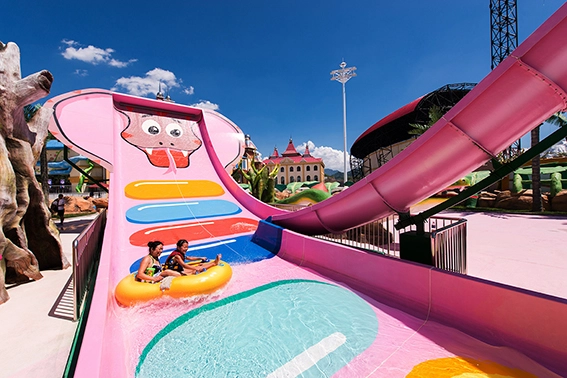
Maintenance Tips for Your Small King Cobra Family Water Slide
Wholesale water slide for pool manufacturer and supplier
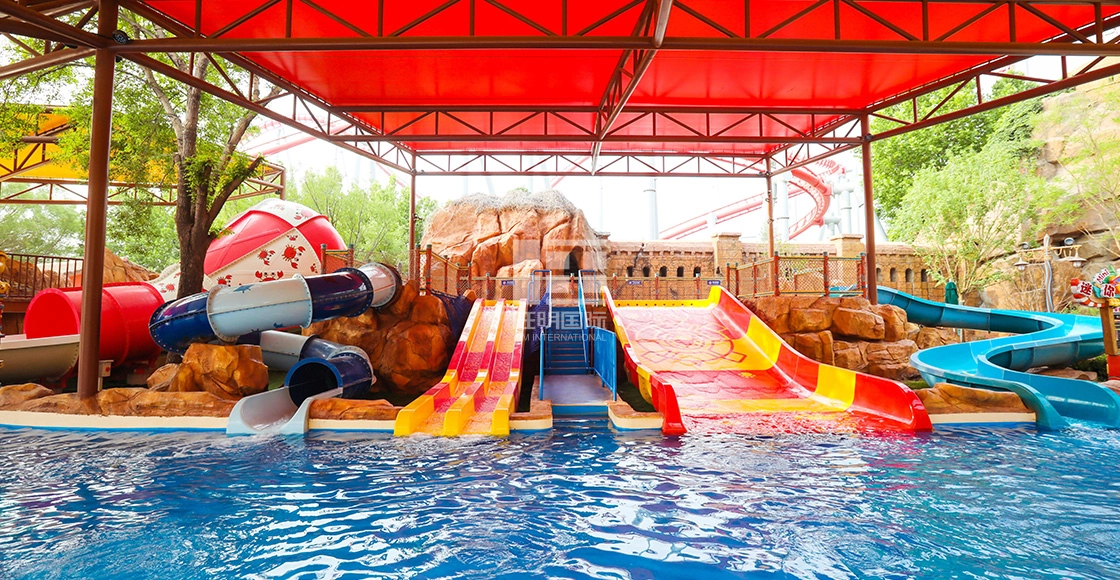
Children Combined Water Slide
Discover endless fun with the Children Combined Water Slide by WM INTERNATIONAL, expertly crafted for thrill-seeking kids. Perfect for summer splashes, this durable slide promises safety and joy. Looking to elevate your play area? Explore our Children's Combined Slide for sale now!
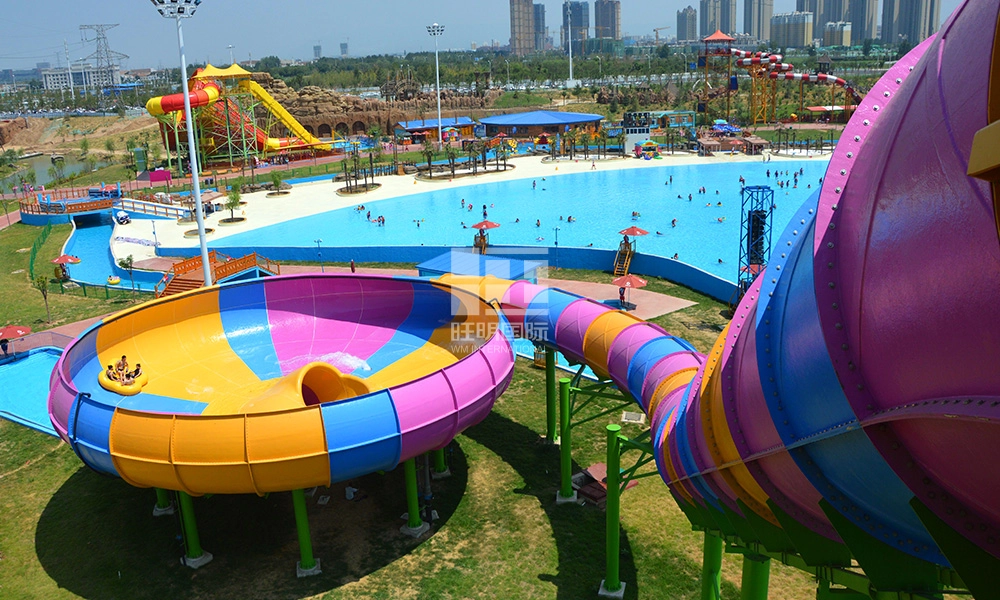
Huge Bowl Water Slide
The Huge Bowl Water Slide has achieved the “World's Best New Water Amusement Equipment” Award; it is the new favorite of the young people and the star project of the water park. The raft carries the tourists slowly entering the closed chute first; then it whirls in the bowl the moment the tourists can see the light. After a short period of time, the raft is suddenly suctioned into a huge black hole until it falls into the water. For a moment, the tourists realize the breathtaking journey has been safely brought to an end.
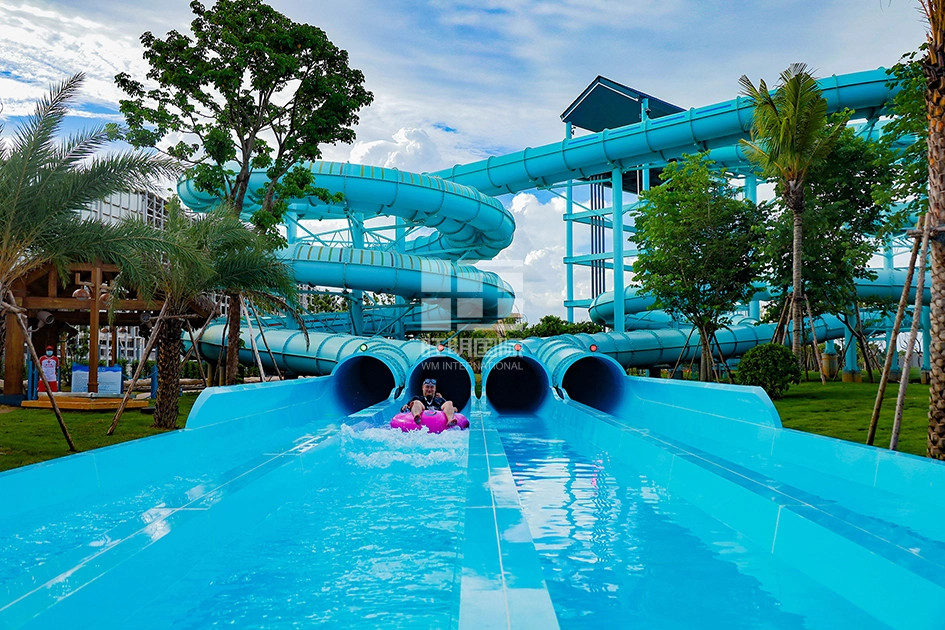
Time Tunnel Water Slide
The biggest feature of the time tunnel slide is that it uses double water slides and double tubes side by side in design and competes along the circular slide path. 8 people can play at the same time, with a large passenger capacity and high return rate, which is very suitable for team and family travel. And the slide is equipped with WangMing International's time tunnel technology, and the interior of the slide presents a beautiful aurora effect, with colorful lights, as if traveling through time and space.
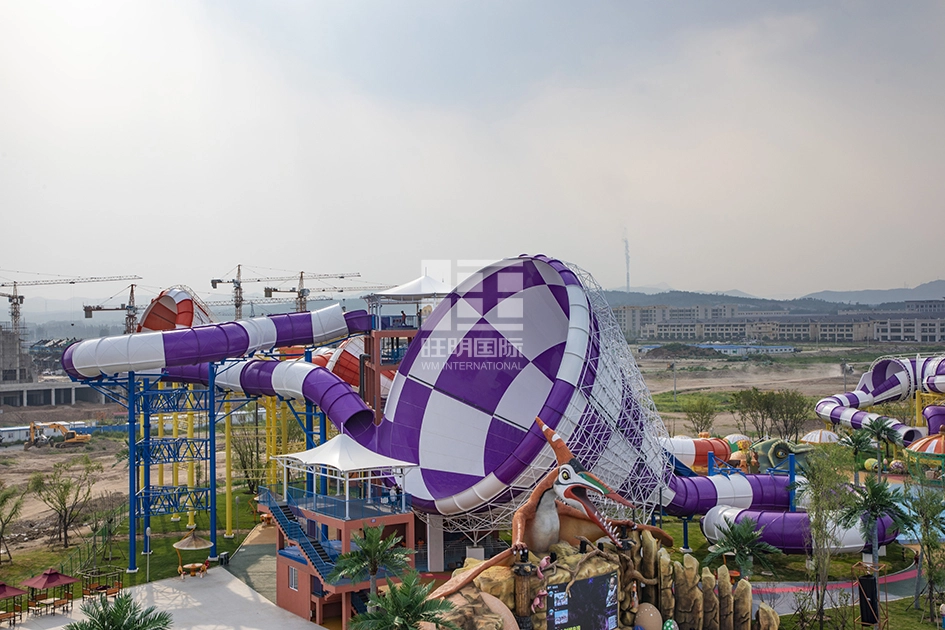
Big Tourbillion Water Slide
The Big Tourbillion water Slide won the "Gold Ticket Award - The Best New Project" of the international tourism industry. With unique modelling, strong irritation and humor, it is deeply loved by the young people; it has always been the popularity star of the water park. The raft carries the tourists as they enter the dark, closed chute slowly from the more than ten-meter-high platform; under the effect of gravity and water flow, it enters the state of rapid falling and then drops into the big Tourbillon; after a few times of whirling, it falls into the water pool. At this moment, the tourists are still in shock.
Get in touch
Have to get customized water park solutions and product quotes.
We will provide you with professional consultation and support.

Relying on leading technology, innovative products and rich industry experience, we tailor personalized solutions for each water park project to ensure a safe and exciting entertainment experience for tourists.
 Scan QR Code
wmwaterslide
wmwaterpark