





Energy and Water Use of a Giant Water Slide Explained
- Energy and Water Use of a Giant Water Slide Explained
- Overview: What a giant water slide is and why energy & water matter
- Introducing the Big Skateboard Water Slide — a major example of a giant water slide
- How giant water slides use water: circulation, losses, and make-up
- Energy consumption basics for a giant water slide: pumps, heaters, and supporting systems
- Typical ranges: estimated water and energy use for giant water slides
- How to estimate real-world water consumption for the Big Skateboard Water Slide
- Strategies to reduce water use on a giant water slide while preserving ride experience
- How to reduce energy use: pump optimization and system design
- Operational best practices for the Big Skateboard Water Slide (practical checklist)
- Cost comparison: baseline vs optimized operation (illustrative)
- Measuring and validating savings: how to prove improvements
- Regulatory and safety considerations when optimizing water and energy
- Brand advantage: why the Big Skateboard Water Slide by Wangming International is a smart investment
- Frequently Asked Questions (FAQ) — giant water slide energy & water
- How much water does a giant water slide like Big Skateboard actually use per day?
- Is energy use mostly from pumps or heating?
- Will adding a VSD really save money on the Big Skateboard Water Slide?
- Can I use non-potable or reclaimed water for make-up?
- How do I measure if my conservation changes worked?
- Are there quick wins operators can implement right away?
- Contact to Learn More or See the Big Skateboard Water Slide
- References and authoritative sources

Energy and Water Use of a Giant Water Slide Explained
Overview: What a giant water slide is and why energy & water matter
The term giant water slide describes large, high-capacity attractions commonly found in modern water parks. These slides combine thrilling rider dynamics with large water flow rates, high pump power and significant surface area exposures — all of which directly affect water consumption and energy use. Park operators and planners need to understand these resource flows to optimize operating costs, comply with environmental regulations, and improve guest experience.
Introducing the Big Skateboard Water Slide — a major example of a giant water slide
The big skateboard water slide is a perfect combination of boomerang slide and mobula natrix slide. Visitors can experience the classic feeling of two star products of Wangming International at the same time. This water slide is twice as large as the original slide and is a water slide with a super experience. Visitors start from the platform and slide quickly. The inertia of falling from high altitude instantly throws visitors to the commanding height of the big skateboard and soars into the sky. Before the tourists have time to calm their heartbeats, they slide down quickly again and instantly rush into the manta ray's skateboard. After a spin, they finally fall into the diving pool, which is an unforgettable experience.
How giant water slides use water: circulation, losses, and make-up
Every giant slide relies on a recirculation system: water is pumped from a collection pool (or surge tank), through filtration and disinfection, and then sprayed or released at the slide's starting points to create a lubricated ride surface and splash effects. The nominal flow rate for large slides varies widely by design — from a few tens to several hundreds of gallons per minute (GPM) per lane — and is sized to deliver the required rider speed and safety margins.
Water losses that require make-up water include:
- Evaporation from open pools, channels, and slide surfaces.
- Drift and splash-out from landing pools and high-velocity discharges.
- Backwashing and filtration wastes.
- Leaks (plumbing, joints, or slide surface damage).
Understanding and measuring these loss components is the first step to estimating how much fresh water a giant water slide needs per day.
Energy consumption basics for a giant water slide: pumps, heaters, and supporting systems
The largest single energy consumer for a water slide installation is the water-moving equipment: circulation pumps, transfer pumps and any high-head pumps needed to elevate water to the slide platform. Other contributors include pool heaters (if heated), UV or ozone treatment systems, lighting, and building HVAC for enclosed structures.
Pumps are rated by horsepower (HP) and efficiency. The energy draw (kW) is a product of motor size, loading, and duty cycle. A single high-head pump running continuously can be hundreds of kilowatts over a day if not optimized — making pump selection, variable-speed drives (VSDs), and hydraulic design central to energy management.
Typical ranges: estimated water and energy use for giant water slides
The actual consumption varies greatly with climate, ride design, and operational choices. The table below shows illustrative ranges based on industry experience and typical installations. Use these as starting points; park-specific metering and seasonal adjustments are essential for accurate budgeting.
| Parameter | Typical Range (Small–Large Giant Slides) | Notes / Assumptions |
|---|---|---|
| Nominal slide flow rate | 50–600 GPM (gallons per minute) | Depends on slide width, rider throughput and number of lanes |
| Daily recirculated water volume | ~72,000–864,000 gallons/day (if continuous flow at 50–600 GPM) | Continuous recirculation; actual turnover depends on pool size |
| Make-up freshwater (due to losses) | 500–10,000+ gallons/day | Evaporation + splash + backwash; climate dependent |
| Pump motor size (per main pump) | 10–200+ HP | Higher head & higher flow require larger motors |
| Electrical energy use (pumps) | 10–400 kWh/day | Depends on HP, efficiency, hours of operation and VSD use |
| Pool heating | Variable — 0 (no heat) to 500+ kWh/day | Heated facilities / cool climates increase energy demand |
How to estimate real-world water consumption for the Big Skateboard Water Slide
To estimate realistic consumption for the Big Skateboard Water Slide, follow a stepwise approach:
- Document design flow rate: obtain the slide manufacturer’s recommended GPM per rider lane.
- Measure duty cycle: how many hours per day the ride runs.
- Quantify loss sources: estimate evaporation (see climate data), average splash-out per rider, and routine maintenance backwash.
- Calculate make-up: Make-up (gal/day) = Evaporation + Splash + Backwash + Leaks.
- Estimate pump power: Pump kW = (HP × 0.746) / Motor_Efficiency. Sum pumps and multiply by hours of operation.
Example assumptions (illustrative): if Big Skateboard uses 300 GPM continuous, operates 10 hours/day, and has 2% total loss per day from evaporation and splash (applied to recirculated volume), expected numbers are as follows:
- Recirculated volume: 300 GPM × 60 × 60 = 432,000 gal/day during operation (10 hours gives 43,200 gallons circulated per hour ×10 = 432,000)
- Make-up at 2% loss: ~8,640 gal/day
- Pump energy (example 75 HP pump @ 90% eff running 10 hours): 75 HP × 0.746 kW/HP / 0.90 ≈ 62 kW → 620 kWh/day
These values highlight that even with relatively modest make-up water, pump energy can be a major operating cost if pumps are oversized or run inefficiently.
Strategies to reduce water use on a giant water slide while preserving ride experience
Water conservation measures tailored to giant slides can significantly reduce make-up water and operating cost. Practical measures include:
- Improve splash-energy capture by changing landing pool geometry and adding splash-reducing baffles.
- Install windbreaks or partial covers around high-exposure slides to lower evaporation losses.
- Use automated make-up meters and freeze alarms to detect leaks quickly.
- Optimize backwash schedules: monitor pressure differentials to backwash only when necessary; consider filter media that requires less frequent backwashing.
- Consider non-potable or reclaimed water for make-up where local regulation permits (with proper treatment and signage).
How to reduce energy use: pump optimization and system design
Key energy-saving tactics for giant water slides focus on pump system optimization and reducing unnecessary heat gains/losses:
- Right-size pumps: avoid oversizing that leads to throttling and inefficiency.
- Install variable-speed drives (VSDs): VSDs let pumps run only as fast as needed, saving energy across variable demand periods.
- Improve hydraulic design: reduce elbows, valves and high-friction fittings to lower head loss.
- Use high-efficiency motors and maintain them (alignment, bearings, and proper lubrication).
- Heat recovery: capture waste heat from HVAC or other systems to preheat pool water where feasible.
Operational best practices for the Big Skateboard Water Slide (practical checklist)
Daily and seasonal operational controls deliver reliable savings without sacrificing guest satisfaction:
- Daily start/stop scheduling to avoid running pumps at full speed during low attendance.
- Real-time monitoring of water flow, pump power, and make-up water volumes via SCADA or simple metering.
- Routine filter differential checks to minimize unnecessary backwashing.
- Training staff in rapid leak detection and basic hydraulic troubleshooting.
- Seasonal adjustments: reduce flow rates during cool, low-occupancy periods to reduce both energy and water use.
Cost comparison: baseline vs optimized operation (illustrative)
The table below compares a hypothetical single-slide baseline (no VSD, oversized pump, frequent backwash) against an optimized scenario (VSD, right-sized pump, reduced backwash). Costs are illustrative and depend on local electricity/water prices.
| Item | Baseline (monthly) | Optimized (monthly) | Notes |
|---|---|---|---|
| Electricity for pumps | ~18,600 kWh | ~9,300 kWh | VSD and right-sizing reduce energy ~50% |
| Water make-up | ~260,000 gal | ~130,000 gal | Evaporation control & splash reduction |
| Estimated monthly savings | — | ~50% resource use | Actual savings depend on utility rates |
Measuring and validating savings: how to prove improvements
Install submeters for electrical circuits that serve the slide pumps and a flow meter on make-up water lines. Compare baseline consumption over representative weeks to post-improvement data, adjusting for climate and attendance. Track KPIs such as kWh per operating hour and gallons of make-up per 1,000 riders to normalize performance.
Regulatory and safety considerations when optimizing water and energy
Any operational change must meet national and local safety and public health rules. Filtration, disinfection, hydraulic safety, and water clarity cannot be compromised. When using reclaimed water for make-up, verify local permitting and ensure equivalent disinfectant residuals in the recirculation system. Consult guidelines from relevant authorities before implementing changes.
Brand advantage: why the Big Skateboard Water Slide by Wangming International is a smart investment
Wangming International combines iconic ride dynamics with proven engineering. The Big Skateboard Water Slide merges two proven ride types (boomerang and mobula natrix), enabling high throughput and a memorable guest experience. For operators, the slide's modular design and manufacturer support make it easier to integrate efficient pumps, VSDs, and monitoring systems during installation, lowering lifecycle cost and simplifying compliance with local regulations.
Frequently Asked Questions (FAQ) — giant water slide energy & water
How much water does a giant water slide like Big Skateboard actually use per day?
There is no single answer; usage depends on design flow (GPM), hours of operation, and climate. Typical make-up water for a large slide can range from a few hundred gallons/day to over 10,000 gallons/day. Accurate measurement requires flow meters on make-up lines and routine monitoring.
Is energy use mostly from pumps or heating?
Pumps are typically the largest continuous electrical load for a slide. Pool heating can exceed pump energy in colder climates or if water is maintained at high temperatures, but many outdoor slides don’t require heating year-round.
Will adding a VSD really save money on the Big Skateboard Water Slide?
Yes. VSDs allow the pump to match actual demand rather than run at full speed and throttle flow. Typical savings vary but often range from 20–60% on pump energy depending on load variability.
Can I use non-potable or reclaimed water for make-up?
Possibly, but it depends on local regulations and required treatment. If permitted, reclaimed water can cut potable water costs but must be properly treated and clearly documented to meet public health standards.
How do I measure if my conservation changes worked?
Install meters for electricity (pump circuits) and make-up water. Compare normalized metrics (kWh per operating hour, gallons make-up per 1,000 riders) before and after changes while accounting for weather and attendance.
Are there quick wins operators can implement right away?
Yes — schedule pump operation to match park hours, reduce unnecessary backwashing, and inspect for leaks regularly. Small steps often yield immediate water and energy reductions.
Contact to Learn More or See the Big Skateboard Water Slide
If you’d like a customized energy and water use assessment or want to see the Big Skateboard Water Slide specifications integrated into your park design, contact our sales & engineering team today. We provide layout assistance, pump sizing review, and lifecycle cost modeling to help you optimize performance and guest experience. Click here to contact sales or request a product brochure.
Understanding energy and water consumption naturally leads to evaluating which design elements and specifications most directly affect performance and efficiency.
Top 10 Features to Look for in a Giant Water Slide
References and authoritative sources
Below are reputable industry and government sources that inform water park and pool resource management:
- World Waterpark Association — https://www.worldwaterpark.org
- U.S. Environmental Protection Agency (WaterSense and Pools) — https://www.epa.gov/watersense
- International Association of Amusement Parks and Attractions (IAAPA) — https://www.iaapa.org
- American Society of Heating, Refrigerating and Air-Conditioning Engineers (ASHRAE) — https://www.ashrae.org
- National Oceanic and Atmospheric Administration (NOAA) for climate/evaporation data — https://www.noaa.gov
- Hydraulic Institute and Pump System Best Practices — https://www.pumps.org
For assistance with the Big Skateboard Water Slide, including technical energy and water use modeling, contact our team and request full installation and operational documentation.
Recommended
How Water Park Slides Are Tested for Safety
WM INTERNATIONAL Best professional water amusement park equipment manufacturers and supplier brands
Top 10 water slide Manufacturers and Supplier Brands
Best Family Water Slide Designs for Mixed-Age Kids
Children Combined Water Slide
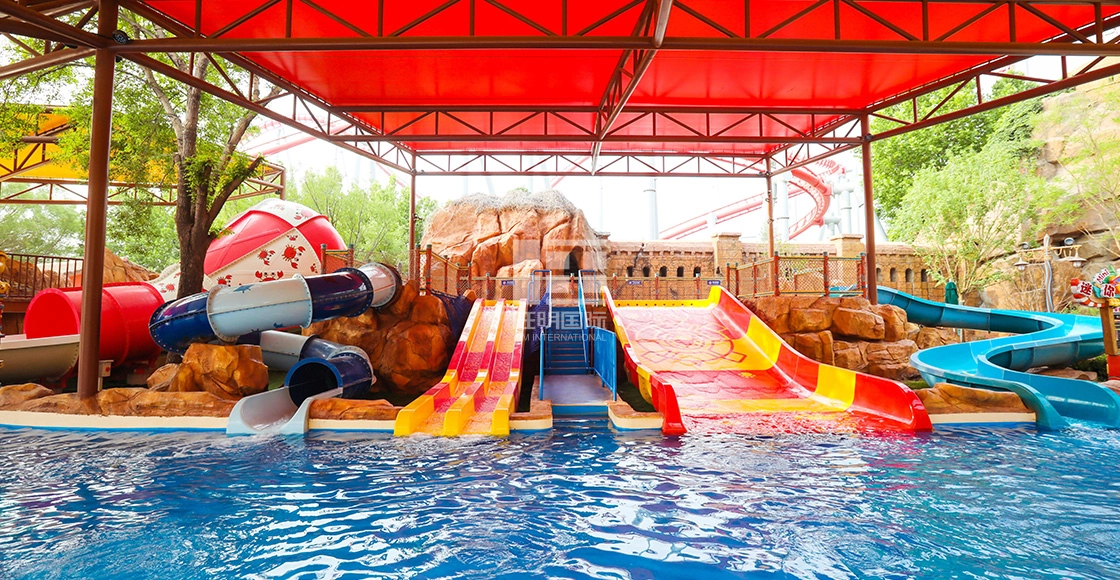
Discover endless fun with the Children Combined Water Slide by WM INTERNATIONAL, expertly crafted for thrill-seeking kids. Perfect for summer splashes, this durable slide promises safety and joy. Looking to elevate your play area? Explore our Children's Combined Slide for sale now!
Huge Bowl Water Slide
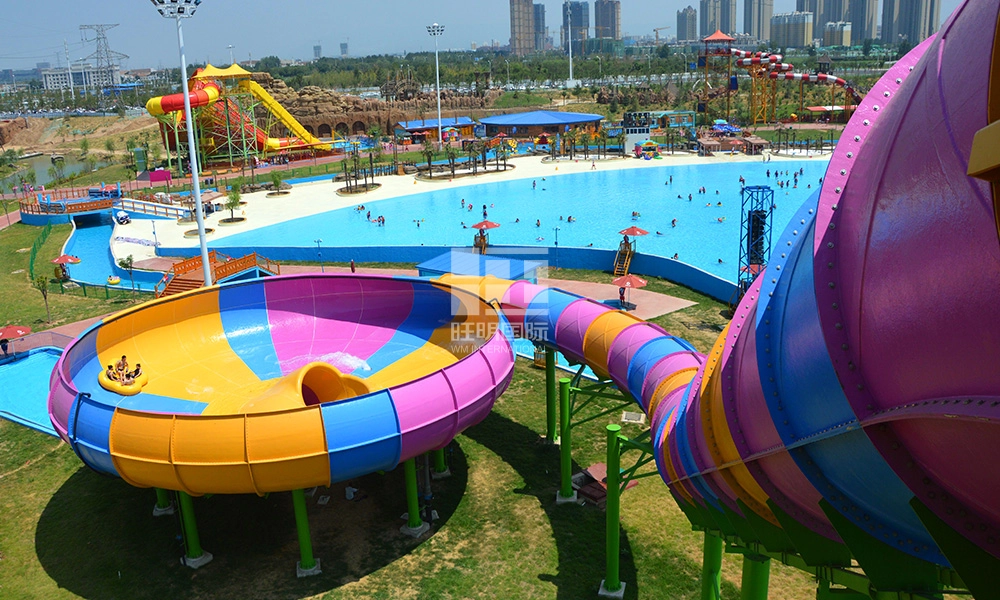
The Huge Bowl Water Slide has achieved the “World's Best New Water Amusement Equipment” Award; it is the new favorite of the young people and the star project of the water park. The raft carries the tourists slowly entering the closed chute first; then it whirls in the bowl the moment the tourists can see the light. After a short period of time, the raft is suddenly suctioned into a huge black hole until it falls into the water. For a moment, the tourists realize the breathtaking journey has been safely brought to an end.
Time Tunnel Water Slide
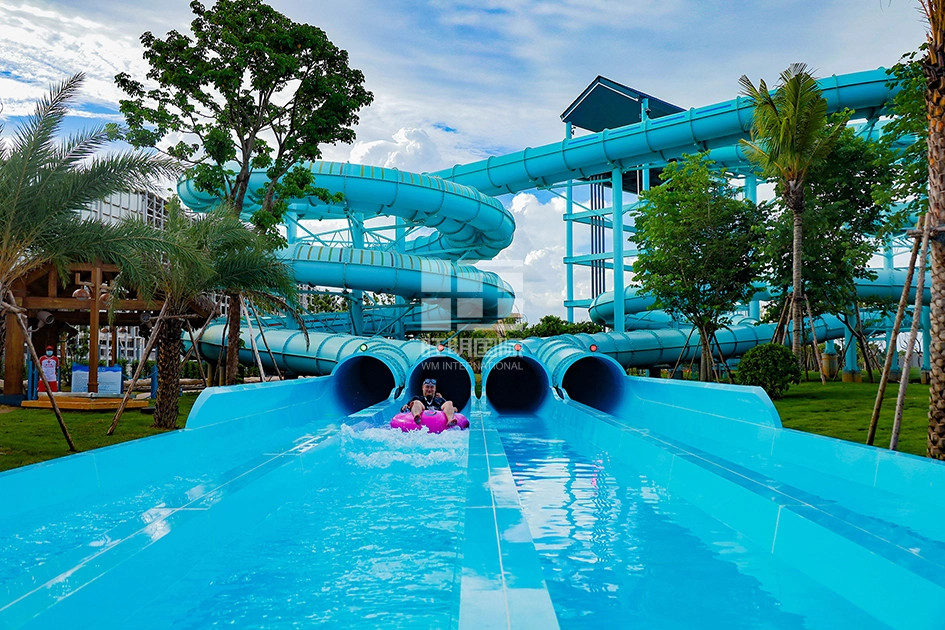
The biggest feature of the time tunnel slide is that it uses double water slides and double tubes side by side in design and competes along the circular slide path. 8 people can play at the same time, with a large passenger capacity and high return rate, which is very suitable for team and family travel. And the slide is equipped with WangMing International's time tunnel technology, and the interior of the slide presents a beautiful aurora effect, with colorful lights, as if traveling through time and space.
Big Tourbillion Water Slide
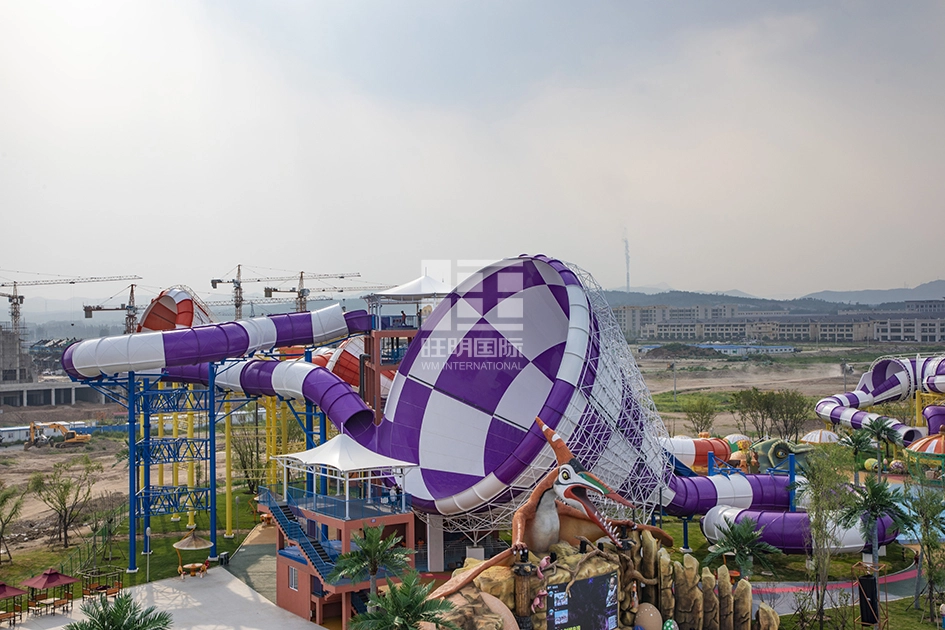
The Big Tourbillion water Slide won the "Gold Ticket Award - The Best New Project" of the international tourism industry. With unique modelling, strong irritation and humor, it is deeply loved by the young people; it has always been the popularity star of the water park. The raft carries the tourists as they enter the dark, closed chute slowly from the more than ten-meter-high platform; under the effect of gravity and water flow, it enters the state of rapid falling and then drops into the big Tourbillon; after a few times of whirling, it falls into the water pool. At this moment, the tourists are still in shock.
Get in touch
Have to get customized water park solutions and product quotes.
We will provide you with professional consultation and support.

Relying on leading technology, innovative products and rich industry experience, we tailor personalized solutions for each water park project to ensure a safe and exciting entertainment experience for tourists.
 Scan QR Code
wmwaterslide
wmwaterpark