





Energy-Efficient Pump Systems for Water Slides
- High-Efficiency Hydraulic Design for Slide Attractions
- Why pump selection affects the whole attraction
- Matching flow to the rider experience
- Controls, Motors, and Equipment That Lower Operating Costs
- Variable frequency drives and demand-based control
- Motor efficiency, filtration, and automation
- How Buyers Should Evaluate Total Cost of Ownership
- Capital cost versus lifecycle value
- Commissioning and maintenance requirements
- WM International Solutions for Efficient Water Park Development
- Integrated planning, design, and manufacturing
- Production capacity and project customization
- Value for owners, operators, and distributors
- Frequently Asked Questions
Energy-efficient pump systems are central to the financial and operational performance of a modern water park. They move the water required for launch pools, conveyor-fed slides, splash zones, interactive play structures, filtration loops, and wave-making equipment while controlling electricity consumption, hydraulic pressure, noise, and maintenance exposure. A well-designed system for a Family Water Slide should deliver a predictable guest experience without forcing operators to run oversized pumps at full speed throughout the day. The most effective strategy combines hydraulic engineering, motor efficiency, variable speed control, equipment compatibility, and disciplined commissioning.
High-Efficiency Hydraulic Design for Slide Attractions
Why pump selection affects the whole attraction
A pump is not an isolated component. Its duty point influences the slide entry velocity, water film thickness, splash behavior, pool turnover, filtration performance, and safety margin. Selecting a pump solely by maximum flow rate can create excessive pressure, throttling losses, unstable operation, and premature seal wear. Buyers should require a duty-point calculation showing flow, total dynamic head, efficiency, motor rating, operating range, and expected performance at peak and partial loads.
Total dynamic head includes static elevation, pipe friction, fittings, valves, filters, heat exchangers, spray nozzles, and slide-specific hydraulic resistance. Long discharge runs or poorly planned elbows can consume a significant portion of pump energy. Hydraulic Institute resources explain that pump-system efficiency depends on the interaction between the pump and the complete system, making system curves and operating points essential procurement documents. A reliable supplier should therefore submit calculations rather than recommend equipment from nominal horsepower alone.
Matching flow to the rider experience
Different attractions require different hydraulic profiles. A body slide may need a controlled water film and stable start-zone delivery, while a raft slide may demand higher flow and a broader operating envelope. An interactive water play structure often uses many nozzles with fluctuating demand, and a wave pool requires cyclic operation rather than a constant slide-launch pattern. Combining these loads without zoning can force every pump to operate for the highest-demand attraction, increasing energy waste during ordinary attendance periods.
Hydraulic zoning separates attractions according to flow, pressure, operating schedule, and water-quality requirements. Dedicated circuits can be equipped with isolation valves, flow meters, pressure sensors, and independent controls. This approach allows operators to shut down an attraction during low attendance, maintain one system while others remain open, and prevent pressure changes in one ride from affecting another. It also supports phased park expansion because future attractions can be connected to a planned utility strategy instead of overloading the original installation.
Controls, Motors, and Equipment That Lower Operating Costs
Variable frequency drives and demand-based control
Variable frequency drives, commonly called VFDs, adjust motor speed to match real-time hydraulic demand. This is especially valuable when a water attraction operates with different schedules, seasonal attendance, or changing nozzle requirements. Under the pump affinity laws, flow varies approximately with speed, head with the square of speed, and power with the cube of speed within comparable operating conditions. Consequently, a moderate reduction in speed can produce a substantial reduction in theoretical power demand, although actual savings depend on system resistance, control settings, and the pump curve.
VFD selection must account for motor compatibility, harmonic distortion, enclosure rating, cooling, bypass requirements, electromagnetic interference, and emergency-stop logic. A drive should not be treated as an automatic energy solution. If a valve remains heavily throttled or the pump is incorrectly sized, the control system may simply move losses from one location to another. The best design uses the drive together with impeller selection, low-loss pipework, sensor placement, and a control sequence that maintains only the pressure and flow required by the attraction.
Motor efficiency, filtration, and automation
High-efficiency motors can reduce lifecycle electricity consumption, particularly in attractions that operate for long daily hours. Buyers should review the motor efficiency class, rated load, service factor, insulation system, ingress protection, bearing arrangement, and local electrical requirements. The U.S. Department of Energy provides industrial guidance emphasizing system-level pump optimization, while ISO 5199 addresses technical specifications for centrifugal pumps and supports a more disciplined approach to equipment quality and performance documentation.
Filtration is another major energy variable. A clogged filter increases differential pressure and makes the circulation pump work harder. Automated differential-pressure monitoring can trigger cleaning or operator alerts before the system reaches an inefficient condition. Water-quality controls should also coordinate with pump schedules so that filtration and chemical dosing remain adequate without running every attraction circuit unnecessarily. The objective is not to reduce circulation below health or regulatory requirements; it is to deliver required turnover and treatment with the least avoidable hydraulic resistance.
| Design or operating decision | Energy and performance effect | Procurement verification |
|---|---|---|
| Fixed-speed pump with throttling valve | Simple installation, but excess head may be dissipated across the valve | Request the system curve, valve position, and measured duty point |
| Correctly sized pump with VFD | Enables speed adjustment for attendance and attraction demand | Review motor-drive compatibility, control sequence, and minimum safe speed |
| Oversized motor and impeller | May increase capital capacity but often raises partial-load losses | Compare actual duty point with best-efficiency-point range |
| Low-loss pipework and fittings | Reduces friction head and required pump power | Check pipe diameter, fittings schedule, velocity, and access for maintenance |
| Dirty or undersized filtration | Raises differential pressure and circulation energy | Confirm filter flow rating, cleaning method, and pressure monitoring |
The affinity-law relationship and pump-system principles summarized above are established engineering concepts rather than guarantees of a specific percentage saving. Actual results should be validated through a measured baseline, commissioning data, and energy monitoring. For electrical safety and drive integration, projects should also consult applicable local codes and standards, including relevant International Electrotechnical Commission requirements. Water treatment and public-health decisions should follow local regulations and recognized guidance such as the World Health Organization guidelines for safe recreational water environments.
How Buyers Should Evaluate Total Cost of Ownership
Capital cost versus lifecycle value
The lowest quotation may not represent the lowest project cost. A complete comparison should include pump purchase, motors, VFDs, control panels, cables, valves, pipework, installation, commissioning, spare parts, planned maintenance, electricity, downtime, and eventual replacement. Energy consumption can be estimated from measured or guaranteed operating points using the electrical input power, annual operating hours, electricity tariff, and expected load profile. This calculation should include peak season, shoulder season, night circulation, and reduced-attendance operation.
Procurement teams should ask suppliers to provide a clear equipment schedule and identify which values are guaranteed. Useful documents include pump curves, motor datasheets, efficiency test records, materials certificates, noise data, vibration limits, control-panel schematics, recommended spare-parts lists, and warranty terms. The Hydraulic Institute standards and guidelines are a useful reference point for pump terminology, testing, and application practice. Independent review is advisable when the project involves multiple slide towers, long pipe runs, high seasonal utilization, or a complex water-treatment plant.
Commissioning and maintenance requirements
Commissioning should confirm actual flow, pressure, current, motor speed, vibration, temperature, noise, valve positions, and control response. Baseline values create a practical benchmark for detecting impeller wear, blocked strainers, air ingress, bearing problems, seal leakage, or filter fouling. A digital building-management interface can make trends visible, but manual verification remains important because sensors can drift or fail.
Preventive maintenance should cover mechanical seals, bearings, couplings, strainers, valves, filters, electrical connections, VFD cooling paths, pressure sensors, and emergency systems. Operators should keep documented records of runtime, alarms, energy use, water-quality readings, repairs, and spare-parts consumption. This evidence supports warranty claims, annual budgeting, and future expansion decisions. A pump that is easy to inspect and isolate can reduce downtime more effectively than a nominally efficient model that is difficult to service.
WM International Solutions for Efficient Water Park Development
Integrated planning, design, and manufacturing
WM International brings 19 years of industry experience to water park planning and design, manufacturing, installation, and maintenance. Our team evaluates the attraction mix, site elevation, available utilities, guest capacity, climate, operating schedule, and expansion objectives before developing a customized concept. This integrated process helps connect water slide geometry with pump-room requirements, circulation routes, control logic, access paths, and long-term maintenance needs.
Our capabilities cover water park design and water park construction support, with a product portfolio that includes Water Slides, Water Play Attractions, and Wave Making Equipment. For a multi-attraction project, the engineering approach can organize hydraulic demand by zone and coordinate equipment interfaces so that the slide experience, water treatment, and operating controls work as a unified system. Buyers benefit from a single technical framework rather than attempting to reconcile disconnected designs from separate vendors.
Production capacity and project customization
WM International owns a 100,000-square-meter modern production base and mainly manufactures various water slides for water parks. The scale of the facility supports structured production, material handling, quality inspection, and project coordination for customized attractions. Each project is developed around the customer’s requirements and site characteristics, including available footprint, tower configuration, target capacity, theme direction, local climate, and investment plan.
Our manufacturing process is intended to support consistent fabrication and practical installation. Project owners and distributors can request technical drawings, attraction specifications, installation coordination, maintenance recommendations, and documentation needed for construction planning. The value of this approach extends beyond the attraction shell: when equipment spaces, access routes, foundations, dispatch areas, and operational controls are considered early, the finished water park is easier to operate and more economical to maintain.
Value for owners, operators, and distributors
For investors, energy-conscious hydraulic planning can strengthen operating margins and improve the predictability of annual utility costs. For operators, properly matched pumps and controls can reduce unnecessary wear, improve attraction availability, and simplify troubleshooting. For distributors, a manufacturer with planning, production, installation, and maintenance capabilities can provide stronger project support across the sales and delivery cycle.
WM International works with new developments and existing facilities that require upgrades, replacement attractions, or maintenance support. Our combined perspective as park operators, designers, suppliers, and guests helps frame technical decisions around both engineering requirements and visitor experience. Energy efficiency remains one part of a broader value proposition that includes safety, reliability, visual impact, construction practicality, and return on investment.
Before approving an energy-efficient pumping package, buyers should request a site-specific hydraulic model, verified duty points, motor and drive specifications, control philosophy, commissioning plan, maintenance schedule, and lifecycle-cost estimate. To review customized Water Slides, Water Play Attractions, Wave Making Equipment, and complete water park planning services, contact WM International at trading@wmwaterslide.com or visit WM International Waterslide.
Frequently Asked Questions
How do energy-efficient pumps reduce water park operating costs?
They reduce avoidable hydraulic and electrical losses through correct sizing, efficient motors, variable frequency drives, low-loss pipework, demand-based controls, and clean filtration. Actual savings should be validated with measured operating data and annual runtime.
Are variable frequency drives suitable for water slide pump systems?
VFDs are suitable when the pump, motor, drive, sensors, emergency controls, and operating sequence are correctly matched. They allow speed adjustment for attendance and attraction demand, but a VFD cannot compensate for an oversized pump or poorly designed pipework.
What information should a buyer request from a pump supplier?
Buyers should request pump curves, guaranteed duty points, motor and VFD datasheets, efficiency information, materials certificates, noise and vibration data, control-panel schematics, commissioning procedures, warranty terms, and recommended spare-parts lists.
Why is hydraulic zoning important in a water park?
Hydraulic zoning separates attractions according to flow, pressure, operating schedule, and water-quality requirements. It allows operators to shut down low-demand attractions, maintain one circuit while others operate, and avoid running every pump at the highest required load.
How can filtration affect pump energy consumption?
Dirty, undersized, or highly restrictive filtration increases differential pressure and forces the circulation pump to work harder. Differential-pressure monitoring, appropriate filter sizing, and scheduled cleaning help maintain required water treatment with less avoidable energy demand.
What should commissioning verify after installation?
Commissioning should verify flow, pressure, current, motor speed, vibration, temperature, noise, valve positions, sensor accuracy, alarm response, emergency-stop logic, and control performance. These measurements provide a baseline for future maintenance and troubleshooting.
What services does WM International provide for water park projects?
WM International provides water park planning and design, manufacturing, installation, and maintenance services. The company produces Water Slides, Water Play Attractions, and Wave Making Equipment and develops customized solutions based on project requirements and site characteristics.
Recommended
The china water park equipment Cost Guide
Everything You Need to Know About Water park construction
Best Professional Spiral Slide Suppliers in Egypt
Storm Valley Water Slide — WM International Waterslide
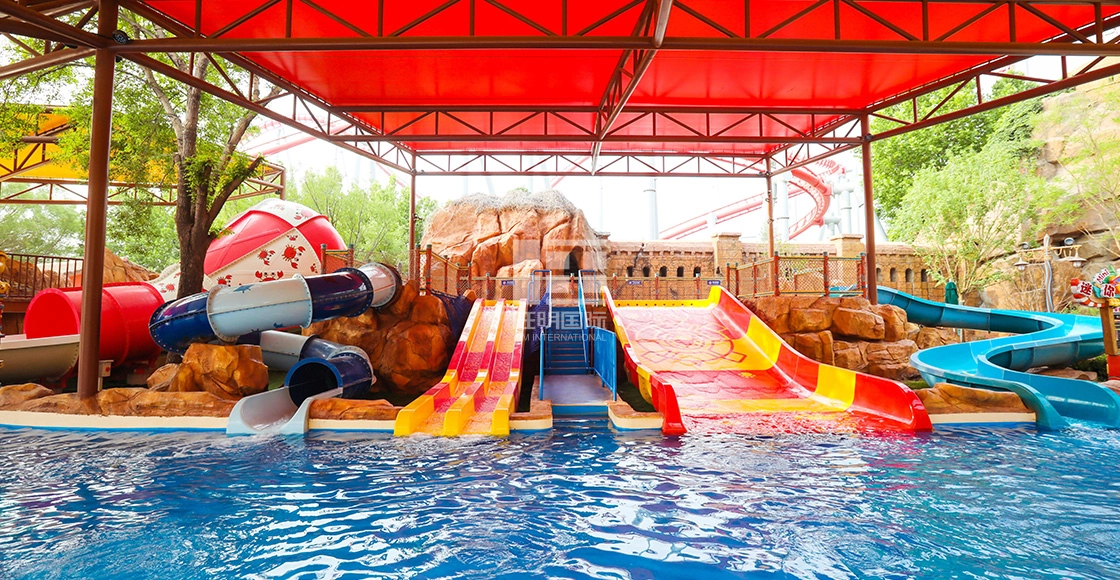
Children Combined Water Slide
Discover endless fun with the Children Combined Water Slide by WM INTERNATIONAL, expertly crafted for thrill-seeking kids. Perfect for summer splashes, this durable slide promises safety and joy. Looking to elevate your play area? Explore our Children's Combined Slide for sale now!
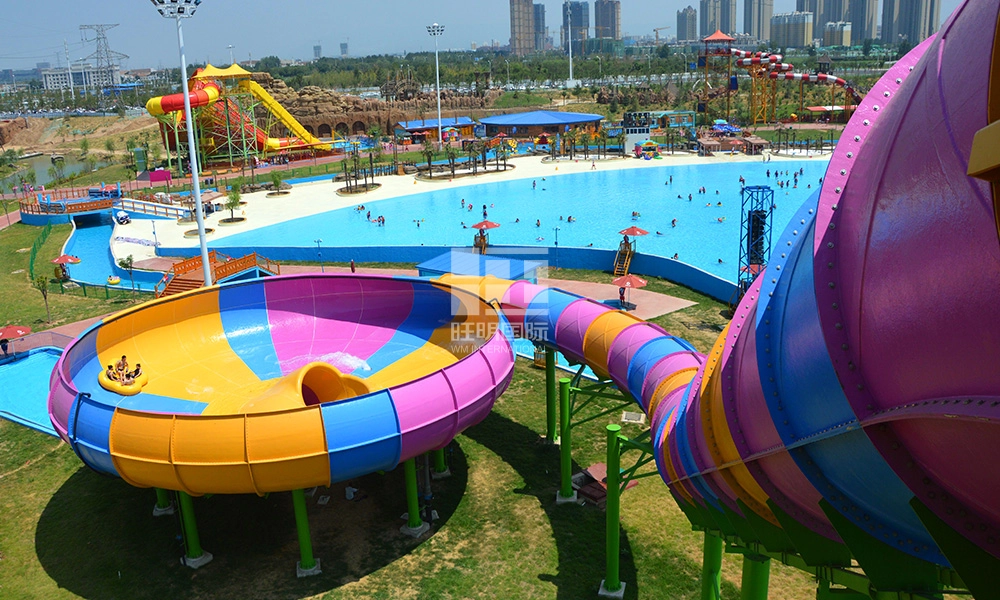
Huge Bowl Water Slide
The Huge Bowl Water Slide has achieved the “World's Best New Water Amusement Equipment” Award; it is the new favorite of the young people and the star project of the water park. The raft carries the tourists slowly entering the closed chute first; then it whirls in the bowl the moment the tourists can see the light. After a short period of time, the raft is suddenly suctioned into a huge black hole until it falls into the water. For a moment, the tourists realize the breathtaking journey has been safely brought to an end.
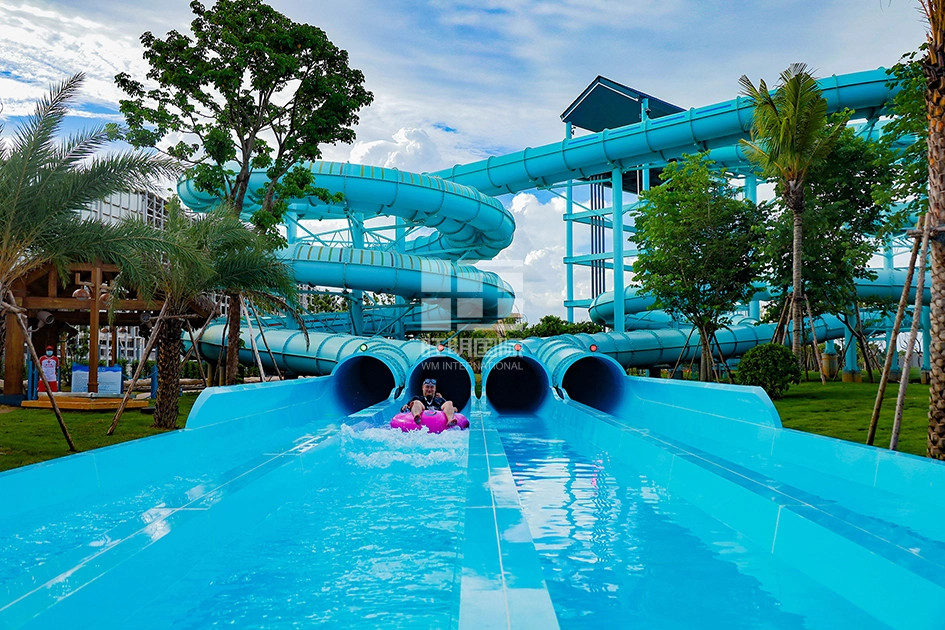
Time Tunnel Water Slide
The biggest feature of the time tunnel slide is that it uses double water slides and double tubes side by side in design and competes along the circular slide path. 8 people can play at the same time, with a large passenger capacity and high return rate, which is very suitable for team and family travel. And the slide is equipped with WangMing International's time tunnel technology, and the interior of the slide presents a beautiful aurora effect, with colorful lights, as if traveling through time and space.
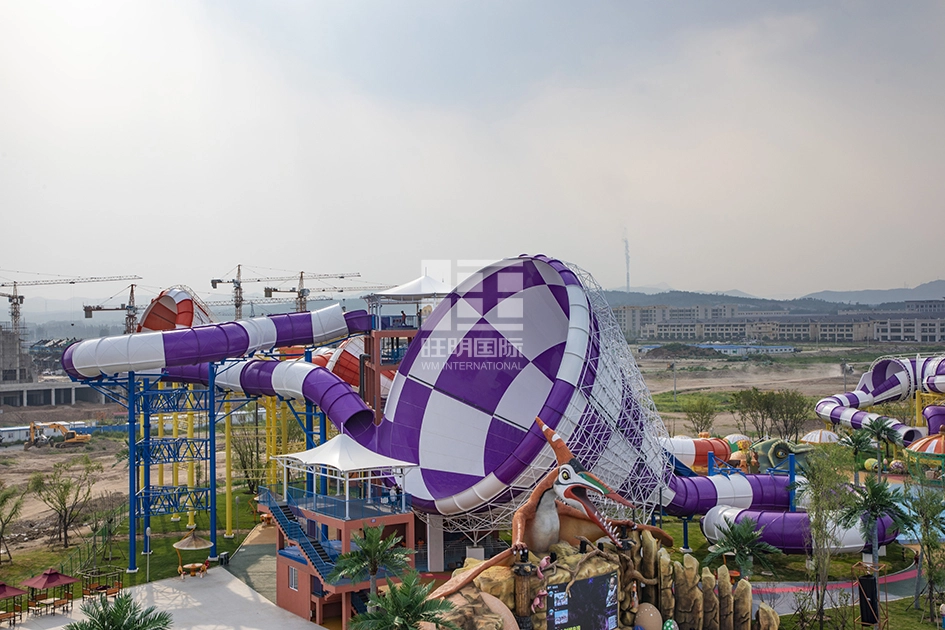
Big Tourbillion Water Slide
The Big Tourbillion water Slide won the "Gold Ticket Award - The Best New Project" of the international tourism industry. With unique modelling, strong irritation and humor, it is deeply loved by the young people; it has always been the popularity star of the water park. The raft carries the tourists as they enter the dark, closed chute slowly from the more than ten-meter-high platform; under the effect of gravity and water flow, it enters the state of rapid falling and then drops into the big Tourbillon; after a few times of whirling, it falls into the water pool. At this moment, the tourists are still in shock.
Get in touch
Have to get customized water park solutions and product quotes.
We will provide you with professional consultation and support.

Relying on leading technology, innovative products and rich industry experience, we tailor personalized solutions for each water park project to ensure a safe and exciting entertainment experience for tourists.
 Scan QR Code
wmwaterslide
wmwaterpark