





Energy-Efficient Best Water Slide for Kids for Parks
- Energy-smart design for children’s aquatic attractions
- Hydraulic efficiency and flow optimization
- Material selection and thermal performance
- Operational controls and scheduling
- Comparing slide systems for low lifecycle costs
- Recirculating vs single-pass water systems
- Pumping and filtration energy trade-offs
- Maintenance regimes that reduce consumption
- Design features that reduce consumption while enhancing safety
- Children-focused ride profiles and low-head losses
- Smart controls and sensor integration
- Compliance and standards for safe, efficient operation
- Why partner with an experienced manufacturer for energy-efficient attractions
- End-to-end project lifecycle management
- Customization for site-specific constraints
- Measurable ROI and case-based forecasting
- WM International: delivering efficient children’s attractions with proven capability
- Frequently Asked Questions
High-impact, low-energy children’s water attractions require a systems approach: combine optimized hydraulics, efficient recirculation pumps, low-resistance surface finishes, variable-speed drives, and automated control schedules to minimize operational electricity and water losses while maintaining safety and throughput—this guide compares common slide systems, quantifies seasonal energy ranges, outlines standards and best practices, and describes procurement criteria for selecting reliable suppliers and manufacturers.
Energy-smart design for children’s aquatic attractions
Hydraulic efficiency and flow optimization
Reducing head loss in flumes and channels is one of the most effective ways to lower power needs. Buyers should prioritize ride geometries that minimize sharp bends, sudden contractions, and excessive slope. Smooth, continuous transitions reduce turbulence, allow smaller pump horsepower, and extend filtration intervals. Specifying large-radius turns and optimized entry/exit manifolds delivers measurable reductions in required flow velocity for the same ride experience, reducing pump energy and wear.
Material selection and thermal performance
Surface materials influence drag, durability, and maintenance cycles. High-gloss polyester or gelcoat finishes on molded fiberglass slides typically provide lower friction coefficients than textured alternatives, reducing required flow at a given ride speed. UV-stable additives and protective topcoats extend service life in high-sun environments and cut repainting frequency—lower lifecycle interventions translate to reduced secondary energy and material consumption.
Operational controls and scheduling
Automated control strategies such as occupancy-based pump modulation, time-of-day scheduling, and event-driven flow adjustment (e.g., reduced circulation during low-attendance periods) can lower energy use by 20–50% compared with constant-speed operation. Integrating variable-frequency drives (VFDs) with occupancy sensors and a central building management system enables tuned energy delivery matched to daily and seasonal demand.
Comparing slide systems for low lifecycle costs
Recirculating vs single-pass water systems
Recirculation systems conserve municipal supply by reusing filtered water, but require energy for pumping and treatment. Single-pass or splash-and-drain solutions avoid continuous pumping but increase water consumption and drainage infrastructure. For parks in water-stressed regions, closed-loop recirculation with efficient filtration typically provides the best resource ROI despite higher upfront mechanical costs.
Pumping and filtration energy trade-offs
Selecting pumps sized to the actual hydraulic demand and using multi-stage filtration with low-pressure-drop media reduces both energy and chemistry use. Pumps with VFD capability and pump station zoning allow staging (only run pumps necessary for current attractions), decreasing total electrical demand and enabling softer starts to lengthen equipment life.
Maintenance regimes that reduce consumption
Preventive maintenance—regular strainer checks, media cleaning, and hydraulic inspections—keeps systems operating at design efficiency. Poorly maintained systems incur higher head loss and therefore increased motor runtime and energy consumption. Contracts should specify KPIs for head-loss thresholds and scheduled maintenance intervals to protect operational efficiency.
| System Type | Typical Pump Power (kW) | Estimated Annual Energy (kWh/year)* | Estimated Energy Cost/year (USD) | Water Recirculation Efficiency | Typical Lifespan (years) |
|---|---|---|---|---|---|
| Traditional constant-flow kids’ flume | 15 | 32,400 | ~$4,860 | High (recirculating but not optimized) | 15–20 |
| VFD-optimized recirculating attraction | ~7.5 (avg) | 16,200 | ~$2,430 | Very high (zoned control) | 18–25 |
| Low-flow interactive splash play | 3 | 6,480 | ~$972 | High (designed for minimal flow) | 10–18 |
*Assumes 12 hours/day operation, 180-day season. Cost estimates use a representative electricity price; see authoritative energy pricing below.
Note: electricity prices vary by market; use local tariffs to model OPEX. For U.S. average retail electricity prices and historical data, consult U.S. Energy Information Administration - EIA.
Design features that reduce consumption while enhancing safety
Children-focused ride profiles and low-head losses
Designing ride profiles specifically for young users achieves two goals: appropriate thrill levels and lower hydraulic demand. Shallower slopes, shorter run lengths, and staged water injection points maintain fun while consuming less energy than long high-flow flumes intended for older riders.
Smart controls and sensor integration
Integrating flow meters, level sensors, and guest-counting systems allows automated adaptation of pump speed and filtration cycles to real-time usage. This reduces energy, chemical dosing, and total water throughput. Energy management frameworks like ISO 50001 provide systematic approaches to continual improvement in energy performance.
Compliance and standards for safe, efficient operation
Park owners should require suppliers to design to recognized safety and performance standards and maintain clear maintenance documentation. Relevant authorities and reference materials include general industry guidance on water parks and safety expectations available at Water park - Wikipedia and standards information from ASTM International. Public-health guidance for recreational water should reference recognized health bodies such as the World Health Organization.
Why partner with an experienced manufacturer for energy-efficient attractions
End-to-end project lifecycle management
Choosing a supplier that delivers planning, engineering, manufacturing, installation, and long-term maintenance simplifies accountability and delivers predictable lifecycle performance. Contracts should include performance guarantees for energy use, water consumption projections, and scheduled maintenance to ensure OPEX targets are met.
Customization for site-specific constraints
Every park has unique constraints: grid capacity, water availability, climate, and visitor profiles. A reliable supplier will produce tailored hydraulic designs, specify appropriate pump sizes, and recommend control strategies aligned to local utilities and regulations. Energy modelling and staged commissioning are essential deliverables in procurement documents.
Measurable ROI and case-based forecasting
Buyers should request case studies with measured pre/post commissioning energy and water data. ROI models must include capex, projected energy cost savings from controls and equipment selection, maintenance schedules, and expected lifespan to support investment decisions and lender confidence.
WM International: delivering efficient children’s attractions with proven capability
With 19 years of industry experience, WM International Waterslide provides a full range of water park planning and design services. From water park planning and design to manufacturing, installation and maintenance, we provide comprehensive service solutions to transform your park vision into vibrant realities. Whether it’s the design and development of new parks or maintaining existing ones, our decades of combined experience as park operators, designers, suppliers, and guests can give you the edge that you need to create world-class amusement, theme, and water park attractions.
WM International owns a 100000 m² modern production base, which is the largest in the industry. We mainly produce various water slides for water parks. Each project is a reflection of our professional capabilities, showing how we can provide tailor-made solutions based on different customer needs and site characteristics. Our engineering team delivers optimized hydraulic layouts, selects low-resistance materials, and integrates variable-speed pumping and filtration systems to minimize operational energy and water demand.
Our product range includes turnkey solutions for water park planning and design, water park construction, engineered water slides, interactive water play attractions, and wave-making equipment, all supported by post-installation maintenance contracts and operator training. Clients receive performance specifications, energy and water consumption forecasts, and preventative maintenance schedules as standard deliverables—tools that help procurement teams and investors make informed, risk-mitigated decisions.
For enquiries about tailored, energy-conscious children’s attractions, contact WM International at trading@wmwaterslide.com or visit https://www.wmwaterslide.com for product details and technical documentation.
Contact WM International to discuss site-specific energy models, lifecycle costing, and delivery timelines.
Frequently Asked Questions
What factors most impact the energy consumption of children’s water attractions?
Hydraulic design (head loss), pump sizing and control (VFD vs constant speed), filtration pressure drop, surface friction of slide materials, and operational scheduling are the primary drivers of energy use. Optimizing geometry, using variable-speed drives, and implementing occupancy-based control strategies produce the largest reductions in electricity demand.
How should buyers compare lifecycle costs between slide systems?
Compare total cost of ownership including capex (ride fabrication, pumps, filtration), estimated annual energy and water costs (based on local tariffs), maintenance intervals, and expected lifespan. Require suppliers to provide modeled OPEX and measured case-study data to validate projections.
Are there standards and certifications to check for safety and performance?
Yes. Request compliance with applicable safety standards and industry guidance; reference materials from ASTM International and public-health guidance from organizations such as the World Health Organization can inform specifications. Suppliers should provide material certifications, structural calculations, and test reports.
What design choices reduce water usage without compromising guest experience?
Closed-loop recirculation with efficient filtration, low-flow ride profiles, timed water delivery, and interactive features that use intermittent jets rather than continuous flows all reduce water throughput while maintaining engaging experiences for children.
How can WM International support a project to ensure energy-efficient operation?
WM International provides end-to-end services from planning and hydraulic design to manufacturing, installation and maintenance; deliverables include optimized hydraulic layouts, equipment selection (including VFD pumps), energy and water consumption forecasts, and maintenance schedules to secure predictable lifecycle performance.
Recommended
Top Wave Pool Manufacturers and Suppliers
The outdoor water park equipment Cost Guide
Safety tips for riding adult water slides
How to start the water playground business ?
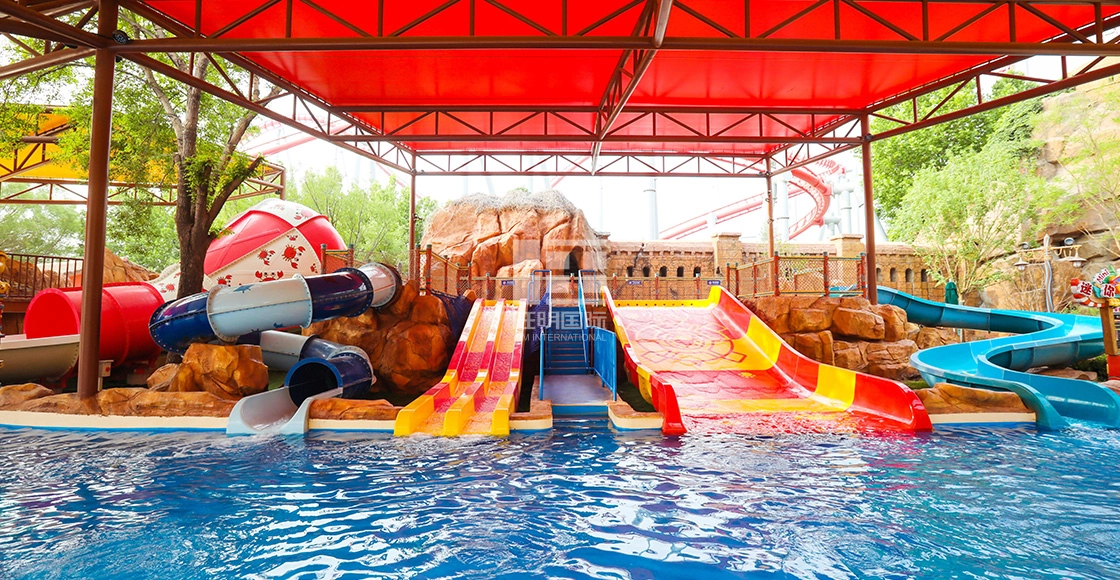
Children Combined Water Slide
Discover endless fun with the Children Combined Water Slide by WM INTERNATIONAL, expertly crafted for thrill-seeking kids. Perfect for summer splashes, this durable slide promises safety and joy. Looking to elevate your play area? Explore our Children's Combined Slide for sale now!
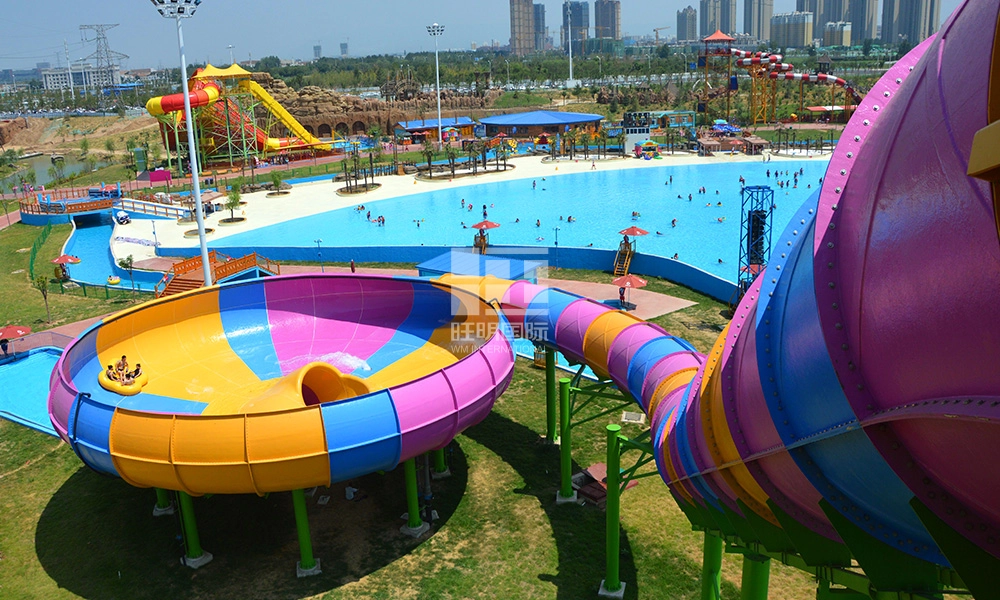
Huge Bowl Water Slide
The Huge Bowl Water Slide has achieved the “World's Best New Water Amusement Equipment” Award; it is the new favorite of the young people and the star project of the water park. The raft carries the tourists slowly entering the closed chute first; then it whirls in the bowl the moment the tourists can see the light. After a short period of time, the raft is suddenly suctioned into a huge black hole until it falls into the water. For a moment, the tourists realize the breathtaking journey has been safely brought to an end.
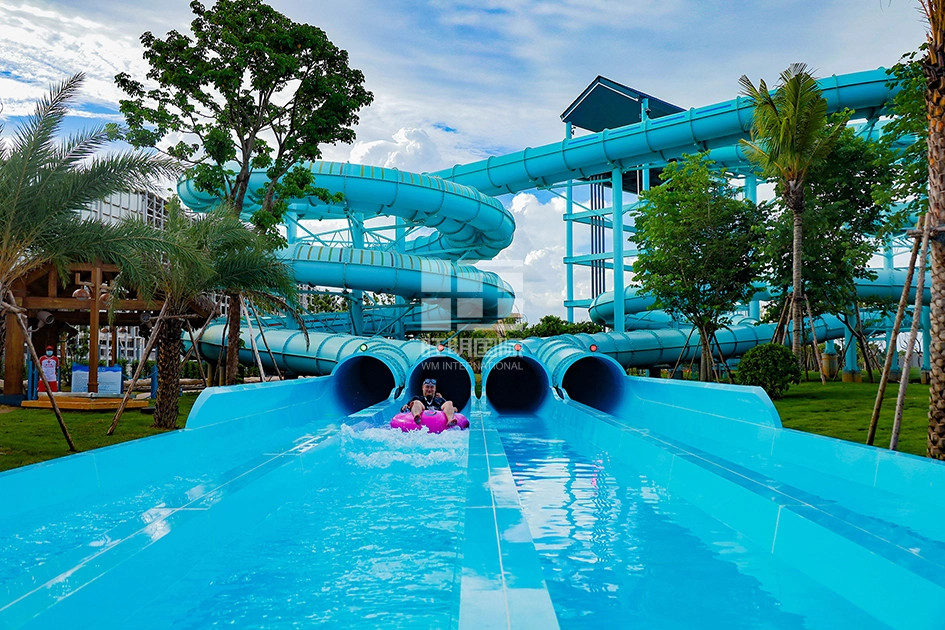
Time Tunnel Water Slide
The biggest feature of the time tunnel slide is that it uses double water slides and double tubes side by side in design and competes along the circular slide path. 8 people can play at the same time, with a large passenger capacity and high return rate, which is very suitable for team and family travel. And the slide is equipped with WangMing International's time tunnel technology, and the interior of the slide presents a beautiful aurora effect, with colorful lights, as if traveling through time and space.
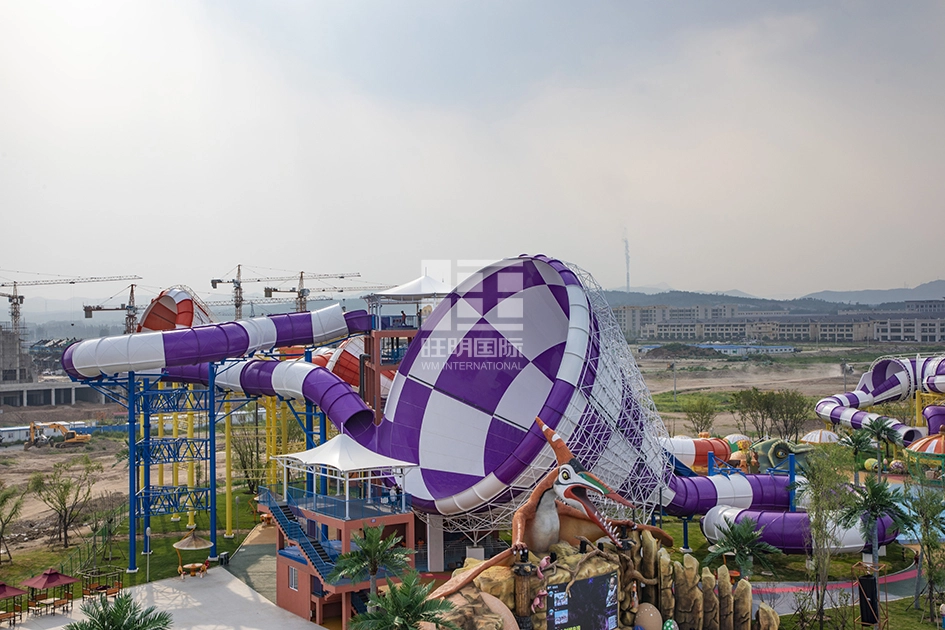
Big Tourbillion Water Slide
The Big Tourbillion water Slide won the "Gold Ticket Award - The Best New Project" of the international tourism industry. With unique modelling, strong irritation and humor, it is deeply loved by the young people; it has always been the popularity star of the water park. The raft carries the tourists as they enter the dark, closed chute slowly from the more than ten-meter-high platform; under the effect of gravity and water flow, it enters the state of rapid falling and then drops into the big Tourbillon; after a few times of whirling, it falls into the water pool. At this moment, the tourists are still in shock.
Get in touch
Have to get customized water park solutions and product quotes.
We will provide you with professional consultation and support.

Relying on leading technology, innovative products and rich industry experience, we tailor personalized solutions for each water park project to ensure a safe and exciting entertainment experience for tourists.
 Scan QR Code
wmwaterslide
wmwaterpark