


Custom Water Slides: OEM Design, Branding, and Park-Specific Features
- Planning Bespoke Aquatic Slides Around Park Requirements
- Start with the operating brief, not the shape
- Match the ride system to the site and guest mix
- OEM Design, Brand Identity, and Technical Decisions
- Turn brand concepts into durable ride details
- Review engineering interfaces and quality evidence
- From Supplier Selection to Long-Term Attraction Performance
- Evaluate the complete project scope
- Connect the attraction to the wider water park plan
- Frequently Asked Questions
Custom water slides combine ride engineering, brand expression, site planning, and operational requirements in a single attraction package. For park owners and developers, a successful OEM project begins with a clear brief covering guest profile, throughput, available footprint, climate, water systems, theming, applicable standards, and maintenance access. A qualified manufacturer should translate those requirements into a coordinated design, review structural and operational risks, document materials and quality controls, and define responsibilities for fabrication, transport, installation, testing, and handover. The right solution is not simply a distinctive flume: it is a ride that fits the park, supports a dependable operating plan, and can be maintained throughout its service life.
Planning Bespoke Aquatic Slides Around Park Requirements
Start with the operating brief, not the shape
Before selecting a slide configuration, project teams should define the attraction’s business and operational purpose. A high-capacity family raft ride, a compact children’s slide, and a headline high-thrill attraction place different demands on the site, guest circulation, staffing, and water systems. The brief should identify intended rider ages and abilities, expected peak demand, dispatch method, ride duration, landing or runout arrangement, and how the attraction connects to queues, changing facilities, and other amenities. These decisions shape both the ride concept and the infrastructure required to operate it.
Site information is equally important. Suppliers need reliable surveys and design inputs, including tower location, elevations, available structural supports, access routes for large components, utilities, prevailing weather conditions, and interfaces with existing pools or buildings. Early coordination can expose constraints that would otherwise trigger redesign during fabrication or construction. For an existing park, the brief should also cover operating hours, shutdown windows, construction access, and the need to keep adjacent attractions open.
Match the ride system to the site and guest mix
Slide type affects more than appearance. Body slides, tube slides, family raft rides, mat racers, and multi-lane attractions have different footprints, loading patterns, rider equipment needs, and queue implications. A compact urban park may prioritize vertical circulation and a small ground footprint, while a destination resort may have more space to develop a longer themed route. Designers should assess ride capacity as a system-level question: the slide, dispatch point, queue, stairs or lift, landing area, and guest circulation all influence the experience and operational flow.
Park-specific planning should also consider the local climate and use pattern. Sun exposure, wind, seasonal operation, water temperature, and the availability of trained maintenance staff can affect material selection, inspection planning, and operating procedures. The final concept should be reviewed against applicable local regulations and recognized technical standards. For machinery risk assessment principles, project teams can consult ISO 12100. Water-slide-specific design, manufacture, operation, and maintenance considerations are addressed by ASTM F2374; buyers should confirm the current edition and its applicability with their project professionals and local authorities.
OEM Design, Brand Identity, and Technical Decisions
Turn brand concepts into durable ride details
OEM design gives park owners the opportunity to develop a recognizable attraction rather than select only from a standard catalog. Branding can be expressed through the ride’s silhouette, color palette, themed entrance, tower architecture, signage, lighting, and story sequence. A well-integrated concept connects these elements to the wider park identity while preserving clear wayfinding and safe guest movement. The design brief should distinguish between structural elements, replaceable decorative features, printed graphics, and lighting components, because they have different maintenance and replacement requirements.
Brand owners should request material and finish information for color consistency, UV exposure, cleaning methods, and repairability. A striking color scheme has limited long-term value if replacement sections cannot be matched or if routine cleaning damages the finish. Procurement documents should identify approved colors and surface treatments, explain how repairs will be handled, and clarify whether themed elements can be removed for inspection. For multi-site operators, documenting the approved design language and critical dimensions can help maintain consistency across future installations.
Review engineering interfaces and quality evidence
A custom ride is a coordinated system, not an isolated fiberglass product. The design review should address flume geometry, support structures, foundations, connections, water delivery, pumps, control interfaces, rider restraints where applicable, and the receiving pool or runout. Responsibility for each interface should be explicit. For example, project documents should state who supplies structural calculations, who verifies foundation loads, who integrates controls, and who approves changes after design freeze. This clarity reduces the risk of gaps between the ride manufacturer, civil contractor, equipment vendors, and park operator.
Buyers should request a quality plan that explains design reviews, material traceability, inspection points, dimensional checks, surface-finish acceptance, nonconformance handling, and final documentation. A quality management framework such as ISO 9001 can provide useful context, but a management-system certificate is not a substitute for project-specific engineering evidence or regulatory approval. The procurement team should verify the scope and validity of any certificates directly and ask how factory inspections, site acceptance, commissioning, and operator training will be documented.
| Decision area | Standard catalog solution | Custom OEM solution | Buyer review point |
|---|---|---|---|
| Configuration | Uses an established product configuration, subject to available options. | Can be developed around project-specific route, footprint, and attraction goals. | Confirm which dimensions and interfaces can be changed without affecting approvals or schedule. |
| Brand expression | Usually relies on selectable colors, signage, or limited decorative options. | Can coordinate ride form, theming, entrance, and visual identity as a design package. | Separate durable ride surfaces from replaceable graphics and themed accessories. |
| Site coordination | May require the project to accommodate the product’s standard geometry. | Can be planned around documented site constraints, subject to engineering feasibility. | Provide accurate surveys, access dimensions, utility information, and structural interfaces. |
| Procurement and delivery | Scope may be more defined when the selected product matches the site and specification. | Requires coordinated design reviews and clear approval milestones before production. | Compare full scope, exclusions, approvals, installation duties, and commissioning requirements. |
| Lifecycle planning | Maintenance information may follow the supplier’s standard product documentation. | Project-specific parts and finishes may require defined documentation and spare-parts planning. | Confirm inspection access, repair methods, replacement-part availability, and training. |
The table describes typical procurement considerations, not guaranteed outcomes. A standard product may be the best choice when it fits the site and operating brief, while a custom configuration may be justified when the park needs a distinct guest experience or must work within unusual constraints. The comparison should be based on the complete delivered scope rather than the ride shell alone.
From Supplier Selection to Long-Term Attraction Performance
Evaluate the complete project scope
When evaluating water slide ride suppliers for parks, buyers should compare technical fit, execution responsibilities, evidence, and after-sales support rather than relying on concept images or headline pricing. A bid should identify the design deliverables, engineering assumptions, materials, fabrication scope, shipping method, installation support, commissioning tasks, training, warranties, exclusions, and expected documentation. It should also explain how design changes are approved and costed. These details help procurement teams distinguish a complete project proposal from a partial equipment quotation.
Reference checks should focus on projects that resemble the proposed work in scale, ride type, climate, operating intensity, or installation conditions. Ask operators about communication during design, delivery coordination, documentation quality, staff training, and the process for resolving defects. Where visits are practical, inspect the attraction and discuss how routine maintenance is performed. A supplier’s past work can inform due diligence, but each project still requires its own review of engineering, permits, and site conditions.
Connect the attraction to the wider water park plan
A slide investment performs best when it is considered as part of the full guest and facility experience. Water park design should coordinate attractions with circulation, queues, food and beverage, shade, accessibility, lifeguard sightlines, and service routes. Water park construction planning should align equipment delivery with foundations, utilities, pool works, and the overall critical path. Water play attractions can broaden the age range served by a destination, while wave making equipment may contribute to a different style of shared aquatic experience. These product categories have distinct engineering and operating requirements, so their interfaces should be defined rather than assumed.
Our product scope is relevant to project teams assessing water park design, water park construction, Water Slides, Water Play Attractions, and Wave Making Equipment together. That range can help buyers frame coordinated discussions about attraction mix and project interfaces; however, the appropriate supplier responsibilities, technical capabilities, certifications, and project references should be verified for the specific procurement. A clear request for information can ask for design scope, manufacturing location, quality controls, relevant project examples, installation arrangements, spare-parts support, and the documentation delivered at handover. Where a company profile or project-specific evidence has not been provided, buyers should treat those items as due-diligence questions rather than assumed credentials.
Lifecycle value depends on realistic operating and maintenance planning. Operators should obtain inspection schedules, cleaning guidance, repair procedures, parts lists, recommended stock levels, and escalation contacts before opening. Maintenance access should be considered during design, especially around supports, joints, water distribution components, and areas that require periodic inspection. Staff training should cover operating controls, daily checks, shutdown triggers, incident reporting, and the supplier’s recommended response to unusual wear or damage. A well-documented handover supports consistent operations and helps preserve the attraction’s appearance and availability.
Commercial evaluation should include the total project cost rather than equipment price alone. Buyers should consider engineering and approval expenses, foundations, utilities, transport, installation, commissioning, staff training, spare parts, routine maintenance, and potential downtime. Throughput assumptions should be checked against the actual dispatch process and expected guest behavior rather than treated as a guaranteed attendance figure. A transparent model allows decision-makers to compare options on a consistent basis and to identify which costs are included, provisional, or dependent on local contractors.
Custom water slide procurement is ultimately a cross-functional decision involving development, operations, engineering, safety, brand, and finance teams. When those groups agree on measurable requirements before design approval, manufacturers can respond with a more complete and assessable proposal. The strongest project documentation connects the attraction concept to verified site information, applicable requirements, manufacturing evidence, installation responsibilities, and post-opening support.
Contact our team to discuss your project requirements or explore our water park and attraction product range.
Frequently Asked Questions
What information should a park provide when requesting a custom water slide proposal?
Provide the attraction’s intended guest profile, expected peak demand, available footprint, site survey and elevations, structural and utility information, access routes, climate and operating pattern, brand requirements, applicable local rules, and the desired scope for design, fabrication, installation, commissioning, and training.
How should buyers compare a custom OEM slide with a standard catalog model?
Compare how each option fits the site, operating brief, brand goals, project schedule, and lifecycle needs. Review the complete delivered scope, design changes, approvals, installation responsibilities, commissioning, maintenance access, repair methods, and spare-parts planning rather than comparing equipment price alone.
Which standards should be considered for water slide projects?
Project teams should identify the standards and regulations applicable in the installation jurisdiction. ISO 12100 provides machinery risk-assessment principles, and ASTM F2374 addresses water-slide-system design, manufacture, operation, and maintenance. Confirm the current editions, applicability, and local approval requirements with qualified project professionals and authorities.
What quality documents should a water slide supplier provide?
Request project-specific design and engineering deliverables, material and inspection records, quality-plan information, nonconformance procedures, installation and commissioning documentation, operating and maintenance instructions, parts lists, and training records. Verify any certificates directly and confirm their scope; a quality-management certificate does not replace project-specific technical evidence or regulatory approval.
What should be included in a water slide supplier’s quotation?
The quotation should define design deliverables, assumptions, materials, fabrication, shipping, installation support, commissioning, training, warranties, exclusions, approval milestones, change control, and documentation. Buyers should also clarify responsibilities for foundations, utilities, structural interfaces, permits, and local contractors.
How can operators plan for long-term maintenance of a custom slide?
Before opening, obtain inspection schedules, cleaning and repair guidance, spare-parts information, maintenance access details, staff training, and escalation contacts. Include routine checks, shutdown triggers, incident reporting, and replacement planning in the operating procedures.
Recommended

Water Spraying Morning Glory: High-Impact Funnel Attraction for Water Parks
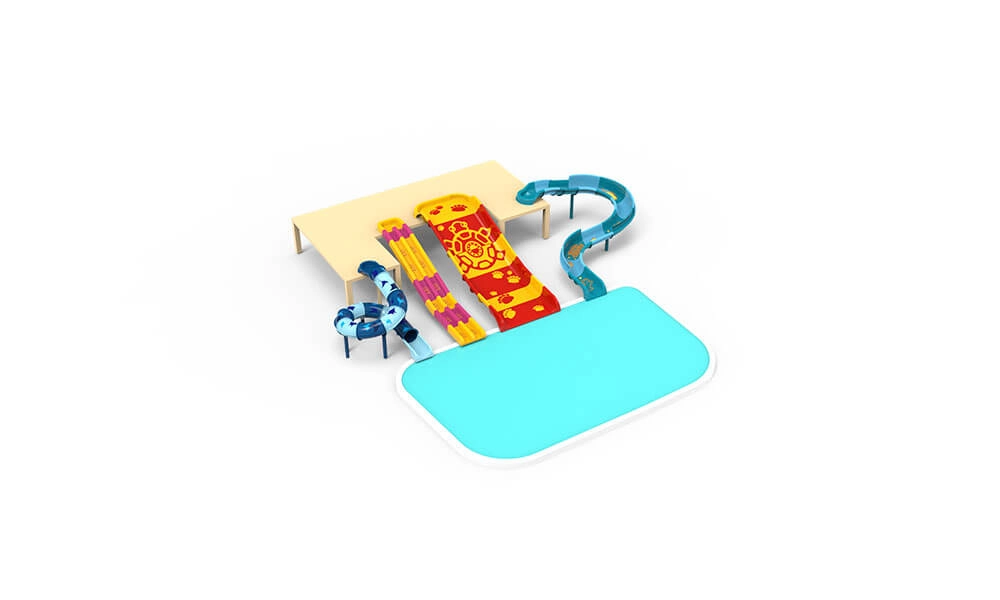
Children Combined Water Slide: Specs for Bulk Buyers
Maintaining Water Slides You Buy: Cleaning and Repairs
Why choose WM INTERNATIONAL as your water park slide supplier in 2026
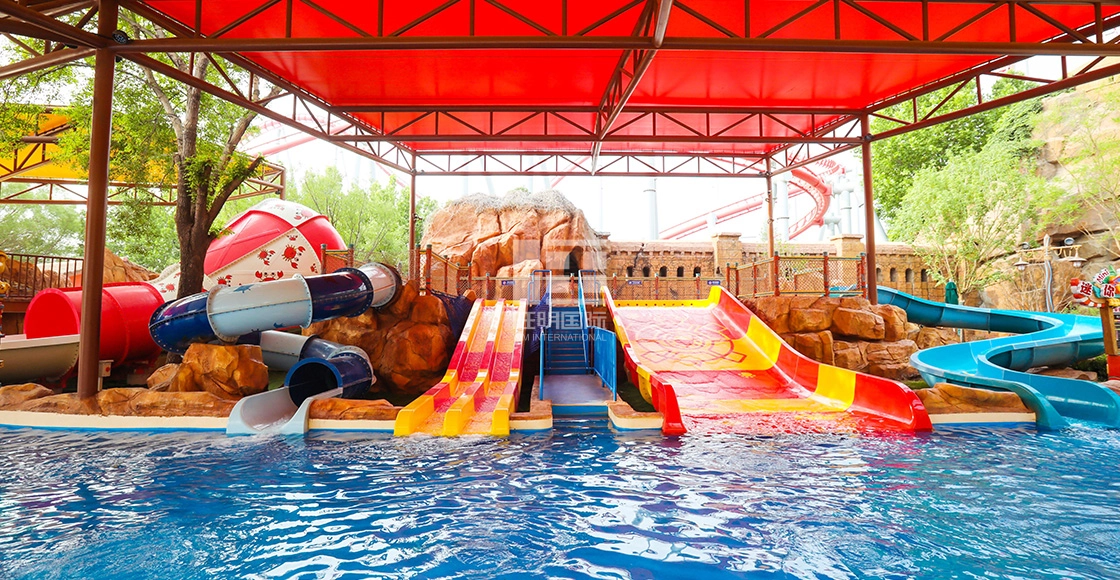
Children Combined Water Slide
Discover endless fun with the Children Combined Water Slide by WM INTERNATIONAL, expertly crafted for thrill-seeking kids. Perfect for summer splashes, this durable slide promises safety and joy. Looking to elevate your play area? Explore our Children's Combined Slide for sale now!
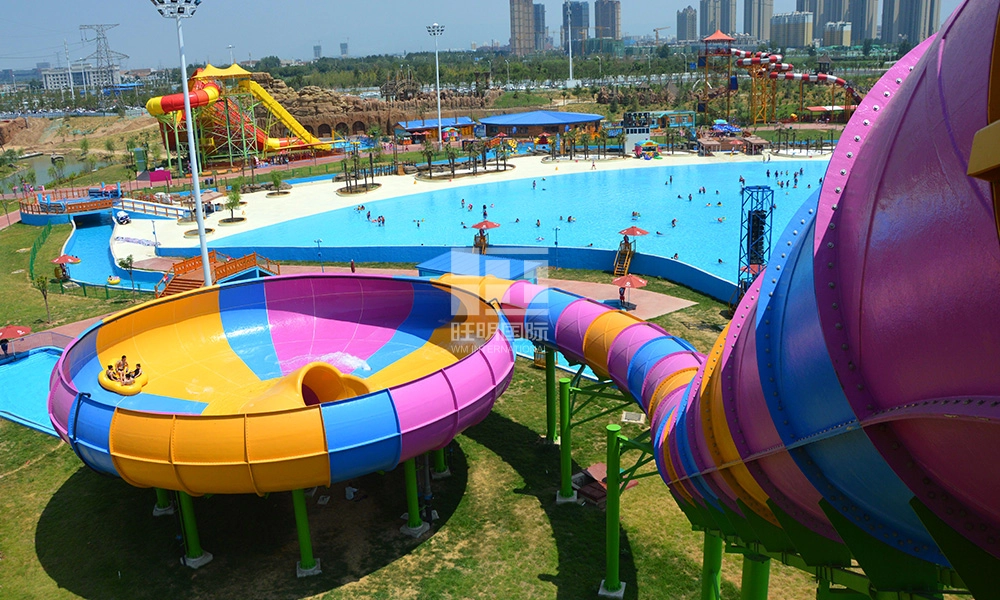
Huge Bowl Water Slide
The Huge Bowl Water Slide has achieved the “World's Best New Water Amusement Equipment” Award; it is the new favorite of the young people and the star project of the water park. The raft carries the tourists slowly entering the closed chute first; then it whirls in the bowl the moment the tourists can see the light. After a short period of time, the raft is suddenly suctioned into a huge black hole until it falls into the water. For a moment, the tourists realize the breathtaking journey has been safely brought to an end.
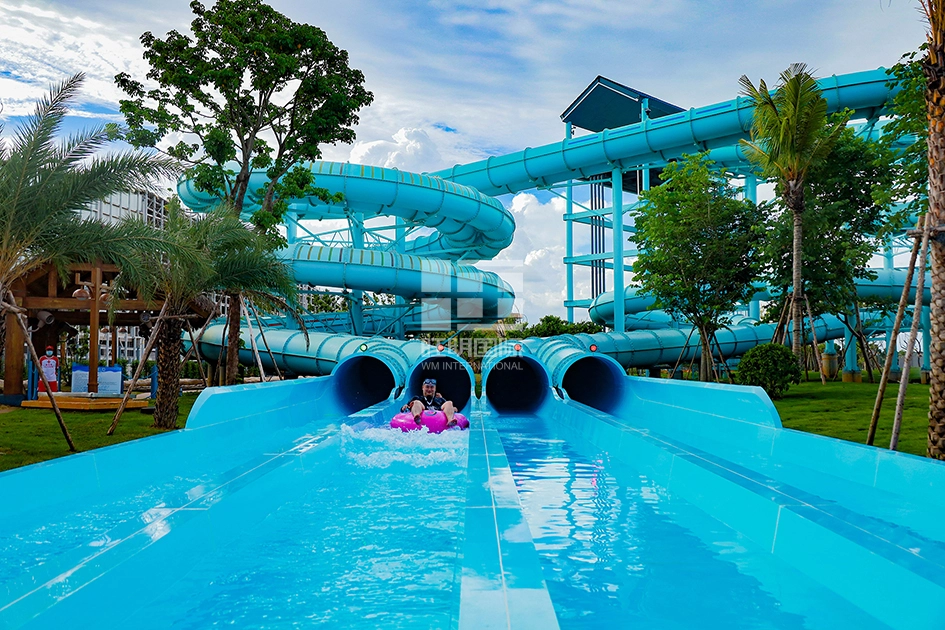
Time Tunnel Water Slide
The biggest feature of the time tunnel slide is that it uses double water slides and double tubes side by side in design and competes along the circular slide path. 8 people can play at the same time, with a large passenger capacity and high return rate, which is very suitable for team and family travel. And the slide is equipped with WangMing International's time tunnel technology, and the interior of the slide presents a beautiful aurora effect, with colorful lights, as if traveling through time and space.
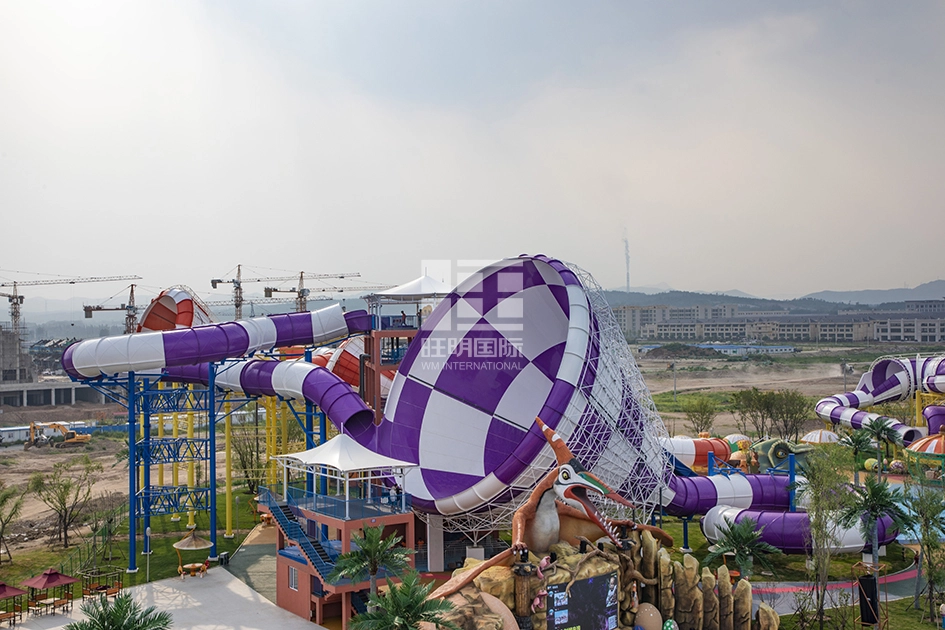
Big Tourbillion Water Slide
The Big Tourbillion water Slide won the "Gold Ticket Award - The Best New Project" of the international tourism industry. With unique modelling, strong irritation and humor, it is deeply loved by the young people; it has always been the popularity star of the water park. The raft carries the tourists as they enter the dark, closed chute slowly from the more than ten-meter-high platform; under the effect of gravity and water flow, it enters the state of rapid falling and then drops into the big Tourbillon; after a few times of whirling, it falls into the water pool. At this moment, the tourists are still in shock.
Get in touch
Have to get customized water park solutions and product quotes.
We will provide you with professional consultation and support.

Relying on leading technology, innovative products and rich industry experience, we tailor personalized solutions for each water park project to ensure a safe and exciting entertainment experience for tourists.
 Scan QR Code
wmwaterslide
wmwaterpark