


Cost Breakdown: Installing a Family Water Slide
- Capital Allocation for Small-Scale Aquatic Attractions
- Manufacturing materials and fabrication
- Civil engineering, foundation and site preparation
- Hydraulic systems and water handling
- Line-item Cost Drivers and Procurement Pitfalls
- Regulatory compliance, testing and certifications
- Logistics, customs and freight
- Installation labor, coordination and quality assurance
- Lifecycle Costs: Operation, Maintenance and Safety
- Energy, water treatment and operational consumption
- Routine inspections, spare parts and scheduled maintenance
- Insurance, staffing and training
- Procurement Models Compared: Multi-Vendor vs. Turnkey Delivery
- Risk distribution and coordination overhead
- Cost predictability and capital control
- Value engineering and lifecycle optimization
- How WM International Reduces Total Cost of Ownership
- Integrated design-to-install delivery for capital efficiency
- Manufacturing scale, quality control and factory testing
- Tailor-made solutions and local adaptability
- Service, spare parts and lifecycle support
- Financial Modeling & Decision Criteria for Buyers
- Preparing an accurate capital estimate
- Evaluating payback and ROI
- Procurement checklists for risk mitigation
- Frequently Asked Questions
- How much does a typical small-scale sliding attraction cost to install?
- What is the usual project timeline from design to first guests?
- Which standards and certifications should be required from suppliers?
- What ongoing maintenance should be budgeted for an attraction?
- Is it better to buy from multiple specialty vendors or a single turnkey provider?
High-performance procurement for a family-oriented aquatic slide requires a granular cost model covering manufacturing, civil works, hydraulics, logistics, installation, and lifecycle operations; this summary synthesizes capital and operating line items, compliance touchpoints (standards, permitting, and safety), decision levers between multi-supplier procurement and turnkey delivery, and measurable strategies to reduce total cost of ownership while maximizing guest throughput and uptime.
Capital Allocation for Small-Scale Aquatic Attractions
Manufacturing materials and fabrication
Primary fabrication costs stem from the slide structure and finishing. Fiberglass-reinforced polymer (FRP) moulded sections are the industry norm for commercial ride surfaces due to high strength-to-weight ratios, corrosion resistance, and lower lifecycle maintenance compared with painted steel or cast concrete. Material selection affects both upfront price and long-term maintenance budgets: FRP typically increases manufacturing content but reduces corrosion control and repainting cycles, improving lifecycle economics for operators.
Civil engineering, foundation and site preparation
Subsurface works and foundations are often underestimated. Proper footings, piling or slab works depend on soil conditions, load cases from slide towers, and regional seismic or wind loading criteria. Geotechnical studies and tailored foundation design typically represent 8–20% of the project capital spend for small-to-mid attractions and are critical to avoid costly retrofits or structural replacement during operations.
Hydraulic systems and water handling
Recirculation pumps, filtration, chemical dosing, and piping networks are a discrete budget-driven domain. A robust pump skid and filtration bank sized to design flow rates ensure ride performance and water clarity; variable frequency drives and automated controls add upfront cost but typically yield 20–40% energy savings and reduced downtime compared with fixed-speed systems. Specifying appropriate headroom and redundancy in mechanical rooms improves reliability and risk profile.
Line-item Cost Drivers and Procurement Pitfalls
Regulatory compliance, testing and certifications
Buyers must verify compliance against recognized standards and local codes. Relevant industry authorities include Wikipedia: Water slide for high-level context, the IAAPA for operational guidance and advocacy, and the ASTM listing for ride standards at ASTM F2376. Additionally, national pool and public safety recommendations (e.g., CPSC) influence lifeguard staffing, signage, and deck surface selections. Failure to align with these frameworks can delay opening and increase insurance High Qualitys.
Logistics, customs and freight
Transportation expenses for prefabricated slide modules and tower systems vary with origin, weight, and dimensional cargo. Consolidated shipments from a single manufacturer greatly reduce transloading and handling risk; oversized modules require flat-rack or RORO solutions and can escalate freight by 25–60% compared with standard container loads. Early coordination of customs documentation and HS codes also reduces demurrage exposure.
Installation labor, coordination and quality assurance
Assembly requires certified installers, craneage, and staged commissioning windows. Labor rates, site access constraints, and weather seasonality drive installation schedules and cost. A detailed installation method statement coupled with third-party inspection checkpoints reduces rework risks. Warranty terms should explicitly cover installation-related defects and tie-back to manufacturer QA records.
Lifecycle Costs: Operation, Maintenance and Safety
Energy, water treatment and operational consumption
Operating expenses include water heating (if required), pump electricity, bather load-dependent recirculation, and chemical treatment. Energy-efficient pump systems and proper automation reduce utility spend; lifecycle modeling should project OPEX as a percentage of revenue—typical small-scale attractions allocate 6–12% of operating revenue to utilities and treatment combined.
Routine inspections, spare parts and scheduled maintenance
Planned preventive maintenance minimizes downtime. Operators should budget for spare slide modules, joint seals, pump seals, bearings, and control system spares—common parts that wear on high-cycle attractions. A tailored spare-parts pack from the manufacturer that aligns with the ride’s BOM reduces mean time to repair and improves availability metrics.
Insurance, staffing and training
Liability High Qualitys reflect ride classification, guest throughput, and documented safety management systems. Investing in certified operator and lifeguard training programs and documented standard operating procedures materially lowers risk. Buyers should request actuarial or broker estimates during budgeting to incorporate insurance loading into early financial models.
Procurement Models Compared: Multi-Vendor vs. Turnkey Delivery
Risk distribution and coordination overhead
Traditional multi-vendor procurement splits scope across structural contractors, MEP specialists, and equipment vendors. This model can reduce unit costs but increases coordination overhead and latent interface risks. Turnkey suppliers consolidate responsibility, reducing single-point coordination effort and offering a single warranty and commissioning sequence.
Cost predictability and capital control
Turnkey contracting typically provides higher cost certainty and schedule control, at the cost of a margin High Quality. For investors prioritizing predictable ROI and rapid time-to-market, a single-source solution often reduces change orders and contingency drawdowns during handover.
Value engineering and lifecycle optimization
Early-stage integration between design, manufacturing, and operations enables value engineering that reduces installed costs and future OPEX. For example, a manufacturer-led program can optimize slide routing and pump sizing to lower pipe runs and balance hydraulic head, producing material savings through fewer fittings and lower electrical demand.
| Procurement Dimension | Traditional Multi-Vendor | Turnkey Single-Vendor |
|---|---|---|
| Lead Time | Variable; dependent on multiple schedules | Consolidated schedule; single critical path |
| Coordination Burden | High; requires owner project management | Low; vendor manages interfaces |
| Cost Predictability | Lower; frequent change orders | Higher; fixed-price options available |
| Warranty & Liability | Fragmented; multiple warranties | Single warranty; streamlined claims |
| Customization & Local Sourcing | High flexibility; complex sourcing | High customization with integrated supply chain |
How WM International Reduces Total Cost of Ownership
Integrated design-to-install delivery for capital efficiency
With 19 years of industry experience, WM International Waterslide provides a full range of water park planning and design services. From water park planning and design to manufacturing, installation and maintenance, we provide comprehensive service solutions to transform your park vision into vibrant realities. Early involvement in schematic design tightens cost estimates, aligns site logistics, and reduces change orders during construction.
Manufacturing scale, quality control and factory testing
WM International owns a 100000 m² modern production base, the largest in the industry, enabling economies of scale that reduce unit fabrication costs and shorten lead times. Our factory QA processes include controlled lamination, dimensional checks, and witness testing that reduce acceptance defects and expedite site commissioning. A factory-tested pump skid and preassembled modules lower onsite cranage hours and diminish installation risk.
Tailor-made solutions and local adaptability
Each project is a reflection of our professional capabilities, showing how we can provide tailor-made solutions based on different customer needs and site characteristics. Whether specifying water-efficient hydraulic systems, modular slide runs for constrained footprints, or themed finishes that meet brand standards, our integrated teams cover Water park design, Water park construction, Water Slides, Water Play Attractions, and Wave Making Equipment to meet commercial goals.
Service, spare parts and lifecycle support
We provide post-install maintenance packages, OEM spare kits, and operator training that lower mean time to repair and preserve guest experience. Proactive maintenance contracts with scheduled inspection intervals translate into lower long-term maintenance budgets and improved asset valuation for resale or expansion.
Financial Modeling & Decision Criteria for Buyers
Preparing an accurate capital estimate
Buyers should compile a cost model with separate line items for: design and engineering (3–8%), manufacturing and materials (35–50%), site civil works (8–20%), mechanical systems (10–20%), installation and commissioning (10–20%), logistics (5–15%), permits and testing (1–5%), and contingency (5–10%). Sensitivity analysis around labor rates, shipping surcharges, and exchange rates will highlight risk exposure.
Evaluating payback and ROI
Revenue uplift from a new attraction depends on increased attendance, incremental per-capita spend, and seasonality. Operators must model conservative attendance scenarios and include projected OPEX increases. A reliable vendor-provided lifecycle cost estimate allows accurate capex-to-OPEX tradeoffs to be modeled for payback analysis.
Procurement checklists for risk mitigation
Essential procurement documents include detailed scope-of-supply, installation method statements, test witness plans, spare-part lists, factory acceptance test (FAT) results, and a detailed warranty schedule. Requesting these documents during RFP evaluation reduces ambiguity and facilitates apples-to-apples vendor comparison.
Frequently Asked Questions
How much does a typical small-scale sliding attraction cost to install?
Installed cost varies by region and scope; a robust budget model should allocate separate line items for manufacturing, civil foundations, hydraulic systems, shipping, installation, and commissioning—expect the largest single items to be equipment fabrication and civil works, with combined manufacturing and mechanical often representing 45–70% of total capital cost.
What is the usual project timeline from design to first guests?
Typical project delivery for a compact family-oriented attraction is 4–9 months from final design approval to commissioning, subject to lead times for fabrication, permitting durations, and local construction schedules; turnkey delivery models tend to compress handover time.
Which standards and certifications should be required from suppliers?
Require compliance documentation aligned with recognized frameworks such as ASTM F2376 for ride safety, documented QA systems aligned with ISO 9001, and operator guidance from trade bodies like IAAPA; additionally, local building codes and pool regulations from national authorities (for example, CPSC in the U.S.) should be satisfied before commissioning.
What ongoing maintenance should be budgeted for an attraction?
Budget for routine inspections, water treatment chemicals, pump and bearing replacements, and occasional surface refurbishments; proactive maintenance contracts typically reduce emergency repair costs and should be costed as a recurring annual line item in lifecycle models.
Is it better to buy from multiple specialty vendors or a single turnkey provider?
For cost-sensitive buyers with strong in-house project management capability, multi-vendor procurement can lower unit costs but increases interface risk. For buyers seeking faster time-to-market and single-point accountability, a turnkey supplier with integrated design, manufacture, and install capabilities minimizes coordination costs and often yields better schedule and warranty certainty.
Contact WM International to discuss project specifications or to request detailed proposals and product brochures at trading@wmwaterslide.com or visit https://www.wmwaterslide.com for our portfolio.
Recommended
Best Professional Resort Water Slide Brands in Australia
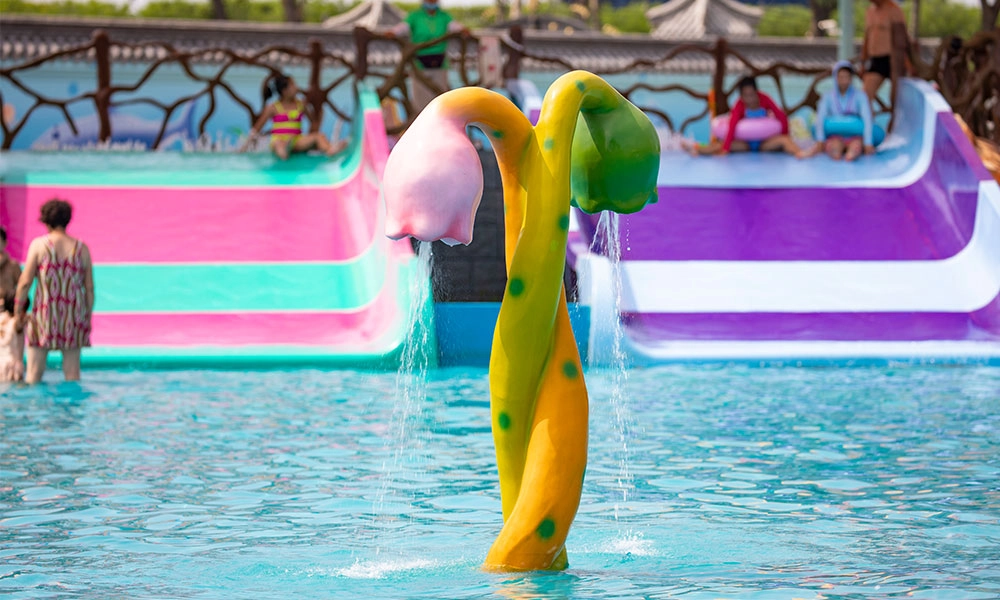
Water Spraying Flower Bud — Interactive Splash Pad Feature to Boost Engagement
How Much to Build a Water Park in Jakarta: Complete Cost Guide
Wholesale custom water park equipment manufacturer and supplier
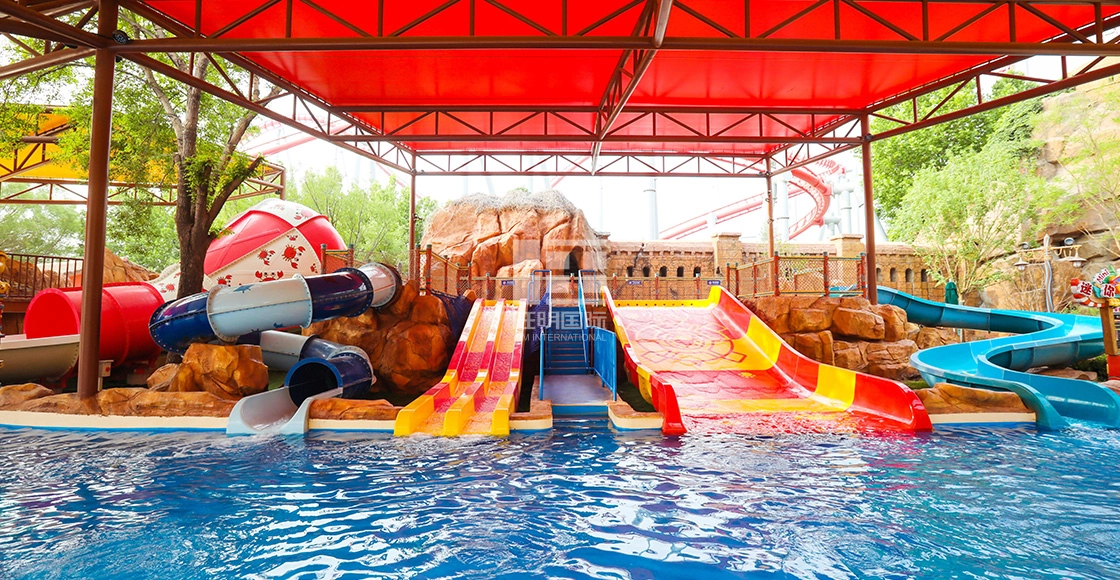
Children Combined Water Slide
Discover endless fun with the Children Combined Water Slide by WM INTERNATIONAL, expertly crafted for thrill-seeking kids. Perfect for summer splashes, this durable slide promises safety and joy. Looking to elevate your play area? Explore our Children's Combined Slide for sale now!
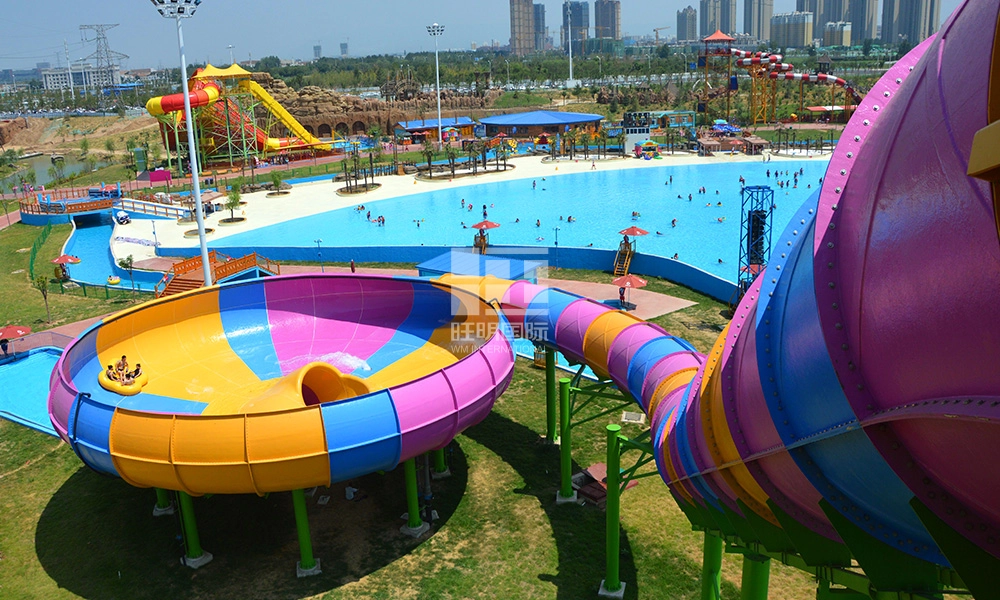
Huge Bowl Water Slide
The Huge Bowl Water Slide has achieved the “World's Best New Water Amusement Equipment” Award; it is the new favorite of the young people and the star project of the water park. The raft carries the tourists slowly entering the closed chute first; then it whirls in the bowl the moment the tourists can see the light. After a short period of time, the raft is suddenly suctioned into a huge black hole until it falls into the water. For a moment, the tourists realize the breathtaking journey has been safely brought to an end.
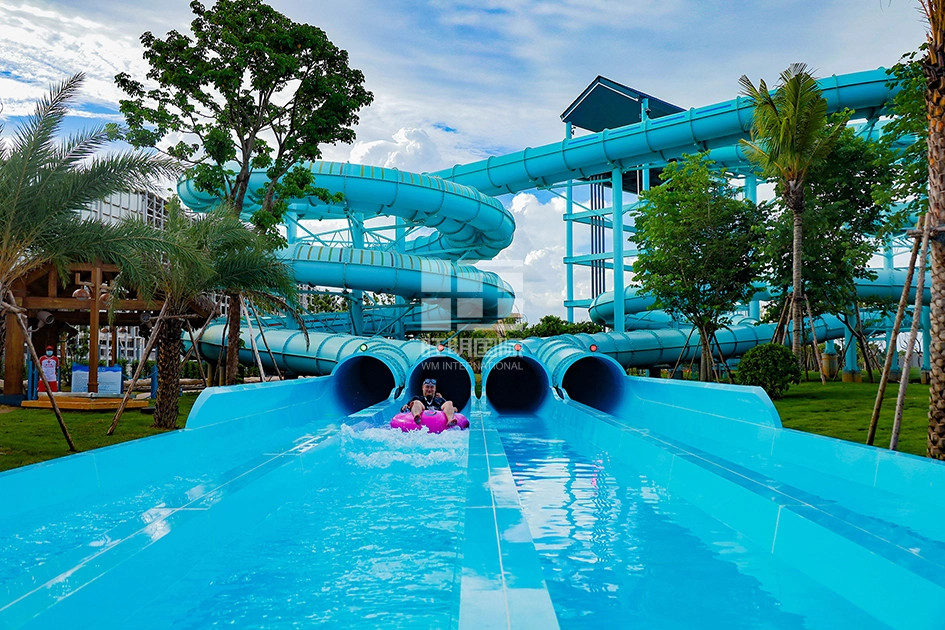
Time Tunnel Water Slide
The biggest feature of the time tunnel slide is that it uses double water slides and double tubes side by side in design and competes along the circular slide path. 8 people can play at the same time, with a large passenger capacity and high return rate, which is very suitable for team and family travel. And the slide is equipped with WangMing International's time tunnel technology, and the interior of the slide presents a beautiful aurora effect, with colorful lights, as if traveling through time and space.
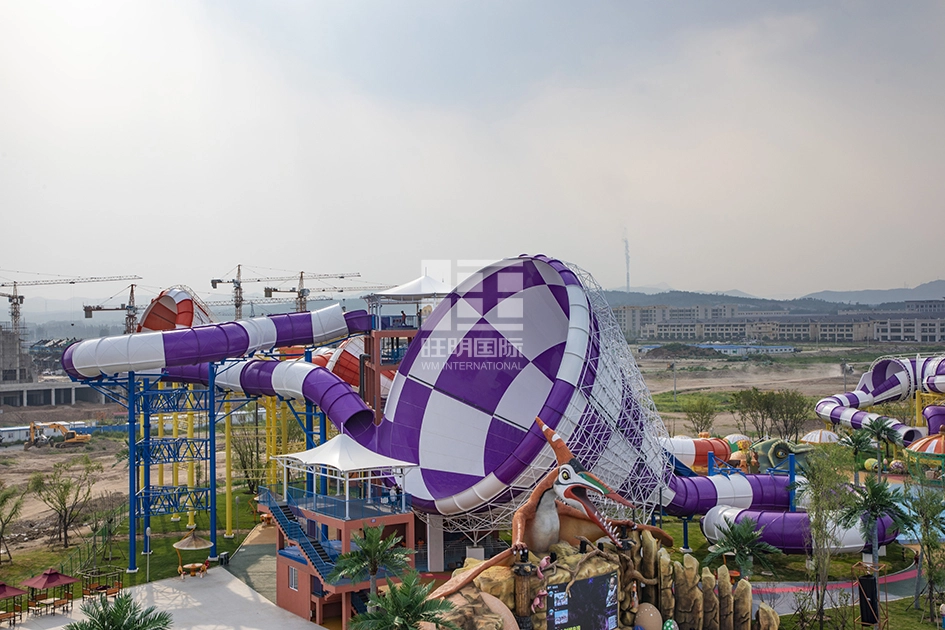
Big Tourbillion Water Slide
The Big Tourbillion water Slide won the "Gold Ticket Award - The Best New Project" of the international tourism industry. With unique modelling, strong irritation and humor, it is deeply loved by the young people; it has always been the popularity star of the water park. The raft carries the tourists as they enter the dark, closed chute slowly from the more than ten-meter-high platform; under the effect of gravity and water flow, it enters the state of rapid falling and then drops into the big Tourbillon; after a few times of whirling, it falls into the water pool. At this moment, the tourists are still in shock.
Get in touch
Have to get customized water park solutions and product quotes.
We will provide you with professional consultation and support.

Relying on leading technology, innovative products and rich industry experience, we tailor personalized solutions for each water park project to ensure a safe and exciting entertainment experience for tourists.
 Scan QR Code
wmwaterslide
wmwaterpark