


Commercial Water Slide Safety: Standards, Testing, and Inspection
- Safety principles for commercial aquatic slides
- Begin with the applicable standards and jurisdiction
- Assess the complete ride system, not just the flume
- Design verification, testing, and commissioning
- Review the evidence before procurement
- Commission the installed attraction under controlled conditions
- Inspection and operational control over the attraction lifecycle
- Use risk-based, documented inspection layers
- Connect maintenance records with operator training
- Supplier selection and project delivery considerations
- Evaluate technical support alongside product cost
- How our product scope can support integrated planning
- Frequently Asked Questions
Commercial water slide safety is achieved through a lifecycle approach: identify the standards and local rules that apply, verify design assumptions, test the installed attraction before opening, and inspect and maintain it throughout operation. For project owners evaluating commercial water slides for sale, the essential procurement questions are whether the supplier can document the design basis, support commissioning, provide operating and maintenance instructions, and help the facility manage foreseeable risks. ASTM F2376 and the EN 1069 series are important reference frameworks, while local authorities and adopted codes determine applicable obligations. No standard or certificate replaces site-specific engineering, trained operations, or a documented inspection program.
Safety principles for commercial aquatic slides
Begin with the applicable standards and jurisdiction
There is no single global rule that automatically governs every water slide. Requirements may depend on the country, state or province, local authority, attraction type, facility classification, and whether the project is new construction or a modification. Buyers should identify the authority having jurisdiction early and obtain written confirmation of required codes, approvals, inspections, and documentation. That step helps avoid late design changes, delayed permits, or an installation that meets a supplier’s standard but not the local approval route.
ASTM International publishes ASTM F2376, Standard Practice for Classification, Design, Manufacture, Construction, and Operation of Water Slide Systems. In Europe, the EN 1069 series addresses water slide safety requirements and test methods, along with instructions for use. The applicable edition, national adoption, and scope should be checked against the project location and attraction configuration; buyers should not assume that a reference to a standard in a quotation means every project requirement has been satisfied.
Broader aquatic-facility guidance can also inform operating plans. The U.S. Centers for Disease Control and Prevention describes the Model Aquatic Health Code as a voluntary model code intended to help jurisdictions reduce public health risks at aquatic venues. It is not a water-slide product certification, and adoption varies. The IAAPA safety and security resources provide additional industry context, but buyers still need to establish which legal and technical requirements govern their own facility.
Assess the complete ride system, not just the flume
A slide’s risk profile is shaped by the whole system: access stairs and platforms, rider dispatch, flume geometry, joints and supports, water delivery, runout, landing or receiving areas, barriers, signage, and operator visibility. A technically sound flume can still create operational hazards if riders enter too close together, the runout is poorly managed, or staff cannot see a critical transition. Design reviews should therefore include circulation, queueing, rescue access, drainage, lighting, and the interface with pools or other attractions.
Risk assessment should consider rider size and posture, the intended operating conditions, foreseeable misuse, environmental exposure, and the consequences of a stoppage or emergency. The supplier’s stated rider restrictions and operating limits need to be compatible with the facility’s guest population and staffing model. Where a project includes multiple slides, wave making equipment, or water play attractions, the review should also consider how simultaneous operation affects supervision, circulation, water quality management, and emergency response.
Design verification, testing, and commissioning
Review the evidence before procurement
Procurement teams should request a controlled document package rather than relying on a brochure or a general statement of compliance. Relevant records may include the design basis, drawings and calculations appropriate to the project, material and component information, installation requirements, inspection and test plans, operating limitations, and maintenance instructions. The documentation should identify the supplied configuration and revision so that later changes can be traced. If independent assessment or testing is specified by the jurisdiction or contract, clarify the assessor’s scope, acceptance criteria, and deliverables before purchase.
Ask the supplier to explain how design loads, support conditions, connections, water delivery, rider capacity, and runout performance are addressed for the actual site. Site conditions matter: foundations, soil, wind exposure, seismic requirements, corrosion environment, and available utilities can affect structural and operational design. A package designed for a different layout or climate should not be treated as proof of suitability for the proposed installation. The project engineer and authority having jurisdiction should review the relevant information within their respective responsibilities.
Commission the installed attraction under controlled conditions
Commissioning is the documented process of checking that the installed system matches the approved design and performs as intended before public operation. It commonly includes visual checks of supports, fasteners, joints, surfaces, access routes, barriers, signage, water systems, controls, and receiving areas. Functional testing should follow the manufacturer’s procedures and the project’s approved test plan, with results, deviations, corrective actions, and sign-offs recorded. The commissioning team should define who can authorize a return to service after a failed check.
Operational verification should address water flow and distribution, dispatch procedures, communication between staff, emergency stops or other controls where fitted, and the response to foreseeable incidents. Test conditions must be set by qualified project personnel rather than improvised during operation. Any change to a slide segment, pump, control, landing area, or operating limit may require engineering review and renewed testing. Retaining baseline measurements and photographs makes future condition comparisons more useful.
| Lifecycle activity | Primary purpose | Typical evidence | Timing considerations |
|---|---|---|---|
| Design and standards review | Establish the applicable requirements and confirm that the proposed configuration has an appropriate design basis. | Applicable standards and code register, drawings, calculations where required, design review records, and supplier documentation. | Before purchase and again when the design, site conditions, or governing requirements change. |
| Installation inspection and commissioning | Verify the installed attraction, interfaces, and operating functions against approved documents and procedures. | Inspection and test plan, completed checklists, test results, punch list closure, and authorization records. | After installation, before opening, and after significant changes or repairs as required by the approved program. |
| Operational inspection and maintenance | Identify deterioration or unsafe conditions and preserve performance during service. | Pre-opening checks, maintenance logs, defect reports, repair records, and periodic technical assessments. | Frequency should follow applicable law, manufacturer instructions, risk assessment, and operating experience; no universal interval applies to every slide. |
The table distinguishes lifecycle activities rather than prescribing a universal inspection frequency. ASTM F2376 and EN 1069 provide relevant frameworks, but project teams must consult the applicable full standard, current edition, local requirements, and manufacturer instructions to establish specific procedures and acceptance criteria.
Inspection and operational control over the attraction lifecycle
Use risk-based, documented inspection layers
A practical program distinguishes routine operator checks from scheduled maintenance and more detailed technical inspections. Before opening, trained staff can check for visible damage, debris, abnormal water conditions, blocked access, missing signage, and other conditions specified by the operating procedure. Defects should be logged, assigned, and escalated; a checklist is only effective when staff know what requires closure, restriction, or shutdown. The person responsible for the attraction should have clear authority to stop operation when safety-critical conditions are uncertain.
Scheduled inspections should examine areas that may not be obvious during a walk-through, including joints, supports, corrosion, coatings, wear surfaces, drainage, and concealed or difficult-to-access components where relevant. The appropriate methods and interval depend on the design, materials, manufacturer guidance, operating hours, environmental exposure, incident history, and local rules. Qualified personnel should document the inspection scope and findings. Repairs should use approved parts and procedures, with engineering review when a repair could affect structural integrity, rider performance, or operating limits.
Connect maintenance records with operator training
Inspection and maintenance records create a history that supports trend analysis and decisions about repair, replacement, or continued service. Useful records identify the attraction and component, date, inspector, observed condition, action taken, parts used, and return-to-service approval. A recurring defect may indicate an underlying design, installation, environmental, or operating issue rather than an isolated maintenance task. Owners should preserve records in a format that is accessible to operators, maintenance teams, engineers, and inspectors who need them.
Operators need attraction-specific instruction on rider eligibility and positioning, dispatch spacing, communication, weather or water-related operating limits, emergency response, and the process for reporting defects. Training should be refreshed when procedures change, incidents reveal a gap, or staff responsibilities shift. Facility procedures should align with the manufacturer’s operating manual while also reflecting the local emergency plan and the physical layout of the venue. The CDC’s Model Aquatic Health Code can inform broader aquatic-facility policies where relevant, but it does not replace attraction-specific procedures or local law.
Supplier selection and project delivery considerations
Evaluate technical support alongside product cost
Comparing suppliers on purchase price alone can obscure lifecycle costs and delivery risks. Buyers should assess the completeness and clarity of technical submittals, the process for resolving design questions, installation coordination, commissioning support, spare-parts availability, warranty boundaries, and the quality of operating and maintenance documentation. A strong bid response explains assumptions and exclusions, identifies who is responsible for site interfaces, and states what records will be handed over at completion. These details help owners compare proposals on their ability to support safe operation, not only on attraction dimensions or visual appeal.
For owners planning a broader water park design or water park construction project, safety requirements should be coordinated across attractions, utilities, circulation, structures, and operations. Early coordination can reduce conflicts between slide runouts, pools, queue lines, plant rooms, and emergency access. It also helps the owner set realistic opening milestones: design approvals, fabrication, installation, inspections, testing, staff training, and corrective work all need time in the project schedule.
How our product scope can support integrated planning
Our product scope includes water park attractions, water park design and construction services, water slides, water play attractions, and wave making equipment. For a project requiring several attraction types, our team can coordinate product discussions around the site plan, guest flow, operating objectives, and the documentation needed for review. The appropriate scope depends on each project, and buyers should confirm deliverables, technical responsibilities, applicable standards, and local approval requirements in writing before contract award.
We encourage project owners to involve their local design professionals and authorities early, share site constraints, and establish a clear review and handover process. A supplier’s role is to provide accurate product information and agreed project support; the owner, engineer, installer, operator, and regulator each retain responsibilities defined by the contract and applicable law. This transparent allocation helps reduce gaps between design intent and day-to-day operation while supporting maintainable, guest-focused facilities.
Contact our team to discuss your water park project, review attraction options, and clarify the technical documentation and project support available for your requirements.
Frequently Asked Questions
Which standards apply to commercial water slides?
Applicable requirements depend on the project location, attraction type, and authority having jurisdiction. ASTM F2376 and the EN 1069 series are relevant reference frameworks, but buyers should confirm adopted editions, local codes, and approval requirements for the specific project.
What documents should buyers request from a water slide supplier?
Request the project design basis, relevant drawings and calculations, component and material information, installation requirements, inspection and test plans, operating limits, maintenance instructions, and records identifying the supplied configuration and revisions. Any independent assessment required by the project should have a clearly defined scope and deliverables.
What is included in water slide commissioning?
Commissioning verifies that the installed system matches approved documents and performs as intended before public operation. It can include visual and functional checks of supports, joints, surfaces, access, barriers, signage, water systems, controls, dispatch procedures, and receiving areas, with results and corrective actions documented.
How often should commercial water slides be inspected?
There is no single universal interval for every slide. Inspection frequency should follow applicable law, manufacturer instructions, the facility’s risk assessment, environmental exposure, operating conditions, and maintenance history. Owners should define routine operator checks and scheduled technical inspections in a documented program.
What should routine pre-opening checks look for?
Staff should follow attraction-specific procedures to check for visible damage, debris, abnormal water conditions, blocked access, missing signage, and other specified hazards. Findings need to be logged and escalated, with clear criteria for restricting or stopping operation until a defect is resolved.
Does the CDC Model Aquatic Health Code certify water slides?
No. The CDC describes the Model Aquatic Health Code as a voluntary model code intended to help jurisdictions reduce public health risks at aquatic venues. It is not a water-slide product certification, and its adoption varies by jurisdiction.
Recommended
Best professional water slides manufacturers and supplier brands
The B2B Buyer’s Guide to indoor water park equipment
Wholesale kids water slide manufacturer and supplier
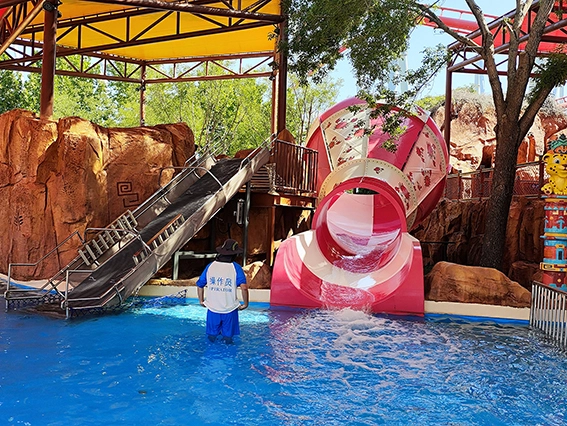
Kids Tourbillion Water Slide — Safe, High-Throughput Family Attraction by WangMing
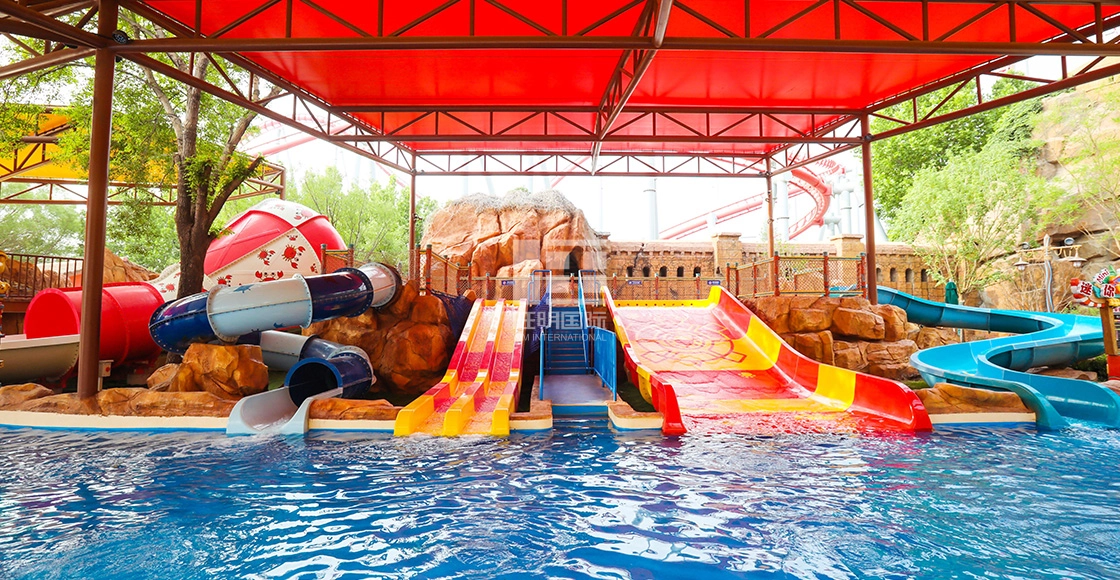
Children Combined Water Slide
Discover endless fun with the Children Combined Water Slide by WM INTERNATIONAL, expertly crafted for thrill-seeking kids. Perfect for summer splashes, this durable slide promises safety and joy. Looking to elevate your play area? Explore our Children's Combined Slide for sale now!
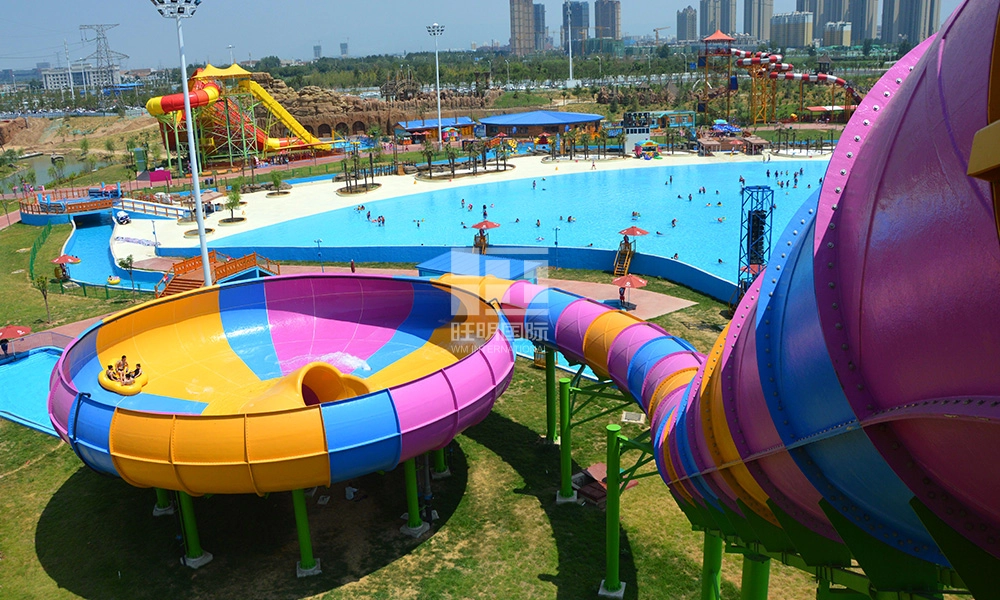
Huge Bowl Water Slide
The Huge Bowl Water Slide has achieved the “World's Best New Water Amusement Equipment” Award; it is the new favorite of the young people and the star project of the water park. The raft carries the tourists slowly entering the closed chute first; then it whirls in the bowl the moment the tourists can see the light. After a short period of time, the raft is suddenly suctioned into a huge black hole until it falls into the water. For a moment, the tourists realize the breathtaking journey has been safely brought to an end.
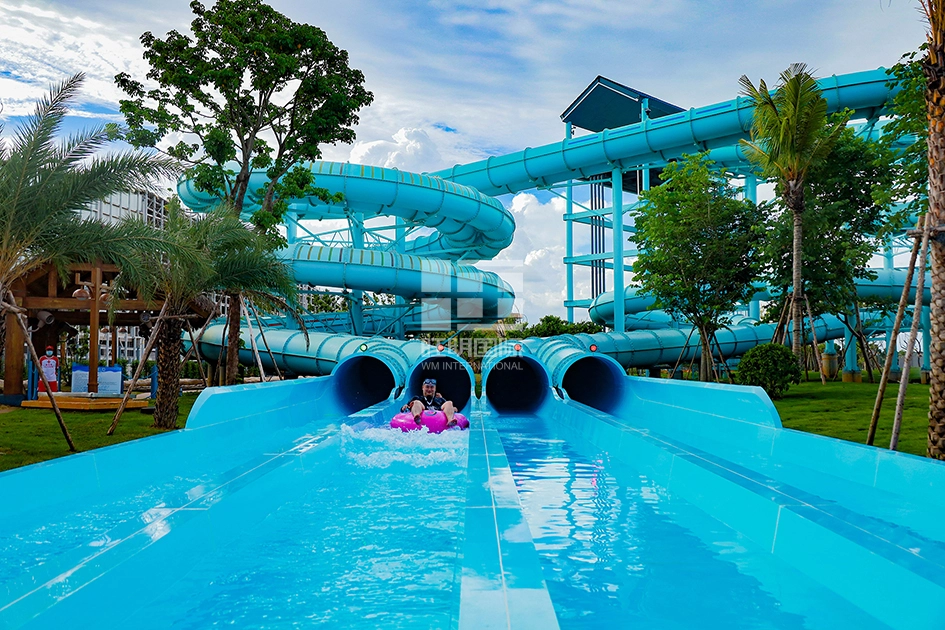
Time Tunnel Water Slide
The biggest feature of the time tunnel slide is that it uses double water slides and double tubes side by side in design and competes along the circular slide path. 8 people can play at the same time, with a large passenger capacity and high return rate, which is very suitable for team and family travel. And the slide is equipped with WangMing International's time tunnel technology, and the interior of the slide presents a beautiful aurora effect, with colorful lights, as if traveling through time and space.
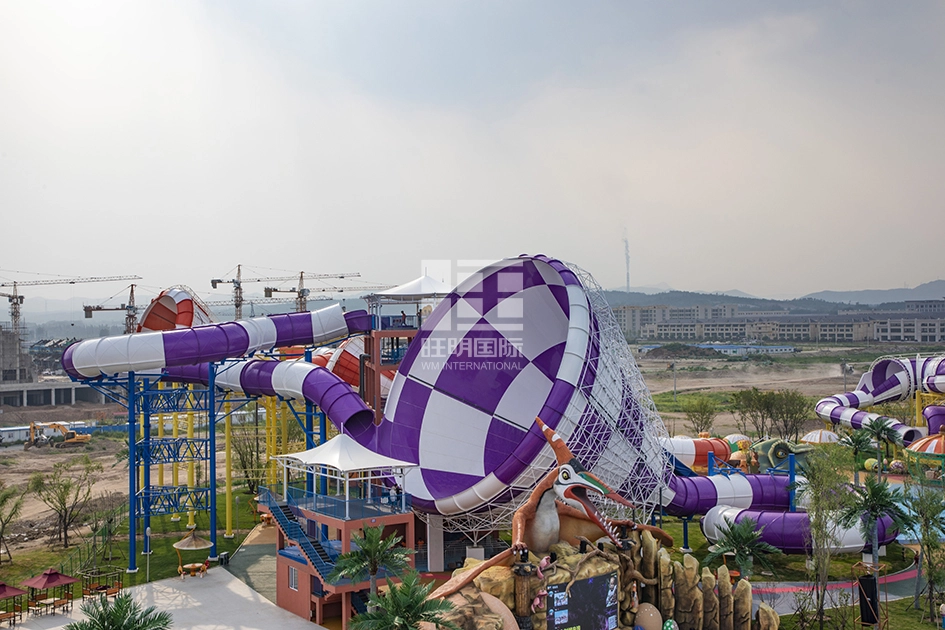
Big Tourbillion Water Slide
The Big Tourbillion water Slide won the "Gold Ticket Award - The Best New Project" of the international tourism industry. With unique modelling, strong irritation and humor, it is deeply loved by the young people; it has always been the popularity star of the water park. The raft carries the tourists as they enter the dark, closed chute slowly from the more than ten-meter-high platform; under the effect of gravity and water flow, it enters the state of rapid falling and then drops into the big Tourbillon; after a few times of whirling, it falls into the water pool. At this moment, the tourists are still in shock.
Get in touch
Have to get customized water park solutions and product quotes.
We will provide you with professional consultation and support.

Relying on leading technology, innovative products and rich industry experience, we tailor personalized solutions for each water park project to ensure a safe and exciting entertainment experience for tourists.
 Scan QR Code
wmwaterslide
wmwaterpark