


Commercial Water Slide Pricing: Project, Installation, and Freight Costs
- What Determines the Total Cost of a Commercial Water Slide Project?
- Attraction configuration, materials, and engineering
- Site preparation, utilities, and ancillary systems
- Installation, Compliance, and Delivery: Costs Often Missed in Initial Quotes
- Installation labor, lifting, and commissioning
- Freight, handling, customs, and schedule risk
- How to Build a Comparable Budget and Evaluate Supplier Quotes
- Use an itemized request for quotation
- Include risk allowances and lifecycle considerations
- Supplier Due Diligence and Integrated Water Park Planning
- Connect the attraction to the wider park plan
- How our product scope can support procurement coordination
- Frequently Asked Questions
Commercial water slide pricing is best evaluated as a total installed project cost—not as a standalone attraction price. A realistic budget accounts for slide configuration and materials, engineering, foundations and site preparation, pumps and water treatment, permits and inspections, freight and handling, installation, commissioning, and operating requirements. The final investment varies with site conditions, local regulations, shipping dimensions, access for lifting equipment, and the scope assigned to the supplier. Buyers comparing commercial water slides for sale should request itemized, scope-matched quotations and confirm exclusions, delivery terms, safety documentation, and schedule assumptions before selecting a supplier.
What Determines the Total Cost of a Commercial Water Slide Project?
A slide quotation is only one component of a water attraction budget. Project owners should compare the complete scope required to move from concept to safe operation. Two proposals with similar equipment prices may differ substantially in engineering deliverables, structural interfaces, site work, controls, installation support, and commissioning. Aligning these assumptions before comparing bids makes the apparent price difference more meaningful.
Attraction configuration, materials, and engineering
Slide type, height, length, route, number of turns, rider capacity, and the number of lanes influence manufacturing complexity and structural requirements. A compact body slide and a multi-lane racing slide do not share the same design, support, or operating requirements. Enclosed sections, special effects, run-out arrangements, and connections to a tower or existing pool can add design and coordination work. Fiberglass components, steel supports, fasteners, and surface finishes must be specified for the intended environment and use.
Engineering scope should be clear in the proposal. Ask whether the supplier provides layout drawings, structural calculations, interface details, installation drawings, and documentation needed for local review. Confirm who is responsible for adapting the design to local wind, seismic, snow, soil, and building-code requirements. International safety standards can help define a technical framework, but they do not replace local approvals. For example, buyers can review the scope of ISO 17842-1 for amusement rides and devices and establish with the supplier and local authority which requirements apply to the specific project.
Site preparation, utilities, and ancillary systems
Site costs are highly location-dependent. A project may require demolition, excavation, drainage changes, new foundations, reinforcement of an existing structure, or modifications to pools and run-outs. Ground conditions and access constraints can change both construction methods and the installation sequence. Buyers should arrange for qualified local professionals to assess the site rather than assuming that standard drawings or a preliminary layout resolve structural and civil requirements.
Water circulation and operating systems also affect capital and lifecycle budgets. Confirm the required flow rate, pump and filtration scope, electrical supply, controls, water treatment connections, and any utility upgrades. Clarify whether these items are included in the slide supplier’s quote or supplied by the owner’s contractor. A price comparison that omits pumps, electrical work, or pool modifications is not a like-for-like comparison, even when the attraction descriptions appear similar.
Installation, Compliance, and Delivery: Costs Often Missed in Initial Quotes
Installation and delivery costs can become material when responsibility is not allocated early. The quotation should state what the supplier provides, what the owner must arrange, and what work is excluded. This is especially important for projects with an operating facility, restricted construction access, international procurement, or a fixed opening date.
Installation labor, lifting, and commissioning
Installation scope may include technical supervision, specialist labor, assembly, alignment, connections, inspection support, and commissioning. It may exclude local labor, cranes, scaffolding, forklifts, temporary access roads, lifting plans, accommodation, travel, or safety provisions. Buyers should obtain a written list of these responsibilities and check whether the project schedule includes time for site readiness, equipment arrival, assembly, testing, operator training, and corrective work.
Crane and rigging requirements depend on component weights, lift heights, working radius, ground bearing capacity, and the site’s available space. The owner’s construction manager should coordinate lifting plans with qualified contractors and the supplier’s installation team. Where United States construction rules apply, relevant requirements include OSHA standards for rigging equipment; other jurisdictions have their own rules. These requirements inform safe execution and planning, not a standard installation price.
Commissioning should be treated as a defined project phase, not an informal handover. The contract can identify who verifies assembly, checks system interfaces, performs operational tests, records outstanding items, and trains facility staff. Confirm the documentation supplied at completion, warranty start date, maintenance instructions, recommended inspections, and the process for reporting defects. These details affect readiness to open and the owner’s ability to maintain the attraction.
Freight, handling, customs, and schedule risk
Freight costs depend on the shipment’s dimensions, weight, packing method, origin, destination, transport mode, handling needs, and the applicable commercial delivery terms. Long or oversized fiberglass sections may need special loading, permits, escorts, or equipment at the destination. Port charges, customs clearance, duties, taxes, inland transport, storage, and cargo insurance may be outside a quoted freight figure. Buyers should ask for the shipment basis and a clear list of included and excluded charges.
Request a packing list with package dimensions and weights early enough to verify transport feasibility. Confirm who is importer of record, who arranges customs documentation, and who pays destination handling and inland delivery. If the attraction must arrive in a defined construction window, allow time for production, dispatch, transit, customs, and possible schedule disruption. Delivery dates should be distinguished from site delivery, unloading, and installation completion dates.
| Cost category | Typical scope to verify | Key cost drivers | Buyer action |
|---|---|---|---|
| Attraction and engineering | Slide components, supports, drawings, calculations, and interface details | Configuration, dimensions, materials, design complexity, and approval scope | Compare technical specifications and engineering deliverables line by line |
| Site and utilities | Foundations, earthworks, drainage, pool interfaces, power, pumps, and treatment connections | Ground conditions, existing infrastructure, access, and local contractor rates | Obtain site assessments and assign each civil and utility item to a responsible party |
| Installation and commissioning | Technical supervision, assembly, lifting, testing, training, and handover | Labor plan, crane requirements, site readiness, duration, and travel | Request a responsibility matrix and a schedule with commissioning milestones |
| Freight and import | Packing, transport, handling, customs, duties, insurance, and inland delivery | Shipment dimensions, route, transport mode, destination, and delivery terms | Confirm package data, named delivery point, exclusions, and import responsibilities |
| Compliance and operations | Local review, inspections, operating procedures, maintenance, and staff readiness | Jurisdiction, facility type, authority requirements, and operating model | Identify applicable rules and confirm required evidence with local authorities |
How to Build a Comparable Budget and Evaluate Supplier Quotes
There is no reliable universal price for a commercial slide installation because projects differ in scope, site conditions, transport, and regulatory obligations. Instead of relying on a headline figure or an unverified market average, buyers can create a project-specific cost model. Separate one-time attraction and construction costs from recurring operating costs, and use clearly stated assumptions for quantities, delivery location, installation scope, and schedule.
Use an itemized request for quotation
A structured request for quotation should describe the intended rider experience, approximate site layout, available pool and utility information, operating capacity, project location, target opening date, and local approval context. Ask each bidder to state the equipment included, design deliverables, materials, warranty terms, spare parts, packing details, freight assumptions, installation services, commissioning, and exclusions. Where the design is not final, request a list of assumptions and identify which items may change after site verification.
Evaluate technical compliance separately from price. A lower equipment figure may reflect a narrower scope, different specifications, omitted support services, or owner responsibilities that appear elsewhere in the project budget. Use a bid comparison sheet to normalize specifications and record commercial terms, payment milestones, delivery basis, lead-time assumptions, warranty coverage, and change-order rules. Ask suppliers to identify the conditions that would trigger a price or schedule revision.
Include risk allowances and lifecycle considerations
Project owners should maintain an appropriate contingency based on the maturity of the design, the quality of site information, and the level of uncertainty in transport and construction planning. The contingency should be grounded in identified risks rather than presented as a universal percentage. Potential exposures include unforeseen ground conditions, utility upgrades, access changes, customs delays, weather constraints, and late design revisions.
Capital cost is only one part of the ownership decision. Pump energy, water treatment, inspection and maintenance labor, replacement parts, downtime, and staff training can affect operating economics. Request maintenance schedules and operating requirements during procurement, then review them with the facility’s operations team. The CDC Model Aquatic Health Code provides guidance for public aquatic venues in the United States; applicable local health and safety requirements should be confirmed with the relevant authorities. A supplier’s proposal should support—not substitute for—the owner’s compliance review.
Supplier Due Diligence and Integrated Water Park Planning
Choosing a supplier involves more than comparing attraction shapes or quoted amounts. Buyers should evaluate whether the proposed scope fits the site, whether responsibilities are documented, and whether the supplier can provide the information needed by designers, contractors, operators, and approval authorities. A practical procurement process checks relevant project references, manufacturing and quality documentation, warranty terms, service arrangements, and the supplier’s approach to design coordination.
Connect the attraction to the wider park plan
A slide is part of a wider guest experience and operating system. Its location may affect circulation, queue capacity, lifeguard visibility, pool operations, accessibility planning, maintenance access, and the balance of attractions across the site. A broader water park design process can coordinate the attraction layout with pools, water play attractions, wave-making equipment, utility systems, landscaping, and guest facilities. For larger developments, the relationship between design, procurement, and water park construction should be established before equipment orders lock in interfaces or delivery assumptions.
When reviewing standards, distinguish between design guidance, certification or inspection requirements, and legally enforceable local rules. The ASTM F2376 standard for water slide systems is one technical reference buyers may discuss with their design team and authorities. Its relevance depends on the project’s jurisdiction and contract requirements. The owner should document the standards and codes adopted for the project and assign responsibility for confirming compliance.
How our product scope can support procurement coordination
Our product scope includes water park design, water park construction, water slides, water play attractions, and wave-making equipment. For buyers considering a coordinated attraction package, this range can provide a starting point for discussing how individual elements fit the site plan and project requirements. Each project still needs a clearly defined scope, verified technical interfaces, and confirmation of which services and deliverables are available under the specific proposal.
We encourage project owners to share the intended location, site information, target opening schedule, and procurement priorities when requesting a proposal. This helps establish the assumptions behind equipment selection, engineering coordination, installation planning, and freight estimation. Buyers should request a written breakdown of deliverables and exclusions, then validate site, structural, transport, and regulatory requirements with their local project professionals before committing to a final budget.
Contact our team to discuss your project requirements or explore our water park attractions and equipment.
Frequently Asked Questions
What costs should a commercial water slide project budget include?
Budget for the attraction and engineering, site preparation and foundations, utilities and water systems, permits and inspections, freight and handling, installation, commissioning, and operating requirements. Confirm which items are included in the supplier’s proposal and which are the owner’s responsibility.
Why do commercial water slide prices vary between projects?
Costs vary with slide configuration, dimensions, materials, engineering requirements, site conditions, utility needs, local approvals, shipping dimensions, transport route, installation scope, and delivery terms. Proposals may also differ in the services and equipment they include.
Is installation usually included in a water slide quotation?
Installation is not automatically included. Ask whether the quote covers technical supervision, specialist labor, assembly, cranes and rigging, scaffolding, travel, commissioning, and training. Obtain a written responsibility list covering supplier, owner, and local contractor work.
How can buyers estimate freight costs for a commercial water slide?
Request package dimensions and weights, the shipment origin and destination, transport mode, delivery point, and applicable delivery terms. Confirm whether packing, permits, port and destination charges, customs clearance, duties, insurance, unloading, and inland transport are included or excluded.
Which standards or regulations apply to commercial water slides?
Applicable requirements depend on the project’s location, facility type, contract, and authority having jurisdiction. Buyers can discuss relevant technical references such as ISO 17842-1 and ASTM F2376 with their design team, while confirming local building, amusement-device, health, and safety rules with the relevant authorities.
What should buyers compare when evaluating supplier quotes?
Compare equivalent technical specifications, engineering deliverables, materials, installation scope, freight assumptions, delivery terms, warranty, spare parts, commissioning, exclusions, payment milestones, and schedule assumptions. Identify the conditions that could trigger a change in price or delivery.
Recommended
Wholesale water park slide manufacturer and supplier
How Much to Build a Water Park in Sydney? Cost Guide 2024
Wholesale water park slide manufacturer and supplier
The indoor water park design Cost Guide
Children Combined Water Slide
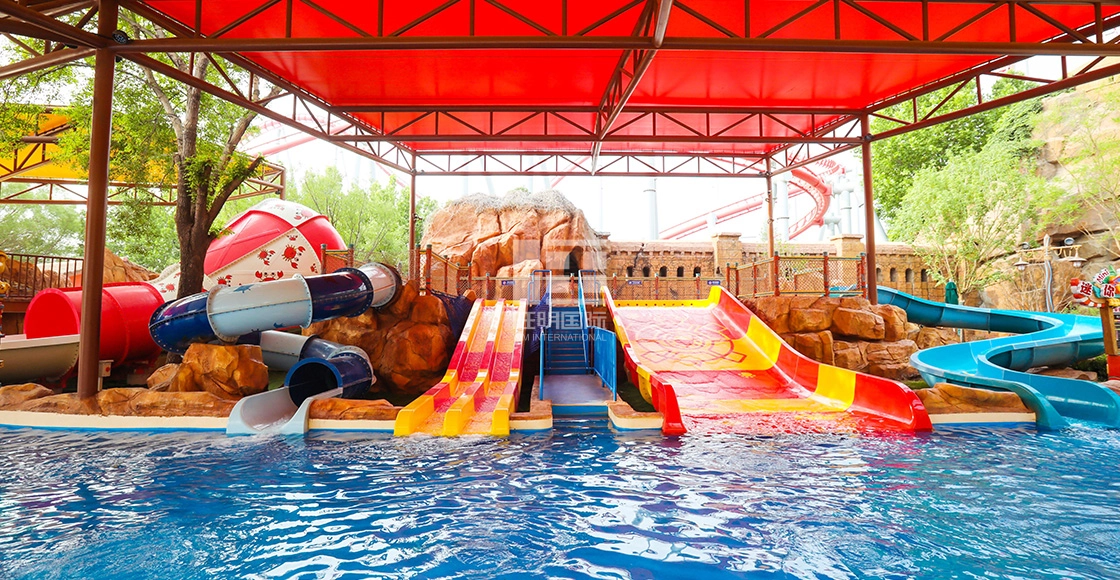
Discover endless fun with the Children Combined Water Slide by WM INTERNATIONAL, expertly crafted for thrill-seeking kids. Perfect for summer splashes, this durable slide promises safety and joy. Looking to elevate your play area? Explore our Children's Combined Slide for sale now!
Huge Bowl Water Slide
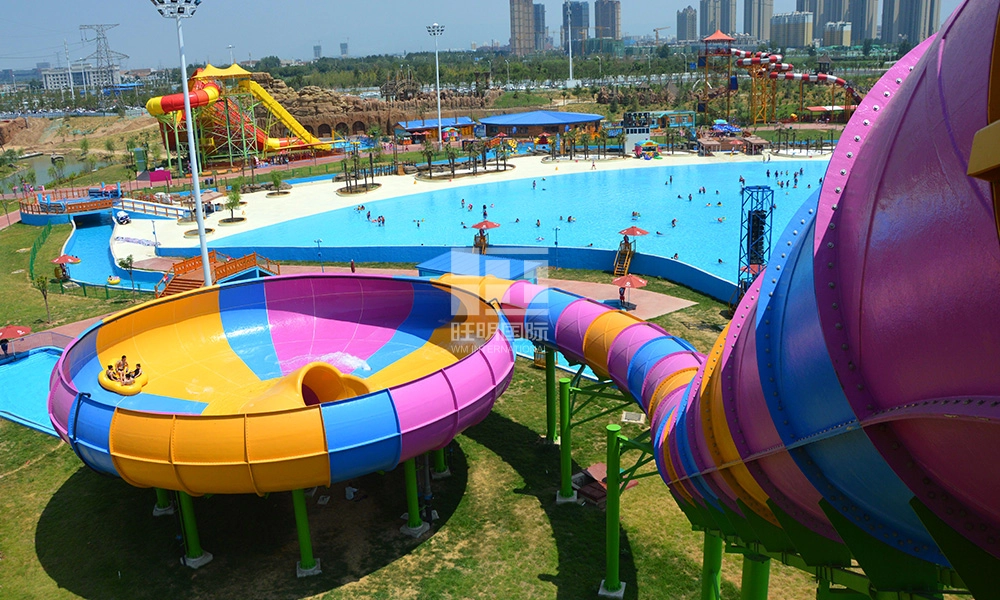
The Huge Bowl Water Slide has achieved the “World's Best New Water Amusement Equipment” Award; it is the new favorite of the young people and the star project of the water park. The raft carries the tourists slowly entering the closed chute first; then it whirls in the bowl the moment the tourists can see the light. After a short period of time, the raft is suddenly suctioned into a huge black hole until it falls into the water. For a moment, the tourists realize the breathtaking journey has been safely brought to an end.
Time Tunnel Water Slide
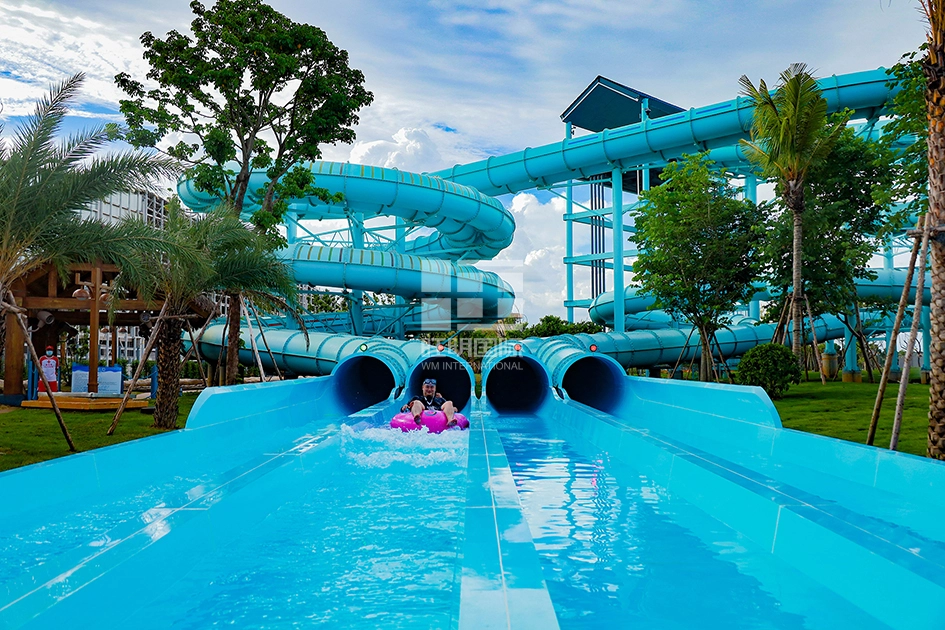
The biggest feature of the time tunnel slide is that it uses double water slides and double tubes side by side in design and competes along the circular slide path. 8 people can play at the same time, with a large passenger capacity and high return rate, which is very suitable for team and family travel. And the slide is equipped with WangMing International's time tunnel technology, and the interior of the slide presents a beautiful aurora effect, with colorful lights, as if traveling through time and space.
Big Tourbillion Water Slide
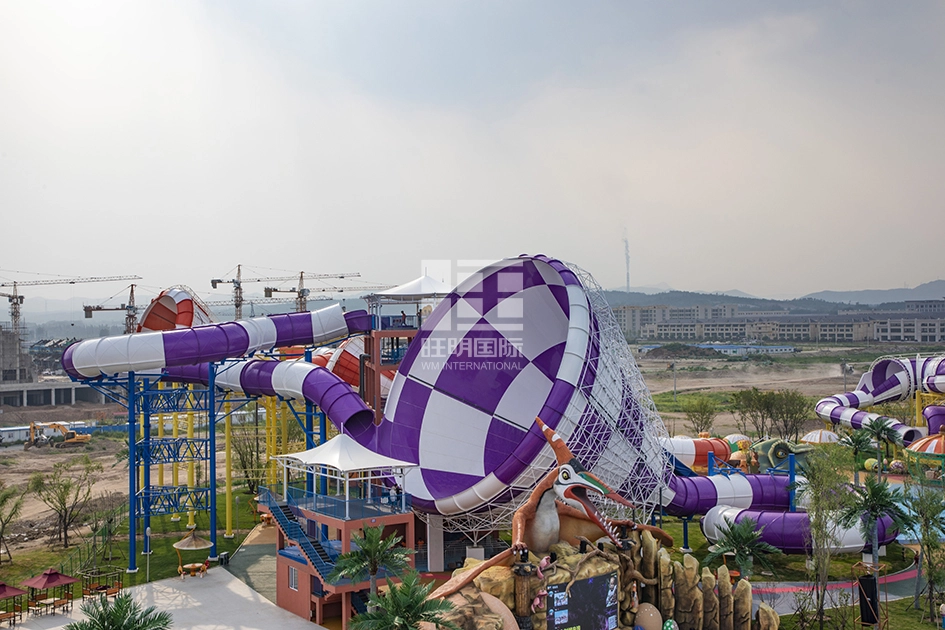
The Big Tourbillion water Slide won the "Gold Ticket Award - The Best New Project" of the international tourism industry. With unique modelling, strong irritation and humor, it is deeply loved by the young people; it has always been the popularity star of the water park. The raft carries the tourists as they enter the dark, closed chute slowly from the more than ten-meter-high platform; under the effect of gravity and water flow, it enters the state of rapid falling and then drops into the big Tourbillon; after a few times of whirling, it falls into the water pool. At this moment, the tourists are still in shock.
Get in touch
Have to get customized water park solutions and product quotes.
We will provide you with professional consultation and support.

Relying on leading technology, innovative products and rich industry experience, we tailor personalized solutions for each water park project to ensure a safe and exciting entertainment experience for tourists.
 Scan QR Code
wmwaterslide
wmwaterpark