





How to Choose Commercial Water Slides for Your Park
- Understanding Your Park’s Needs and Guest Profile
- Capacity Goals and Throughput Planning
- Demographics: Thrill Seekers vs Family Guests
- Site Constraints: Footprint, Topography, and Water Supply
- Design, Safety, and Regulatory Considerations
- Materials, Durability, and Finish
- Safety Features and Lifeguard Sightlines
- Standards, Codes, and Industry Guidance
- Ride Types, Features, and Experience Selection
- Water Roller Coaster Water Slide: A Highlight
- Comparing Popular Slide Types
- Theming, Lighting, and Multisensory Enhancements
- Operational, Cost, and ROI Analysis
- Installation, Maintenance, and Lifecycle Costs
- Throughput Calculation and Staffing
- Comparative Cost and Capacity Table
- Warranty, Supplier Support, and Parts Availability
- Brand Advantages and Why Choose Our Water Roller Coaster Water Slide
- Procurement, Installation, and Lifecycle Management
- RFPs, Vendor Evaluation, and Site Visits
- Installation Timeline and Phased Commissioning
- Maintenance Programs and Data-Driven Operations
- FAQs
- What is the ideal mix of slides for a mid-sized water park?
- How much does a Water Roller Coaster Water Slide cost to install?
- What safety certifications should I require from a manufacturer?
- How do water usage and pump requirements affect operating cost?
- How long is the typical lifecycle of a commercial water slide?

Choosing commercial water slides for a park is more than picking a visually impressive attraction: it requires a strategic assessment of guest demographics, throughput goals, site footprint, water and pump systems, local regulations, and lifecycle costs. The right selection increases per-guest spend, enhances park reputation, and improves operational efficiency while keeping safety and accessibility front and center.
Understanding Your Park’s Needs and Guest Profile
Capacity Goals and Throughput Planning
When evaluating commercial water slides, start by defining daily and peak-hour throughput targets. Throughput determines queue length, guest satisfaction, and staffing needs. Calculate desired riders per hour (rph) using projected attendance and target ride share. For a medium-sized park aiming for 5,000 daily visitors, allocating 5–8% of guests to a marquee attraction during peak hours can mean designing for 300–400 rph. Different slide types (e.g., single-rider tube slides vs. multi-lane mat racers) have wide throughput variance, so choose rides that match your operational goals.
Demographics: Thrill Seekers vs Family Guests
Segment your guests by age, tolerance for thrills, and desire for shared experiences. Family raft rides and multi-person attraction types appeal to groups and families, while steep drop slides and high-speed racer slides attract teenagers and thrill-seekers. Levelling your slide roster with a mix of high-thrill and family-oriented commercial water slides helps broaden appeal and lengthen average stay.
Site Constraints: Footprint, Topography, and Water Supply
Assess available land, elevation changes, and existing mechanical rooms. Some attractions, like water roller coasters, require additional elevation changes or booster pumps. Footprint includes not only the slide structure but runout pools, safety zones, queue areas, and service access. Early-stage site planning reduces costly redesigns. Coordinate with civil engineers and waterpark designers to confirm soil conditions and drainage capacity.
Design, Safety, and Regulatory Considerations
Materials, Durability, and Finish
Commercial water slides should be constructed from UV-stable, marine-grade materials (e.g., reinforced fiberglass with corrosion-resistant supports), designed for heavy use and chlorine or saltwater environments. Ask suppliers for material specifications, finish warranties, and anti-slip treatments for platforms and stairs. Longevity and ease of repair are critical; modular panels reduce downtime for repairs.
Safety Features and Lifeguard Sightlines
Safety design includes adequate runout areas, water depth compliance, overflow handling, safe deceleration zones, and unobstructed lifeguard sightlines. For enclosed sections and high-speed elements, ensure emergency access points. Ride designers should provide detailed sightline diagrams and suggested lifeguard positions. Consider adding automated monitoring systems for dispatch intervals and rider spacing to reduce human error.
Standards, Codes, and Industry Guidance
Adherence to recognized standards is essential for legal compliance and guest safety. Refer to guidance from the International Association of Amusement Parks and Attractions (IAAPA) for operator best practices (https://www.iaapa.org/) and the World Waterpark Association for safety resources (https://www.waterparks.org/). For technical background on water slides and aquatic attractions, general references such as Wikipedia's water slide article can provide basic context (https://en.wikipedia.org/wiki/Water_slide), but always rely on certified engineers and manufacturers for compliance specifics.
Ride Types, Features, and Experience Selection
Water Roller Coaster Water Slide: A Highlight
Water Roller Coaster Water Slide
As an upgraded version of the land roller coaster, the water roller coaster has gained a lot of popularity since it was launched. The tourists take the rafts, start from the equipment platform and start to speed up based on the high potential energy. After a short period of climbing, they will experience another exciting acceleration. The tourist's heart is also jumping up and down together with the slide.
The water roller coaster blends coaster-like airtime and multiple acceleration points with aquatic attraction safety and comfort. It is ideal as a signature attraction that drives marketing, higher ticket High Qualitys, and extended length-of-stay. However, it typically requires a more complex pump system and greater structural investment than conventional slides.
Comparing Popular Slide Types
Understand the pros and cons of popular commercial water slides:
- Multi-lane Racer: High throughput, competitive guest appeal, moderate footprint.
- Enclosed High-Speed Tube: High thrill, lower throughput, compact footprint.
- Bowl and Funnel Slides: High visual impact, medium throughput, good for families and teens.
- Family Raft/Log Flume: High capacity per dispatch, great for groups, larger footprint.
- Water Roller Coaster: Signature attraction, high marketing value, moderate-to-high throughput depending on raft size and dispatch cadence.
Theming, Lighting, and Multisensory Enhancements
Theming turns a ride into an experience. Integrate LED lighting, soundscapes, mist effects, and projection mapping to enhance perceived value without significantly increasing footprint. Consider maintenance implications for special effects and their compatibility with chlorine or saltwater environments.
Operational, Cost, and ROI Analysis
Installation, Maintenance, and Lifecycle Costs
When calculating total cost of ownership, include procurement, site preparation, electrical and pump infrastructure, installation, commissioning, training, routine maintenance, and parts replacement. Warranties and local supplier support reduce risk and lifecycle cost. Ask manufacturers for lifecycle cost estimates and typical Mean Time Between Failures (MTBF) for critical components.
Throughput Calculation and Staffing
Estimate throughput by combining dispatch interval, riders per raft/slide, and operational uptime. Example: a family raft ride dispatching one raft every 30 seconds with 4 riders per raft yields 480 rph. Factor in dispatch delays, rider readiness, and staff performance. Determine lifeguard and attendants per ride according to manufacturer recommendations and local regulations.
Comparative Cost and Capacity Table
| Ride Type | Typical Capacity (riders/hr) | Footprint | Approx. Installed Cost (USD) | Ideal Audience |
|---|---|---|---|---|
| Water Roller Coaster | 300–800 | Medium–Large | $600,000–$2M+ | All ages, thrill-seekers, groups |
| Multi-lane Racer | 600–1,200 | Medium | $150,000–$600,000 | Families, competitive guests |
| High-Speed Enclosed Tube | 200–500 | Small–Medium | $200,000–$800,000 | Teens, thrill-seekers |
| Family Raft / Log Flume | 300–700 | Large | $400,000–$1.5M | Families, groups |
Note: Costs vary by region, vendor, customization, and site-specific work. Use these ranges for high-level planning only; obtain vendor quotes for budgeting.
Warranty, Supplier Support, and Parts Availability
Supplier reliability is essential. Prioritize manufacturers who provide comprehensive warranties, local spare parts depots, and responsive technical support. Long-term partnerships reduce downtime and protect revenue. Ask for references from similarly sized parks and check industry forums or associations for supplier reputations.
Brand Advantages and Why Choose Our Water Roller Coaster Water Slide
Our brand delivers industry-leading experience in designing and installing commercial water slides. Key advantages include:
- Proven Safety Record: Designs conform to IAAPA and industry best practices with full documentation and engineering certifications (IAAPA).
- Global Installation Experience: Multiple projects completed across climates and regulatory environments, reducing site-specific risk.
- Comprehensive After-Sales Support: Spare parts availability, regional service teams, and operator training programs.
- Custom Theming and Integration: On-site design services that integrate lighting, sound, and queue engagement to boost revenue per guest.
- Transparent Total Cost of Ownership: Detailed lifecycle cost projections and maintenance schedules to help you plan CAPEX and OPEX.
The Water Roller Coaster Water Slide, specifically, serves as a marquee attraction that drives marketing, third-party partnerships, and sponsorships while delivering a balanced combination of innovation, capacity, and reliability.
Procurement, Installation, and Lifecycle Management
RFPs, Vendor Evaluation, and Site Visits
Create a detailed Request for Proposal (RFP) that asks for technical specifications, drawings, throughput modeling, project timeline, references, warranty terms, and cost breakdowns. Schedule site visits to operating installations to evaluate reliability and guest appeal firsthand. Confirm the vendor's ability to meet local permitting and certification requirements.
Installation Timeline and Phased Commissioning
Plan for phased installation and commissioning: structural works, slide installation, pump and filtration tie-ins, electrical systems, and acceptance testing. Allow buffer time for custom theming, testing, and staff training. Ensure the vendor provides a commissioning checklist and operator training sessions before opening.
Maintenance Programs and Data-Driven Operations
Implement preventive maintenance schedules, daily checklists, and condition-based monitoring where possible. Track key performance indicators (KPIs) such as dispatch intervals, downtime hours, parts usage, and incident reports. Data-driven operations optimize staffing and reduce unexpected downtime, improving guest experience and profitability.
FAQs
What is the ideal mix of slides for a mid-sized water park?
A balanced mix includes one signature attraction (e.g., Water Roller Coaster), one high-capacity racer, family raft rides, and a couple of high-thrill tube slides. This mix maximizes appeal across demographics and balances throughput.
How much does a Water Roller Coaster Water Slide cost to install?
Installation cost ranges widely, typically between $600,000 and $2,000,000+, depending on customization, pump systems, structural supports, and site preparation. Obtain detailed quotes for accurate budgeting.
What safety certifications should I require from a manufacturer?
Require structural engineering certificates, materials safety data, test reports for ride dynamics, and alignment with industry standards. Vendors should provide documentation and support for local permitting. Consult IAAPA resources for operator best practices (IAAPA).
How do water usage and pump requirements affect operating cost?
Water roller coasters and booster-assisted slides often use recirculating systems with high-power pumps. Consider energy-efficient pumps, variable frequency drives (VFDs), and water treatment strategies to manage OPEX. Factor in seasonal variations and water reclamation capabilities.
How long is the typical lifecycle of a commercial water slide?
With proper maintenance, commercial water slides commonly achieve 15–30 years of useful life. Surface refinishing, periodic panel replacement, and mechanical overhauls extend lifespan.
If you want more specific cost modeling, design consultation, or to view technical specifications of the Water Roller Coaster Water Slide, contact our sales team or view the product page:
View Water Roller Coaster Water Slide | Contact Sales
Selecting the right equipment for your venue is the first step toward a successful expansion. For operators looking to invest in a high-capacity, flagship attraction that drives ticket sales, we recommend diving into our specialized Water Roller Coaster Water Slide: Buyer's Guide for Parks.
Recommended
Wholesale Wave Making Equipment manufacturer and supplier
High Quality Custom Spray Water Park Equipment
Adrenaline Rush: The World's Most Extreme Water Slides
Top water park slide Manufacturers and Suppliers
Children Combined Water Slide
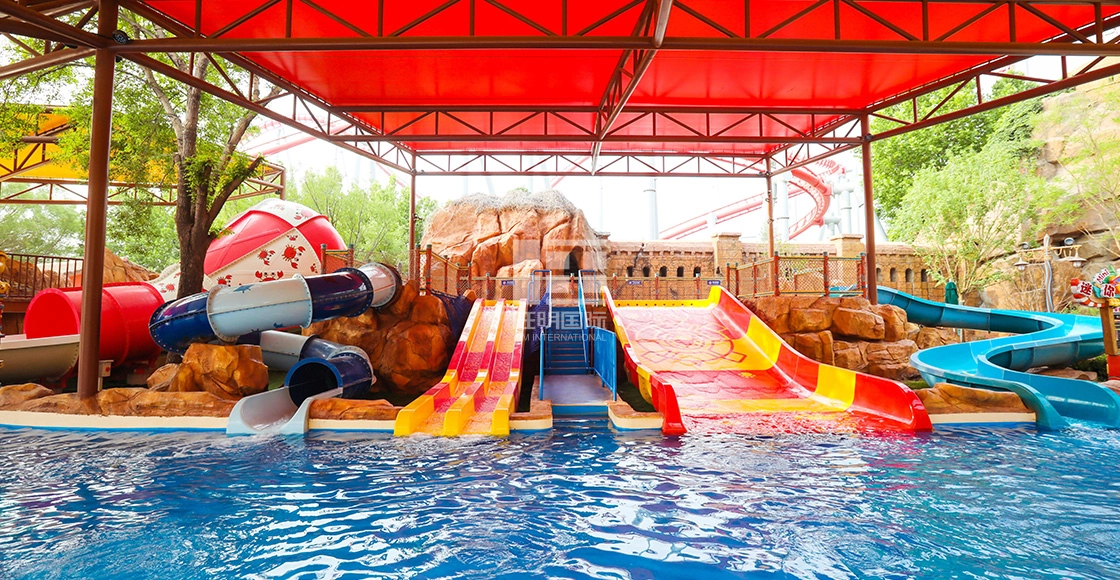
Discover endless fun with the Children Combined Water Slide by WM INTERNATIONAL, expertly crafted for thrill-seeking kids. Perfect for summer splashes, this durable slide promises safety and joy. Looking to elevate your play area? Explore our Children's Combined Slide for sale now!
Huge Bowl Water Slide
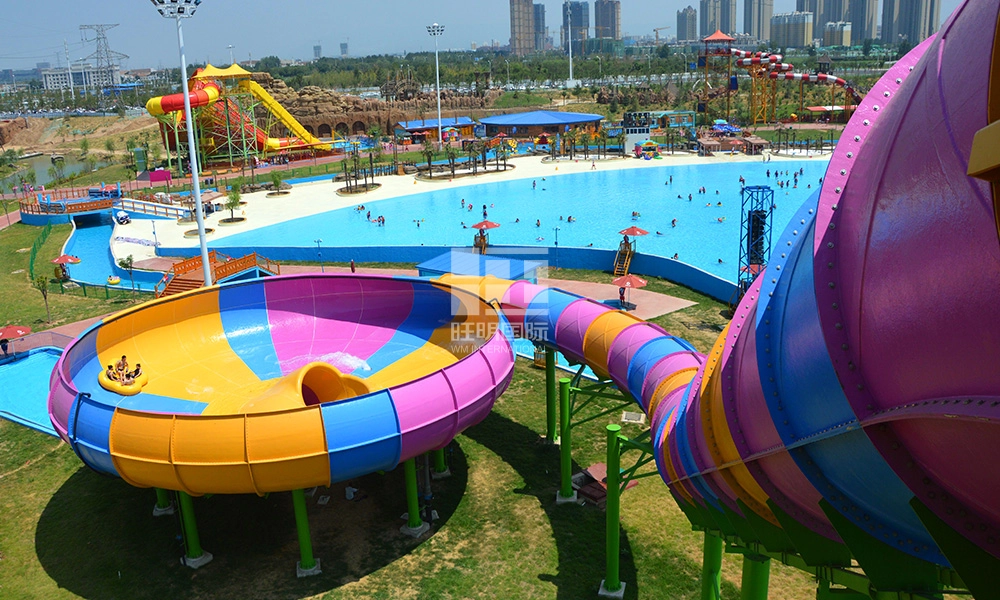
The Huge Bowl Water Slide has achieved the “World's Best New Water Amusement Equipment” Award; it is the new favorite of the young people and the star project of the water park. The raft carries the tourists slowly entering the closed chute first; then it whirls in the bowl the moment the tourists can see the light. After a short period of time, the raft is suddenly suctioned into a huge black hole until it falls into the water. For a moment, the tourists realize the breathtaking journey has been safely brought to an end.
Time Tunnel Water Slide
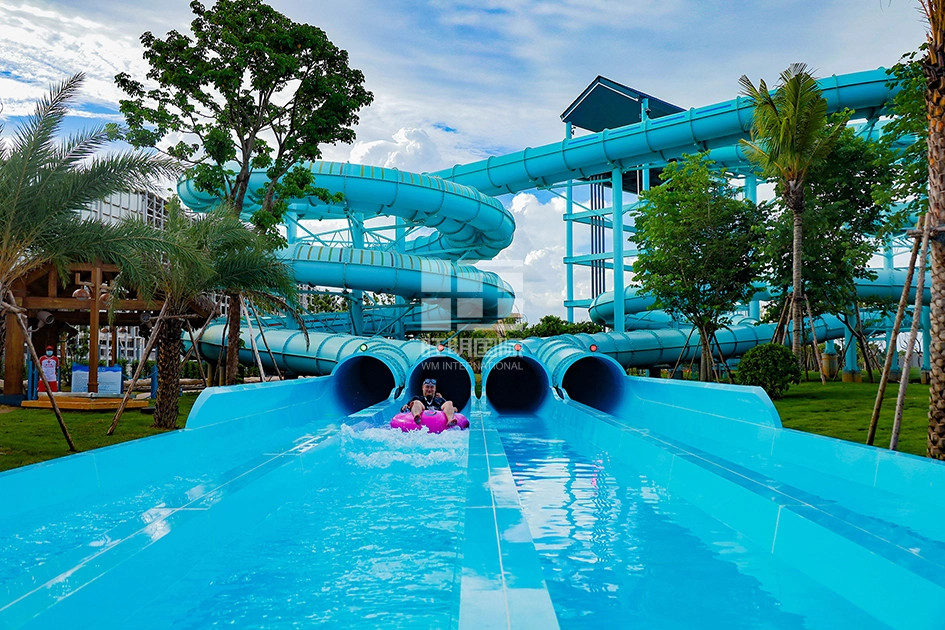
The biggest feature of the time tunnel slide is that it uses double water slides and double tubes side by side in design and competes along the circular slide path. 8 people can play at the same time, with a large passenger capacity and high return rate, which is very suitable for team and family travel. And the slide is equipped with WangMing International's time tunnel technology, and the interior of the slide presents a beautiful aurora effect, with colorful lights, as if traveling through time and space.
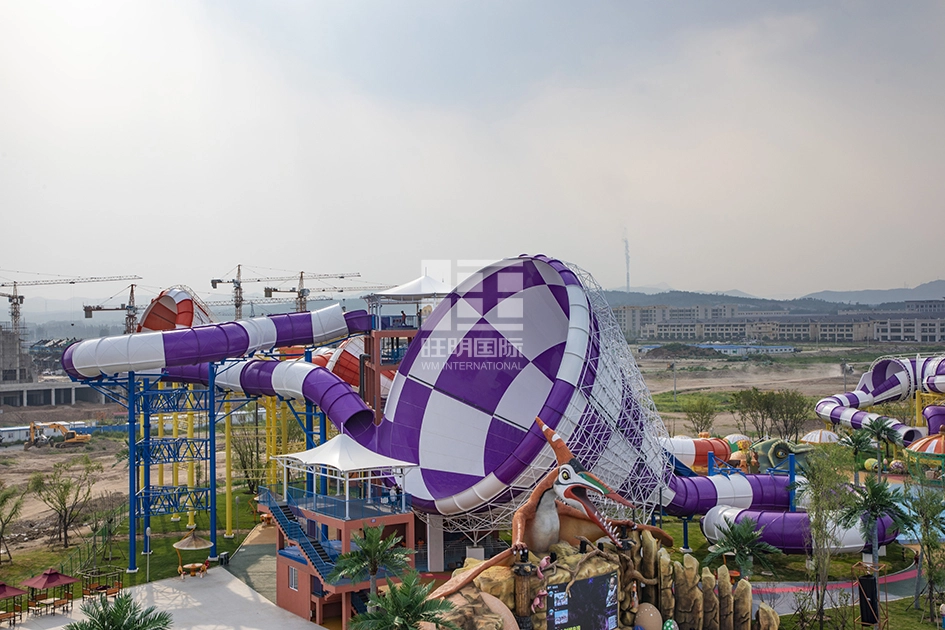
Big Tourbillion Water Slide
The Big Tourbillion water Slide won the "Gold Ticket Award - The Best New Project" of the international tourism industry. With unique modelling, strong irritation and humor, it is deeply loved by the young people; it has always been the popularity star of the water park. The raft carries the tourists as they enter the dark, closed chute slowly from the more than ten-meter-high platform; under the effect of gravity and water flow, it enters the state of rapid falling and then drops into the big Tourbillon; after a few times of whirling, it falls into the water pool. At this moment, the tourists are still in shock.
Get in touch
Have to get customized water park solutions and product quotes.
We will provide you with professional consultation and support.

Relying on leading technology, innovative products and rich industry experience, we tailor personalized solutions for each water park project to ensure a safe and exciting entertainment experience for tourists.
 Scan QR Code
wmwaterslide
wmwaterpark