




Best Commercial Water Slides for Small Water Parks
- Optimizing ride selection for compact aquatic facilities
- Space-to-throughput analysis for limited footprints
- Ride typologies suited to small parks
- Operational constraints affecting selection
- Evaluating total cost of ownership and ROI drivers
- CapEx vs. OpEx and lifecycle budgeting
- Revenue uplift modeling and attraction mix
- Financing, warranties, and supplier guarantees
- Technical specifications and procurement checklist
- Engineering and materials considerations
- Compliance, safety standards, and third-party testing
- Installation, commissioning, and timetable
- Comparing attraction types: footprint, capacity, and maintenance
- Data-driven comparison of common compact slides
- Interpreting the data for procurement
- Case-level risk assessment
- Why supplier selection matters: manufacturing footprint, QC, and after-sales
- Production capacity and lead-time predictability
- Service network and spare-part logistics
- Certification, references, and portfolio verification
- WM International: turnkey solutions for small water parks
- Company capabilities and industry experience
- Manufacturing scale and technical resources
- Turnkey product range and tailored solutions
- Quality assurance, installation, and aftercare
- Frequently Asked Questions
High-density This guide helps facility owners, investors, and procurement teams evaluate compact ride types, capacity modeling, lifecycle costs, and compliance requirements when sourcing commercial-grade slide attractions for constrained-site water parks. It prioritizes footprint-to-capacity ratios, modular assembly options, maintenance profiles, and supplier evaluation criteria aligned with ASTM/IAAPA safety guidance, WHO water hygiene practices, and global manufacturing quality control—helping buyers optimize attraction mix, capital allocation, and long-term operational margins.
Optimizing ride selection for compact aquatic facilities
Space-to-throughput analysis for limited footprints
When site area is constrained, prioritizing slides with high riders-per-hour (RPH) relative to occupied square meters is critical. Multi-lane racer attractions, funnel slides with quick cycle times, and compact body flumes typically deliver superior capacity per square meter compared with long, meandering tube slides. Procurement teams should request manufacturer-provided RPH modeling based on pool loading, dispatch intervals, and staff-operated throughput controls to forecast daily capacity and reduce queue-related guest dissatisfaction.
Ride typologies suited to small parks
Key attraction types that balance excitement and footprint are: competitive multi-lane racers, family mat slides with stacked footprints, compact bowl/funnel hybrids, and children’s serpentine body slides integrated into play structures. Each category offers distinct cost, maintenance, and staffing profiles—racer lanes require reinforced launch and splashdown basins, while bowls demand durable composite shells and precise drainage to limit water loss.
Operational constraints affecting selection
Consider staffing, lifeguard line-of-sight, water recirculation design, and average guest dwell time. For example, rides with short cycle times often increase chemical load on filtration systems; therefore coordination between attraction selection and mechanical room capacity is necessary to avoid underperforming water quality or increased operating expenses.
Evaluating total cost of ownership and ROI drivers
CapEx vs. OpEx and lifecycle budgeting
Buying decisions must incorporate initial purchase and installation outlays plus recurrent costs: energy for pumps, chemical consumption, routine repair parts, and surface repainting or gelcoat maintenance. Buyers should request a 10-year cost projection from suppliers that includes conservative estimates for spare parts consumption and scheduled refurbishments to calculate net present value and payback period for each attraction.
Revenue uplift modeling and attraction mix
Forecasts should factor in attendance elasticity, per-capita spend uplift from marquee slides, and cross-selling potential (VIP lanes, photo packages, timed-entry). Small parks can achieve a disproportionate revenue increase by introducing one or two high-appeal rides that drive marketing reach and repeat visitation rather than trying to replicate the inventory of large resorts.
Financing, warranties, and supplier guarantees
Compare standard warranty terms, extended-service contracts, and performance guarantees. Reliable suppliers offer structured warranty cover for structural integrity, surface finish, and mechanical systems, and can bundle maintenance plans. Buyers should negotiate milestone-based payment schedules tied to Factory Acceptance Tests and on-site commissioning to mitigate schedule risk.
Technical specifications and procurement checklist
Engineering and materials considerations
High-quality slides use UV-stable fiberglass composites with reinforced cores and corrosion-resistant anchoring hardware. Design-for-maintenance principles—such as modular section joints that allow in-situ replacement—reduce downtime. Ask for material certificates, gelcoat UV ratings, and load calculations validated by a licensed engineer when approving drawings.
Compliance, safety standards, and third-party testing
Ensure attractions adhere to the relevant international and regional standards. Industry guidance from the IAAPA provides best practices for lifeguard placement and operation; ASTM and similar standards address mechanical and structural requirements, while water hygiene should follow WHO water safety recommendations. Request test reports and independent structural analyses during supplier evaluation.
Installation, commissioning, and timetable
Compact attractions frequently offer modular fabrication that shortens on-site build time. Confirm lead times for prefabricated sections, site-prep responsibilities, foundation requirements, and required mechanical room upgrades. A well-defined installation plan with critical-path milestones reduces unexpected civil works and avoids delays that escalate construction costs.
Comparing attraction types: footprint, capacity, and maintenance
Data-driven comparison of common compact slides
The table below summarizes typical attributes for small-park-appropriate ride types. Values represent conservative industry averages; buyers should validate numbers against manufacturer-specific specifications and local code requirements.
| Ride Type | Typical Footprint (m²) | Throughput (riders/hr) | Estimated Initial Cost Range (USD) | Maintenance Intensity |
|---|---|---|---|---|
| Multi-lane Racer | 80–200 | 600–1,200 | 40,000–150,000 | Medium (surface repair, lane dividers) |
| Compact Bowl/Funnel | 60–150 | 300–700 | 50,000–160,000 | High (water management, surface wear) |
| Family Mat/Body Slide (stacked) | 40–120 | 250–600 | 25,000–90,000 | Low–Medium (components, pump load) |
| Children’s Play Slide Integrated | 30–100 | 150–400 | 15,000–60,000 | Low (superstructure checks) |
Interpreting the data for procurement
Use the table to map ride performance against financial targets and space constraints. For example, a small urban park aiming to maximize daily throughput with limited sq m may elect a multi-lane racer as anchor, supplemented by a low-footprint children’s attraction to broaden demographic appeal.
Case-level risk assessment
Identify potential risks: supply-chain delays for resin and steel, local permitting for elevated structures, and elevated OPEX from high-turnover attractions. Mitigation strategies include ordering critical components early, pre-approving foundation designs, and selecting finishes that reduce repaint frequency.
Why supplier selection matters: manufacturing footprint, QC, and after-sales
Production capacity and lead-time predictability
Manufacturers with larger, modern production facilities typically provide better lead-time certainty and consistent quality. Look for firms that can demonstrate repeatable processes, ISO-level quality management, and factory QA documentation to reduce on-site variability.
Service network and spare-part logistics
Post-sale responsiveness affects uptime. Suppliers that stock standardized spare modules and offer remote support reduce mean time to repair. Request service-level agreements and spare parts catalogs during tender evaluation to ensure availability over the life of the ride.
Certification, references, and portfolio verification
Ask for project case studies, client references, and third-party testing certificates. Independent verification—such as structural sign-off by a licensed engineer—adds credibility during procurement and supports insurer and lender requirements.
WM International: turnkey solutions for small water parks
Company capabilities and industry experience
With 19 years of industry experience, WM International Waterslide provides a full range of water park planning and design services. From water park planning and design to manufacturing, installation and maintenance, we provide comprehensive service solutions to transform your park vision into vibrant realities. Whether it’s the design and development of new parks or maintaining existing ones, our decades of combined experience as park operators, designers, suppliers, and guests can give you the edge that you need to create world-class amusement, theme, and water park attractions.
Manufacturing scale and technical resources
WM International owns a 100000 m² modern production base, which is the largest in the industry. We mainly produce various water slides for water parks. Our production capacity supports modular fabrication and batch quality control, allowing shorter lead times and consistent finishes. Buyers benefit from documented manufacturing processes, material traceability, and factory acceptance procedures that reduce on-site uncertainty.
Turnkey product range and tailored solutions
Our product portfolio spans water park design, Water park construction, Water Slides, Water Play Attractions, and Wave Making Equipment. Each project is a reflection of our professional capabilities, showing how we can provide tailor-made solutions based on different customer needs and site characteristics. We provide integrated proposals that align attraction selection with mechanical systems, filtration sizing, and guest flow planning—delivering measurable improvements in capacity and operating efficiency.
Quality assurance, installation, and aftercare
We provide end-to-end project management: site survey, engineering drawings, modular fabrication, on-site assembly, and commissioning. Post-installation, WM International offers maintenance contracts, replacement-part supply, and refurbishment services to protect operating margins and ensure long-term guest satisfaction. For design references and project galleries, visit our website: https://www.wmwaterslide.com or contact sales via trading@wmwaterslide.com.
Industry references: general water park design principles and attractions guidance can be cross-checked on Wikipedia - Water park, IAAPA best practices at IAAPA, and public health water safety guidance at WHO - Water, Sanitation and Health. Manufacturers and buyers should also consult standards and testing resources available through ASTM International for industry specifications.
Final procurement advice: request detailed capacity models, lifecycle cost projections, materials certificates, and a phased installation timeline as part of any commercial slide procurement package to reduce risk and maximize ROI.
Contact WM International for tailored proposals, engineering drawings, and project timelines—email trading@wmwaterslide.com or visit https://www.wmwaterslide.com.
Frequently Asked Questions
What slide types are best for a small water park to maximize capacity?
For constrained sites, multi-lane racer attractions, compact bowl/funnel hybrids, and stacked family mat slides typically deliver the best riders-per-hour while minimizing footprint. Buyers should request manufacturer-provided throughput modeling and verify dispatch interval assumptions.
How should total cost of ownership be evaluated for a new slide attraction?
Total cost of ownership must include purchase and installation costs plus ongoing expenses: energy, chemicals, spare parts, routine surface repair, and periodic refurbishments. Request a 10-year cost projection from suppliers and factor in warranty scope and service agreements to compute payback period and NPV.
What safety and compliance standards should be checked during procurement?
Buyers should confirm conformity with regional and international amusement-ride guidance, review independent structural analyses, and follow operational best practices from IAAPA. Water hygiene should align with WHO recommendations. Suppliers must provide test reports and certificates where applicable.
How long do lead times typically take for prefabricated compact slides?
Lead times vary by manufacturer capacity and customization level. Suppliers with large modern production facilities offer shorter and more predictable delivery windows. Confirm factory scheduling, critical-path milestones, and allowances for transportation and installation in the contract.
What should be included in a post-sale service agreement?
A robust service agreement should include scheduled maintenance, emergency spare-part availability, response-time commitments, recommended consumables list, and options for refurbishment. SLA terms tied to uptime and part availability protect operating margins and guest experience.
Recommended
Best professional water slides manufacturers and supplier brands
Top Surfing Simulator Manufacturers and Suppliers
Rattlesnake Water Slide — Thrilling Snake-Themed Attraction for Modern Parks
Parent-Child Water Slide: Safe, Customizable Family Attraction for Modern Water Parks
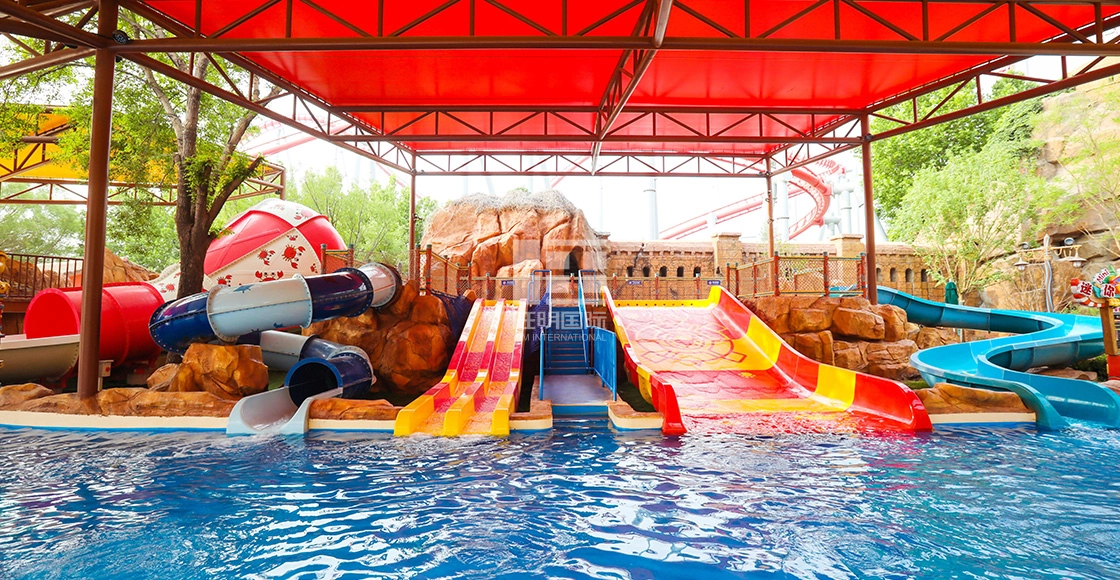
Children Combined Water Slide
Discover endless fun with the Children Combined Water Slide by WM INTERNATIONAL, expertly crafted for thrill-seeking kids. Perfect for summer splashes, this durable slide promises safety and joy. Looking to elevate your play area? Explore our Children's Combined Slide for sale now!
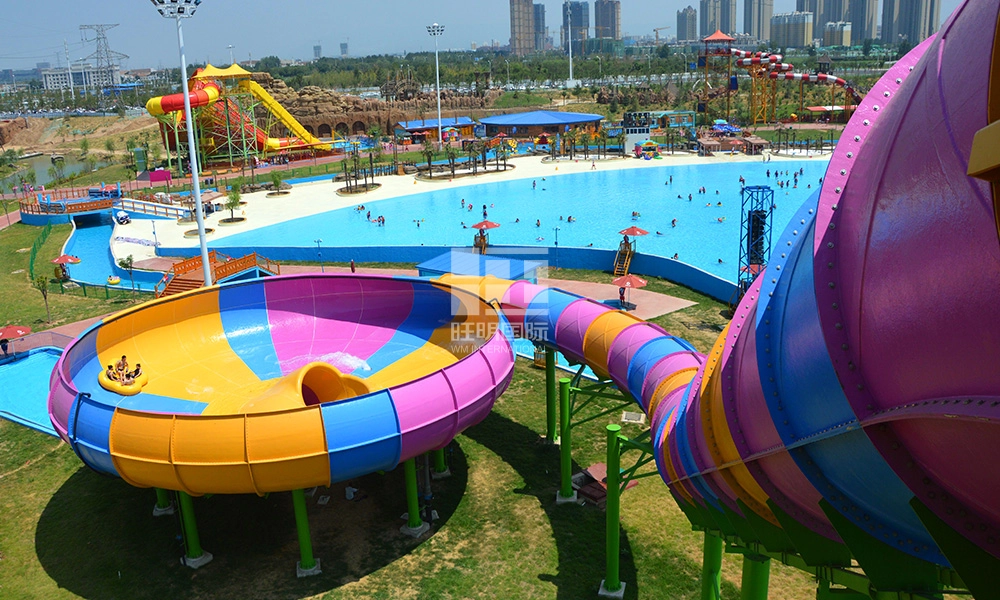
Huge Bowl Water Slide
The Huge Bowl Water Slide has achieved the “World's Best New Water Amusement Equipment” Award; it is the new favorite of the young people and the star project of the water park. The raft carries the tourists slowly entering the closed chute first; then it whirls in the bowl the moment the tourists can see the light. After a short period of time, the raft is suddenly suctioned into a huge black hole until it falls into the water. For a moment, the tourists realize the breathtaking journey has been safely brought to an end.
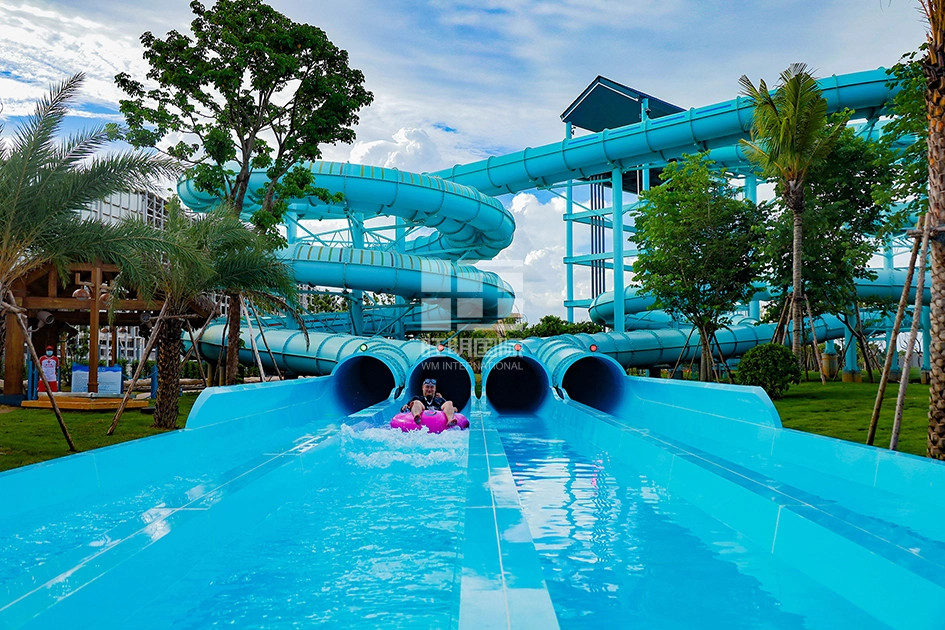
Time Tunnel Water Slide
The biggest feature of the time tunnel slide is that it uses double water slides and double tubes side by side in design and competes along the circular slide path. 8 people can play at the same time, with a large passenger capacity and high return rate, which is very suitable for team and family travel. And the slide is equipped with WangMing International's time tunnel technology, and the interior of the slide presents a beautiful aurora effect, with colorful lights, as if traveling through time and space.
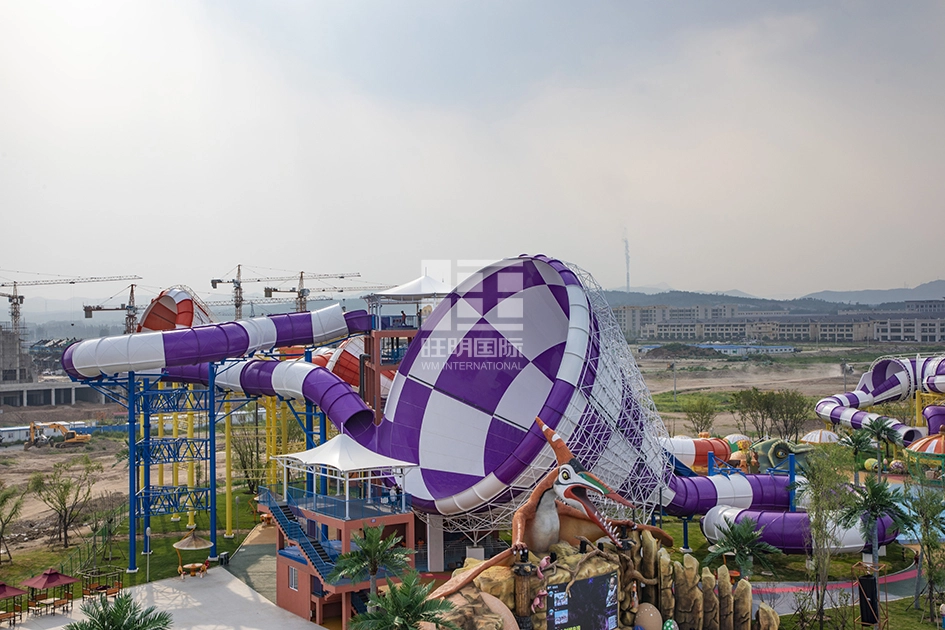
Big Tourbillion Water Slide
The Big Tourbillion water Slide won the "Gold Ticket Award - The Best New Project" of the international tourism industry. With unique modelling, strong irritation and humor, it is deeply loved by the young people; it has always been the popularity star of the water park. The raft carries the tourists as they enter the dark, closed chute slowly from the more than ten-meter-high platform; under the effect of gravity and water flow, it enters the state of rapid falling and then drops into the big Tourbillon; after a few times of whirling, it falls into the water pool. At this moment, the tourists are still in shock.
Get in touch
Have to get customized water park solutions and product quotes.
We will provide you with professional consultation and support.

Relying on leading technology, innovative products and rich industry experience, we tailor personalized solutions for each water park project to ensure a safe and exciting entertainment experience for tourists.
 Scan QR Code
wmwaterslide
wmwaterpark