





Anti-Slip and Drainage Solutions for Slide Areas
- Designing Safer Wet-Deck Circulation Around Water Slides
- Why slip resistance must be assessed under real operating conditions
- Managing transitions, stairs, and high-risk approach zones
- Balancing texture, comfort, hygiene, and accessibility
- Drainage Engineering for Platforms, Splash Zones, and Landing Areas
- How deck falls and drainage capacity work together
- Choosing point drains, trench drains, and linear channels
- Preventing ponding, odor, contamination, and structural damage
- Procurement, Quality Assurance, and Lifecycle Maintenance
- Questions buyers should place in the tender specification
- Factory quality control and site acceptance
- Building a preventive maintenance program
- How WM International Supports Integrated Water Park Projects
- Engineering coordination from concept to installation
- Manufacturing capacity and product breadth
- Commercial value for owners and distributors
- Frequently Asked Questions
Anti-slip and drainage solutions are essential safety systems around every Family Water Slide, including launch platforms, stairways, landing zones, queue lines, transfer decks, and circulation routes. A reliable slide-area design combines slip-resistant flooring, controlled falls, correctly sized drains, hygienic water management, visible maintenance access, and inspection procedures suited to high humidity and continuous guest traffic. For project owners, the objective is not simply to select a textured tile; it is to create a complete wet-area strategy that reduces standing water, supports safe movement, protects the building structure, improves cleaning productivity, and remains compatible with the attraction’s operating profile. This guide explains the main technical decisions, procurement checks, and lifecycle considerations for water park investors, designers, operators, and distributors.
Designing Safer Wet-Deck Circulation Around Water Slides
Why slip resistance must be assessed under real operating conditions
Slip risk changes significantly when a surface is covered by water, sunscreen, body oils, cleaning residue, sand, or fine debris. A dry laboratory rating therefore cannot be treated as the sole indicator of field performance. Buyers should request test information for wet conditions and confirm whether the reported method reflects barefoot traffic, because slide platforms and splash zones are normally used without footwear. Surface texture also affects cleanability: an aggressive profile may improve traction but can trap contaminants, create discomfort for barefoot guests, or increase the time required for mechanical scrubbing.
Material selection should be based on the complete use case. Porcelain or ceramic systems, resinous coatings, molded fiberglass components, rubberized products, and stainless-steel drainage assemblies each have different responses to ultraviolet exposure, chlorine, thermal movement, impact, abrasion, and chemical cleaning. The project specification should identify the intended wet pendulum or barefoot classification where applicable, the cleaning chemicals permitted by the manufacturer, joint width, substrate tolerance, and replacement method. A supplier that provides only a generic statement such as “non-slip” has not supplied enough information for an enterprise procurement decision.
Managing transitions, stairs, and high-risk approach zones
The highest-risk locations are often not the slide flume itself but the approach routes where guests change direction, slow down, climb stairs, step over thresholds, or leave a landing pool. Stair nosings should remain visually identifiable when wet, have durable edge protection, and avoid abrupt height changes that can catch bare feet. Handrails, guardrails, and access gates should be coordinated with the attraction structure so that they do not create pinch points or obstruct evacuation.
Transitions between fiberglass, concrete, tile, metal grating, and rubber surfaces require particular attention. Differential movement can open joints or create raised edges, while poorly finished sealant can become a contamination point. A practical design review should inspect every transition in plan and section, confirm drainage on both sides, and specify a flush finish that remains stable after thermal expansion and repeated cleaning. The OSHA walking-working surfaces requirements provide a useful reference for keeping walking areas clean, orderly, and free from recognized hazards, although local aquatic-facility regulations remain controlling.
Balancing texture, comfort, hygiene, and accessibility
Traction is only one part of inclusive design. Excessively rough paving may increase skin abrasion, interfere with mobility devices, or make wheeled maintenance equipment difficult to operate. The preferred solution is a consistent, cleanable, slip-resistant finish with tactile and visual contrast at stairs and changes in level. Drain covers should be flush, securely fixed, resistant to corrosion, and designed so that toes, small wheels, and maintenance tools cannot become trapped.
Accessibility requirements vary by jurisdiction, but the design team should evaluate accessible routes, pool edges, transfer areas, slopes, handrails, and clear widths before equipment fabrication begins. Retrofitting an accessible route after slide supports, pipework, and deck drains are installed can cause substantial rework. Early coordination between the water park design consultant, civil engineer, attraction manufacturer, and accessibility specialist reduces that risk.
Drainage Engineering for Platforms, Splash Zones, and Landing Areas
How deck falls and drainage capacity work together
Drainage performance depends on more than the number of floor drains. Deck falls must direct water toward collection points without creating uncomfortable slopes, abrupt crossfalls, or ponding behind structural supports. The hydraulic design should account for splash discharge, rainfall where outdoor decks are exposed, hose-down volumes, overflow from pools, and the capacity of downstream piping. Drain locations should be coordinated with column bases, anchor plates, expansion joints, access hatches, and equipment rooms.
Drainage calculations should use the actual catchment area and design flow rather than a rule of thumb. The engineer should verify grate free area, pipe diameter, invert levels, trap or channel details, maintenance access, and the consequences of partial blockage. Where several attractions discharge into one line, peak simultaneous use and backflow protection should be considered. The CDC Model Aquatic Health Code offers a widely used technical reference for aquatic venue design and operation, while local plumbing, public-health, and building codes determine the enforceable requirements.
Choosing point drains, trench drains, and linear channels
Point drains can be economical for compact platforms with straightforward falls, but they require careful setting-out to avoid isolated low spots. Linear trench drains are often more effective along the edge of landing pools, beside long splash decks, and at the bottom of stairs because they intercept water across a continuous line. Channel systems also simplify the formation of a single directional fall, although they need suitable grate loading, removable covers, sediment baskets, and access for flushing.
Drainage grates in guest areas should be selected for barefoot safety, corrosion resistance, load capacity, and cleaning access. Stainless steel is commonly used in demanding wet environments, but grade, finish, weld quality, and compatibility with cleaning chemicals still need verification. Polymer channels may reduce corrosion exposure, yet their temperature stability and structural support must be checked. Every drain should have a documented cleaning method; a system that cannot be opened safely during routine operations will eventually lose capacity.
Preventing ponding, odor, contamination, and structural damage
Standing water creates several business risks: it increases slip exposure, extends drying time, encourages odor, complicates sanitation, and can migrate into joints or adjacent finishes. Water trapped beneath coatings or around penetrations may contribute to delamination, freeze-thaw damage in cold climates, or deterioration of reinforcement and embedded steel. Waterproofing details should therefore be continuous around drains, anchors, pipe sleeves, and movement joints.
Operators should separate cleanability from circulation hydraulics. A deck drain is not automatically a substitute for a properly designed pool overflow or recirculation system. The water treatment engineer must define where water goes, how it is captured, and whether it returns to the treatment loop or to a separate storm or sanitary system. The WHO Guidelines for Safe Recreational Water Environments provide international context for managing recreational water health risks; project teams must still apply the applicable national water-quality rules and authority approvals.
| Design element | Indicative planning consideration | Procurement verification | Operational consequence |
|---|---|---|---|
| Deck slope | Use a continuous, code-compliant fall toward drainage without creating abrupt level changes | Review coordinated sections, spot levels, and hydraulic calculations | Less ponding and faster post-cleaning recovery |
| Drain type | Point drains suit compact zones; linear channels suit edges, stairs, and long wet decks | Confirm flow capacity, grate safety, access, and blockage management | Improved interception and simpler maintenance |
| Surface finish | Select wet barefoot traction together with cleanability and comfort | Request test method, chemical resistance, warranty, and sample approval | Lower slip exposure without excessive cleaning burden |
| Joint and penetration detailing | Coordinate waterproofing at movement joints, anchors, sleeves, and drain bodies | Inspect shop drawings and responsibility matrix | Reduced leakage, delamination, and repair interruptions |
| Inspection access | Provide removable covers, sediment baskets, and safe cleaning routes | Review operation and maintenance documentation before handover | Higher drainage availability and predictable labor cost |
The values in this table are planning principles rather than universal dimensions. Final slopes, grate ratings, pipe sizes, and surface classifications must be calculated and approved against local codes, occupancy, rainfall, attraction throughput, and the manufacturer’s technical data.
Procurement, Quality Assurance, and Lifecycle Maintenance
Questions buyers should place in the tender specification
A strong tender package distinguishes performance requirements from preferred brands. It should describe guest load, barefoot use, exposure to sunlight, water chemistry, cleaning frequency, temperature range, expected service life, accessibility needs, and the relationship between attraction drainage and site drainage. It should also define who is responsible for substrate preparation, waterproofing, embedded items, drain bodies, grates, sealants, testing, commissioning, and future replacement.
Buyers should request product data sheets, wet-slip test reports, chemical compatibility information, fire or reaction-to-fire documentation where required, corrosion specifications, installation tolerances, warranty terms, spare-part availability, and references for comparable aquatic facilities. Independent review is particularly valuable when a supplier proposes a proprietary coating or an unusual drainage assembly. The ASTM F2376 standard for waterslide systems is one relevant industry reference for waterslide-related safety considerations, but the complete project must also comply with local construction, electrical, structural, health, and accessibility standards.
Factory quality control and site acceptance
Quality assurance should begin before materials reach the site. Factory records can include resin or coating batch identification, fiberglass layup controls, dimensional checks, weld inspections, laminate thickness checks, and documented corrective actions. For drainage interfaces, the inspection plan should verify drain-body dimensions, grate fit, anchor positions, waterproofing compatibility, and the finish of exposed edges. Photographic records and serial-number tracking make future warranty and replacement decisions more efficient.
Site acceptance should include a visual inspection, water-flow test, ponding observation, grate stability check, transition measurement, sealant review, and cleaning-access demonstration. The commissioning team should test representative high-flow conditions and confirm that water does not discharge onto stairs, queue routes, electrical spaces, or neighboring attractions. Handover documents should include as-built drawings, drain locations, approved cleaning agents, inspection frequencies, spare-part lists, and escalation contacts.
Building a preventive maintenance program
Daily operators should remove visible debris, inspect wet routes, check loose grates, and report ponding or damaged surfaces. Weekly or scheduled maintenance can include channel flushing, sediment-basket cleaning, joint inspection, and verification of stair nosings and handrails. Periodic technical inspections should assess coating wear, fiberglass damage, corrosion, sealant failure, drainage flow, and changes caused by settlement or renovation.
Maintenance data should be converted into measurable operating indicators, such as blocked-drain incidents, slip-related reports, repair response time, cleaning labor hours, and attraction downtime. These metrics help owners compare the lifecycle value of a robust system against the apparent savings of a low-cost installation. The most economical procurement outcome is usually the solution that remains inspectable, repairable, chemically compatible, and supported after opening day.
How WM International Supports Integrated Water Park Projects
Engineering coordination from concept to installation
WM International Waterslide brings 19 years of industry experience to water park planning and design, manufacturing, installation, and maintenance. Our team approaches slide-area safety as part of the complete attraction system rather than as an isolated flooring purchase. We coordinate slide geometry, platform access, splash behavior, circulation routes, support structures, drainage interfaces, and maintenance requirements according to the site characteristics and the owner’s operating goals.
Our project support is suitable for new developments, expansions, renovations, and replacement programs. By combining the perspectives of operators, designers, suppliers, and guests, we help project owners identify practical issues before construction, including cleaning access, queue congestion, service routes, equipment clearances, and the relationship between wet decks and adjacent guest areas. Tailor-made solutions are developed for different climates, site layouts, investment levels, attraction mixes, and throughput expectations.
Manufacturing capacity and product breadth
WM International owns a 100,000 m² modern production base, described by the company as the largest in the industry, and mainly manufactures various water slides for water parks. This production capacity supports coordinated fabrication, quality control, customization, and project scheduling for complex attraction packages. Our main product capabilities include water slides, water play attractions, wave making equipment, and broader water park systems supported by design and construction services.
For slide-area drainage and anti-slip coordination, our engineering process can align attraction components with deck levels, landing conditions, access stairs, guardrails, and service zones. The final specification still requires approval by the project’s local architects, engineers, authorities, and safety consultants. This collaborative model helps prevent interface gaps between the slide manufacturer, civil contractor, waterproofing installer, and facility operator.
Commercial value for owners and distributors
For investors, integrated planning can reduce late-stage variations, installation conflicts, unplanned shutdowns, and replacement costs. For distributors and developers, a clearly documented product package makes technical evaluation easier and supports consistent installation across different markets. For operators, accessible drains, durable surfaces, and complete maintenance documentation improve daily productivity and help preserve the guest experience.
WM International’s website, water slide and water park solution platform, provides an entry point for reviewing our product and service capabilities. Project teams can also contact our commercial department at trading@wmwaterslide.com to discuss site conditions, attraction requirements, drawings, production, installation, or maintenance support.
Frequently Asked Questions
What is the most important anti-slip requirement for a water slide platform?
The surface should provide verified wet barefoot traction while remaining comfortable, cleanable, chemically compatible, and suitable for the expected traffic and maintenance program. A generic “non-slip” claim is not sufficient; buyers should request the test method and performance documentation.
Are linear trench drains better than point drains around water slides?
Neither system is universally better. Point drains can suit compact platforms with straightforward falls, while linear trench drains are often effective beside stairs, landing pools, and long splash decks. The choice should follow hydraulic calculations, site geometry, maintenance access, and local code requirements.
What should a water park drainage calculation include?
The calculation should consider catchment area, splash discharge, rainfall exposure where relevant, hose-down flow, pool overflow, pipe capacity, grate free area, downstream restrictions, simultaneous attraction use, and the consequences of partial blockage.
How often should slide-area drains and surfaces be inspected?
Operators should perform daily visual checks for debris, ponding, loose grates, and damaged surfaces. Scheduled maintenance should include channel flushing, sediment-basket cleaning, joint inspection, and checking of stair nosings. Periodic technical inspections should evaluate wear, corrosion, sealants, drainage flow, and settlement.
What documents should buyers request from an anti-slip and drainage supplier?
Buyers should request product data sheets, wet-slip test reports, chemical compatibility information, corrosion specifications, installation tolerances, warranty terms, spare-part availability, maintenance instructions, and references for comparable aquatic facilities. The tender should also define responsibilities for substrate preparation, waterproofing, drain bodies, grates, testing, commissioning, and handover.
Can drainage and slide manufacturing be coordinated by one supplier?
An attraction supplier can coordinate slide components and drainage interfaces, but final drainage, structural, plumbing, accessibility, and code approvals must be completed by the project’s qualified local design team. Early coordination helps align slide geometry, deck levels, support structures, access routes, and maintenance requirements.
Recommended
Wholesale kids water slide manufacturer and supplier
Best Professional Aqua Park Slide Manufacturers Middle East
Best Commercial water slide manufacturers and supplier brands in 2026
How Much to Build a Water Park in Sydney? Cost Guide 2024
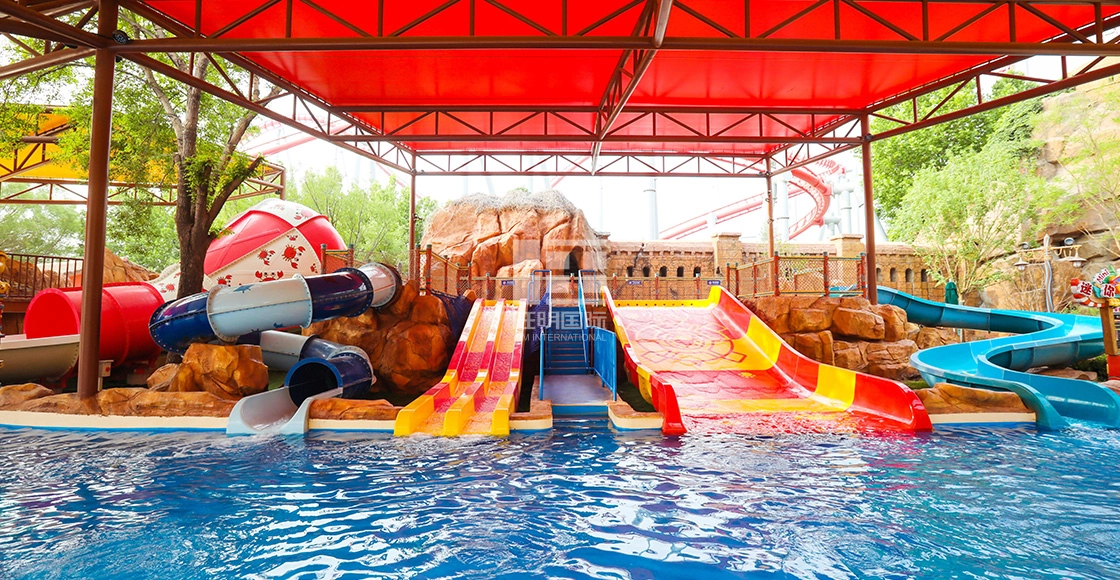
Children Combined Water Slide
Discover endless fun with the Children Combined Water Slide by WM INTERNATIONAL, expertly crafted for thrill-seeking kids. Perfect for summer splashes, this durable slide promises safety and joy. Looking to elevate your play area? Explore our Children's Combined Slide for sale now!
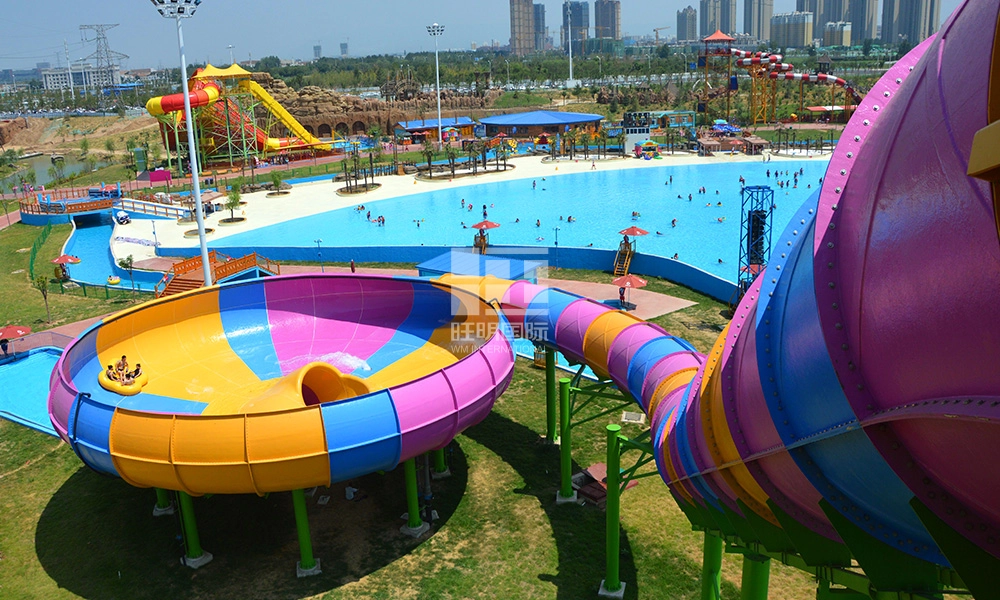
Huge Bowl Water Slide
The Huge Bowl Water Slide has achieved the “World's Best New Water Amusement Equipment” Award; it is the new favorite of the young people and the star project of the water park. The raft carries the tourists slowly entering the closed chute first; then it whirls in the bowl the moment the tourists can see the light. After a short period of time, the raft is suddenly suctioned into a huge black hole until it falls into the water. For a moment, the tourists realize the breathtaking journey has been safely brought to an end.
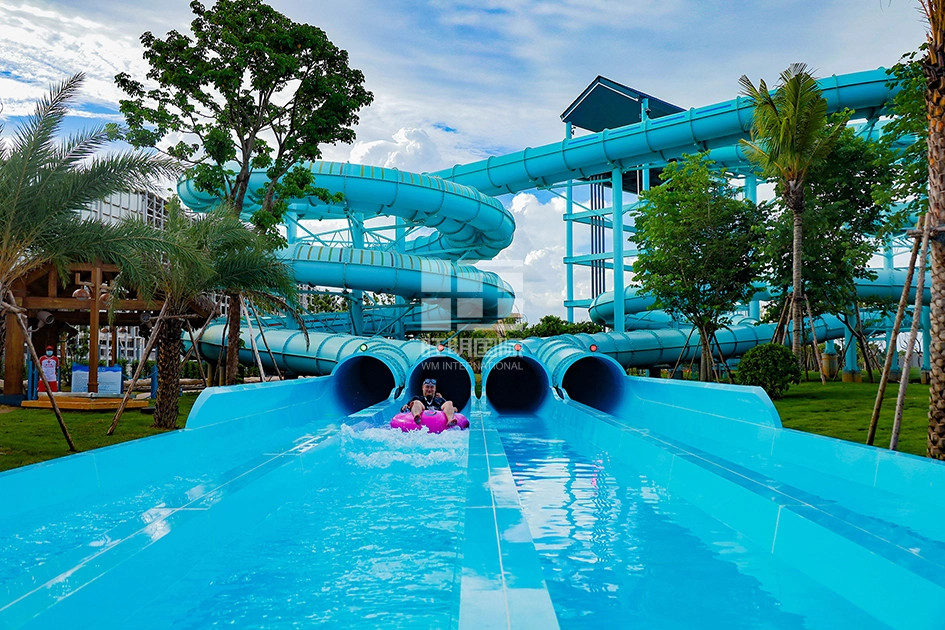
Time Tunnel Water Slide
The biggest feature of the time tunnel slide is that it uses double water slides and double tubes side by side in design and competes along the circular slide path. 8 people can play at the same time, with a large passenger capacity and high return rate, which is very suitable for team and family travel. And the slide is equipped with WangMing International's time tunnel technology, and the interior of the slide presents a beautiful aurora effect, with colorful lights, as if traveling through time and space.
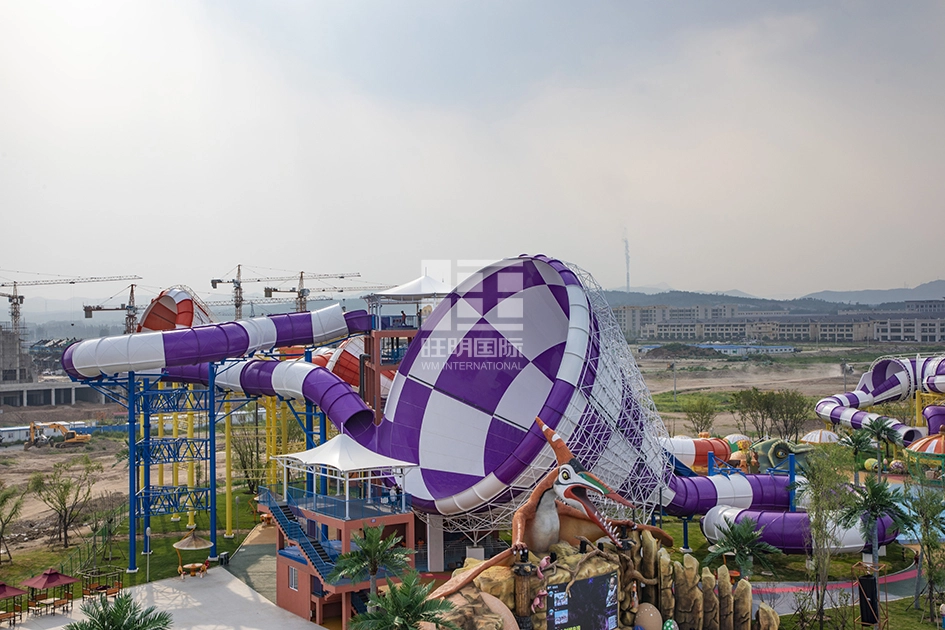
Big Tourbillion Water Slide
The Big Tourbillion water Slide won the "Gold Ticket Award - The Best New Project" of the international tourism industry. With unique modelling, strong irritation and humor, it is deeply loved by the young people; it has always been the popularity star of the water park. The raft carries the tourists as they enter the dark, closed chute slowly from the more than ten-meter-high platform; under the effect of gravity and water flow, it enters the state of rapid falling and then drops into the big Tourbillon; after a few times of whirling, it falls into the water pool. At this moment, the tourists are still in shock.
Get in touch
Have to get customized water park solutions and product quotes.
We will provide you with professional consultation and support.

Relying on leading technology, innovative products and rich industry experience, we tailor personalized solutions for each water park project to ensure a safe and exciting entertainment experience for tourists.
 Scan QR Code
wmwaterslide
wmwaterpark